Ing. Igor Frič

* 1955

  • "My grandfather, as a Slovak, especially during the uprising, because he had a big house, so my mother told me that partisans came there many times. First of all, he was the landlord and farmer, so he had some potatoes, crops, food that he gave them. She told me an experience where they really suffered because they had hidden partisans in a pit for potatoes or cockroaches, as they said in Liptov. They were hidden there and at that time Germans came to them, who even wanted to stay there or did stay there for a while. So those partisans were hidden there in the pit. I don't know how many days it was, but several days. They only delivered food to them at night. Fortunately, those Germans lived in what I said was the annex, so they lived in the next part, so they could somehow deliver the food to them. Mom said that she had such a painful experience because they had a small dog that, when the Germans came, simply jumped and tore the German's pants and he stabbed him with a bayonet. So it was such a sensitive story that affected her and she remembered it until her late years. I know that my grandfather was definitely sympathetic and helped the partisans. And even if I say such a little thing, I don't know if it's appropriate, but that's how it was. Mom then said that the Germans were simply less unpleasant than when the Russians came there. That the Russians got drunk there with apologies, raped the girls, that this didn't happen under the Germans."

  • "I remember that at three o'clock in the morning the phone rang at home and my father woke up. Actually, the whole family woke up afterwards and said that the Russians had attacked us, that is, they had occupied us. He was careful with those words. So that was the first thing. So I was so upset, what does that actually mean? How is it possible that our liberators had occupied us, what they had all hammered into our heads and taught us in schools. Then I went outside with the boys and those troops were going through Ružomberok. Tanks were rolling there. And I remember that there by the Váh River, but that road still leads there to this day, of course, because we have a highway, so we still go along it. (laughter) And we started throwing rocks at those tanks. We just, if they went, I don't want to say that it was any conscious thing, but there was just such an atmosphere of resistance. What do they want here and why are they going here in tanks. They even destroyed the road and you could just feel it. So "We threw stones at the tanks, but then my father found out. So I got beaten up. He told me they could have shot me, so he forbade me. So I didn't continue that activity after that, but that was the first thing I remember."

  • "At that time, a scout organization was founded in Ružomberok. I actually joined because the nature of the organization's activities was nature and it was very close to me, so I signed up. Of course, I already bought those shirts, that uniform, short pants. We went to all sorts of meetings there and had activities, so I really liked it. So I actually became a scout. Although it turned out later that my father was warned that his son was a scout, but that was after the occupation, that he should have forbidden me from doing it. He stuck it to me at some point. He told me that you can't do it because I'll have a problem. So this was, from the perspective of my age, the greatest revival and relaxation. I remember it as a beautiful experience, the whole period. I was about two years old and I really liked it. It was something completely different from the pioneers, where it was so artificial. This was so natural. I still remember that man, his name was Rubeš. His nickname was Akela, actually like the wolf from the Jungle Book. He was in the original Bohemia, he came from there and was closer to nature, according to everything. There were a lot of us there. Of my friends, maybe four or five, we were the closest ones there. We all joined and then there were people from all over the city. They were also older, maybe ninth graders. In 1968 I was in seventh or eighth grade. So at that time we were proud to be scouts. That is probably the most striking memory that I remember as a child, which entered my life as part of that liberation before 1968."

  • We were going to play. As I said in the European Championship group, we were with the Scots and the Swiss. We went to play the return match in Switzerland for promotion. We won at home, I think, 4:0. I was nominated there. I came to the meeting in Prague and they told me that I wouldn't go anywhere because I didn't have the consent of the Socialist Youth Union. That was a shock for me. I told them if they were serious, that it was because of such nonsense. I don't know if I forgot it or just ignored it. I don't know. I didn't have it. It's not that they didn't want to give it to me, but I didn't ask for it. I got on the plane normally and went back to Žilina. A substitute went instead of me. That was such a shocking experience. Because of such nonsense. But at the time, that was a higher interest than representing Czechoslovakia. That was one of the things that aroused my resentment towards the former regime.

  • We played, I think, in Duisburg, Germany, we were there for training. Me and Jano Hlavatý, who also played for Slovan, went to a large department store. We had time off. We got lost there and got lost. We had some time there and a place where we were supposed to meet at the bus. We went out the other way. We were pressed for time and started to get stressed. In the end, we missed the bus. We didn't show up for the meeting and the bus left. Then we found the place but the bus wasn't there anymore. We took a taxi and it took us to the place. But then the guys told us that the eye had given itself away because he started finding out and looking for information about who he was, whose parents he had. Until then, we didn't know that he was an eye. They said he was from the chemical industry department. At that time it was CHZJD Slovan, or Juraj Dimitrov's Chemical Works. He was somewhere from Palstika Nitra. This person then started investigating where we were from and whether we had spoken out against the socialist regime and whether we had escaped. When we arrived, it was quiet. That's my experience. Then we went to Spain. There was a Mr. Fiala there. He was a Jew and he arranged all these matches. That's why I said he was a Jew, that it was his strong weapon. When we arrived at the airport somewhere, we didn't look for Slovan Bratislava, but we looked for Ján Fiala. And there was always another Jew who came there, through whom he organized it. In Switzerland, Spain, Germany. At that time, getting to a match for the Czechoslovak teams, without some contacts... they simply didn't want us there. They maybe made a little bit of a business out of it, but that didn't interest us. We went to Spain every year for two weeks to a month to prepare.

  • "It happened that in the previous year we played a match with Frýdek-Místek, who played in the Czechoslovak league. According to the coach, some players simply sold the match. That was a real blow to the team. Allegedly, there were four players. It was unofficially investigated. But I think the coach said it out loud and all hell broke loose. The team completely fell apart. Then the coach left. He said he wouldn't coach it. The officials couldn't handle it either. So we were eliminated the next year. We had already been saved the previous year, so it wasn't that much of a threat. Frýdek-Místek won that year, but it brought such a split to the team. The team fell apart and there was a lot of distrust. The two who did it were fired right away and I feel like two more stayed, but it was completely extinguished. So we dropped out in 1978."

  • Full recordings
  • 1

    Bratislava , 15.10.2025

    (audio)
    duration: 03:38:03
    media recorded in project Stories of the 20th century
Full recordings are available only for logged users.

I always attached more importance to education than to sports. I still considered football as entertainment
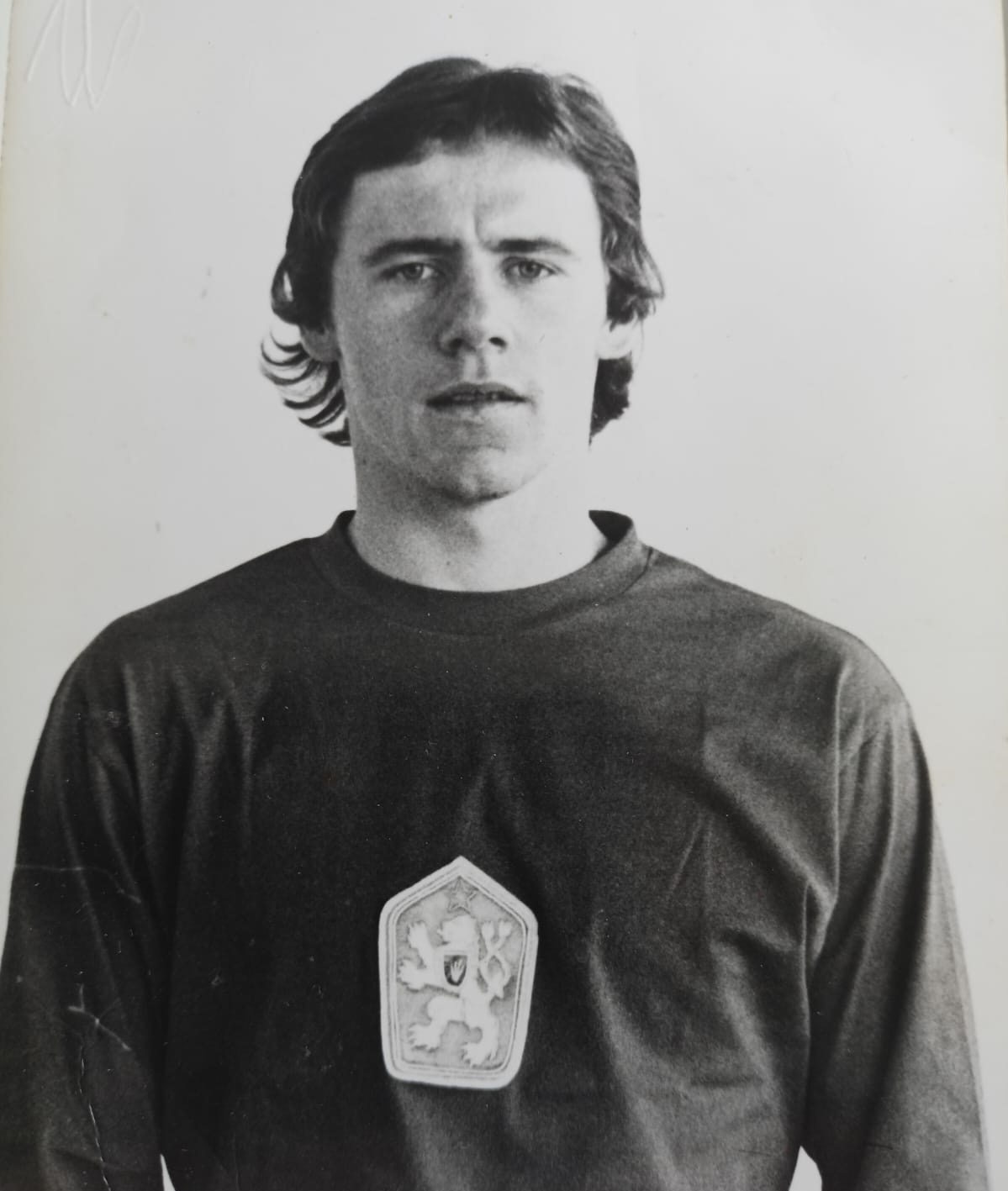
hráč Sparta Praha
hráč Sparta Praha
photo: archív pamätníka

Igor Frič was born in 1956 in Ružomberok to a peasant-worker family. His parents and grandparents came from Liptovské Sliačy. His grandfather Ján Priesol was a large farmer, he smuggled horses from Poland. He had ten children. Germans and Russians lived with him, he also hid partisans. He did not voluntarily join the cooperatives. He lost thousands when changing money. His father Štefan Frič was first a foreman in the North Slovak pulp and paper mills, later a manager in the administration. He was a member of the Communist Party. His mother Jolana, née Priesolová, was a clerk. He has an older sister Soňa and a younger brother Ota. He graduated from the gymnasium in Ružomberok, graduated in Žilina. He graduated from the Transport University in Žilina. He started playing football towards the end of primary school. As a junior he played for BZVIL Ružomberok. In his youth he transferred to ZVL Žilina. He also played in the Czechoslovak youth team. He also joined Sparta Prague, from where he left due to a fractured collarbone. During his basic military service, he was first in Dukle Banská Bystrica, later in VTJ Tábor. He married Janka Fričová in 1980, had his first son Tomáš and moved to Bratislava. From 1981 to 1986, he played as a striker in CHZJD Slovan Bratislava and was managed as an employee of the Juraj Dimitrov Chemical Works. At the end of his football career, he represented BZVIL Ružomberok in 1986 - 1988. At the same time, he worked as a deputy director at the Secondary Vocational School in Ružomberok. He said goodbye to football as a youth coach of SCP Ružomberok. After the Gentle Revolution, which he welcomed and also participated in the general strike, he became the chief controller of the Ružomberok City Hall for 25 years. Today he is retired and plays sports. He has three children and lives in Ružomberok.