I remember that around 1980, Người Việt newspaper organized a writing contest with the theme “Summer of 1999.” At that time, roughly around 1985 or 1986, the year 1999 was still more than ten years away. Some of the people who took part in that contest later became quite well known in journalism and literary circles. For example, Hoàng Mai Đạt participated in the contest and won prizes, as did Tạ Thái. In 1985, almost all of the entries on the theme “Summer of 1999” imagined that by 1999 Vietnam would be free, Vietnam would be democratic, and Vietnamese people from everywhere would be returning to help rebuild the country, and so on. Nearly all of those essays were based on the assumption that by 1999 communism would have to collapse. How could it not? But I thought that was probably more correct around 1987 or 1988 rather than 1985 or 1986, because by then the changes in Eastern Europe, the Soviet Union, and China had already taken place. Based on those developments, people were very optimistic and thought that by 1999 Vietnamese communism would inevitably fall. But now we have reached the year 2025, and Vietnamese communism still has not collapsed. Even so, I remain optimistic, because in reality we don’t actually need to wait for communism to collapse. My goal, for example, or what I think should be the goal of activists in general, is not simply the collapse of communism. Of course, there are people who struggle specifically for the collapse of communism, and that’s fine. But if communism collapses, then what? If communism collapses, do we automatically get democracy? Do we get human rights? Or do we end up with a new dictator and still have no human rights? So our goal should be democracy and human rights, regardless of whether communism still exists or not. If communism remains, we may not have democracy. But if communism remains and we have human rights, that is still good. Therefore, we should focus more on democracy and human rights than on whether the country is communist or not.
A free press means that journalists do not have to constantly look over their shoulders, worrying about whether something will happen to them, whether the state will put them in prison, or whether they will face protests. So what I think is that if you are a journalist, you should start by practicing that mindset first: practicing doing journalism without worrying about whether someone will be watching you, whether someone will boycott you, or whether people will protest against you. If you see something that is objective and correct, then you do it. Of course, that doesn’t mean saying, “I’m not afraid of anyone, I’ll just do whatever I want and see what happens.” That’s not what I mean. You have to do what is right and what is objective. If what you say is true and objective, then you say it. You shouldn’t be afraid of being targeted; you shouldn’t be. Sometimes you do need to be afraid in order not to go to prison. But you shouldn’t be afraid or hesitant because you might offend people, or because people might protest, boycott you, or put you in jail. You shouldn't be. Huy Đức once said that no free person ever wants to go to prison for no reason. But there are times when you have to do things knowing that there is a risk. People like Huy Đức, for example, chose to do things that carried that risk, and he thought he was clever enough to avoid prison. In the end, however, his cleverness was no match for the authorities’ desire to imprison him.
The first articles I wrote were actually not for Người Việt newspaper, but for an earlier paper called Mimi News. Later on, Mimi News was transformed by some of the people involved into another newspaper that became very well known and also very controversial, called Viet Weekly. So that was where I started. The strength of Mimi News at the time, compared to other newspapers like Người Việt, was that those other papers had a strong need to publish news from Vietnam, world news, and so on. For example, they would read news in English and translate it into Vietnamese, or read many Vietnamese news pieces and combine them into a single article. For Vietnamese news in particular, say, something that happened that day, for example involving Venerable Thích Quảng Độ. They would read many such reports, both U.S. and Vietnam-related, and then write a news article about Venerable Thích Quảng Độ. That was the news-writing procedure. Or they would take a story about President Bush at the time, or some president or chairman in Russia, like Yeltsin, and then write an article for Vietnamese readers. Because of that, newspapers back then had a huge demand for news coverage, and they had to spend a lot of money to maintain editorial teams whose job was purely to write news. This left a gap in doing feature reporting. They didn’t really cover that field. So the people at Mimi News saw that gap and realized that what was missing was in-depth community reporting right in Bolsa. They focused on that area because they knew the other newspapers were very busy writing news and therefore didn't really do these documentaries. It wasn’t that they couldn’t’t write features at all, but they couldn’t do it in the proper sense. Mostly it was just things like reporting on a April 30 memorial ceremony, noting which people attended. That kind of article. So when I later joined Người Việt, I also wanted to strengthen that area. Looking back, I would say that the contribution I am most proud of at Người Việt was helping to build that feature-reporting section: community features, investigative reporting, in-depth reporting. Today, that kind of thing is taken for granted. When people read newspapers in the Little Saigon area now, they expect every paper to have that kind of content. Every TV station is expected to have it too. But back in the early 2000s, it wasn’t like that at all.
My family stayed in Vietnam until 1982. In 1980, my older brother left the country by boat. Compared to many others, my family was more fortunate because we already had a sponsorship application to go to France that had been submitted very early, right when people were first allowed to apply for departure. The first year when people were permitted to file family reunification applications like that was around 1967 or so. Just one or two years later, there was already an agreement with France allowing people to go there. Our family already had a reunification sponsorship from that time because we had two maternal uncles who had gone to France around 1951 or 1952. They had lived in France for a very long time, originally going there to study and then staying on to work in scientific research, so our family’s sponsorship application dated back to around 1976 or 1977. By 1981 or 1982, we finally received the exit permit. Back then, the Vietnamese authorities were very strict in terms of letting their citizens leave the country. So once they had agreed to let you go and had already issued the exit permit, they did not really care much about where you went. Because of that, after getting an exit permit to go to France, we applied to have it changed to go to the United States, and it was approved. It wasn’t immediate, but compared to people who had to submit applications from the beginning, it was relatively fast. When we applied to change to the U.S., the ODP (Orderly Departure Program) was already in place. Some of my friends had left as early as 1979 or 1980, also going to the U.S. through ODP. So once again, when my friends had already gone to America in 1980 and I was still here, I felt less fortunate than they were. But after I arrived in the United States in 1982 and have lived here all the way until this year, 2025, looking back at the period from 1982 to 2025, I see that so many people came after me. So in a sense, looking at it the Vietnamese way: looking up, you’re not as fortunate as others; looking down, no one is as fortunate as you. That’s how it is. I look at those who left before me and feel I was less fortunate than they were, but when I look at those who came after me, I see that I was far more fortunate than many people.
When I got back home, it was just in time, because after April 30, right in the afternoon of April 30, there was widespread looting. People flooded into the houses of those who had already left and took things to bring home. Around my house there were quite a few homes that had been abandoned. There were also some families who stayed behind, and later on those people were subject to lengthy reeducation time. That was because they were at least captains, and one man, Mr. Lý Bá Hỉ, was a general. But for those who had already left. For example, the civilian house directly across from mine; the owner had left, and people rushed into his house and carried things away. They carried out machinery from his house, shoes, tables, chairs, beds, wardrobes—everything. That was the looting that happened on April 30. I was there at the time, and I personally witnessed all of it. That was April 30, and after that we went back to school. We were children, what could we do? We just went back to school. My parents were professors at the University of Medicine, but before becoming a professor, when my father was young, he had been mobilized into the military. He had been mobilized and held the rank of second lieutenant. Because of that rank, he was told to go for “reeducation” for ten days, so he went for ten days. I remember that after that year, I no longer studied at Lê Quý Đôn School but transferred to La San Taberd. I remember that particular day, it was supposed to be the tenth day. I came home from school and waited for my father to return. It was the tenth day. But on the tenth day, my father did not come back. So the stories people later heard, about going for “reeducation” for ten days or one month, and then ending up being detained for many years. Although I was only eleven years old, I witnessed those things myself. I knew these things happened; I remember them clearly. Fortunately, my father was not held for several years like others. At that time, it seemed that the authorities who took over Saigon gave some priority to doctors, allowing them to return earlier. My father went for six months and then came back. Another doctor went for just over three months and returned. Many others were back in under a year. But there were also people my father knew who were doctors yet were caught up in additional issues. For example, a doctor named Ái was implicated because he was involved in political activities and religious activities. He was very active in Catholic work, especially in the Legion of Mary. When he went for reeducation and declared his involvement in the Legion of Mary, it was seen as very dangerous. He was detained for several years.
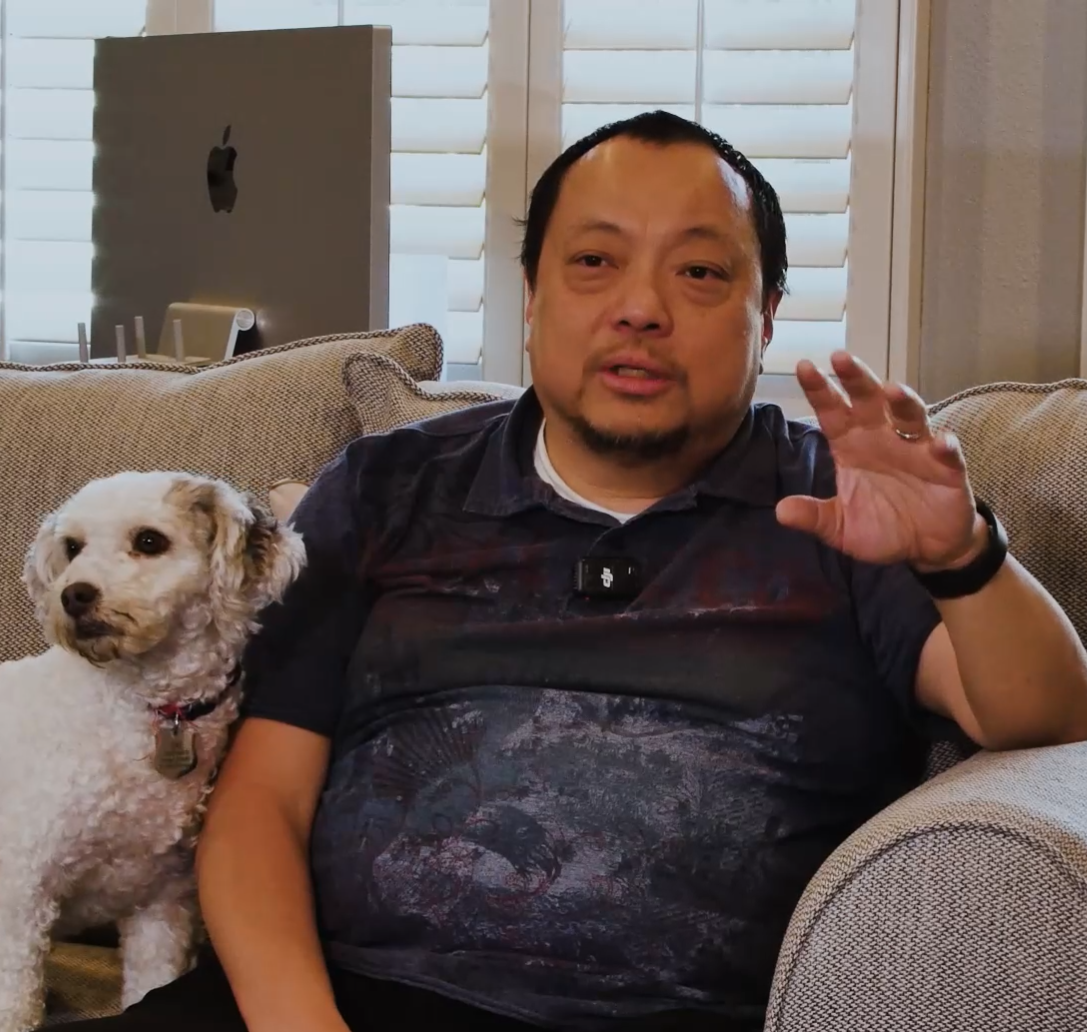
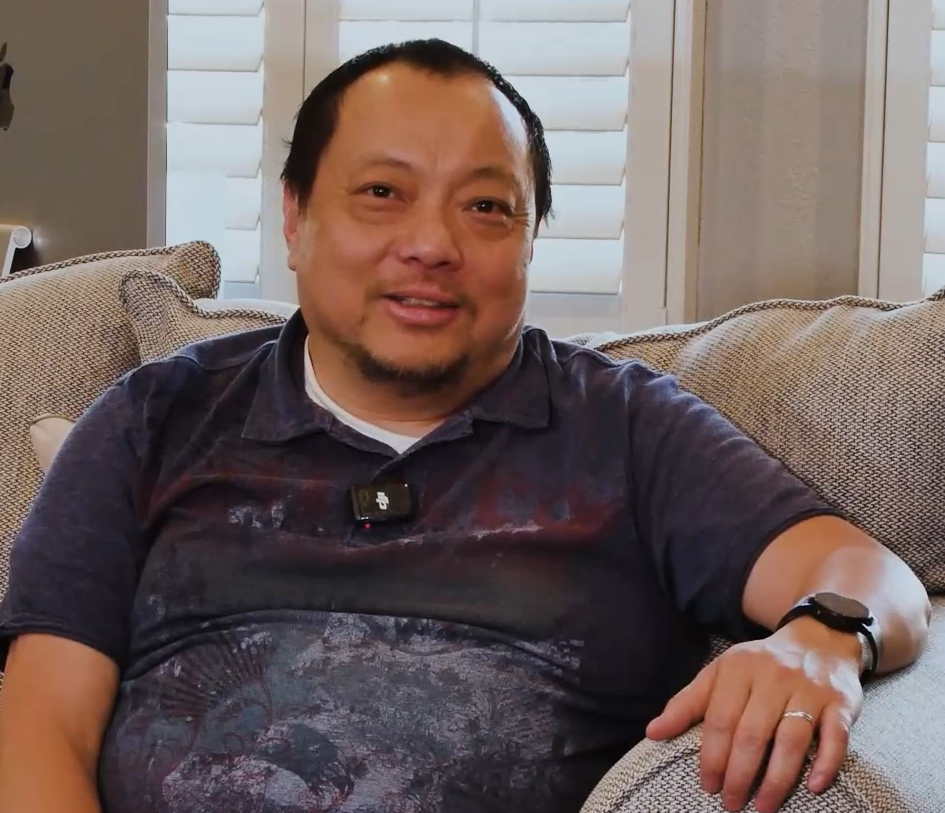
Vũ Quí Hạo Nhiên was born in Sài Gòn in 1964 to a family of Northern immigrants. His parents both worked as lecturers at a medical university. His secondary education was temporarily disrupted in March 1975 when Nguyễn Thành Trung, a North Vietnam-affiliated agent, bombed the Independence Palace, forcing him and other classmates to evacuate. Nhiên also witnessed the horrors of war and the chaotic scenes in Sài Gòn before the collapse of South Vietnam later in April. His father, a lieutenant-ranked doctor, was sent to a communist “reeducation camp” due to his military involvement. Nhiên’s family had a sponsorship to France through relatives who lived there, but they remained in Vietnam until 1982 before receiving exit permits and eventually changed their destination to the United States through the ODP (Orderly Departure Program). He first arrived in Indiana and completed his higher education there, then moved to Southern California in 1989 for a job. He first began his journalism career at Mimi News, a U.S.-based Vietnamese language service known for its feature reporting, before joining Người Việt Newspaper in the early 2000s. He prided himself in helping Người Việt develop in-depth community reporting and investigative documentaries. Through the Internet, Nhiên connected to many Vietnamese bloggers, journalists and activists, including Điếu Cày and Phạm Đoan Trang. When asked about his vision for the future of Vietnam, he strongly believes that human rights and democracy should be the primary missions to fight for, whether or not the communist regime exists. Independent journalism, grounded on these values, can bring that goal closer every single day.