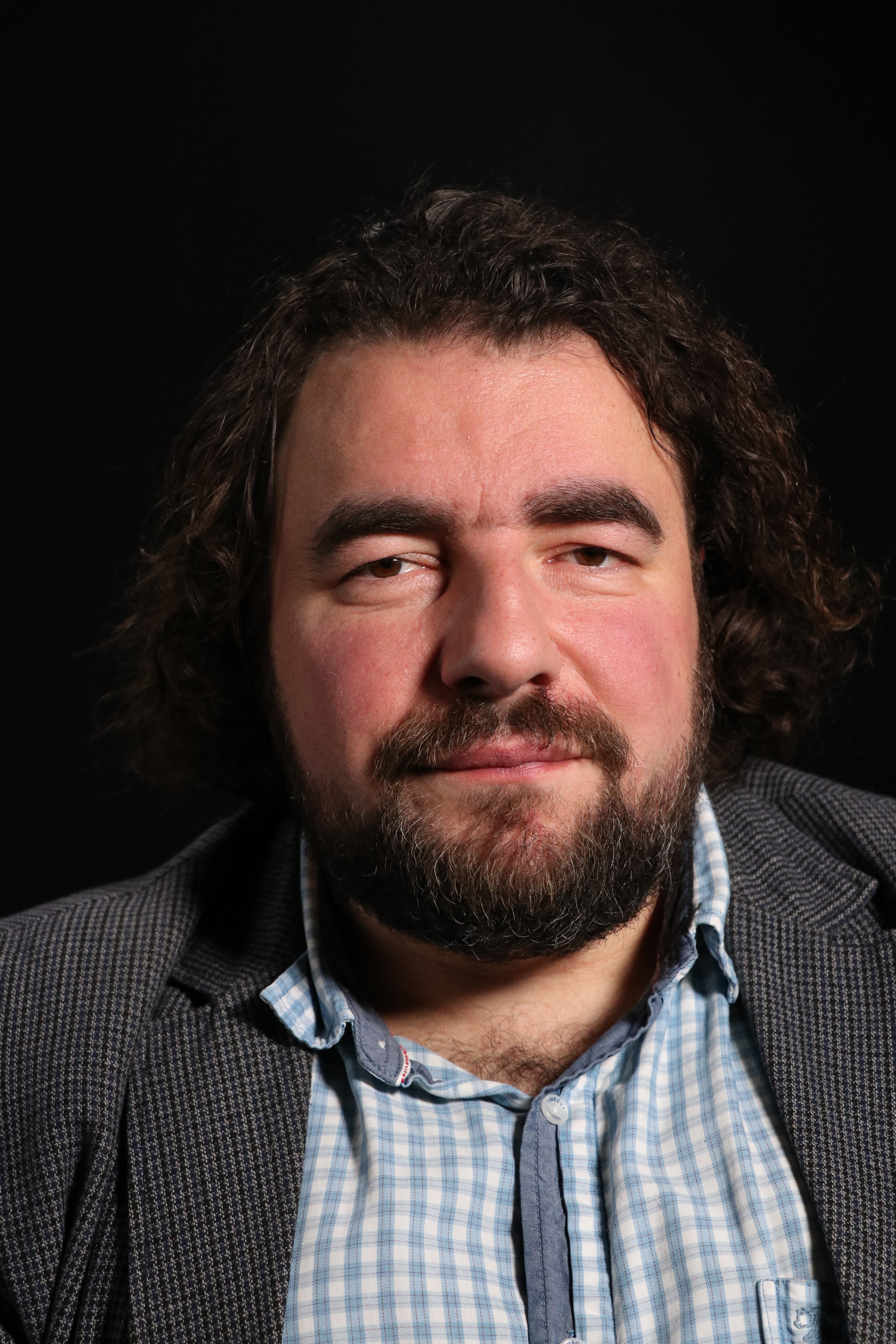
"In my opinion, one thing is absolutely essential in relation to the Ukrainians: before you even try to establish any dialogue, you must make it clear that you consider what Russia is doing to be criminal and unacceptable. Ukraine's internationally recognised borders must be restored and Russia must be held accountable, including for war reparations. But human lives cannot be replaced - there is no real compensation for that. The responsibility for all this therefore falls on us, and its consequences will be felt for generations to come. We must accept that many Ukrainians will hate Russians for a long time - and may not distinguish between 'good' and 'bad' Russians at all. And the moment one accepts this and stops feeling sorry for oneself or feeling unfairly blamed, real dialogue can begin. And often surprisingly quickly."
"As long as Alexei Navalny was alive, it was possible to have various reservations about him - I myself was not one of his supporters, but one thing cannot be denied: he was able to raise issues to which the Kremlin had to respond. Today's Russian opposition no longer creates such topics. It has no real influence on Russia's internal politics. That is why I often do not even call it the opposition. Rather, it is about resistance to the Putin regime - an intellectual and moral alternative to what is happening in Russia today. It is that part of a vibrant civil society that has been marginalized. While the majority society has succumbed to the war, and in a sense destroyed its own future by turning back to the past - not even its own past, but the past of Vladimir Putin's generation, to visions of a return to Soviet childhood. A real opposition would have to do something else: to create an image of the future that would be acceptable to the majority of Russians, and to speak to specific groups of society in their language. And this is sometimes possible, but only to a limited extent. Russian propaganda, which I have unfortunately been forced to follow for a long time, works in a very purposeful and targeted way. It reaches out to each population group separately, offering each its own set of conspiracy stories and arguments - not one, but dozens of different versions, depending on exactly what each group wants to hear. But the Russian anti-war resistance lacks resources and often tries to speak to all Russians at once. And this then gives the impression of shouting into the void - and through a gag."
"On the other hand, I think we can talk about it openly today. A few months after the start of the full-scale Russian invasion, we held a meeting with psychologists. The Prague anti-war activists were there to talk about what they were experiencing, and the psychologists advised them on how to maintain their mental resilience and not burn out. It was then that I realized that I was probably the only one present who did not feel guilty towards the Ukrainians. Because I had already understood one thing long before the war: it was not my war, it was not my army, and it was not my president. And everything I could have done to prevent it - or at least to warn of what was coming - I did. I talked about the threat of war long in advance. And when the war actually started, I tried to do the least I could. I followed a simple rule: do what you think is right and accept the consequences."
Ivan Preobrazenskij was born and raised in Moscow. His family background reflects the complex history of the 20th century: on his mother’s side, his Crimean roots and family documents mention the revocation of his Turkish citizenship in 1917; on his father’s side, his connections to the Soviet elite; and his great-grandfather, an Orthodox priest who became a victim of repression in 1937. In the 1990s, after the divorce of his parents, the family experienced an economically and socially challenging period typical of post-Soviet Russia. Nevertheless, Ivan Preobrazhensky received a good education and graduated from a French grammar school. In 1998, he entered the newly opened political science program at the Russian Friendship University of Nations (PFUR), where he later earned a PhD in comparative political science. He began his professional career at the Centre for Political Technologies, where he rose from analyst to deputy head of the media projects department. He also co-founded the Association of Young Political Experts. Subsequently, he turned to journalism. He worked as a columnist for Profil magazine, headed the international section of the Strana.Ru portal and in 2008 joined the Vedomosti daily newspaper, where he focused on foreign policy. He covered, among other things, the war with Georgia and, according to his own words, prepared an article on the beginning of the war, which was not published. He later worked as political editor for the Rosbalt agency and as an economic commentator for other media. After the annexation of Crimea in 2014, he emigrated with his family to the Czech Republic. He continued to work as an analyst and columnist, including for Deutsche Welle, where he specialised in Central and Eastern Europe. After the start of the Russian invasion of Ukraine in 2022, he co-founded the Prague Anti-War Committee. He has published actively and has been involved in helping Ukrainian refugees and Russian emigrants. In 2023, he was included by the Russian Ministry of Justice in the register of so-called “foreign agents” for allegedly supporting Ukraine and spreading “negative information”. In 2025, a criminal prosecution was launched against him and he was placed on the wanted people list.