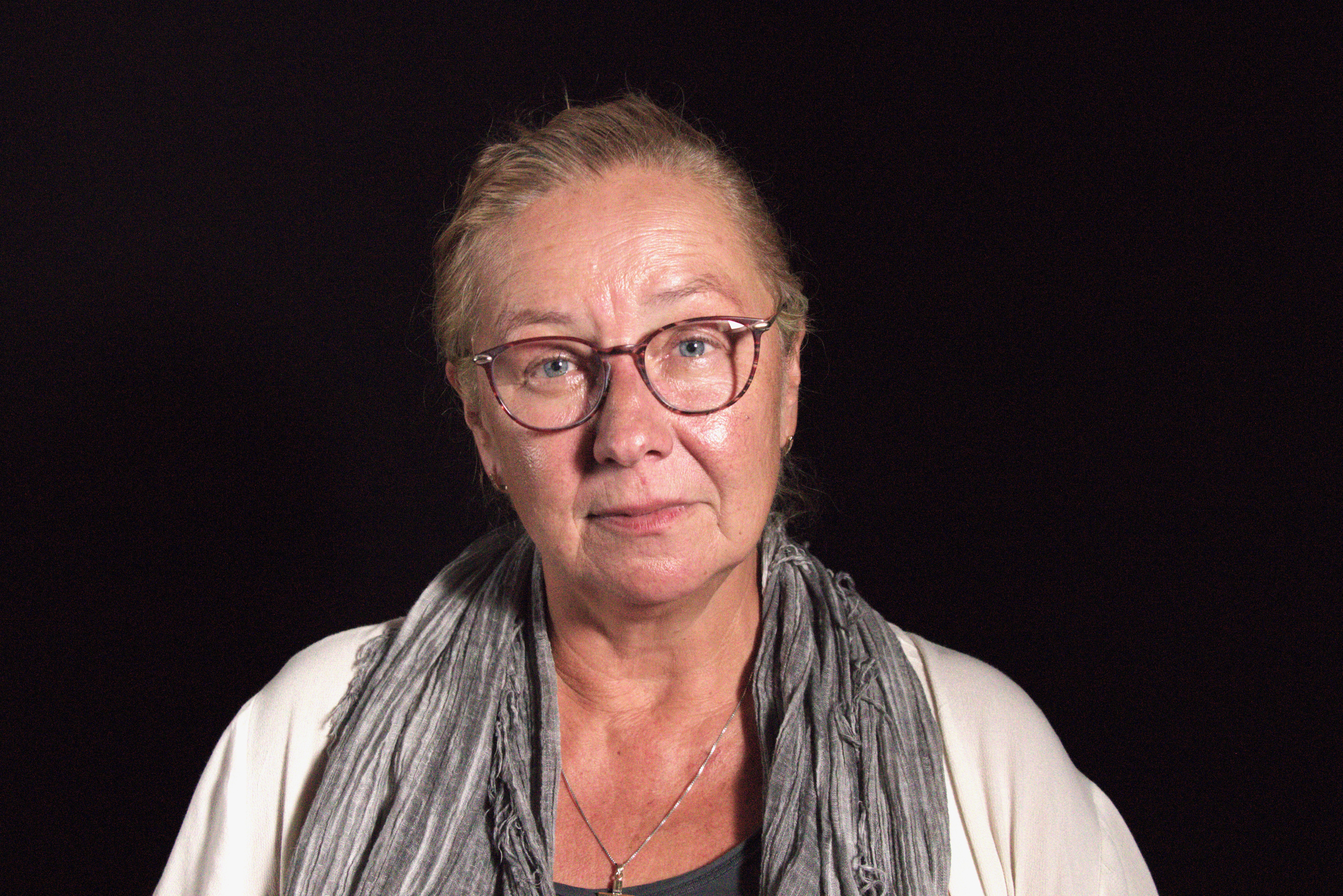
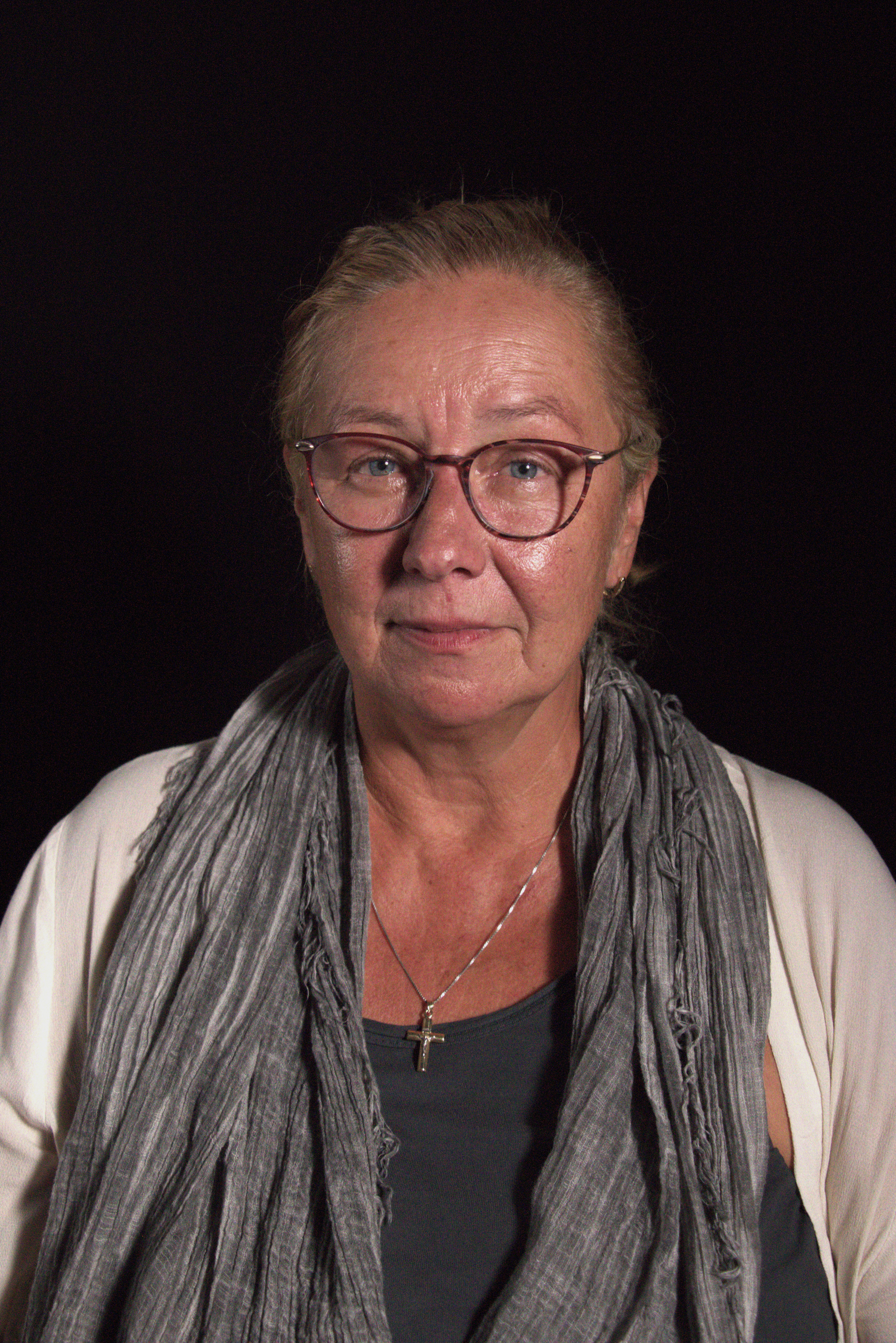
ThLic. Mgr. Lenka Makovcová Demartini , Ph.D.

* 1964

  • "Now I remembered, maybe the Wednesday of that last Palach Week in 1989, it was already there, so they had really started it up... Water cannons were standard, but here I was in the front row, right under the horse, and the ones with the batons and the shields were facing me as they started running. There just happened to be some of those stone pots or whatever, so I still kind of fell, or rather I got knocked over a bit and the others fell down,so they beat them, just pulling them by the hair into the police cars all. You couldn't really take kids there. Again, nothing happened to me. If I didn't mention it last time, still unbelievable to me to this day... I mean, I was covered in blood when I fell, whatever... But I got up, and there was a member of the police above me with a baton outstretched, at which point I expected to get hit in the head. And he just stopped the hand and put it aside. I just don't get it, really, nothing ever happened to me. So I feel sometimes that I'm not really..., like, what am I talking about... But then I was getting on the tram, and I was bleeding, because everybody saw there - it was the upper part of Wenceslas Square - where the trams cross Vodičkova Street... So some of us got on there, and as I got on covered in blood, an old lady in her nineties stood up and let me sit down and said: "Children, I'm grateful to you. I'm too old for this, but I would go with you.'"

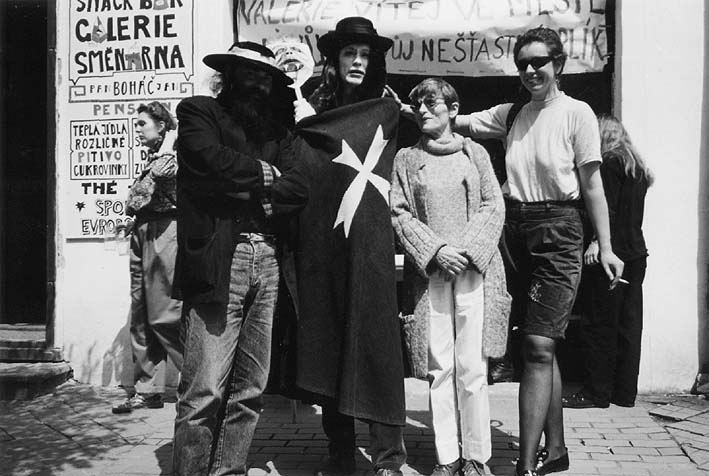
  • "We arrived at the Archbishopric in this group, announced for a visit, with the understanding, of course, that it was Archbishop's Palace utterly full of agents. So the moment we were let in, the Cardinal just smiled and with a slight gesture across his face - like he put his hands over his mouth, not quite, but a hint - and turned up - I don't know if he turned it up or turned it on - the radio, I don't remember, but in any case the radio must have been playing, because otherwise of course there were wiretaps everywhere. Well, then, you've presented what we're coming up with, that we want a blessing - we didn't phrase it directly that way, that we want to introduce him to the program of the Czech Children group, and now we started the reading. And indeed the reading of the manifesto, where 'the king is the only one, the kingdom is sacred...' - it seems to be a completely Catholic text. So you could see in the Cardinal that at first he thought that he had some Catholic group of young believers who..., so he was like really smiling beautifully, and so about halfway through when it started to break down: 'the return of the nobility and the religious orders and the religious orders, he understood that it was like seriously meant that the kingdom - was the kingdom. So that's when he got a little, I can't say sad, but he got serious, let's say. I don't know what his emotion was, but this change was noticeable. Of course, nevertheless, my colleague Karel Tlustý read it, and he read it with such dignity that I saw that the Cardinal had again connected himself to listen attentively to the end of the reading of the manifesto. And then he commented something to the effect that, of course, the king is the only one and so on, but you could see that he was also confused, that he didn't quite know what to make of it. But basically I think he saw a kind of determination behind it all, or I don't know how to put it, but the sympathies were definitely there. Anyway, the ending was impressive, because he gave us the blessing, including that, while saying goodbye, as I remembered from the films, you kiss the ring to the prelates. So I thought, 'I should probably kiss the ring!' But I actually ended up doing it, and at that moment - I don't want to sound pathetic again - but suddenly it just sort of dawned on me, and from then on it's always there - we're really the Czech Children group - the whole program got a real blessing from the Czech Primate."

  • "As I was talking to American, or some foreign students, in English in Old Town Square, and thinking that I was completely safe, because when I speak English, nobody understands me, and somehow the regime here - because they asked how it was here, so I said it as it really was. I was saying that in many ways it didn't compare with the totalitarian regimes of all of them, like Nazism and so on. Well, two random witnesses, the city court recorders, heard me, turned me in, and then the police arrived, took me to Bartolomějská Street, and the questioning began there. Then there were further problems, I'll cut it short, so much so that the result was a charge of subversion of the Republic and defamation of its socialist leader, or whatever it was, those sections where the penalty was two to three years in prison. And in fact, there followed afterwards, the next day, for about ten or twelve hours, an interrogation, the purpose of which was to get me to cooperate. And even though I wasn't physically directly - like they would beat me or anything - but they were kind of quite... Basically, if someone suggests that they're going to pull a chair out from under you or that they're going to hit you and then they don't, it almost doesn't matter whether they did it or not. But this was just kind of teasing. Otherwise, there was a bad cop and a good cop... So the bad cop would tell me like, I have a child and I wouldn't want it taken away from me or God forbid something should happen to it, and so on. I thought that was like something out of a film. Then, that - of course - I'm a student and it would be a shame to be expelled, it was really quite nasty. And it was only then that I realised what those - this was still nothing - what those who really bothered the regime, who really were tortured and so on, must have experienced. So that was really something, because even that little bit relatively, what was happening to me there at that point was a terrible thing, and basically, I was this close to really signing it for them at one point. Especially when they were focusing on taking my daughter away from me, or that something might happen to her. That's when you believe it."

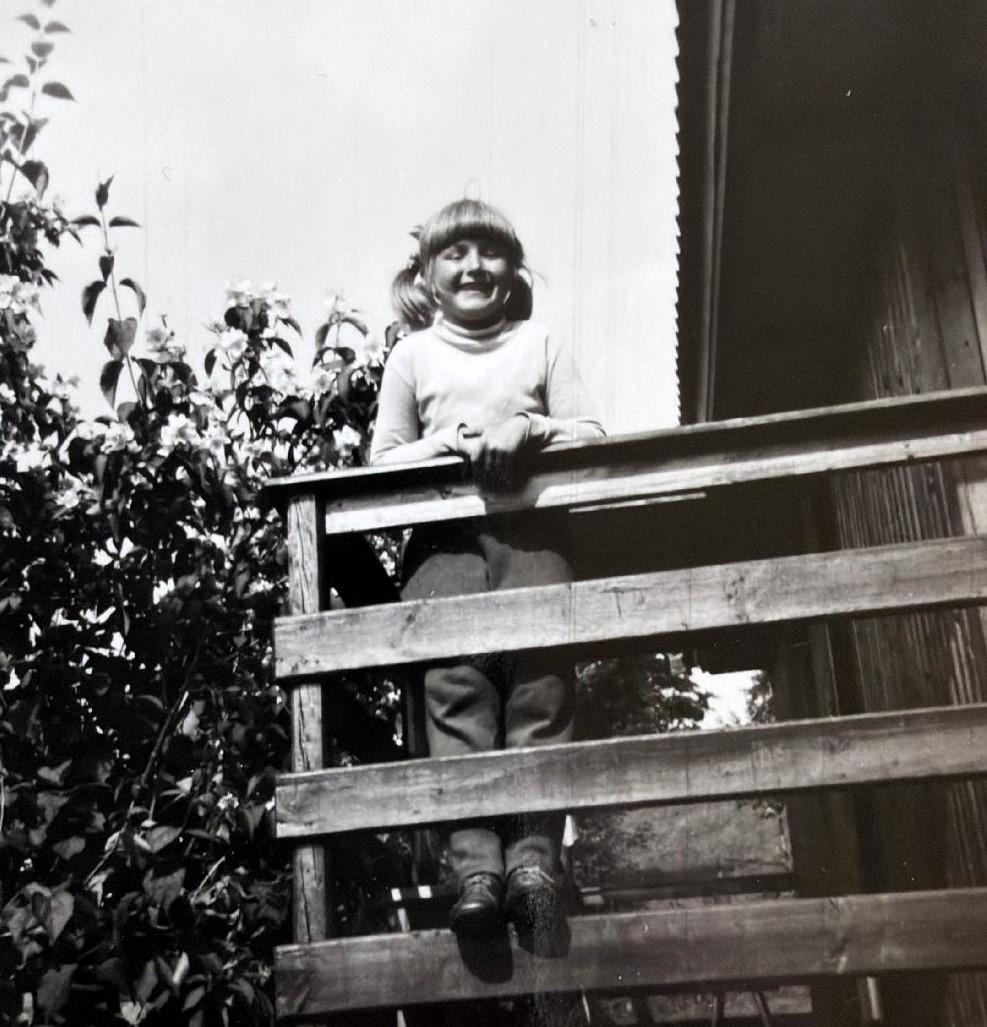
  • "In the third grade, I think, it wasn't until my dad mentioned it to me. Even my grandmother - my father's mother, originally Matilda von Bayer Demartini, so even she didn't want to tell me much about it. Even, poor thing, she endured patiently when I bought her 'Live Flowers' - a terrible perfume beyond belief - the older people remember, and it must have been terrible for her when I gave her such gifts, just her, from a perfume family, but she never told me. It was only afterwards that Daddy gently began to tell me that we used to have this and that. Well, only I - reaction again - the second or third day I packed up and started to look for where Míšeňská was, that's what he told me. Which, again, from Zahradní Město at that time, at my eight years, it wasn't quite..., I didn't even tell anybody where I was going. And I arrived, and there were two ladies walking in that street Míšeňská. And I said, 'Hello, do you know where Mr. Demartini had his factory here?' And the two ladies said, 'Of course, dear. The five houses and the chimney in the middle, that was it.' That's where the actor Štěpánek lived. They said, 'This is where Štěpánek lives, and it was right across the street.' And they said, 'He was a very nice gentleman - they were old ladies then - the employees loved him, he took such good care of them...' It made me so happy to hear - I had been pesruaded by proppaganda that those capitalist businessmen - how they were tormenting the employees, and suddenly here I am hearing firsthand that my grandfather was wonderful and took such good care of the employees, and it made me very happy. And when I left, I stroked one of those houses. And it's the only house we've been able to get now in restitution. So there's a line there that's almost mystical."

  • Full recordings
  • 1

    Praha, 10.07.2025

    (audio)
    duration: 01:25:49
    media recorded in project Stories of the 20th Century TV
  • 2

    Praha, 17.07.2025

    (audio)
    duration: 01:30:54
    media recorded in project Stories of the 20th Century TV
Full recordings are available only for logged users.

I am grateful for the opportunity to experience it and to have such people around me
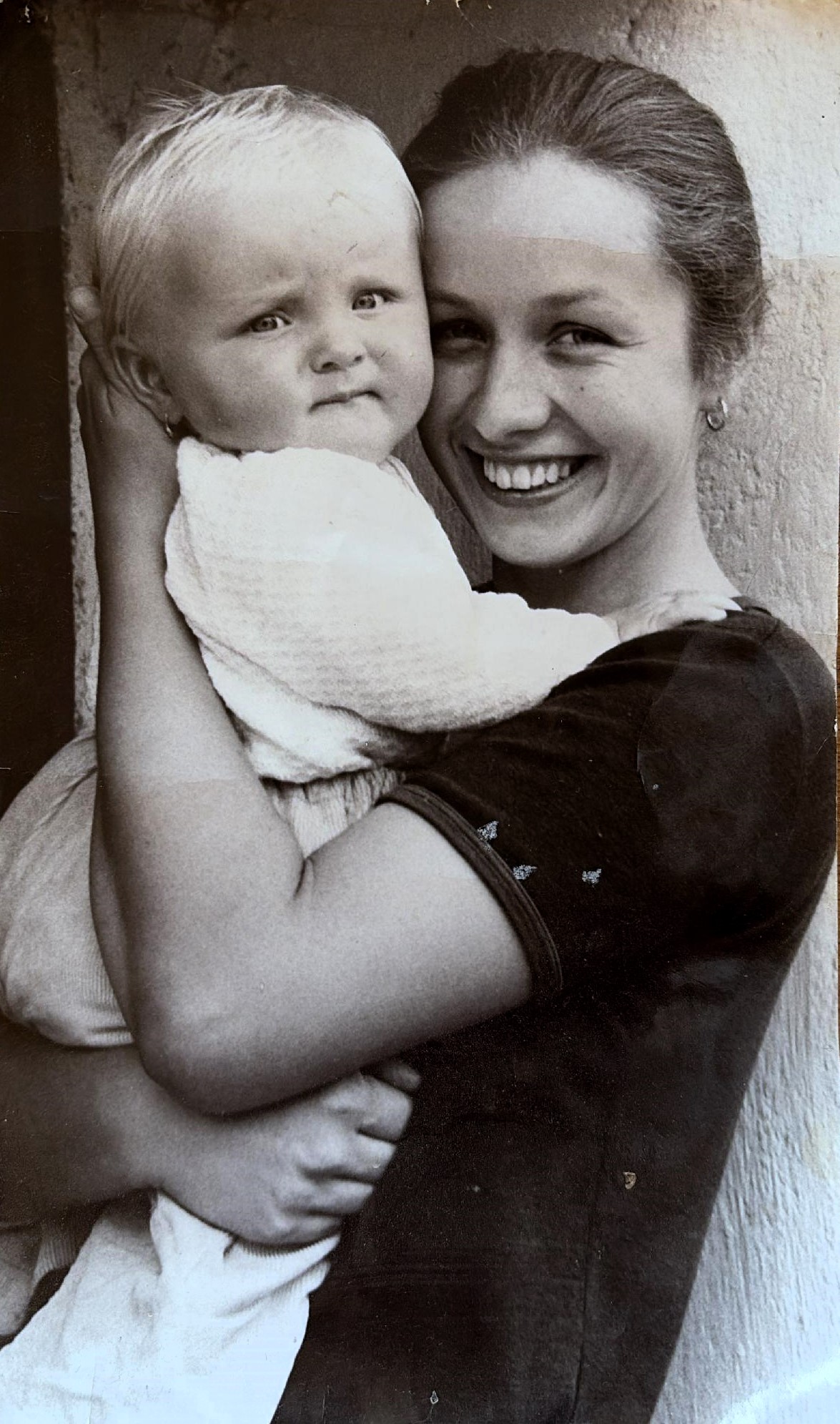
Lenka Makovcova Demartini with her daughter Sofia (b. 1987)
photo: Witness´s archive

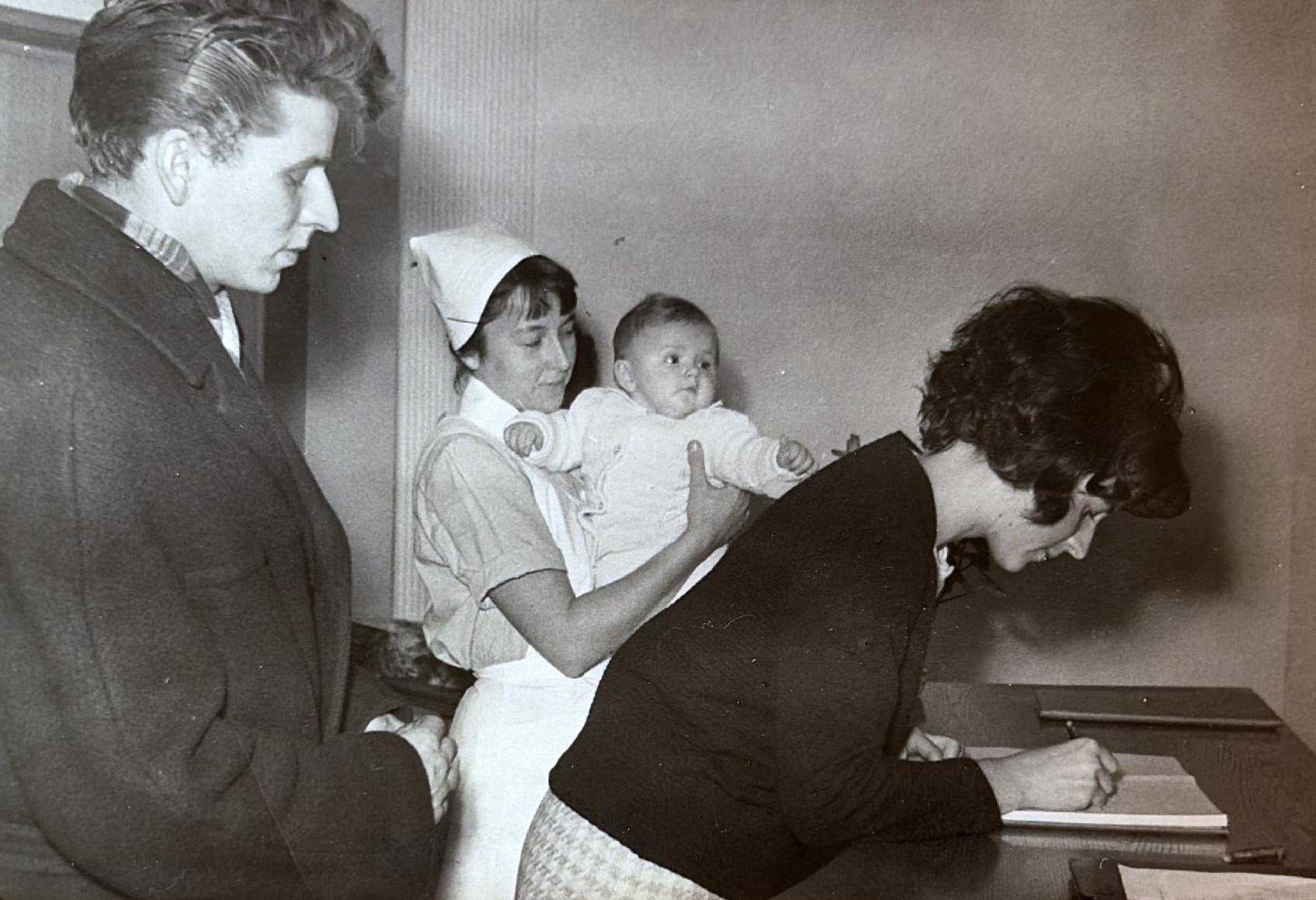
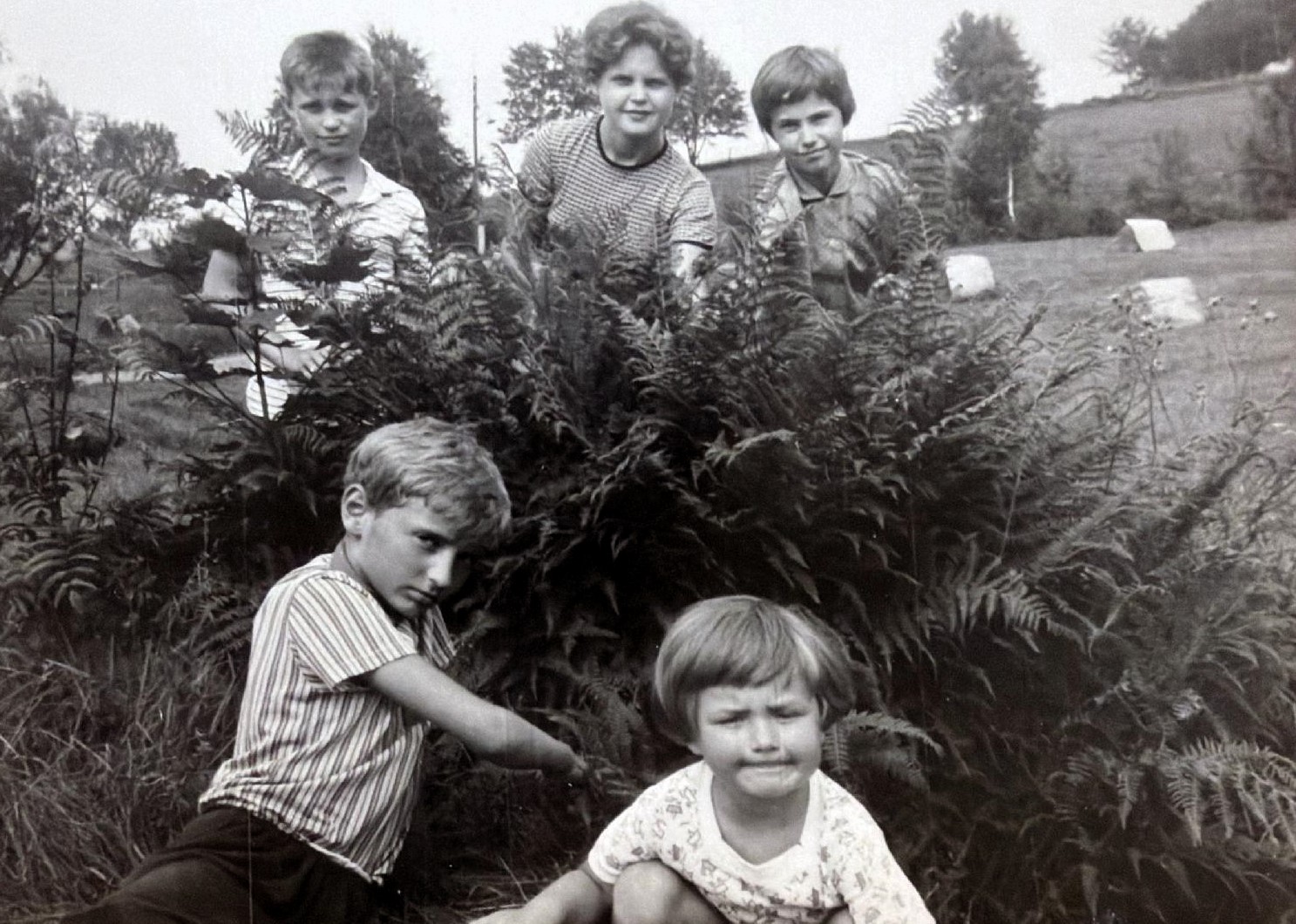
Lenka Makovcová Demartini was born on 30 April 1964 in Prague, into a family with a long and famous tradition - producers and exclusive suppliers of soaps and perfumes for the imperial court. After finishing primary school, she entered grammar school in Strašnice, where she showed her attitude towards the communist regime by permanent rebelliousness. After her graduation exam, she worked briefly in the broadcasting department of Czechoslovak Television and then continued her English and Czech studies at the Faculty of Arts of Charles University. In 1985, after a conversation with English-speaking tourists, she was subjected to interrogation in Bartolomějská Street, during which State Security threatened her with an unconditional sentence and with taking her child away for allegedly subverting the republic and defaming a socialist leader. In the mid-1980s, Lenka Demartini became part of the opposition community around Petr Placák. In 1988 she joined the independent initiative Czech Children, with which she participated in spreading of samizdat and independent activities. In January 1989, she was a direct participant in the demonstrations during Palach Week. After the Velvet Revolution, she took up English and American Studies at the Faculty of Arts of Charles University and later theology at the Catholic Theological Faculty of Charles University, where she successfully passed the state doctoral exam in 2022. In the same year, she received a Certificate of Participation in Resistance and Resistance against Communism from the Minister of Defence. In 2025 she lived and worked in Prague.