“I remember the first day, March 15, 1939, when the Germans came. My father was working on the railway since he was thirty-seven years old. He went to work and came home and said, 'Boys, when you wake up, German soldiers will be here. Not that you misbehave to them.' We waited until it dawned, because he was walking from Perknov to the railway, he had to walk in the dark, it was still dark in March. And so we woke up, we went to the village square and of course... there were cannons facing a house on the top hill. We looked at them, they had wires stretched to a place where the mill of the Kubeš family was, they had wires stretched to a fixed line so they could make phone calls."
"So he was watching, his task was to watch the control tower, and there were two banners hanging on that tower. One yellow and one red. The first yellow signaled 20 minutes until the bombing raid. And when it was 10 minutes from Brod, the red one was displayed."
"We said goodbye to each other, fifty meters from the boiler room, as you walk down the hill. Everything started shaking... I was like, what's going on... somebody rode by on a bike and said, 'Bombs fell in the park.' I said to myself: 'Oh my God... so this Láďa Beránek saved my life one hundred percent.' And there it killed four boys, they were my classmates."
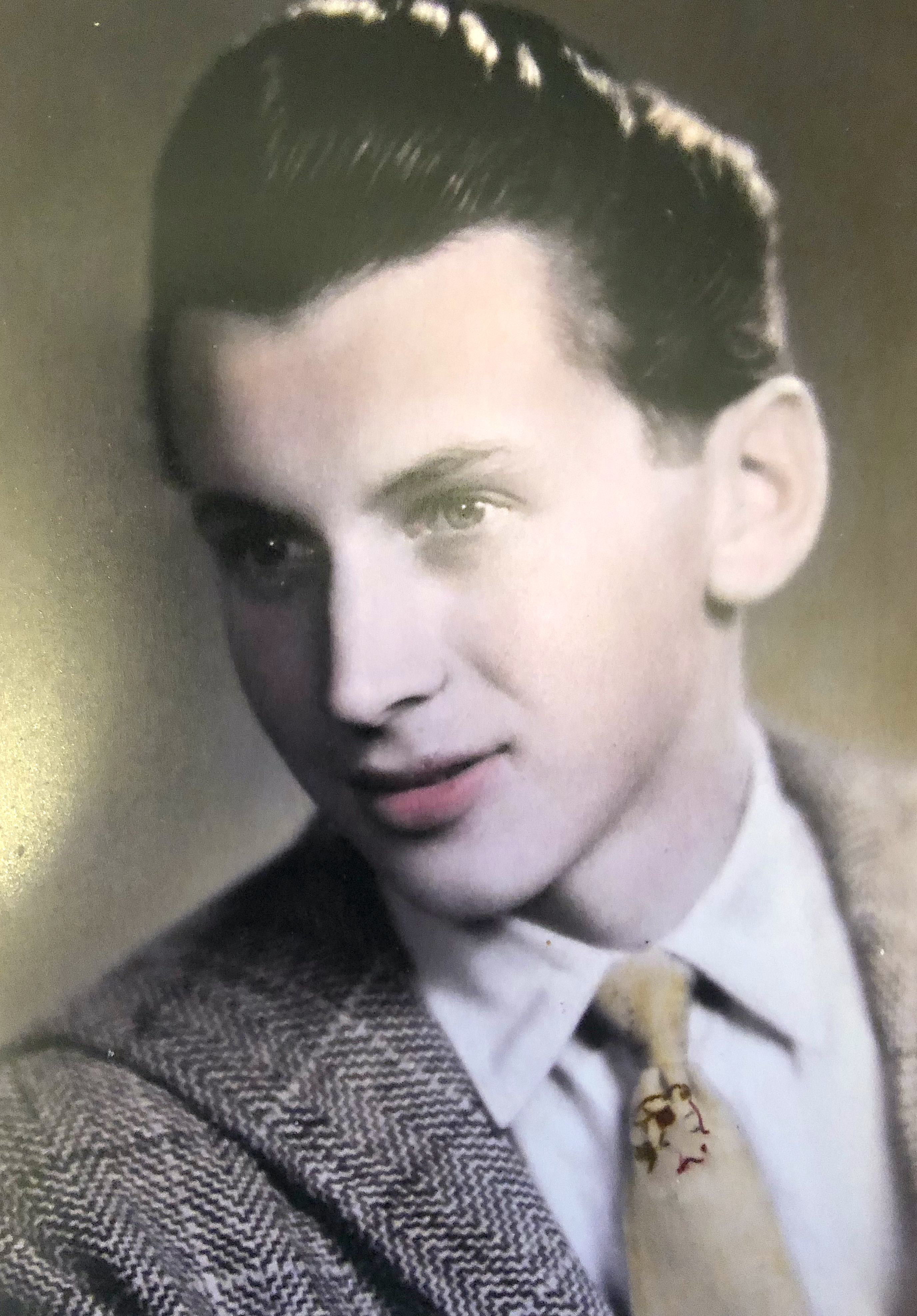
Miroslav Kotlas was born on January 17, 1933 in the village Perknov near Německý (Havlíčkův) Brod. He grew up in the modest circumstances of a working-class family. His father worked as a stonemason during the summer and his mother knitted gloves at home. In September 1939, he entered general school in Brod. Five years later, in November 1944, four of his classmates fell victim to an unfortunate air raid when an allied bomber dropped several aerial bombs on the town. He wanted to warn his classmates, who at that time were transporting old collection paper, of the impending air raid. After the war, he graduated from a carpentry school and, by order of the district national committee, was forced to leave to work in Ostrava. He spent less than a year on the construction site at Klement Gottwald’s Nová huť, and before completing his mandatory military service, he became a civilian employee of the military administration of the Czechoslovak people’s army. From 1955 he worked for the railway administration and joined the Communist Party. A career rise followed; he rose to the position of foreman and later worked as an administrator of the cultural center. After leaving the Communist Party, he worked as a railway worker until his retirement. In January 2023 the witness celebrated his 90th birthday and at the time of filming, in February 2023, he lived in Havlíčkův Brod. He died on December 5, 2025.
In close proximity to the tragedy stands the Rubeš school, back then a general school, which the boys and the witness attended. Havlíčkův Brod, February 2023
In close proximity to the tragedy stands the Rubeš school, back then a general school, which the boys and the witness attended. Havlíčkův Brod, February 2023
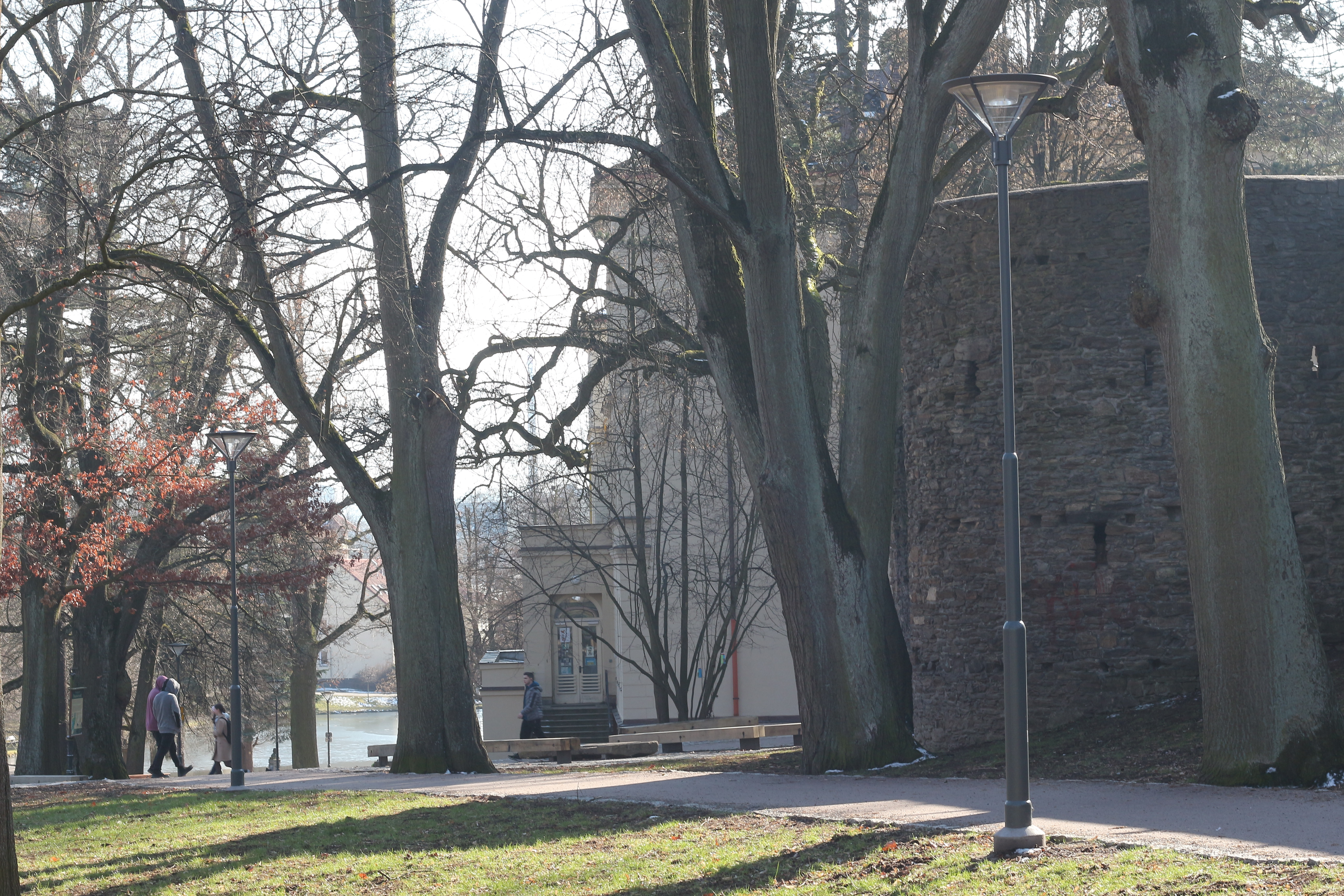
The back part of the Rubeš school building. Some sources of the tragedy state that the pressure wave caused by the explosion shattered 540 window panes in the surrounding area. The sad event is still commemorated in the park today by a memorial plaque and also by an imitation of an aerial bomb. Havlíčkův Brod, February 2023
The back part of the Rubeš school building. Some sources of the tragedy state that the pressure wave caused by the explosion shattered 540 window panes in the surrounding area. The sad event is still commemorated in the park today by a memorial plaque and also by an imitation of an aerial bomb. Havlíčkův Brod, February 2023