Zoltán Demján

* 1955

  • Emil Hasík was in the physical unit and the presidency of JAMES Bratislava and said: Listen, here you have a national representative and one of the best mountaineers in Czechoslovakia, why don't you want to take him? He got tired of climbing two eight-thousanders in one year, that no one had done it in our region, that it was impossible. He somehow talked them into it, so three weeks before leaving, they suddenly called me and asked if I wanted to go to Everest. So I nodded and in the end it worked. But mainly it didn't work, because Juzek died on our descent. There were three leaders. Fero Kele had never been to an eight-thousander in his life before. He had never led such a large expedition, so he had no experience. But he was a party member and knew how to get a stamp for the Slovak Academy of Sciences and he arranged it. He was a diplomat. He knew how to think that we would go to clean Everest, because Everest was sold out at the time. So it was almost impossible to get a permit. But he conjured it up. So, immortal merits. If it weren't for him, there would be no Everest. Ivan Fiala thought up the idea that they would climb the Soviet route, because the Russians had left oxygen bottles there and this generation dared to climb without oxygen. So they wanted to repeat the Soviet route. So he was prepared for this. But when we arrived in Nepal, we found out that the oxygen bottles that the Russians had left there had also been carried away by avalanches from the western crater. The Sherpas had carried it down and were selling it in stores in Kathmandu. So there was no oxygen. So Ivan was only prepared for this route and said that he was not prepared for anything else. Mišo Orolín sacrificed himself in quotes, saying that it was fine as long as he was the sports leader. Because Fero didn't have it in him to lead the expedition, as it were, the Polish route. The preparation was such that we focused only on this and ignored the rest. So, what other routes were, it was known that there was something there. Coincidentally, we had a photo about this big from a Polish magazine in Taternik, where there was the southwest wall and there was a line that said, ah, the Polish route. Four or five hundred meters to the right or left. So we kind of got on the Polish route and climbed the first ascent. Nobody knew about it, that we climbed the first ascent.

  • The meeting that took place in the middle of the Danube, the mayor of Hainburg and the mayor of Bratislava met. On the Austrian side, Popovič made a big heart out of the mesh, so it was a big event. And they told us that the Austrian and Czechoslovak flags should be hung on the Devín Castle Crag, where we used to climb. Of course, the border guards went there and an old man with a whistle and a stick guarded the castle. But when we got on, they could have blown powdered sugar at us. They wouldn't shoot us down. We climbed down and they were waiting for us there with the gas mask, saying they would take us to the interrogation room. But we, the rock is cracked, and we knew that when we climbed down a little and through the crack we crossed to the other side of the massif and came out in the castle and disappeared there. So for the border guards, the mountaineers disappeared, a mystery. But that was nonsense. I used to go cycling along Devínska cesta. I remember, once... Of course I didn't wear a bike, but I was in some kind of jersey and I was working on that bike. And now some border guards stopped me there, saying what was I doing there. What, I'm training, right? An ID card! And the classic thirty-fifth, forty-fifth, minus five, as Lasica and Satinský made fun of them. So they took me to some of their interrogation rooms and now they're suffocating me there. After all, I'm a national representative, so I'm training here, so don't mess around. And in which club? Normally they called JAMES Bratislava and they had to pretend that yes, a certain Zolo Demiján is our member. So bitterly, they hardly let me go. Well, but that's how they approached us to hang those flags there. The Austrians supplied the flag, of course. But no one in Bratislava had such a flag. So my ex-wife sewed all night. It's not hard to sew the Czechoslovak flag. She sewed the five-meter or how many meters long flag at night. We arrived early, yes, it was sometime in November, but it was cold, freezing, so we arrived, we rappelled, we hung the flags and there was some guy under the castle. It was cold, so we went, we had a drink with some tea. We also put on the other leg so that we wouldn't limp. So we were so brave. But the curtain fell, so what are those wires for? So we went to our Avia Furgon, we took out the pliers we had and we cut the wires. Suddenly some gasman flies in there, some second lieutenant flies out, or I don't know what, he started yelling at us. Red as a pepper, he jumped up there about twenty meters. We were a little bit on edge, we weren't drunk, but since we were brave, we sent him to warm countries. You didn't register, you idiot, that you were finished! That there was freedom. Fortunately, he was helpless, because he didn't know what to do, so he disappeared. A moment later, a major came along, and he was already jumping two meters. As small as a red pepper. That's how we got it. But fortunately, time had already passed and crowds of people were already coming, because they saw the torn fence there, so they flocked to the Danube, that is, to the confluence of the Danube and the Morava. It was a great experience that we could get behind the Iron Curtain. At that time, the magazine Verejnosť was published and I think there is a photo on the cover of the first issue that was ever published. There I was, I was wearing an expedition cap, where they had a tricolor, a blue cap with a white-red and blue tricolor.

  • Because they were coming from all the friendly countries, these occupiers. So they were really coming ten meters from our tent. And it started with a soldier suddenly appearing there, standing there. It was at night and my father probably went to pee or something, he just came out of the tent and came back and he was completely terrified, because the guy with the machine gun was looking at him, saying, "This is the forest." He knew what he was talking about. He remembered it from the war, when the Russians came. It was clear to him that he had never learned Russian in school, but that they were Russians with machine guns. So we were lurking there, like a louse under a bush. And then he came after a few hours, so they were some patrols that they had sent out there. All night. Those were terrible sounds, because they had powerful engines and when they had to get out of the water, there was a steeper bank, so when they came out, it was roaring all night. Coincidentally, my father's friend was with us at the time, also a dentist. Mr. Rosina, who was in the Soviet Union as part of some liberation during the Second World War. He had the rank of captain of the Soviet army. As a result, he spoke fluent Russian. The father was really scared, because he had small children there. Mr. Rosina, he didn't have children and I don't remember if he was there alone or with his wife. As a former soldier, he just walked there. Since he was like a scythe, and there were ordinary soldiers standing there, they immediately asked him what was going on here, what was being done here? and he was like: Nothing, nothing, this is so much training! So just some kind of maneuvers. They probably didn't know at all, those ordinary soldiers, what was going on. How, we were crossing some water and what. And then it turned out that what was going on. We had a transistor with us. I know that it was a problem to get to Bratislava after that. The vacation ended because the psyche was what it was. We packed up the tents. It was still part of the romance. It's like terrible things, but there are always beautiful things. However, when we got to Klúčovec with that little truck, you couldn't get straight to the water. There was a broken road and it was such a small car that it would fit there. A classic horse-drawn carriage. Mr. Futó's name was, in Hungarian, futó, a runner, with a hat like that, a scoundrel always in his mouth, a mustache. Like out of a book, a Hungarian coachman. He took us with that horse-drawn carriage to the water. And Futó came to pick us up and then took us to the village. There a family took us in. Somehow my father arranged it, so we lived with that family after that. I know they had tomatoes and peppers in the garden there. So we children didn't notice it very much, but I know that the parents were already scared that there would be a war or something.

  • "We somehow earned money for it, because we didn't have any subsidies. Only Kerametal, where we washed windows, paid us for washing windows and gave us ten thousand crowns for having a big Kerametal sign above the cabin. Igor Junas, we later sat together in the Bratislava Chamber of Commerce, so he was rooting for us. Plus, we toured the factories. I had an Embéčka 1000 at the time, which I also went to Šúr with. Jože Just and Stano Marton were in charge of clothing and equipment. Someone else was in charge of the kitchen. So I drove about ten thousand kilometers at that time. Which was not a lot on the roads of that time. We really traveled from Decín to, say, Ružomberok. We probably didn't have to go any further east. First of all, we had to go to the factories to see the general directors and we had flags and posters made. For example, they gave us. in Cífer we got down, in Dunajská Streda, powdered milk. Somewhere in the Czech Republic, I don't remember the place where they made nylon, we got nylon. The Decín I mentioned, some mountaineer Jarda Uher worked there, so they made duralumin tubes for us, which they somehow made opaque. Which is now a complete standard in every tent in Decathlon. You can get a tent like that for a few bucks, but back then it was an absolute rarity. There were only classic A-shaped tents and we wanted dome-shaped tents, so we needed the reinforcement that the tent could be stretched on. It had to be a duralumin tube that could be bent and was not straight, because before they were thick and heavy. This was a thin tube, so they made it for us there. We had a friend, Wolfi Ranfl, who went to Slovakia, chased girls there and was with us on one expedition. He brought us a Japanese Sumitomo tent from Austria, because at that time this was still a novelty even in the West. He gave us a tent in Ružomberok "They took it apart and sewed it for us from nylon accordingly. We put the tubes in there. Now, from the nylon and down that we had from Cífer, they made us down windbreakers and sleeping bags. We gathered the whole thing as bedding for the expedition."

  • Full recordings
  • 1

    Bratislava , 27.08.2025

    (audio)
    duration: 02:16:26
    media recorded in project Stories of the 20th century
Full recordings are available only for logged users.

The climbing world was such an island of freedom
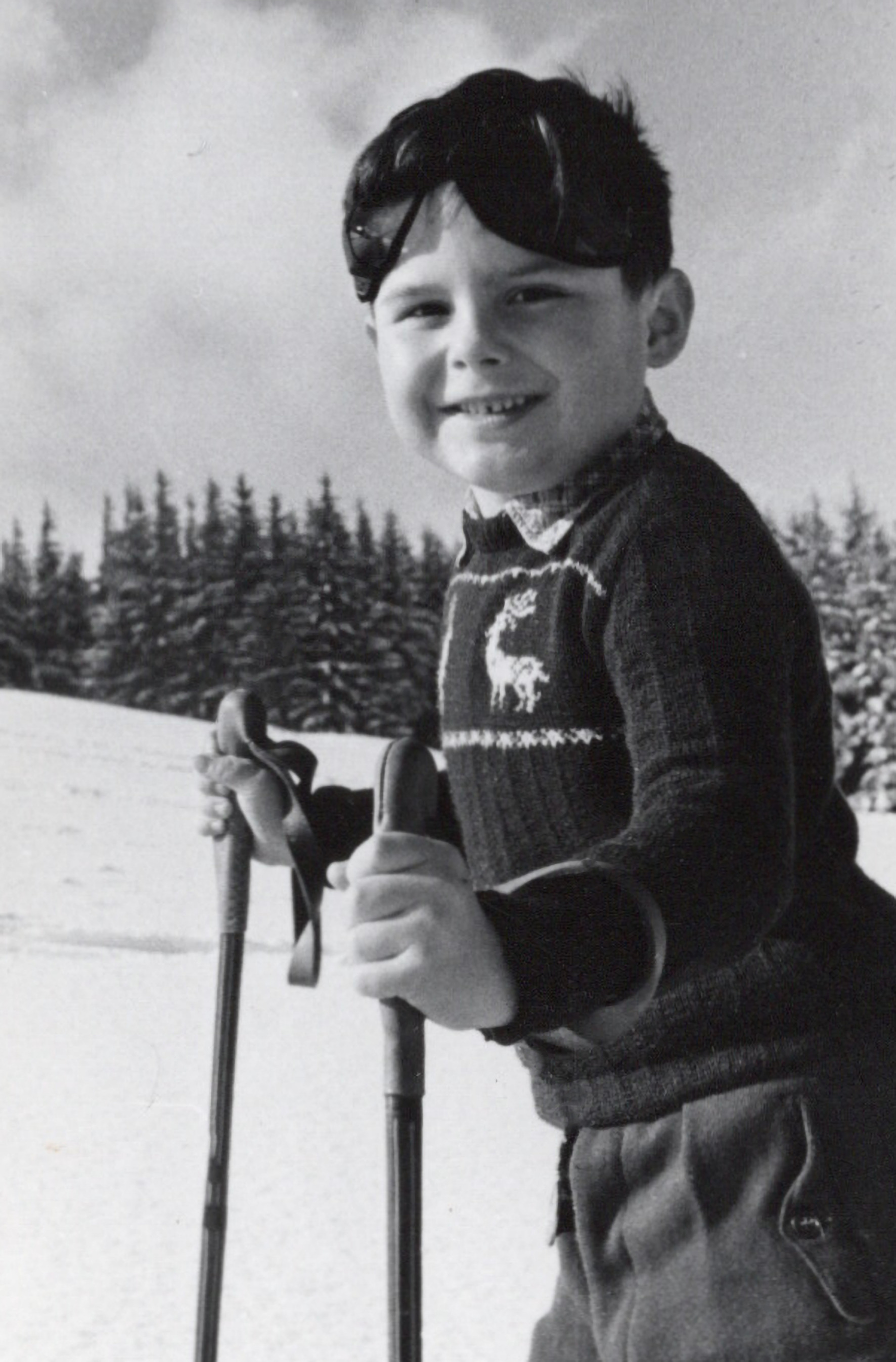
Mikulčin vrch 1960, Biele Karpaty
photo: archív pamätníka

He was born in 1955 in Bratislava. His father Zoltán Demján was a dentist and his mother a teacher of German and English at the Faculty of Arts, Comenius University. He graduated from the gymnasium on Vazovová Street in Bratislava. In addition to his studies, he was involved in speed canoeing at Comenius University. After the club merged with Tatran Bratislava, he was fired. Therefore, he began to devote himself to mountaineering. His friend Peter Hargaš took him on his first ascent to Plavecké podhradie. He arrived in the High Tatras in 1974. He graduated from the Faculty of Natural Sciences, Comenius University in Bratislava, majoring in Engineering Geology and Hydrogeology, where he had an individual study plan. He gradually became a methodologist at JAMES Bratislava and was in charge of education for ten years. He completed a first-class instructor course. He completed his compulsory military service in Bratislava, because he had been married since 1977 with two children. In 1977, his sister emigrated to Germany. After graduating, he joined the State Nature Conservation in Pezinok. Later, he worked for ten years in the Radošinka Mountaineering Association as a high-altitude specialist. For ten years, he was a Czechoslovak representative in mountaineering and held a brown passport. After the Tatras, he began climbing with Slovak climbers in the winter Alps, which was a preparation for higher peaks. He was in the Himalayas 25 times and climbed three eight-thousanders. In 1984, he climbed Lhoca Šar (8383 m, a secondary independent peak of Lhoca), Mt. Everest (8848 m) with Jozef Psotko, who died on the descent, and Sherpa Ang Rit. Finally, in 1988, he made the first ascent of Dhaulagiri (8167 m) with two Kazakhs, awarded as the UIAA world ascent of the year. When the Iron Curtain fell, he cut barbed wire on Devín. He gradually became the president of the Czechoslovak Mountaineering Association (1990 – 1992), a member of the Executive Committee of the UIAA - International Mountaineering Federation (1992 – 2000), a member of the UIAA Presidency (2000 - 2006). He also has awards such as Merited Master of Sports, the JAMES Golden Badge, the Best Athlete of the Czechoslovak Socialist Republic - 5th place, 1984, and the first ascent of Dhaulagiri, awarded as the UIAA World Ascent of the Year. He worked for 18 years at Holcim, where he first joined as a human resources specialist, later as CEO and finally as Chairman of the Board. In this position, he was responsible for over 1 000 employees and for the management of 7 companies in Slovakia, Austria and Poland. After leaving Holcim, he became a coach and accompanied people to the Himalayas for ten years. He is also the laureate of the Slovak Prize for Human Resources Management and Development in 2003. Currently, he sees his mission in passing on his experience to other managers and leaders, and also in helping them find balance in their lives. In his free time, he is intensely engaged in landscape photography, occasionally lectures and coaches, goes to the mountains alone and only does what he enjoys. He is married for the second time. He lives in Podkylava.