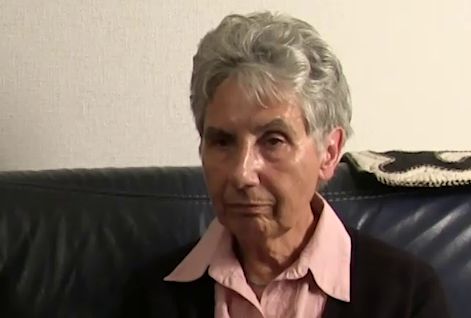
Jiřina Bystrická

* 1936

  • "We understood right away that we could not go back. As long as communism is there, we will not return [to Czechoslovakia]. In the early 1980s, one was allowed to ask for a pardon. Emigrants were allowed to ask for the return of Czechoslovak citizenship or to be stripped of their citizenship. And the condition was to ask the president for a pardon for having been convicted [of illegally leaving the republic]. We were convicted, Jirka was sentenced to two years in prison and I was sentenced to 18 months. But they didn't even tell us. They only told my sister. So we never officially had it in our hands that we had been sentenced like that. We would never have asked for pardon because we hadn't done anything to have to ask for pardon, so morally that option didn't exist for us at all. Many of those emigrants did it, but we didn't. We chose to live our lives, living our lives in Czech at home and French outside. We had friends from both sides and we used to buy the České slovo magazine, which was published in Munich. We used to buy the magazine Západ, Svědectví. We used to buy Zpravodaj from Switzerland, which had interesting things about Switzerland. We looked for Sokol. We thought there must be a Sokol branch here, but we couldn't find the address in any phone book."

  • "At school one afternoon, in about the second class of the municipal school, the biggest communist - a teacher who was known to be a communist, his name was Šachl. He came to persuade us to join Pioneer. Nobody applied, and he said, 'I have enough time, I'll wait here until you apply. And until you sign up, you're not going home.' So we sat, we sat, we stuck it out for about an hour, then we all signed up and went home. We got red scarfs and we became Pioneer members. But it wasn't so bad, because it had nothing to do with politics. We had several groups in the class and we would go in groups of five or six people, like on a bike, on a trip, and then we'd say, 'We did a Pioneer trip.' And I remember one classmate singing jazz songs in the fields while he was doing it, hey, bab, riba, hey, bab, riba, the kind of songs he couldn't afford to do at school. So we didn't mind Pioneer so much. But we did mind when the trial of Milada Horáková was going on, this teacher Šachl called us into the gym. I think there were two parallel classes, but I don't know exactly if there were more. He informed us that Milada Horáková was a traitor, that she deserved the death penalty, and that we should confirm that we agreed. That we vote that she was rightly convicted, that we really want her to be executed. And we didn't want to, we didn't want to. And then we all put our hands up because we said ourselves, 'We're going to want to go to grammar school and he's not going to let us go,' so that was kind of the worst memory."

  • "We went to the Czechoslovak Church parish house on Wednesday, 2 May 1945, to get our homework. Then she came back and said: 'Children, the war is over, go home, the war is over.' We ran to the square with Aunt Ola, each of us with a tricolour ribbon on our coat, and there everyone was rejoicing. Suddenly two cars of Germans, German soldiers, appeared, and people ran home. They were pulling down their flags, because they had already put up Czechoslovak flags somewhere, and now everybody was terribly afraid, so they ran home, and it turned out that it was a false alarm, that the war wasn't over yet. And then three days later the revolution broke out in Prague and the war ended on 9 May."

  • Full recordings
  • 1

    12.12.2012

    (audio)
    duration: 02:13:11
    media recorded in project Collection of interviews of the ÚSTR
  • 2

    Gif-sur-Yvette, 07.08.2025

    (audio)
    duration: 22:08
    media recorded in project Stories of the 20th Century TV
  • 3

    Gif-sur-Yvette, 07.08.2025

    (audio)
    duration: 01:07:01
    media recorded in project Stories of the 20th Century TV
  • 4

    Gif-sur-Yvette, 07.08.2025

    (audio)
    duration: 23:09
    media recorded in project Stories of the 20th Century TV
  • 5

    Gif-sur-Yvette, 07.08.2025

    (audio)
    duration: 23:44
    media recorded in project Stories of the 20th Century TV
Full recordings are available only for logged users.

We refused to ask Husák for a pardon because we had done nothing
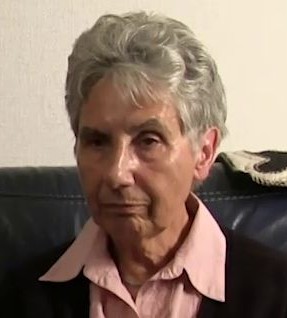
Jiřina Bystrická, 2012
photo: Institute for the Study of Totalitarian Regimes (ÚSTR)

Jiřina Bystrická was born on 16 July 1936 in Poděbrady into the family of architect Vojtěch Kerhart, who was a legionary in Russia during the First World War. Her mother Marie, née Švadlenková, died shortly after Jiřina was born. After the Second World War, her father married his widowed sister-in-law, whose husband died in a concentration camp. In 1947 Jiřina entered the primary school of the newly founded Jiří of Poděbrady College; however, after the communist reform of education she had to leave the school and return to primary school. In the 1950s she studied philology at Charles University in Prague, majoring in Russian and Bulgarian. In Czechoslovakia, she first made her living as an interpreter and guide, travelling with Czechoslovak tourists to Bulgaria and the Soviet Union. In 1961 she married mathematician and physicist Jiří Bystrický. From 1962-1964 they lived in the scientific town of Dubna near Moscow, where Jiří worked on the development of computers for nuclear research. Their eldest son Pavel was born there. In 1968, Jiří was invited to spend a year at the research centre in Saclay near Paris. They left in the spring of 1969. Czechoslovakia allowed them to extend their stay legally until the end of 1970, after which they decided to emigrate. Initially, Jiřina Bystrická took care of the children at home, then studied library science in Paris and worked as a librarian in an American school in Saint-Cloud. In 1977 she became actively involved in the activities of the local Sokol. These included regular exercises on the Sokol meadow in Gournay-sur-Marne near Paris, Sokol annual balls and lunches, a programme for children and young people of Czech origin, summer camps, etc. In 1982 she became chief of the Paris Sokol and took part in organising Sokol meetings in France and other countries in Western Europe. In the 1970s and 1980s, Jiřina also accompanied her husband on his scientific internships in Montreal and Los Alamos, New Mexico. Together they raised their sons Pavel and Michal and their daughter Eliška. In 2025, they lived in Gif-sur-Yvette, near Paris.