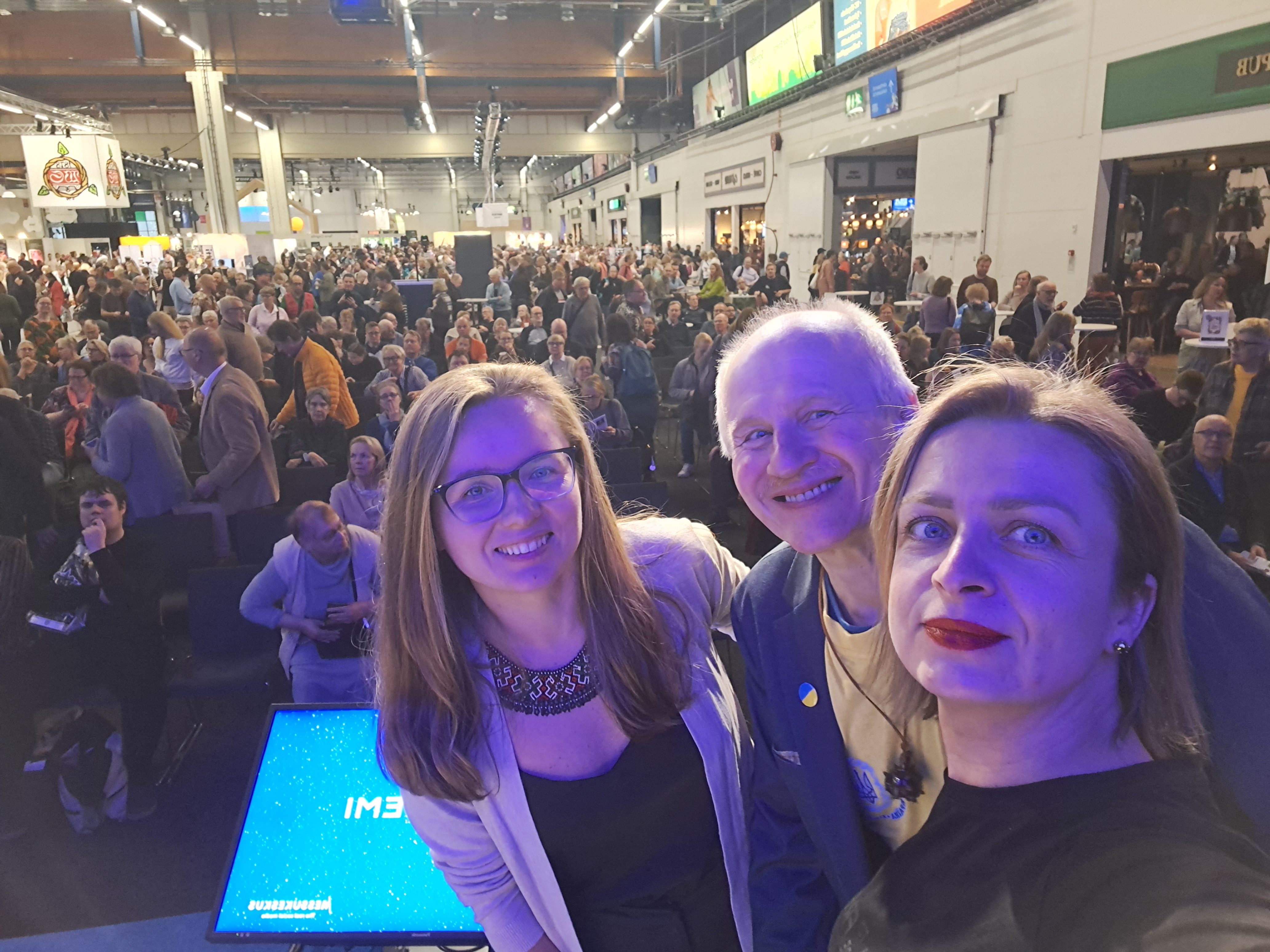
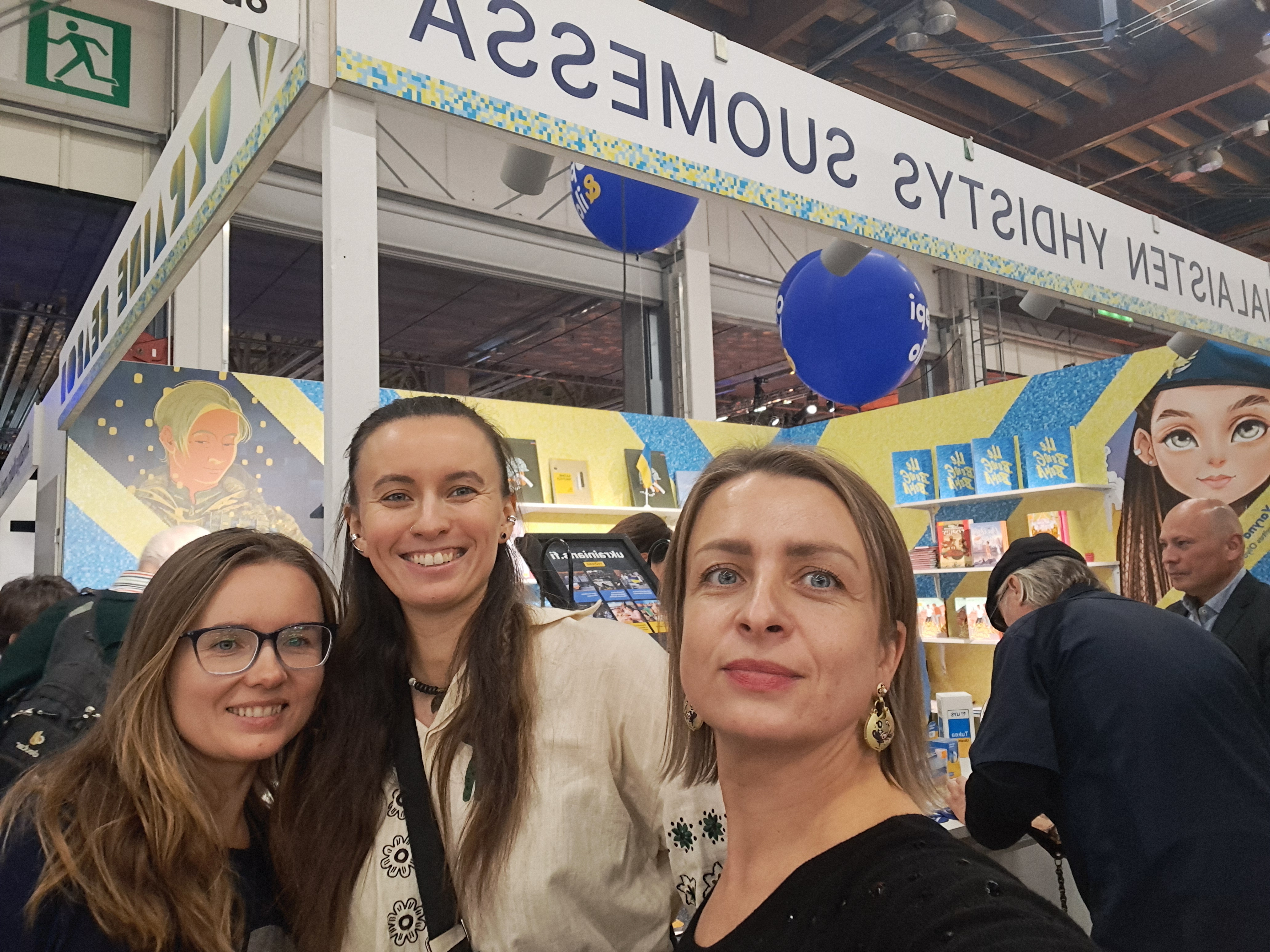
Наталія Терамае Natalia Teramae

* 1980

  • …That I found myself. I found myself and I believe that these ten years of mine abroad (almost eleven), I just haven't fully understood it yet. I think maybe it's like that in the human consciousness, in the psyche, that they need time to accept. Obviously, this experience of mine is important and was needed for something. But I'm still sad that I lost a lot of time. It seems to me that it would have been better at home, so for me now, this is about finding myself. Being abroad gave me a very severe depression. Because it kept getting worse, and worse, and worse, and now for me, this is a recovery and a return of my energy, my acquired extroversion. And for me, it's very important... I also thought about this, isn't it selfish? It's very important to me that my children are Ukrainians. We live in a world where it seems we give freedom. And a teacher at the kindergarten asked me about this, by the way. She said, "Won't you be putting some kind of pressure on them, so to speak?" I said, "It's very important to me that they are Ukrainians." — "But what if they consider themselves Finns?" I said, "They can't be Finns, because they don't have that ethnicity, first of all. And second, they haven't spent enough time..." Why should they be Finns? For what reason? Does our parental identity mean anything then? So they will become Finns because your system wants to make them Finns. And it's a very smart system. That's how it should be. A nation will exist as long as it has a sufficient number of sensible citizens who will defend this nation on various levels. And a child will become whatever they are made to be, no matter what. I had this example, a very cool Ukrainian family, their children are abroad and studying there, and they don't believe there was a Holodomor. They say. "What are you telling us? That didn't happen. Was that a long time ago? It wasn't on Wikipedia, they don't tell us about it in school." You see? This is one well-known example about the Holodomor. This system will make of our children what it needs. And it is important for us, after all, why we have children — to continue ourselves, no matter what. You don't just want to give birth to a flower or something. It is a continuation of us. Why is Russia fighting so hard for children? Why is it taking them from us? Because our children are our future, it's simply a matter of national security. And I am very happy for my children to be here, and as for how long we'll... To be honest, I have very pessimistic expectations, because we see these processes, how things are now with mobilization, with technology, with defense. But I don't know, maybe we'll get lucky, maybe we'll pull through again...

  • No one really believed it, because I was planning to leave every year. First Mark's contract was extended, then I was pregnant. When the child was born, he decided to take parental leave, and they extended it again, then COVID started. And they [the Ukrainian community in Helsinki] were like: "My God, Teramae, you're leaving every year and you still stay here." And I'm like: "No, I'm getting out of here." I think that until the very end, they didn't believe I would just leave. Many people said, "Where are you going? Think about the children. It's dangerous. What will you do there? Here, everything is stable. Where will you work there?" But two Ukrainian women also told me… One said, "That's very good." She's from Kharkiv, she said, "I can't bring myself to do it, because my child reacts very badly to all this, but it's good that you are returning, to set an example for the Finns that our country and we are worth something, that we aren't just some people here, that our territory doesn't exist." And some girls wrote that I was very strong, that it was a big decision, that they would also like to, but can't bring themselves to do it at the moment. There was, in fact, concern in all of this. Concern not about how we will fare here... Again, we understand that when you follow this from a distance, you haven't lived through the experience and you don't know, so it seems, it just gets demonized. When I was already here and living, and my children and husband came several times, he's more or less familiar with this experience — it's clearly scary. It's scary, yeah, so what? It's true. But I just realized that it was now or never. Because my eldest is eleven, he's putting down strong roots, I see that the children are just becoming foreigners, as I had predicted might happen. Because my husband and I talked about this a lot, and I had been thinking about it since my time in the States, because again, America, and he has many friends of different nationalities, and we talked about this, how children want to distance themselves from their parents. In his case, they want to be Americans. They don't want to be Korean, or from wherever, or Jewish. In the same way, I understood that I would simply lose that moment and I wouldn't have a connection with my children, because the children would be foreigners, and I won't become a foreigner. Excuse me, but I just don't see the point in having children if there's no emotional closeness with them. You will be living on different planets.

  • There wasn't that kind of patriotism. I was already dating my first husband, who lived in Kyiv, we lived together. I was in a more international crowd, meaning they were guys of different professions and different nationalities. And we lived in an apartment with [journalist] Ivan Yakovyna. It just so happened that Mark and Ivan were renting an apartment in the Tatarka neighborhood. And Ivan and I had a lot of discussions. Ivan's mother is Russian, his father is Ukrainian. Ivan was working for Lenta.Ru at the time. Ivan is generally such a... I'm saying this in the sense that we didn't notice many threats. There was this creeping... this takeover by Russians. For example, [political technologist Kazbek] Bektursunov, who was at Kommersant, launched this project and then gave an interview to the BBC Ukrainian Service. I even printed out his interview and kept it. He was saying that Ukrainian journalism didn’t exist, that Ukrainian journalists were uneducated, they didn’t go to theaters, they didn’t even know how to use a fork and knife in a restaurant. I read this interview and thought, “How could he... Seems like an idiot has to be shown that he's an idiot.” But it was always like that from their side: they would hire managers from there, producers, they would come and say that you're shit, and then they would come… And I worked in culture. This was especially noticeable with Russian stars. I remember when [Russian actress] Alyona Babenko came, "Oh, what stupid questions, when will this be over?" And you go to the Molodist [film festival], and some Western star is sitting there, and to the most banal question, they say, "My God, what a wonderful question, you are such great journalists." By the way, I should also mention [Russian actress Alla] Demidova. She came to Molodist, Russians were often brought over too, and there was Alla Demidova, our star, too. I don't know why she [was there], there was some press conference with her. And this was already when Putin was in power, by the way. And I asked her, "How do you, as the cultural intelligentsia, resist this?" Because in Ukraine, it's about protests, a protest-oriented layer of society. She really laid into me then, she just lost her temper, saying she wouldn't talk about politics, "culture is beyond politics," and that she had done enough to have things to talk about with her other than politics. And I remember that my colleagues looked at me then like, "What are you doing?" But these were all, let's say, warning signs that we most likely ignored, where it was all heading. This language from Russia, Russian, had a devaluing effect: that you are not educated enough, you are a subpeople — this "failed state" narrative that they later promoted very heavily.

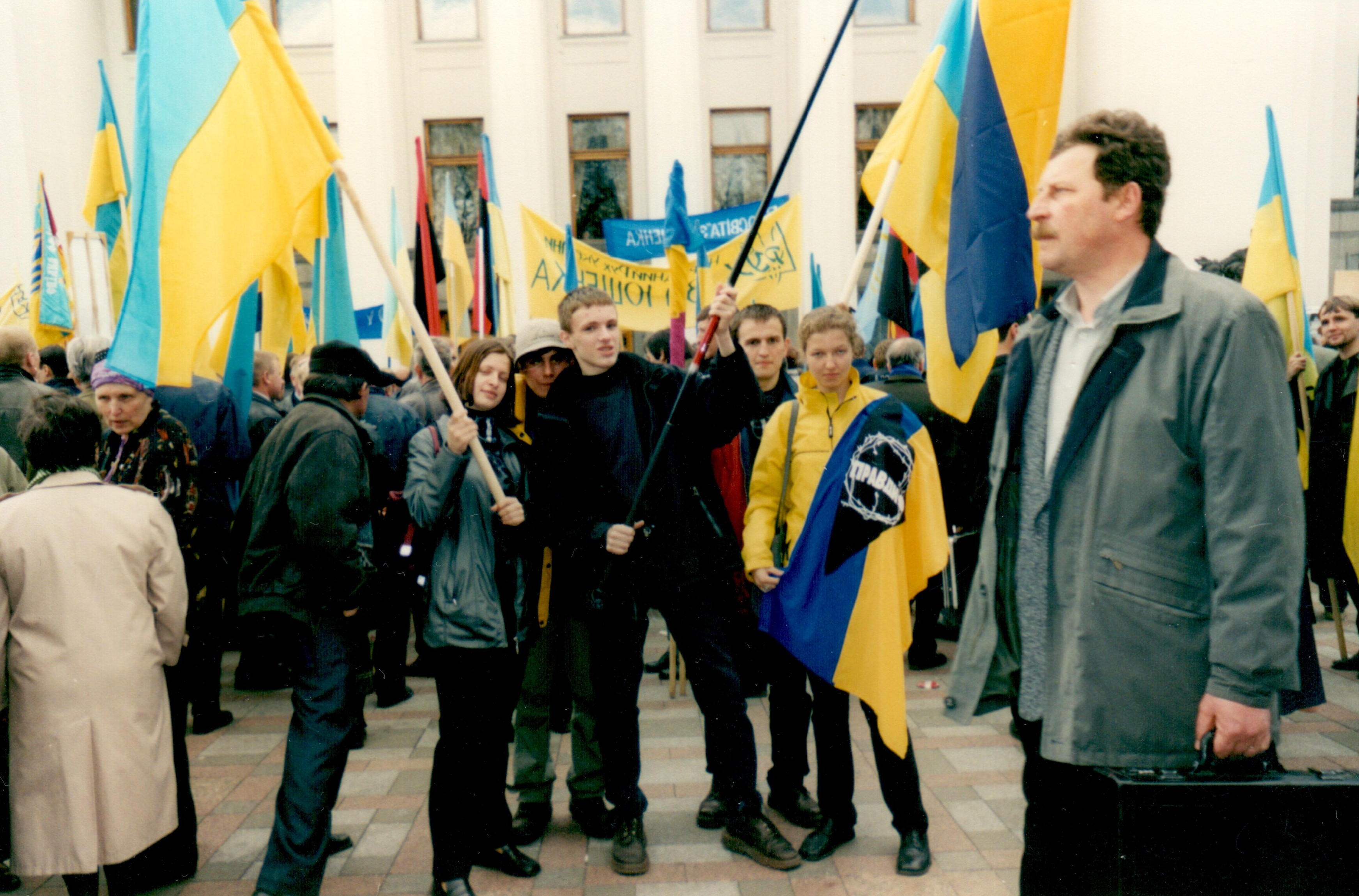
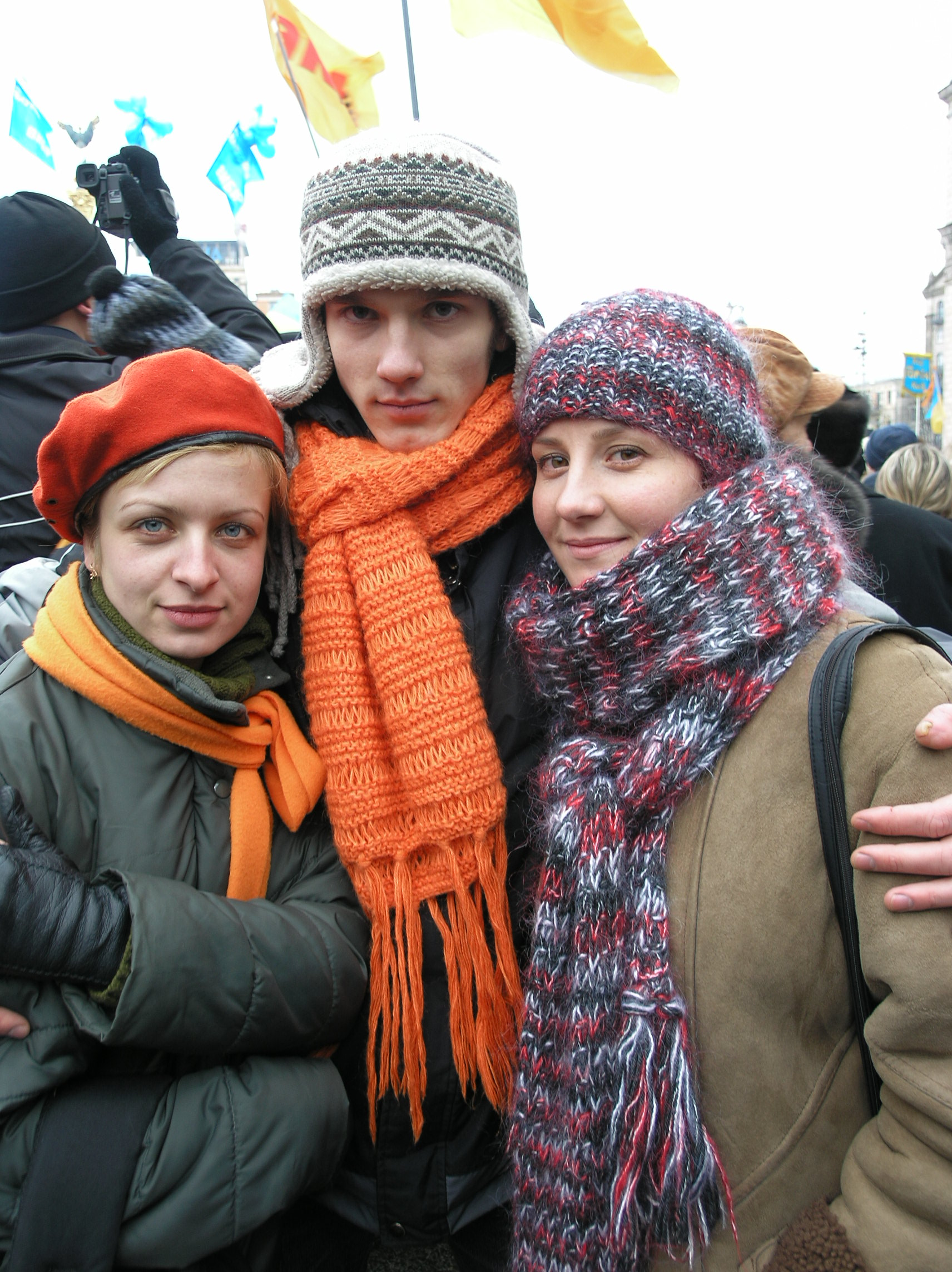
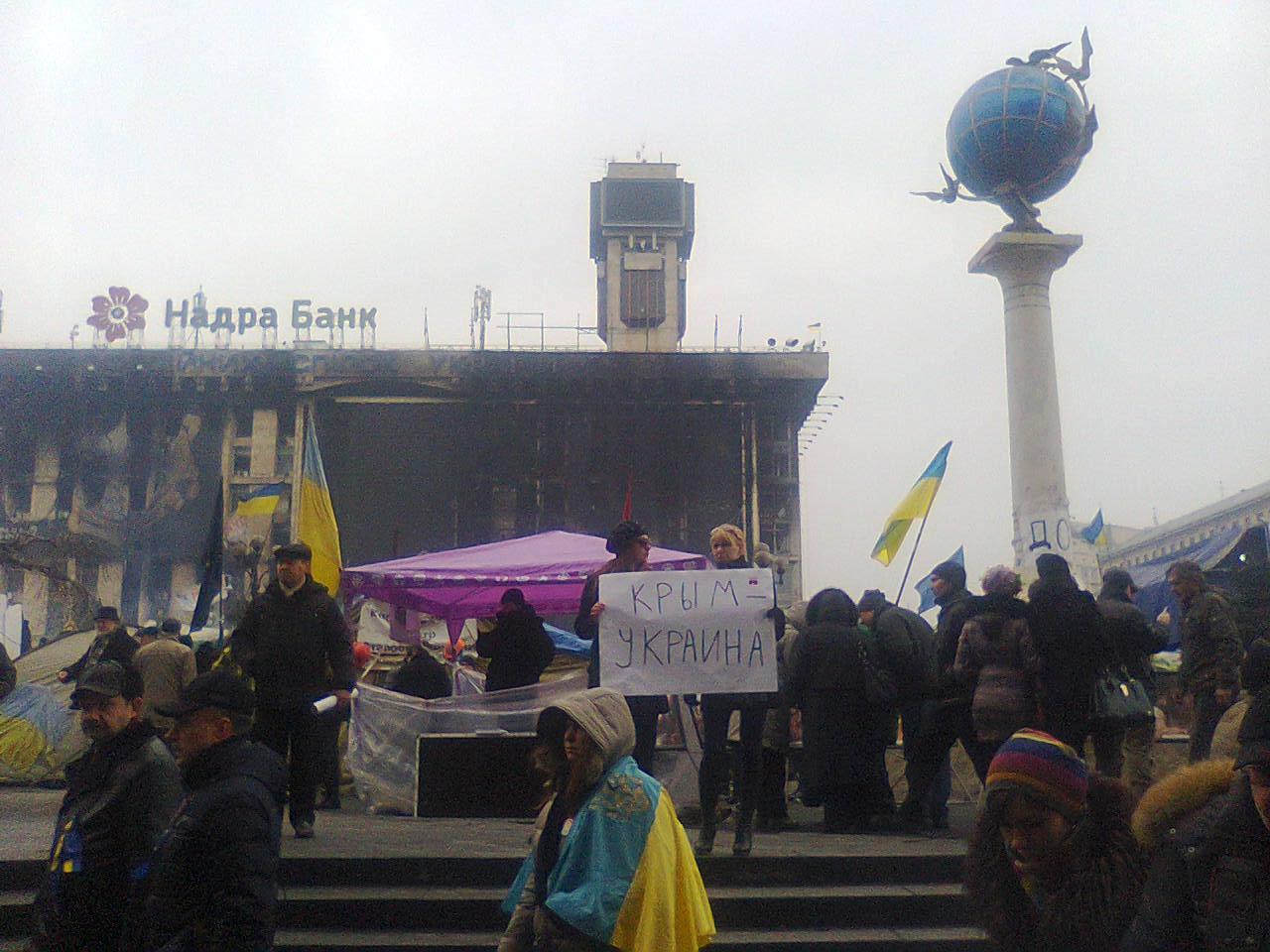
  • We were on the Maidan a lot as correspondents because, again, Ukraina Moloda [newspaper] supported Yushchenko. We handed out our newspapers for free to people there, wrote reports from there. There was just an incredible sense of elation. My family was there too, and part of my family came from western Ukraine then, all this was described, about the people. It was a carnival atmosphere. Maybe because I was still young. How old was I… 24. You felt that we could do it, we would do it. And your slightly older friends were all heavily involved in this struggle. And then, when Yushchenko won and when his inauguration took place — it was an incredible high. We were on Independence Square, there are photos left, I kept a lot from all of that. I have a whole album of these artifacts, I need to flip through and read it. It’s just sitting there, and I don't have time to do it. So that should be a separate conversation. Memory, to be honest, erases it all so much that I had completely forgotten, for example, about that "night of the long knives," I think that's what it was called... When there was a clash near the CEC [Central Election Commission] on Lesi Ukrainky Boulevard, and then Volodia Semkiv wrote about it on Facebook, and I remembered that we were there together. Indeed, I was there, I remember it, it was a bit creepy and scary because the security forces were there. But again, you have to dig this up, read the articles you wrote then, and look at all these archives, because, I don't know, maybe it's a psychological feature that lets you suppress the bad things, you suppress these scary moments. I remember mainly the elation. And when we were on the Maidan during the inauguration, there was champagne, we drank the whole bottle with friends there. With Lyubysh, by the way, with Ivan Lyubysh-Kirdey. And we wrote notes — our expectations — to open and look at later. I was looking through them somewhere recently. There were, of course, a lot of... back then, for some reason, there was this — placing hopes and trust in the president. Like, “We believe in you…” Was this cult created by political technologists? Or did we create it ourselves? It's very wrong, absolutely. We all understand this now, because you can't put everything on one person. In any case, it's a failure. Either the person can't handle it, or the person usurps power. But those were great hopes for the future.

  • It's Surzhyk. That is, it’s the Kyiv region, it's the kind of Surzhyk that lingered there a bit: “dielat” [to do, in Russian]… Although the school was Ukrainian, and I knew the language very well. And if we're talking about language, we spoke Surzhyk, and at school, Ukrainian as well, but there was this moment when we, as high school girls, for instance, would go to Kyiv (we used to go to Kyiv to hang out, the commuter train was a quick way to get there), for some reason, just stepping onto the platform, we would abruptly switch to Russian. We didn't plan it, nothing, it was a given. And Russian was present if you were going out in public somewhere. I had a diary, which I most likely wrote in Surzhyk, but I destroyed it. But I looked, for example, at the keepsake notebooks we wrote in our last year of school, those stories, most of them are written in Russian. Some wrote in Ukrainian, but most were in Russian. And again, I'm thinking now that if it weren't for Mohylianka [Kyiv Mohyla Academy], then probably… I look at my classmates who went to other universities and jobs and became some sort of managers in Kyiv or in the Fastiv tax office, and they mostly [speak] Russian. Although at home, it's Ukrainian, Surzhyk.

  • Full recordings
  • 1

    Kyiv, 26.06.2025

    (audio)
    duration: 02:54:49
    media recorded in project Returning Home
Full recordings are available only for logged users.

I found myself in returning
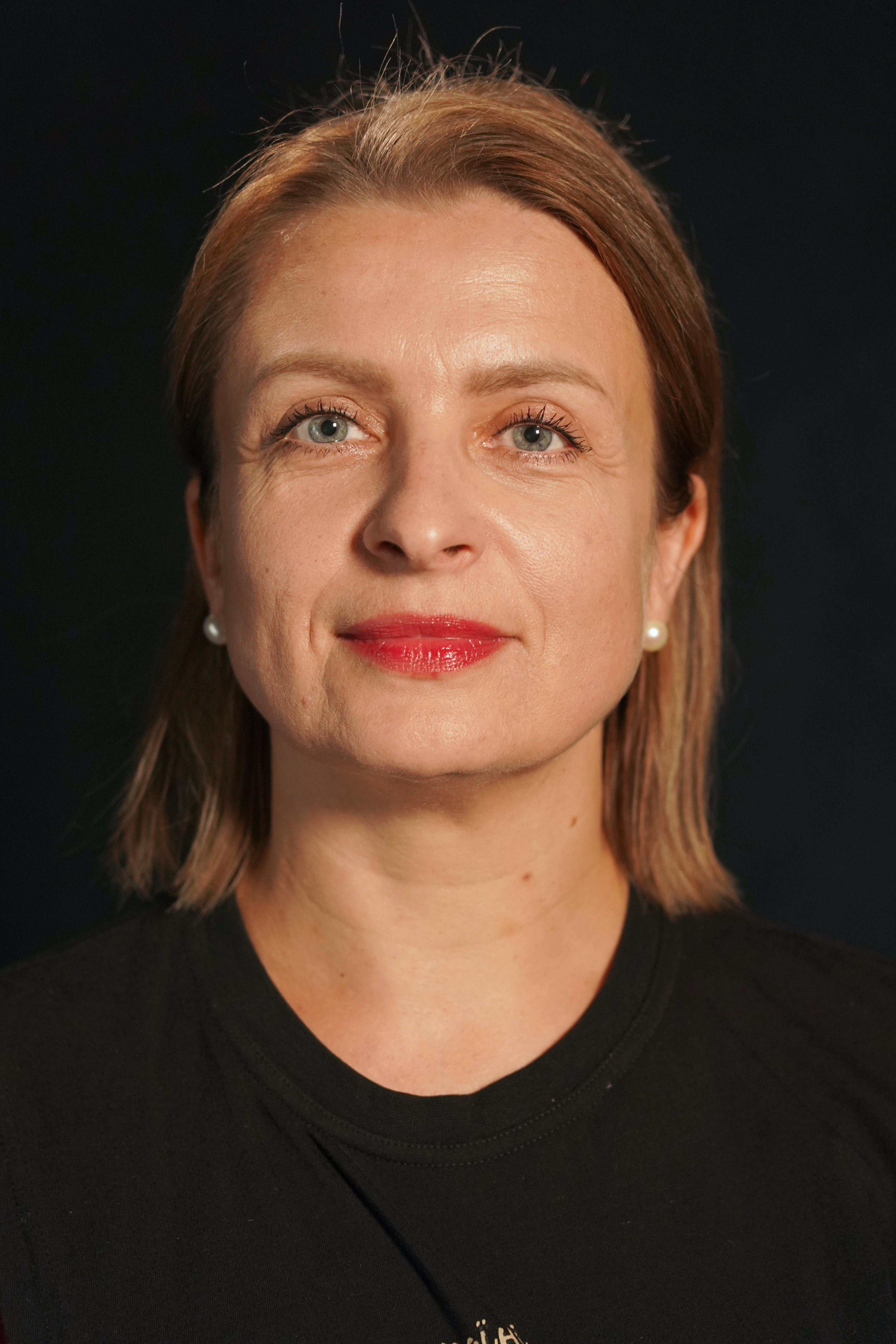
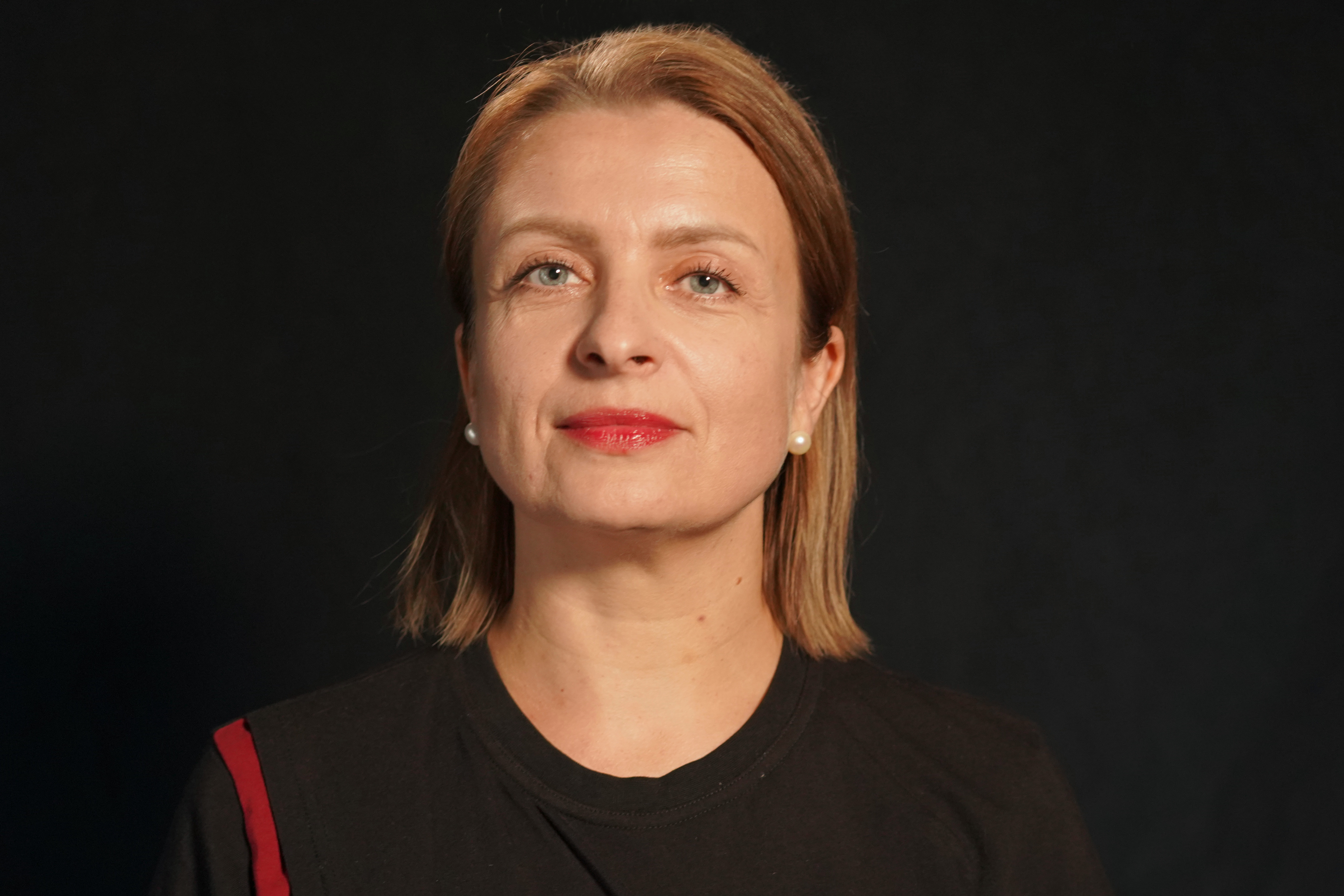
Natalia Teramae during the interview, 2025
photo: Post Bellum Ukraine

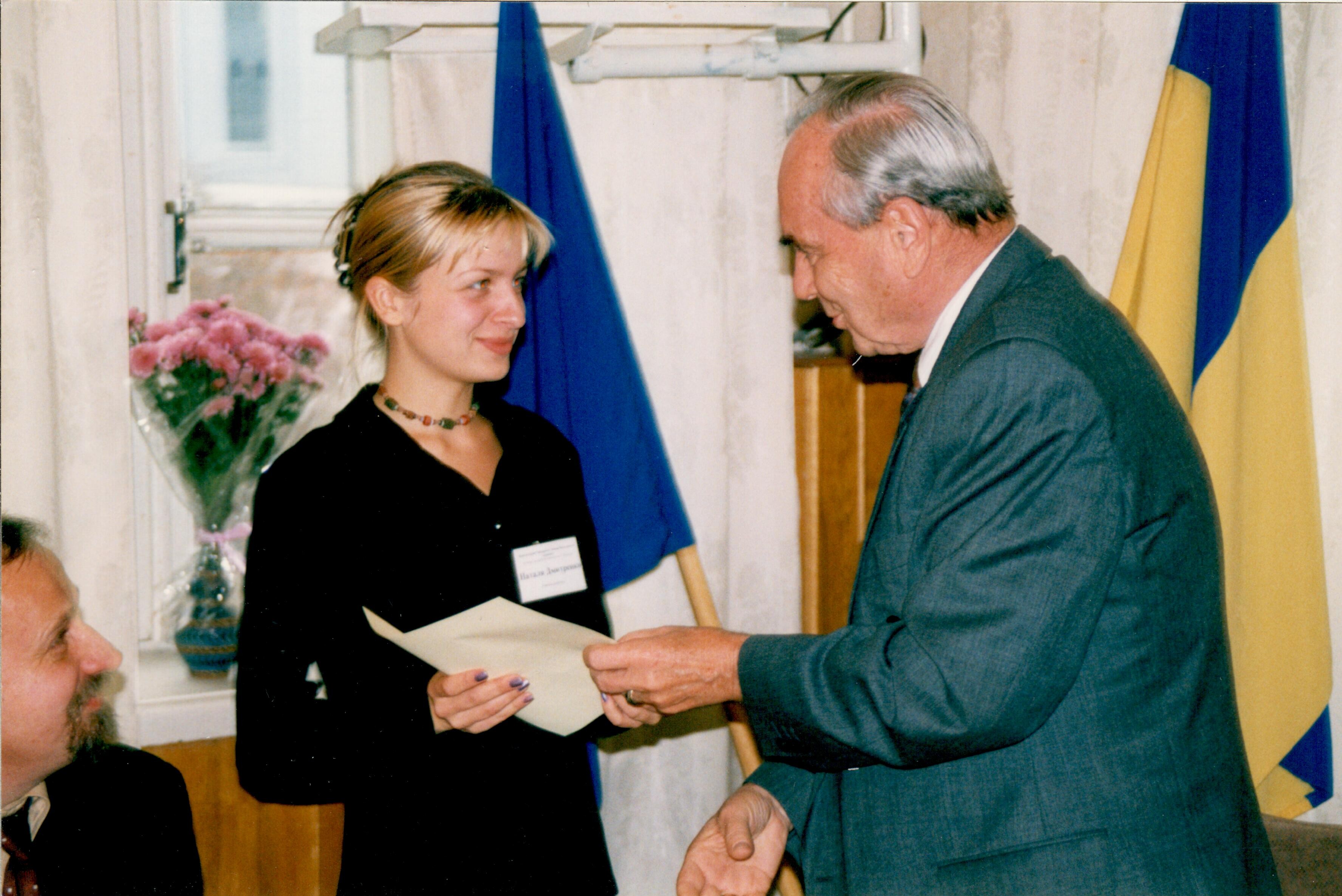
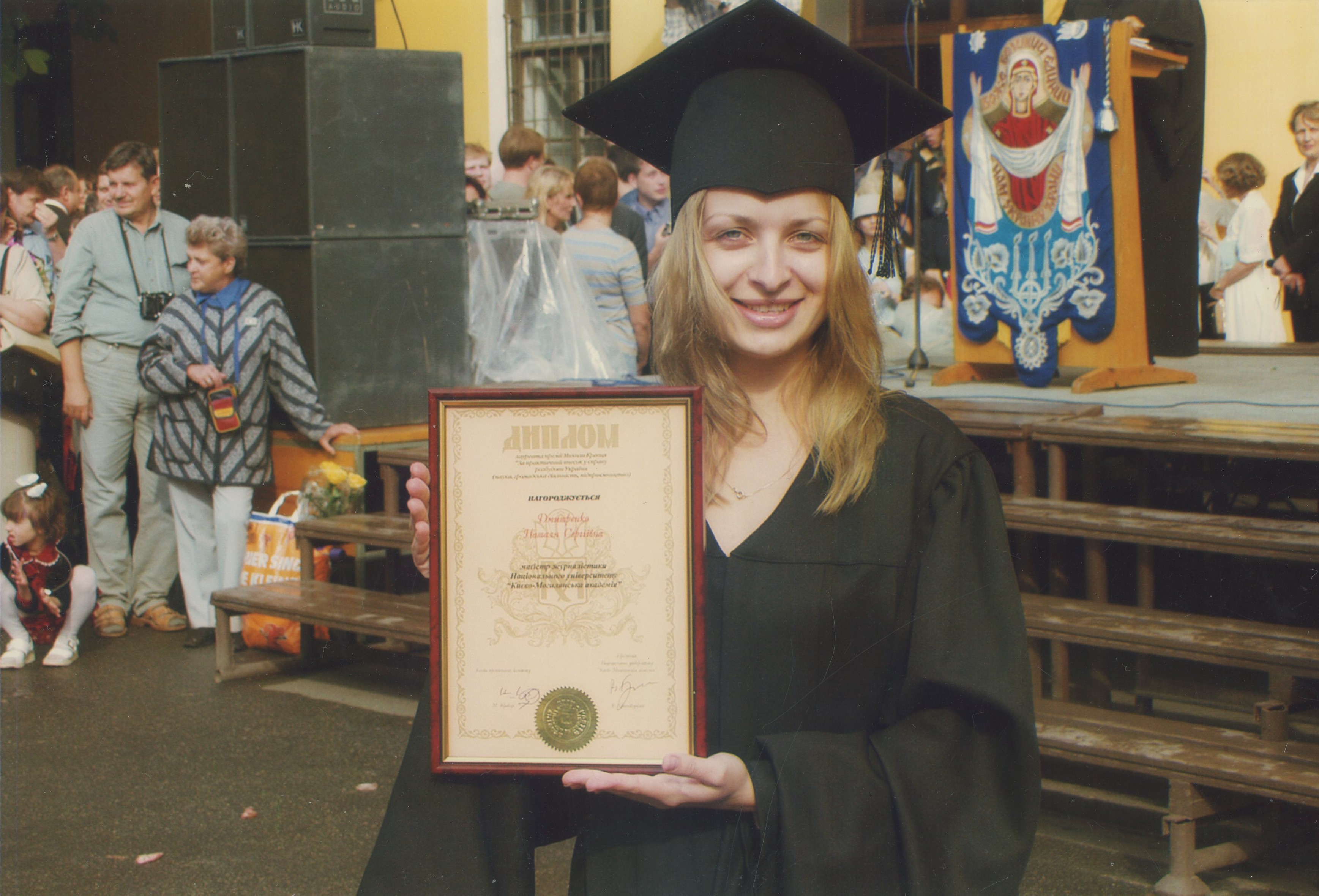
Natalia Teramae is a journalist and cultural manager. She was born on February 2, 1980, in the village of Borova in the Kyiv region. From 1997 to 2001, she studied sociology at the National University of Kyiv-Mohyla Academy. In 2001, she enrolled in the master’s program in Journalism at the Kyiv-Mohyla Academy. That same year, she began an internship at the newspaper Ukraina Moloda. In the fall of 2005, she went to work for the Secretariat of the President of Ukraine, where she worked as a speechwriter. She wrote about tourism and culture for the publication Bez Tsenzury and worked for the online publications PiK and Ukraina Moloda. In 2012, she married Mark Teramae and moved with her husband to the USA. Abroad, she realized she wanted to return, and six months later, she moved back to Ukraine, where she joined the MediaSapiens media literacy project, founded by the NGO Telekrytyka. During the Revolution of Dignity, she participated in the Euromaidan protests. In 2014, she moved with her family to Finland, where she became a board member of the NGO Ukrainian Association in Finland. She worked as a lecturer at the University of Helsinki, teaching the course “Contemporary Ukrainian Culture of the Independence Era: From 1991 to the Present,” and organized cultural events, including the Ukrainian Film Days in Helsinki festival. At the end of 2024, she decided to return to Ukraine. Since 2025, she has been living in Kyiv with her family. She is raising two sons. She plans to return to journalism. She is the author of the book The Immigrant.