Jozef Studenič

* 1951

  • "Well, that's why I have bad memories of it, because we lived in that... in that office building, in the building of the Ministry of Transport and that was part of the government office and the presidential palace... because that's all, like today. Well, on the twenty-first, when the Russians arrived, the first thing they occupied in Slovakia was the government, the presidential palace... and they didn't know that the post office, that it was just the Ministry of Communications, so they occupied the whole thing and we lived there. So we were... on every floor, the Russians were walking with machine guns... there was a transporter downstairs, no one could go in or out... They chased everyone away from work, from the post office. So when I went to school, I somehow got to that school and I couldn't get back home. My father had to go get me and convince the Russian commander that I was his son and to let me in. There were machine gunners on every floor... and then they started shooting... there on Gottwald, tanks were down, there were transports… Then a helicopter landed, so they threw down all the masts… they had to take them down… Well, the shooting… so we were hiding. They shot at our windows… So then my father took us… we went to Závod for two weeks. And we had to be there for two whole weeks, even though we didn’t want to, but he said he had to protect us so they wouldn’t shoot us. So we couldn’t be in Bratislava… And don’t you remember that… one, two, three… and don’t you remember that someone was injured there during that shooting? Yes, yes. There were… those Russians… also shooting at each other, because those who were down, they thought that those… and those who were up, so those down… so some people were shooting at each other there. So… So your apartment was also hit? Yes, yes. And so… if you could describe it somehow… it must have been very stressful, the shooting… Well, that was it… that’s why I have such bad memories… that we were looking at those Russians down there, but there were a lot of them there… suddenly the shooting started, so we had to lie down, because they were shooting at our window and stuff. If we were there, they would kill us. They didn’t care, they were shooting crosswise, crosswise. Hey… and then when you… how long were you actually there, in that apartment… until your father took you away, that… probably the whole day, or… Well, about two more days.”

  • “And I would ask that… about the beginnings… that at all, you mentioned the first one, the first race… that you remember it emotionally, how it went, what the track was like, where you drove… That was at the Košice Rally. So we went to Košice, and back then we didn’t have it like today, where you put it on a trailer and take your car there. So we drove the car that we raced with and that we trained with. So then, the car has a lot of kilometers on it… today it’s a racing car, you don’t train with it. You have training and racing cars, ready for the race. Well, so we went like this, with the car to Košice… I drove it there with my co-driver. Luckily, we didn’t destroy it, we didn’t break it… then we came home, I washed it… and I parked it in front of the house and I wrote a letter to my father, which I have with me here… Where did I thank him and apologize for giving him the car? took it. And I say, okay… I didn’t go home for three days because I knew I would get into such a fight… so I hid here and there…. mom cried and then begged dad not to beat me… so I came back home. And then you guys kept driving that Embéčka… or? I went to one more race with her… and then we… My friend and I rented a car from a rental company… and we went to the race with the rented car… And of course, the rental company that rented us the car didn’t know that we were going to the race with it. And they usually rent it to you there… We usually rent it for the weekend and they write down the kilometers, the speedometer… and they leave you with a full tank. Well, but as a car mechanic, I disconnected the speedometer so that the kilometers wouldn’t run up there, because that’s what you pay for. But the speedometer was sealed up there, on the dashboard board, but it wasn't on the gearbox. So I disconnected it down on the gearbox, and we raced about two or three more races like that. With a rented car. Also some… Embéčka, yeah. The thousand… And so I… I would also like to ask about the first ones, those Rally Košice. Where did they race then? It was around Ružín, or… Yes, yes. That's how it was… just like now. Only there were more kilometers… now, now they have three hundred, four hundred kilometers for a whole day, sometimes even three days… And we had about a thousand kilometers. Back then it was… Even with the transfers… Well, it was with everything. And actually those stages… how many were there… were there more of those stages? Yes, yes.”

  • “And I would also try to ask about the Slovak National Uprising, which was not in those territories, but somehow it was in the vicinity. This was also talked about, maybe back in the family, whether they… they knew about it at all, even in Záhorie or in Voderady. They knew that there was… that there was an uprising, but basically when they talked about it, at least as far as I remember… they knew that those Germans, those few partisans would not be enough… so actually, history proves us right that a lot of damage was done by that uprising, because they burned down villages, shot those people… Germans. The partisans were then proud that they had attacked the German garrison and then the Germans burned down the entire village, not just one. And they murdered people… well, it was so unpleasant, well. If I had lived in that period, I would probably have been a partisan too… but I don’t know how they behaved, whether it was all kosher or not they didn't kill people, I don't know... You know, after the war until the fall of the socialist regime, the uprising was heroic and one thing with another... but today people also talk about what was bad about the uprising. Yes. Next, I would ask about the crossing of the front... because it also passed through the vicinity of Voderady, when it was heading towards Bratislava and again in Záhorie, maybe not directly in Závod... some battles... So did they talk about this... were there any alarms, did they have to hide towards the end of the war... and if so, how did they experience it? In Voderady, the front passed through there and even Marshal Malinovsky stayed at his grandmother's. So when they traveled somewhere, they always spent the night somewhere and so... and Marshal Malinovsky... the supreme commander or the highest officer, stayed at his grandmother's... and they remember him very well... or so she remembered. That he was nice, and that he made sure… of course, when there was such a high official there, they also had some privileges, regarding food and all sorts of things. That was on the side of Voderad… And in Záhorie… there were big battles there, behind the Plant… My father said that there were big battles there… that it was unbelievable, that there was a normal war there, there were tanks, just everything possible. Did he also mention that they had a shelter somewhere, that they had to hide somewhere during those battles? Yes. There was also bombing there… the Plant. So they had cellars… they always hid there and somehow they solved it that way. And maybe they also described how they experienced it? Because it is difficult to even imagine the real war, those battles, that we would experience… what it was like for them when they talked about it… Well, so… they said that the Germans were nicer than the Russians. That when the Germans went, it was decent, and when the Russians went, so… I I can understand that when Germany attacks you and kills half of your family, then that Russian soldier, when he came to Slovakia and knew that Slovakia was an ally of Hitler, the Russian soldiers probably didn't treat us in the way that... probably everyone would behave that way. So that's why they mentioned the Russians, that... when the Russians came, they hid more from the Russians than from the Germans, but what can I tell you about that..."

  • “So I would move forward… a little. And… so you experienced that early childhood, as you mentioned… What was it like, because of the preparedness of Bratislava at that time… where as children, you had the opportunity to spend your free time… let’s say playgrounds… like in the city. There were so many playgrounds in the city that there are none today… there are none. We had swimming pools and playgrounds, how many there were… We went to the Pioneer Palace, today it is the Presidential Palace… and we had playrooms upstairs. Our parents put us in that palace… we took off our shoes downstairs and we had big rooms upstairs… you see today that the president is there, so they were… it was the Pioneer Palace. We played there. There was even a zoo… there was… every weekend there were parties in the Presidential Park… there was a swimming pool, there were tennis courts. So I spent a lot of time there as a child… because we had a little bit of it… we came there and had fun there, the football field… we played football there, in the winter they built an ice rink there. So the pioneer park was nice… and around there we could go to Žabotova Street, there was a swimming pool… we could go to Malinovského Street, there was a swimming pool… to Dunajská Street, there was a swimming pool. There were so many playgrounds, there were so many football fields. It’s not like that today, but back then we played sports… back then we didn’t sit at home, so it was interesting. Today those children… even if those playgrounds were there, so what… they wouldn’t go there because they’d rather be at the computer and locked up at home and that’s how it is. And within… that palace, that game room… how it was equipped, that it was more for some board games… Yes, yes. There were board games there and actually there were clubs that you could sign up for. You won there… well it was nice… it was clean, nice. The Pioneer Palace "That was calling, I remember that. Where the president walks up those stairs today, I used to go there barefoot, to play upstairs."

  • I was already such a lookout when I was 15. I went to the apprenticeship on a motorbike. When the Russians arrived, the first thing they did was occupy Gottwald Square, because the government office was there. At night, they occupied the whole place up to the Presidential Palace. They sealed it off and no one could go there. I lived there with my parents. There was shooting there. We were hiding under the window, because the Russians were shooting at each other with submachine guns and machine guns. They didn't know that they were shooting at each other, because they occupied the entire building. There were Russians on every floor up to the tenth floor, and we lived on the fifth. And other Russians were down there, a helicopter landed there, they took down the masts. In short, there were a lot of Russian tanks and the army. Something happened and from our building, from our house, someone shot at the Russians and they all started shooting into the building. They shot our windows. We hid because they would kill us. My father decided then that we had to leave because it was dangerous. So we went to my grandmother's place in Voderady near Cífer, near Trnava, for a week. There were Russians on every floor. There were some Russians who gave me a machine gun and said: If you think I'm here to shoot you, he came because he had to come. They were so nice that we even gave them food. It wasn't a problem. We lived in a building that is now the Ministry of Transport and downstairs was the post office, which is still there today. When they occupied the building, they kicked out all the employees from the post office. The money had already been withdrawn there and they took all the money from the post office. Then they came to us to buy vodka. They gave us watches for vodka or a hundred crowns for a bottle that cost ten or twelve crowns. They had so much money from the post office because they took it all out of drawers, and we were happy that they paid us like this.

  • We went to the Rally Košice for Dukla Nitra. From Nitra we had permission to go to Košice and back. You can't go to Bratislava, because Nitra is closer to Košice than Bratislava. But the race was on Friday and Saturday and we had permission to be back by midnight on Saturday. No one is looking for you on Sunday. So my co-driver and I went to Bratislava with a military car illegally. That's a violation of the regulations. It's like driving a tank somewhere else than you're supposed to. I drove to Bratislava. But during the Rally Košice race, our exhaust pipe broke. Since the racing car didn't have a fan, the exhaust gases went out through the cabin. I always drove with the window open, and the exhaust gases therefore went out through my window. Carbon monoxide. After three or four minutes, I stopped feeling the carbon monoxide. As I drove from Košice, I felt terribly sick. I couldn't even drive anymore, so we switched. I threw up everything I could. I couldn't control myself anymore, I was done for. I had terrible cramps in my stomach. There was an emergency room on Mýtná Street. The Ministry of Transport was 300 meters away. I begged my passenger to stop at the emergency room for me, that they had to give me something there. He said I couldn't stop there because they would lock us up. We'd go to jail if they found out we'd been to Bratislava or, God forbid, they'd take me to the hospital. They'd lock him up right away and me when I got home from the hospital. He suggested he take me home, where I live. I'd sleep it off and tomorrow afternoon we'd go to the barracks. I begged him to drop me off there just for a moment. So he turned right and stopped 20 meters away. I got out of the car and passed out. I ran to get the doctor at the emergency room. They ran over and brought me inside. Since then I know what it's like for a person who is dying. I heard them all, I felt them all. She slapped me, screamed, one thing after another, and I couldn't answer her. Nothing. I was lying on the bed with plastic wrap and the poor thing quickly called an ambulance because she didn't know what to do. My eyes were open and I saw everyone. I remember how an ambulance with beacons took me through Jaský rad to the Military Hospital. Luckily, my passenger told them about the exhaust, so they knew that I had poisoned blood. They gave me a drink and exchanged five liters of blood. The old blood went out of me and the new blood went in. The doctor told me that if my passenger had taken me home, I would have died. I would have fallen asleep from the pain and never woke up. You have to be lucky. Since they left me in the military hospital, they found out in Nitra that we had violated the regulations. My friend was arrested as soon as he returned with his car without me. He was a college student and had only served for a year. All his peers went into civilian service as second lieutenants, only he went into civilian service as a sergeant because he was arrested. They didn’t give him a single lick of civilian service because of me. When I came home from the hospital, my major called me and said: “I’ve been here for over twenty years, but I’ve never seen anyone sent straight from the hospital to prison.”

  • I had a garage in Dúbravka and there I repaired racing cars that are used on circuits and hills and they don't have registration numbers. Sometimes I also repaired cars for friends there or to earn some money. They put a person who rented an apartment opposite my garage on me. He wrote down every car that came and went there. Then they called me to Februárka and said: "Mr. Studenič, you repair cars without license plates there. We have records of cars with license plates and then without. What is this supposed to be!!!" They checked cars with license plates to see if any contras (military counterintelligence officers) or foreigners were going there. However, they were most interested in cars without license plates. They showed me that the person wrote down every minute when a car came and went there. They checked whose car it was, who it was. But without a license plate they didn't know what it was. I say: "People are racing cars, they don't have money!!!" So I explained it to them and it was fine. But I was the one who was being watched both outside and at home.

  • There was the Central Automobile and Motorcycle Club of the Czechoslovak Republic, which owned the Brno Autodrom, Most Autodrom, Metalex, a large building in Prague. The Slovaks didn't get a penny from it. Do you know what they did? Feel free to upload it there. Before the division, they donated the Brno Autodrom to the Brno Autodrom. They donated the Most Autodrom to the Most Autodrom. So they were getting rid of the property and then the property was divided. I was in Prague, saying that we were going to divide the property and they told me, what do you want to divide? I told them, give us something, but you can't keep everything. "We have one 613, we can give you one Zhiguli...." I told them, what about Metalex? "Metalex is a private company." And the Brno Autodrom? "The Brno Autodrom owns the Brno Autodrom. What do you want to divide?" We didn't get anything. That's how we ended up when the property was divided. However, it was agreed that everyone would have their own flag. We have ours and they have Czechoslovakia. It was said that shipping, military matters, would be divided. They kept everything, the emblems, the anthem. I have to admit that they are clever. They planned it in advance and prepared themselves, and Mečiar jumped on them. Do you want to hear my full opinion? I was afraid that Slovaks, when they start governing themselves, won't be able to do it. We don't have the political ancestors we had. Someone always had to lead us. Even in that war, we gave in to Hitler.

  • Full recordings
  • 1

    Bratislava, 28.04.2025

    (audio)
    duration: 02:21:56
    media recorded in project Stories of the 20th century
Full recordings are available only for logged users.

I had a great relationship with those engines
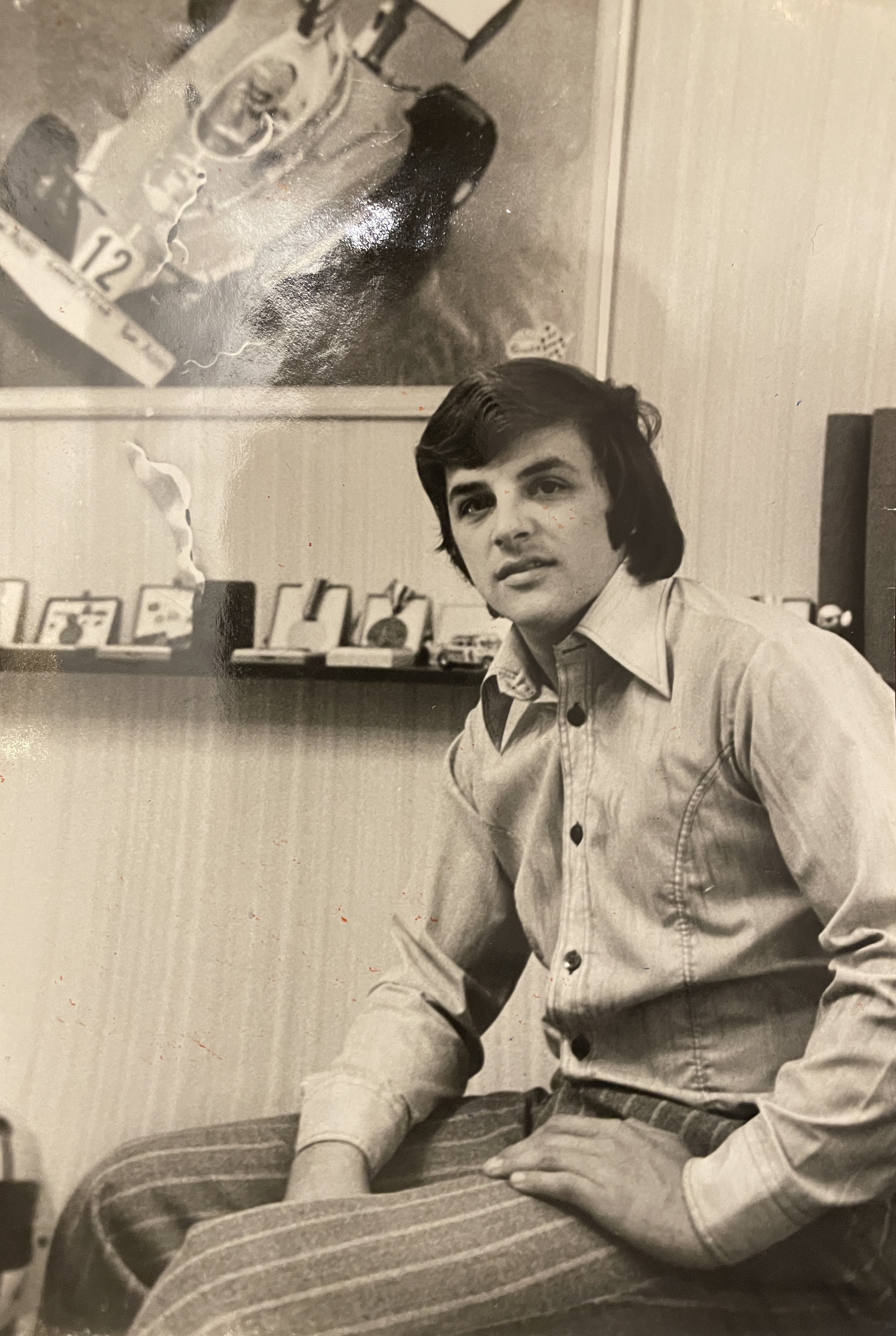
Jozef „Dodo„ Studenič
photo: archív pamätníka

Jozef “Dodo” Studenič was born in Bratislava in 1951 as the third of four siblings. He started his five-year primary school on Školska Street. He continued on to a nine-year school on Jelena Street, where he attended class A. His love of cars led him to a secondary vocational school, where he trained as an automobile mechanic. Later, he completed a general education school with a school leaving certificate for workers. During the invasion of the Warsaw Pact troops, he experienced firsthand how the Soviets occupied Gottwaldovo Square all the way to the Presidential Palace. The shooting broke the windows in their apartment at the time, so the family went to their grandmother’s for a week. After finishing his studies, he enrolled in the law department at the University of Bratislava for two months. However, he then received an offer to race for Dukla Nitra and enlisted in Nitra. He completed his first race at the age of 17 at the Rally Košice at the Slovak Championship in 1969 in his father’s car. He worked as an apprentice at Tatra Kopřivnice from 1968 to 1974. He participated in the preparation of T603 cars for the Rally competition as well as the construction of the Tatra prototype. Later he became a test driver in the Tatra development department. In 1972-1974 he started military service in the Dukla Nitra sports department, where he raced on Škoda 110 Rally cars. Here he also won the first title of the Czechoslovak Socialist Republic and was in military prison three times for violating the regulations. After completing military service, he became a representative of the Slovak Academy of Sciences and received a Škoda 120 Rally car and later one of the first Škoda 130 RS. In 1974 he worked as a transport manager at the Chemika factory and at the same time became a representative of the Slovak Republic in car racing. Later he worked as a director of the Bratislava Driving School (1975-1990), where he devoted himself to children and youth within the Automotoklub and Zväzarm. The monument considers the greatest achievements in 30 years of competition in rallies, circuits and hills to be the representation of the Czechoslovak Socialist Republic, the Czechoslovak Socialist Republic, the support of the Škoda, VW, Audi factories and the award of the title - Master of Sports for 3x champion of the Czechoslovak Socialist Republic, the Czechoslovak Socialist Republic, 1x champion of Austria, 17x champion of the Slovak Republic, 1x champion of Europe. He is also the holder of the highest world award for contribution to sports and road safety from the FIA ​​world motoring center in Paris - a gold medal (1998). At the same time, he is the former founder of the Rescue System Slovakia (1990), former director of automobile races focused on road safety and drug prevention (1993). In 1991, he founded the company Rallye-Racing team STUAD BRATISLAVA, which was later renamed Jozef Studenič - MOTORSPORT rallye racing team STUAD. This company was active until 2021 and focused on motor vehicle repairs, car accessories trade and the organization of motor racing events. In the 1990s, Jozef Studenič was also involved in the ambitious project of building a Formula 1 circuit in Piešťany. As director of the Motorsport organization, he participated in the preparation of plans, which were ultimately not implemented. He was also the manager of the representative and son of Andrej Studenič. In the 1998 parliamentary elections, he ran for the Movement for a Democratic Slovakia (HZDS) in 109th place on the candidate list. Later, in 2002, he appeared in 12th place on the candidate list of the Movement for Democracy (HZD), which Ivan Gašparovič founded after leaving the HZDS. In 2010, he last ran for the SNS party in 30th place on the candidate list. He is married for the third time and has six children.