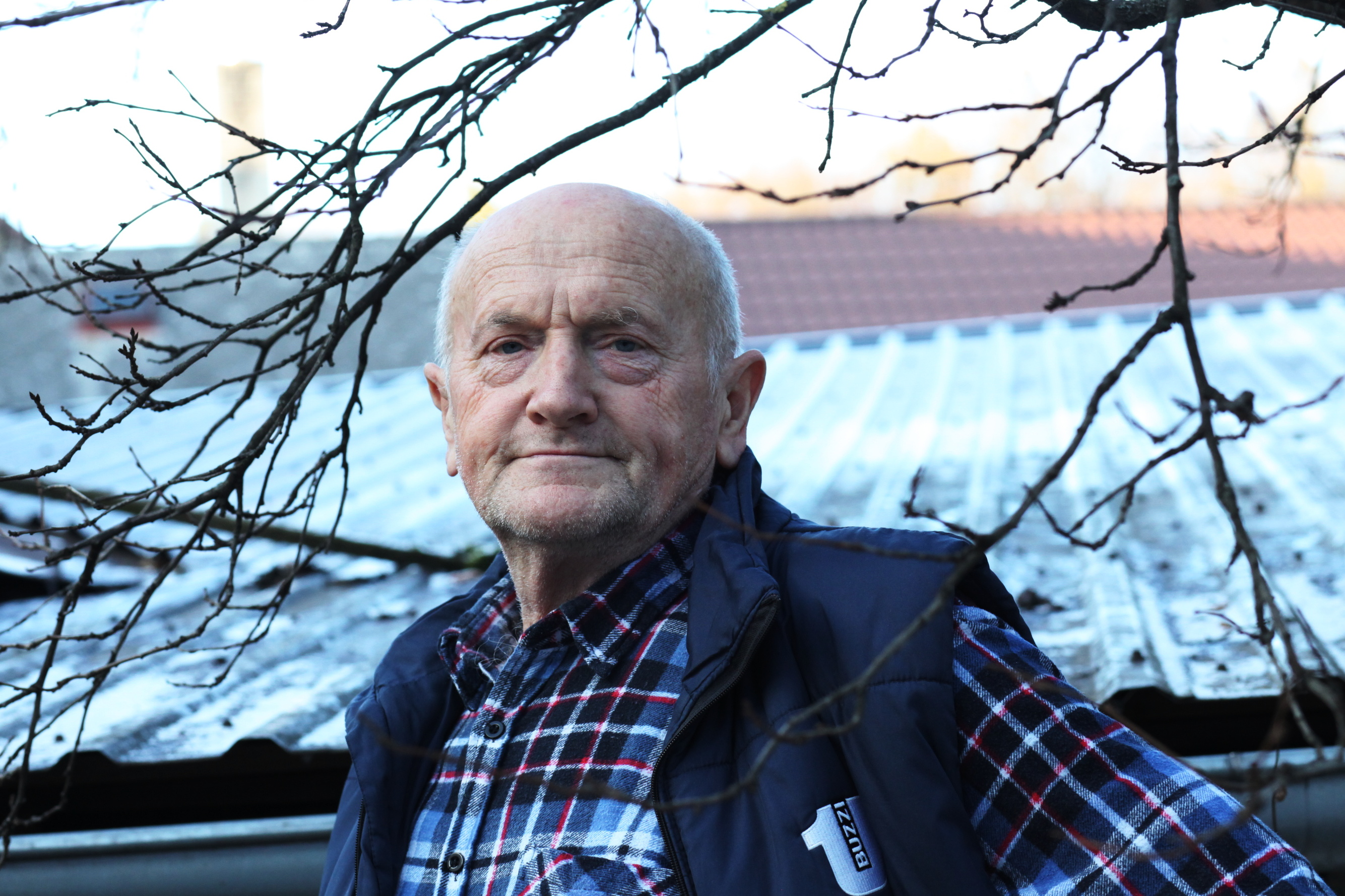
Ing. Josef Smyčka

* 1949

  • "Of course, we were surviving somehow, we were also involved in it. What else was there to do? Either we were worried about ourselves, or our family, or our existence, and we were by that time, as it had been going on for a long time and through those experiences, so that there was nothing to be done but to put our heads down and do what they wanted, that is, go to the elections, for example. We went to the elections. I know there were heroes who did not go and made it known. We did go. My wife and I did it by saying, 'Look, since it's a given, we're not going to do anything,' but, quite simply, I'm going to go from work, a smelly animal keeper from the pigsty, I'm not going to change my clothes, I'm not going to go wash up, I'm going to go in there and throw it to them, and that's how I'm going to make it clear that it's not a holiday for me, or at least make that clear."

  • "Most of the teachers were very convinced, I don't like remembering them. For this. Back when I went to Úsov, we had a teacher called Matyášová and she, I know how shocked I was at the time. We were naughty, like normal, we had a break and we were naughty and she shouted at us and said, 'Can't you behave? Can't you see how sad I am? Our president Zápotocky died.' What year was it, I'm between fifty-five and fifty... three years, seven, eight, I don't know in which period, in the spring, in the autumn he died. Zápotocký. So that's what stuck in my mind, I wondered how a completely indifferent person to me, how he could cause her such grief that she had to shout at us, that we should be quiet because of that."

  • "So he said we're going to the demonstration. We took the train to Bern, we were in that area around Bern, between Freiburg. [...] And in Bern we were watching like crazy, because we knew it maybe only from TV. A real demonstration. And they were chanting in front of this Russian embassy, it was a palace [...] but then Molotov cocktails started flying, real ones, not only on TV where we had seen it, it was all young people, and there in front of the embassy a cordon of Swiss police who have to protect it. And now the Molotov cocktails were flying at those policemen. Of course, as one or two flew in, the siren went off and they pulled out water cannons from somewhere and the first people, it started backing up, this crowd of these young people, and we started backing up with them. And then we saw, there's two local Swiss climbing the opposite palace. There was a tree in the corner, and you could climb up that tree to that first eaves and to that shelter, to that porch, and from that you could, through a kind of a gully, we climbed all the way to the top of that two- or three-story building. And the locals, they had already, by the time we had climbed up there, the siren had just sounded and the gases had been set off. They had gas masks on and people started crying, even us at the top. We were saying to ourselves that if we climbed to the top, we had to keep it down to make it work, we'd be fine there. And it was, we were crying up there too. And now this one Swiss guy was there tearing the roof tiles away and he wanted to throw it at the cops because they had pushed the crowd out and they were already below us. So we, and the others, and us told him: "Don't be silly, that water cannon will be aimed at us too, it will wash us away from here." And I, as I hate heights, I couldn't see much in the darkness, and the height around, as you're pumped up with adrenaline, so... So now they cleared it, the cops everywhere, and now we couldn't get down. ' Are we gonna be here till morning or what?' Some Swiss, we climbed over to the other side of the main roof and we climbed down again through a kind of a gully and there was a balcony underneath, as it's usually pushed out, just a little window with a door to the balcony and we went down to the balcony and there was a young lady or girl and we were knocking, and she kept running away, she wouldn't open the door for us, she brought her brother and the local Swiss people talked to her and they let us in, we went through the whole house and they let us go to the other side of the river, there were no more cops there. And there we got to the station and home."

  • Full recordings
  • 1

    Dolní Újezd, 22.12.2021

    (audio)
    duration: 02:04:58
    media recorded in project Stories of 20th Century
Full recordings are available only for logged users.

My ancestors made the rocks and the forest fertile, the communists took it away from us
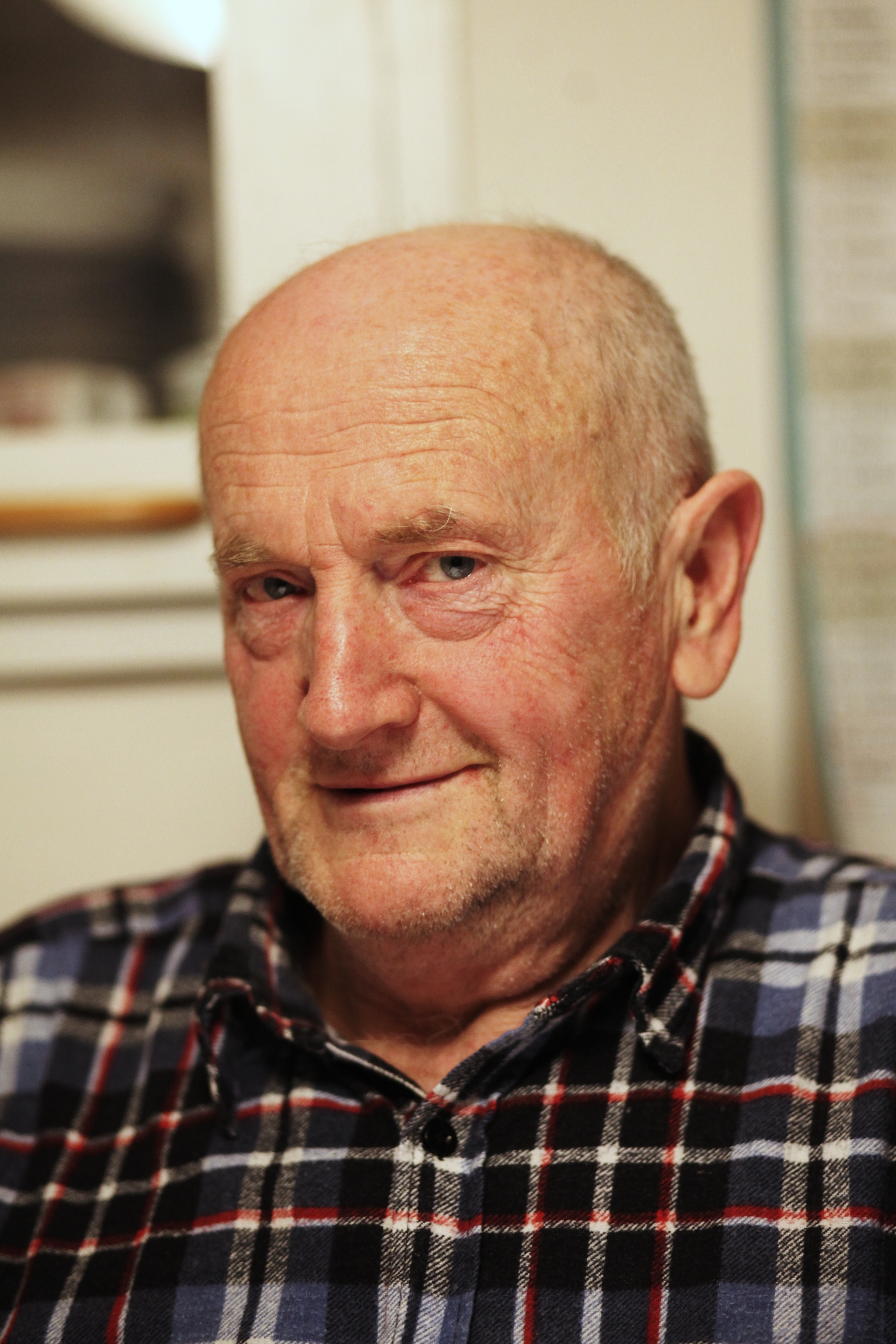
Josef Smyčka in 2021
photo: Post Bellum

Josef Smyčka was born on 2 April 1949 in the village of Holubice near Zadní Újezd (part of the village of Medlov in the Uničov region). His father, Jiří Smyčka, owned a 20-hectare farm and during the collectivization of agriculture in the 1950s he was to be declared a kulak. However, this did not happen at the intercession of one of the local communists and the Smyčkas, under pressure of disproportionately high deliveries, farmed privately until 1958, when they handed over their land and animals to a cooperative farm. Josef Smyčka longed to study electrical engineering, but he did not get the necessary reference from his teacher, so he apprenticed as a repairer of agricultural machinery in Uničov. He then completed his secondary school leaving certificate at the Secondary School of Agriculture in Bruntál. At that time, in the summer of 1968, he visited a farm in Switzerland. There, after the events of 21 August 1968, he took part in an anti-Soviet demonstration in Bern, where there was a violent clash with the armed forces. After returning to Czechoslovakia, the witness completed his secondary school studies and graduated as a livestock specialist from the University of Agriculture in Prague in 1974. He worked as a livestock specialist until and after the Velvet Revolution. In 2022, he lived with his wife Eva in Dolní Újezd near Lipník nad Bečvou.