Marcela Papežová

* 1952

  • "Total despair. It was simply war. I wasn't allowed to go anywhere, so I could only go in front of the house on Budějovická Street. It's so wide, the tanks were going up and down there. That was ten days of complete surprise, hopelessness, being pissed off... Then things started to turn around. Not everybody was the same, so some of them started to turn back. It was awful. I think everybody still has the sound of those planes overhead, because they were the heavy planes that were probably carrying the tanks. So it was terrible, the sound. That's how I imagine the war."

  • "It was in the seventy-fourth, seventy-fifth... I had a lot of free time, so even with the kids I would type in the evenings - usually in the evening or when I was free. I typed pretty fast, so I enjoyed it too. I copied Bondy's Invalid Siblings a few times, books like that... It was put into a folder then. Or poems or statements. Papež always brought it. He was friends with Jarda Kukal. He was friends - they knew each other. And he was organizing it, so he was bringing us what to copy, and in turn Papež was bringing it to Kukal. So for years he was famous and nobody knew about me."

  • "When they went to the illegal markets, it was the same thing. They were beaten up there. They had the LP records taken out, and before they could clean it up, the cops came and dispersed them. About ten markets. Every year they were somewhere else, maybe in a month or two. And concerts, too. But we've never experienced it this rough. Prague is a big city and people get a bit lost there, but the biggest heroes are in Písek or in these smaller towns where everyone can see them. Budějovice is pretty big too, but they're not."

  • "At the train station, it was enough... I was afraid of the cops from then on, because they herded us into such a crowd. And it's just there... the way he threw me away... But the worst thing was the plain clothes people, because they were the hidden cops walking with them. So there was one... I wanted to look like this - and he pulled me out and threw me against the wall. I wasn't pregnant at the time. And I weighed about forty-five kilos. So I went back into the crowd, because then you don't want to stand out. And I saw a tramp walking there, but real one - who didn't belong to us. And they beat the poor guy up. He just had a backpack on his back and he was beaten. He didn't deserve it at all. And then they herded us into a train, into one half of a carriage, and they were leading us into the other half, and there they took pictures of us. Meanwhile, they always took one away, beat him up. There were policemen with dogs at every stop we passed through to Prague, in case someone wanted to get off the train. In Prague, too. And then they sent us home normally."

  • Full recordings
  • 1

    Praha, 02.10.2025

    (audio)
    duration: 01:25:00
    media recorded in project Stories of the 20th Century TV
  • 2

    Praha/České Budějovice, 23.10.2025

    (audio)
    duration: 47:17
    media recorded in project Stories of 20th Century
Full recordings are available only for logged users.

Then I was afraid of cops my whole life
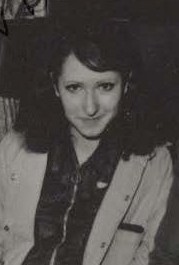
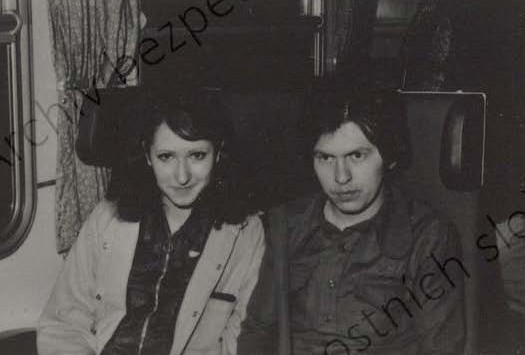
Marcela Papežová on her way back from Rudolfov, 1974 (ABS archive) cut-out
photo: ABS archive (H2-1-II i.j. 351_f112173)

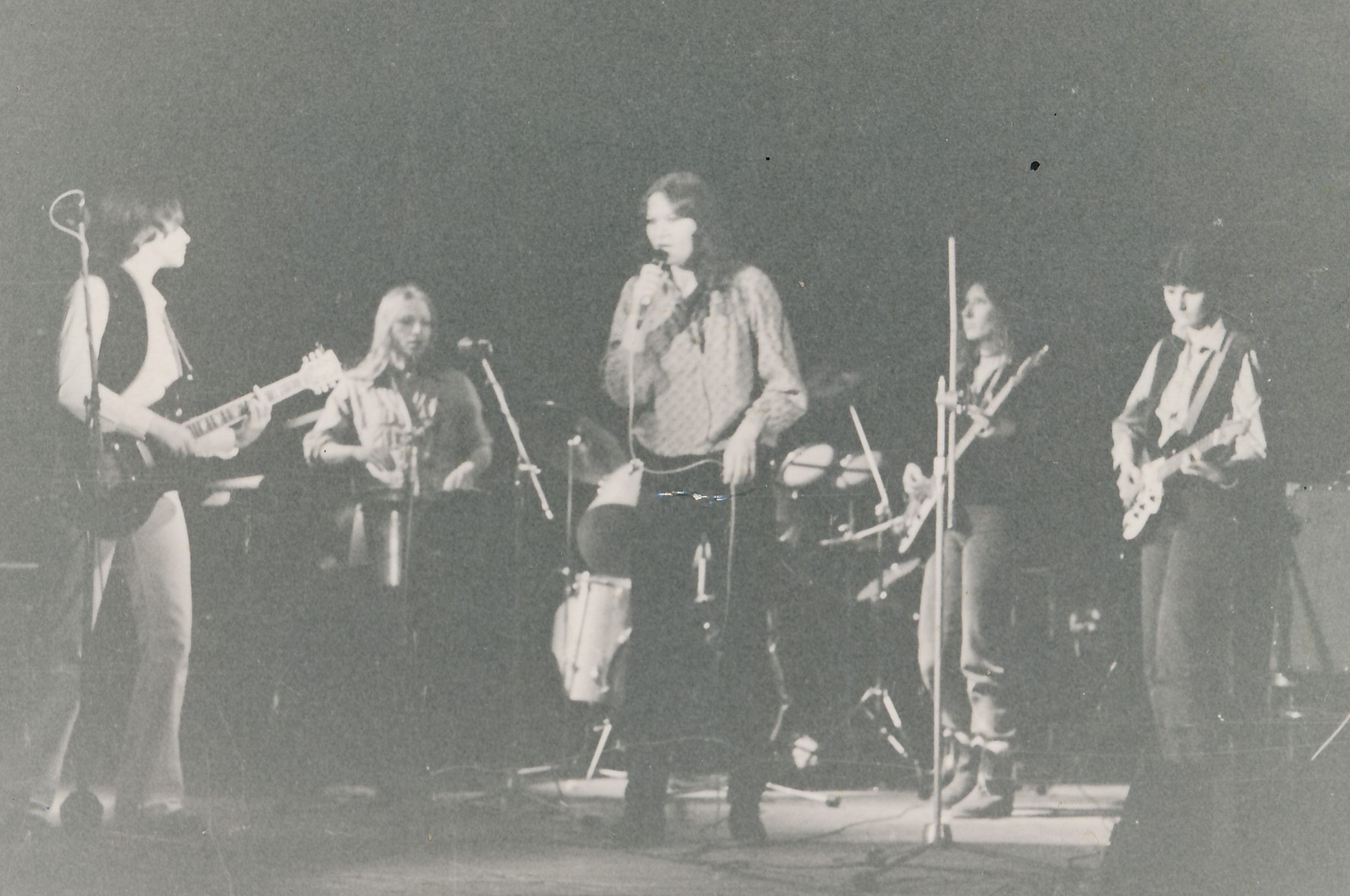
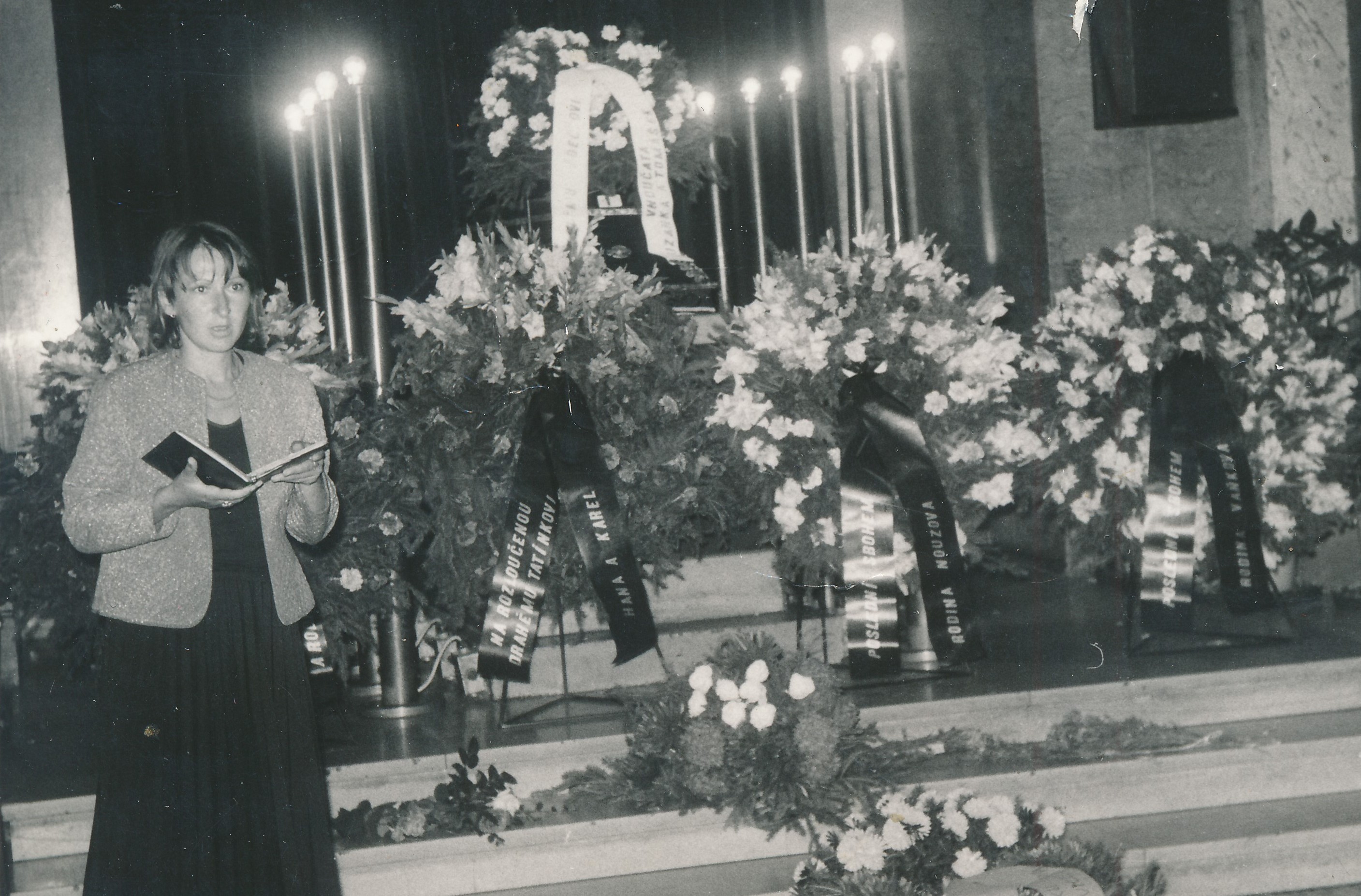
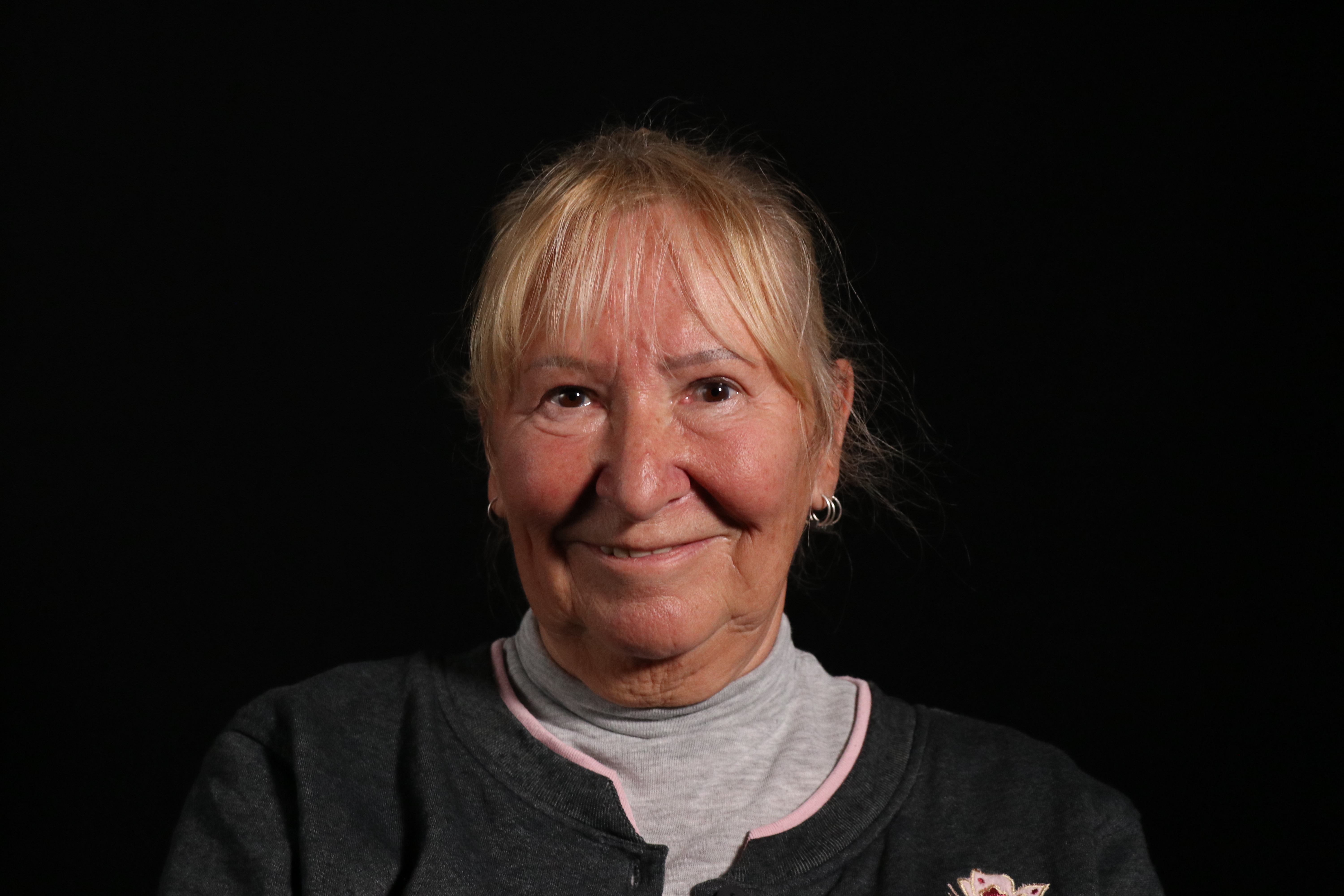
Marcela Papežová, née Škoulová, was born on 1 August 1952 in Prague. Her father, Václav Škoula, was a lieutenant colonel in military intelligence, and her mother, Květoslava, worked as a speaker in a crematorium. During her childhood she lived with her parents and brother for two years in Moscow, where her father worked at the Czechoslovak embassy. In 1968 she experienced the invasion of the Warsaw Pact troops and her first big sobering up. She married Zdeněk Papež, who was active in the Prague underground, and together they participated in cultural events of the independent scene. In March 1974, they went to a concert of the band The Plastic People of the Universe in Rudolfov near České Budějovice, where Marcela Papežová was the victim of a brutal intervention by the security forces. She was physically assaulted and repeatedly interrogated. In the following years, she copied samizdat texts and provided background for persecuted friends. Together with her husband, they owned a share in a farm in Krašovice, which became a centre of underground life, but also a place of frequent police checks. From the age of thirty-three, she worked as a speaker at the Prague crematorium, where she still works. In 2025 she received an award from the Ministry of Defence of the Czech Republic for her participation in the Third Resistance. At the time of the interview (2025), she was living in Prague, still owned a share in a cottage in Krašovice and maintained friendships with former underground culture members.