Nguyen Gia Kieng (Nguyễn Gia Kiểng)

* 1942

  • "When Vietnam reaches a national consensus that we must renounce violence, reconcile and harmonize with one another, and hold the belief that Vietnam must have democracy, I think no one can object to those three fundamental principles that we have pursued for the past forty years. That is a great step forward. When such a national consensus has grown so strong, only the very foolish would oppose it. If the Communist Party of Vietnam stubbornly resists, they will only bring defeat upon themselves. On the contrary, if they participate, they may become agents remembered by history as contributors. In any case, whatever changes the Communist Party makes can only speed up or slow down this democratic revolution — they cannot alter the course of events. Day by day my confidence grows more optimistic. More and more Communists believe that this future is inevitable. And increasingly, they contribute positively to that change. That future is not mine — I am already 83 years old. The time when I could hold any formal or important role has passed. What matters in life is what we have contributed to what is right. Success or failure does not matter; everything passes quickly. Life is short — whether one lives 100 years or 20 years, it is still an extremely brief moment in the endless flow of time. [...] What matters is how, in that short life, we live in a worthy manner. I hope that Vietnamese people understand this, so that we can set aside hatred, anger, and division, and join hands so that the next generation may live better, and the generation after that even better. After more than eighty years of life, I think of myself as a child of the Vietnamese countryside, very slow to develop. After studying abroad in France, fortunate to learn from the most elite minds of the French nation, I realized that the Vietnamese people possess very sharp intellectual abilities. We can have a very bright future. We have a highly advantageous geographical position, a long and beautiful coastline opening onto a gentle ocean; moreover, the East Sea through which more than half of global goods pass. We have all the conditions needed for success. The question is whether we can see them correctly. But the most important thing is that we have to recognize our brothers again, accept our friends again. We must understand that we went through a 30‑year civil war. In other countries, even a five‑year civil war leaves deep wounds, and reconciliation afterward is difficult. How much more for us, after thirty years of civil war, even after the winning side imposed discriminatory measures, mass imprisonment, and humiliation upon the whole country. The mission of national reconciliation, to achieve national harmony, becomes even harder. It requires effort from everyone. These are my final words. All that I could do in my life, I have done. Now, on the verge of leaving this world, I only hope people understand that the greatness of life does not lie in success, but in the fact that one has always tried to stand on the side of truth and righteousness, and has always held the right feelings for the country, for one’s fellow citizens, and for humanity. For someone at the final hours of life, these are my parting words. My life, after all, has been a journey from one failure to the next, but nonetheless, I depart with peace in my heart."

  • "Back then, many people said that if anyone had the legitimacy to claim to be the exiled government of the Republic of Vietnam, it would be us [laughs]. But that was just joking around. We came together and stayed together because of a greater and nobler ideal. We are not fighting to restore the Republic of Vietnam, but to bring democracy, freedom, and human rights to the Vietnamese people. For the future of Vietnam. That is why we do not use the flag of the Republic of Vietnam. We respect that flag. One of the reasons people dislike us is because of this. We respect that flag because under it, many virtuous people died. And we also respect the red flag with the yellow star, because many patriotic and honest people also died under it. But those things now belong to history. The yellow flag with three red stripes has been lowered forever, it belongs to the past. And the red flag with the yellow star will also be lowered one day; it too will become part of history and be placed in a museum with full respect. But we need a different symbol. That is our stance. […] Our struggle is a struggle for democracy. It is not to raise the yellow flag with three red stripes again, but to lower the red flag with the yellow star and place it in a museum. […] Both flags must be respected. I do not want to see anyone trampling on or burning any flag, because under those flags, honest people, our own compatriots, have died. We must honor their memory. The point is that we need a new symbol, one that represents a united Vietnam, a Vietnam of reconciliation, a symbol for people striving together toward a shared future."

  • "The day I left my post as an economic specialist (for the Communist regime), while riding my motorbike on the street, someone called out to me: 'Mr. Kiểng, Mr. Kiểng.' It was a female specialist, very dedicated, who strongly disliked people from the South, considering them arrogant. She was always preachy and doctrinaire. She called my name, and I was surprised to turn around. She said to me, 'I wish you good luck.' So, I thought that her stern, preachy demeanor before could have been just an act. She didn’t want to lose her position just as a matter of survival. But deep down, she could see me as just a fellow countryman, a friend. [...] I found that working as a specialist for the communist regime was pointless. I met with communist party leaders and told them there were things that could be done, but that they would never do them. I even gave them many examples. I felt useless. So when the French government intervened, I gladly accepted."

  • "We became specialists for the communist regime again, we reconnected. We were determined to find a way to escape. He escaped under extremely difficult conditions. I have to say, we were close in a way that’s hard to imagine. Not to mention the times he tried to escape and failed, got caught, I even helped guide him to places to hide. We couldn’t have been closer. We passed the baccalaureate the same year, studied at the same school. Our friends used to wonder who was smarter, we became close. Later, when he finally made it out after so many hardships, probably ten attempts before he finally escaped, he wrote to me. Two years later, the French government intervened I was allowed to leave. What shocked me was that he was no longer… Back then, we used to say to each other that we would leave just to find a way to come back, not to abandon our country, that was our vow... But now he had gone completely silent. He had disappeared from everything. Later, by coincidence, I found his address and phone number. I called, and what surprised me most was that he didn’t know who I was. I had to introduce myself two or three times, and he still sounded unsure… as if his memories had been erased. Only after I repeated things several times did he finally remember. [...] I think that when he reached freedom, when he looked back on those years, he found the suffering too much to bear, and he made the decision to erase those memories. I believe that, unintentionally, many people from the Republic of Vietnam, after the hardships and tragedies they lived through, arrived at the same decision. They were simply exhausted. [...] That’s why I deeply admire those who, despite being in such difficult circumstances, still raise their voices, still speak out. I believe that today, in this moment, you people have every reason to be proud. You are the last remaining willpower of this nation."

  • "They forced me to confess to treason, but I refused. I said, 'Maybe I have sinned against the Communist Party, because I do not accept communism, but I am not a traitor to my country. If I didn’t love my country, then why would I leave the peaceful life in France and return to Vietnam, enduring all the hardships? I have not betrayed my country. If being anti-communist is a crime, then I admit to that crime.' But they kept insisting that I sign a confession. To them, opposing communism was the same as betraying the country. So, they put me in solitary confinement and my legs were shackled for 18 months. [...] At that moment, I thought I didn’t come back to Vietnam to surrender. I lost and I accept it but if I signed a confession admitting to treason, even if I was released later, I would have no moral authority to continue any political activities. Back then, I thought the chance of being freed was very small. But I told myself that if by some miracle, I regained my freedom, I would dedicate the rest of my life to the struggle for democracy and freedom. And I have kept that promise to this day. [...] Many people think that the purpose of re-education was for security reasons, but it wasn’t. Later, after I was released from prison and became a specialist for the regime, I had discussions with very high-ranking experts inside the system, I came to understand that they wanted to break the intellect of the South. All the will to resist. I witnessed many very heartbreaking things. The most painful of all was hunger, the lack of food. [...] And then came the longing for one's children and wife. Over those years of suffering and humiliation in prison, people’s willpower collapsed. That’s why when former officials later went abroad, they no longer had the will to fight anymore."

  • "After the Paris Peace Accords 1973, we urgerd each other to return to Vietnam, even though the situation in the South seemed hopeless. The Paris Peace Accords essentially marked the moment the United States abandoned the Republic of Vietnam. Yet, thinking back, I actually feel joy. We were so idealistic that over 100 of us were eager to return, to contribute to the defense of the regime in its time of despair. [...] There were too many issues, and every issue was difficult in a regime that was at its final stage, living in its last days. On average, a workday was 11 or 12 hours, which was very exhausting. After April 30, 1975, we, the ones who were left behind, lived under a constant threat. Let’s not forget that just two weeks before April 30, 1975, the communist forces had won in Cambodia. The first thing they did when they entered was massacre the intellectuals, those from the old regime who were left behind, even those who were guilty only of knowing how to read and write. So, we lived in confusion, not knowing whether our fate would be the same as the intellectuals in Cambodia. But after they entered, I felt strangely relieved. Before that, I had no time to sleep, had to work exhaustively, but in those days, I suddenly felt healthier. Whatever fate may be, I thought, let it be. Later, like everyone else, I was sent to prison for three and a half years, and then they brought me out and assigned me as a specialist for the communist regime. [...] Although the military front collapsed, we tried to ensure that the economic front did not collapse as people had expected. What was the result? At that time, I was the head of the Price Control and Tax Assessment Department, meaning I was the one in charge of pricing within the Ministry of Economics. My team and I continued working calmly until April 30. The result was that although the Republic of Vietnam collapsed, the Vietnamese dong still retained its value. The Communist regime, I think, was also surprised. They had to keep the old currency for another six months before they introduced a new one. Later, I realized that perhaps the Vietnamese people only cared about failure, and we seldom paid attention to the achievements and efforts that led to results, even though they were overshadowed by the failure of the Republic of Vietnam. But there was one person, who later became a close friend of mine. He was an advisor to the Australian Embassy, a very insightful researcher. He was very surprised by this; he had never seen a regime on the verge of collapse where its economy remained unaffected. He searched tirelessly, asking officials and people in charge of pricing in Vietnam, and eventually found me. We became friends. He was very curious about this paradox, something that had never happened anywhere else in the world. Later, when I met old friends at the Ministry of Economics, despite the regret over the outcome, we could still sit down and have coffee together in peace of mind, that although we were on the losing side, we had done everything we could for the country we wanted to serve."
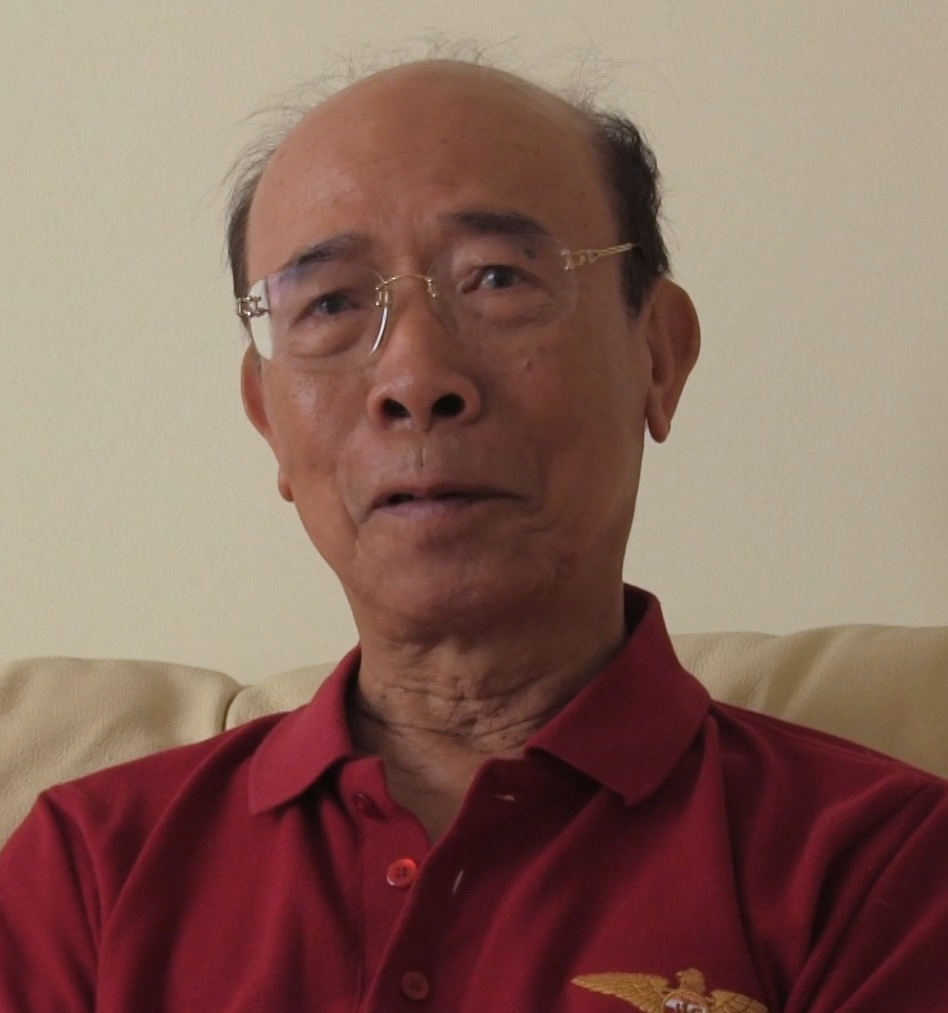
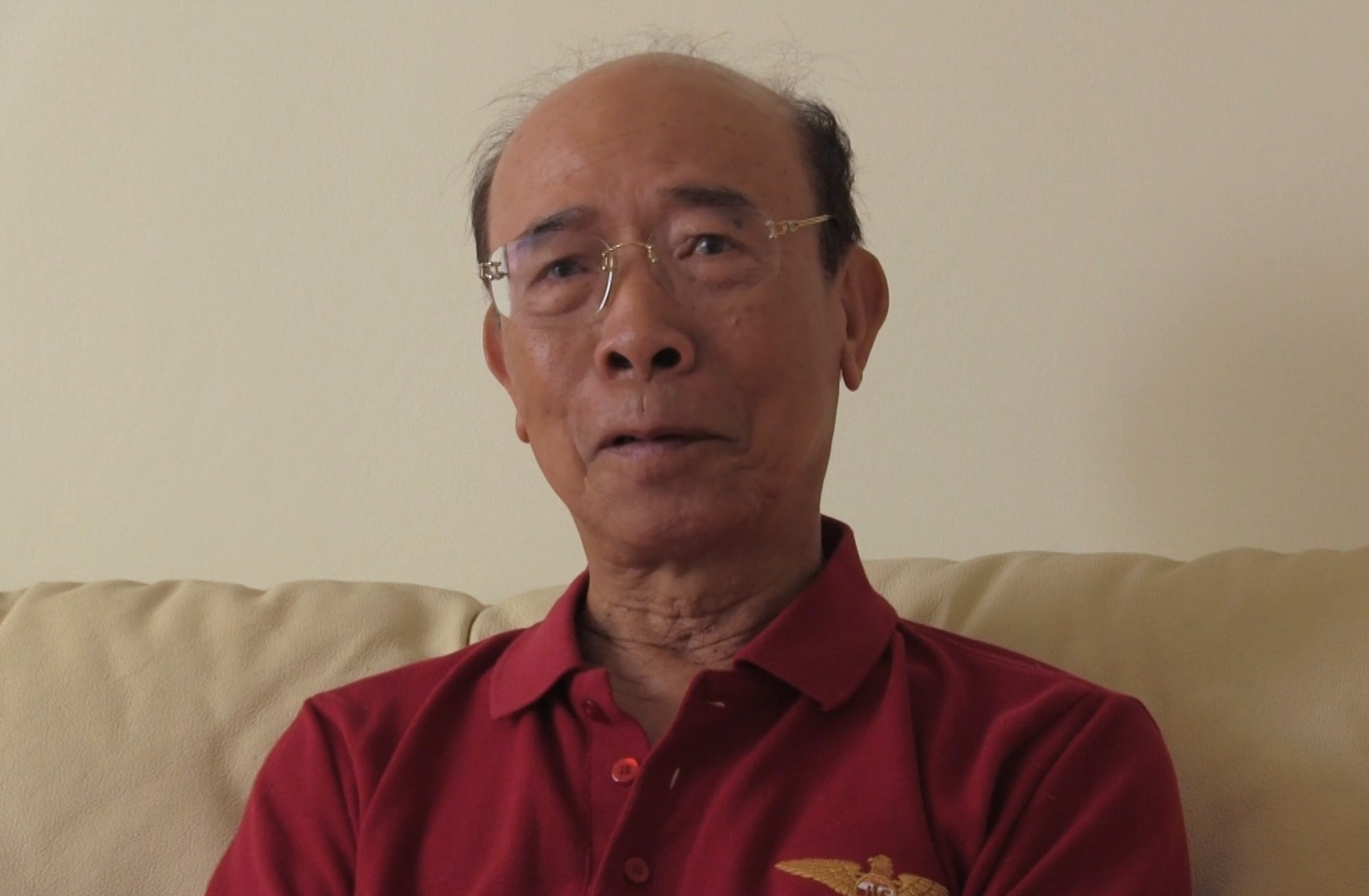
  • "Together with some friends, we were persistent, thinking that the future of Vietnam must be democratic. We believed that nothing is more precious in life than freedom. If one has money but cannot think what they want, read what they want, or say what they want, then life is meaningless. We persistently fought for the stance of freedom and democracy. During that time, I lost many dear friends, those that also have a sense for what is worthwhile, but they followed the communist ideal. They believed that the communist ideal would advance humanity, eliminate wealth inequality, and uplift and help the majority of poor people. They had their reasoning, but many accused me of betraying my class. They knew I was poor and lived a difficult life in Vietnam, yet now I was following the capitalists. During that period, I was assaulted multiple times by the communists; I might have been the student with the highest record of being hospitalized during that time. [...] Fortunately, I met some brothers with goodwill and a heart for the country. We organized study nights together, with a stance from the beginning of having no prejudice. Each of us diligently collected materials about the communist party, democratic regimes, and other countries. Almost every weekend, we would talk for nearly 48 hours, just exchanging ideas about which path the country should take. [...] So we had the sincerity of youth, the purity, no prejudice, and relatively above-average capacity for studying. Gradually, most of us came to the stance that the South, despite many shortcomings, could become a democratic country. Therefore, we supported the Republic of Vietnam in the South. Supporting the regime did not mean supporting President Diệm. We still protested against him and the generals. We distinguished those, we support the regime, the republican system, but did not support the government, so our situation was very precarious [laughs]. The communists saw us as enemies, and those from our nation (the South) did not see us as friendly either. Later, they recognized that we were endearing, naive youths, we later generally achieved fairly remarkable academic success, so they felt some sympathy for us. Intelligent and virtuous kids. But in truth, I was not someone who supported the South Vietnamese generals. I said that my family lived very difficult lives under the Ngô Đình Diệm regime; my father had to flee to Pleiku to live with ethnic minority tribes. We had no reason to endorse the leaders of the Republic of Vietnam, yet we supported democracy."

  • "I have a memory from when I was only three years old, I wasn’t quite three yet. It was during the 1945 famine. My farming family wasn’t wealthy, but we were fairly well-off compared to most in the area. Every evening, my mother would go out and gather what she could from those who had the means to help. And every night, she would cook porridge to feed those who were starving. I can still see it so clearly in my mind that under the flickering firelight, hundreds, even thousands of people coming by and each of them would get a bowl of porridge. I witnessed countless people die from starvation, every day, my older siblings would dig graves to bury them. Those are memories that will never leave me. But it was also during this same famine that I gained some new brothers and sisters. Whenever my mother encountered children whose parents had died of hunger, she would bring them home. So, from 1945 onward, almost every day, I would have a new brother or sister. [...] I don't even know why my mother came up with the idea of cooking porridge every evening to stave off hunger. But it had a deep impact on me and my siblings. I still believe that what truly matters in life isn’t success or wealth, but the love we have for our fellow humans. I can’t fully understand why my mother chose to do that, but I know it affected the psychological well-being of our family, our relationships with each other, and myself."

  • "In 1982, I was allowed to leave because the French government intervened. The Vietnamese communist government at that time needed cooperation with France and wanted to open relations with democratic countries, so they let me go. Two months after arriving in France, I met with a number of friends who mostly were former officials of the Republic of Vietnam and some Vietnamese professionals who had graduated in France but had not yet returned home. More than ten of us decided to form the Assembly for Democracy and Pluralism. Our basic agreement was this: to fight and contribute to building a democratic and pluralistic system for Vietnam, and to do so in the spirit of national reconciliation and unity. We agreed that all of Vietnam’s suffering came from the fact that Vietnamese people do not see one another as brothers and sisters, there is too much hatred. Therefore, we believed the most urgent duty was to achieve national reconciliation in order to move toward national unity, so that we could work together to build a common future. We also believed that the reason we suffer as much as we do today is because we have never firmly rejected violence. Violence is something we must decisively and permanently abandon. From then until now, the Assembly for Democracy and Pluralism has existed for nearly 42 years."

  • Full recordings
  • 1

    Paris, 26.07.2004

    (audio)
    duration: 02:35:03
    media recorded in project Memory of Vietnamese Civil Society
Full recordings are available only for logged users.

My entire life of struggle has been for a democratic and prosperous Vietnam

Nguyen Gia Kieng (Nguyễn Gia Kiểng) 2025
photo: Natáčení

Nguyễn Gia Kiểng was born in 1942 in Thái Bình Province, northern Vietnam, during the war. After the Geneva Accords divided the country, his family and he migrated to the South, where they continued to face hardships under the regime of Ngô Đình Diệm. At the age of 19, he passed his high school exams and received a scholarship to study in France. In 1973, he returned to South Vietnam and worked as an economic consultant for the government of the Republic of Vietnam. In 1975, he was arrested and sent to re-education camps. After being released, he was entrusted as an economic specialist for the new Communist regime. In 1982, he resettled in France. Since then, he has remained actively involved in political work and advocated for a multi-party, democratic future of Vietnam.