Karel Krušina

* 1938

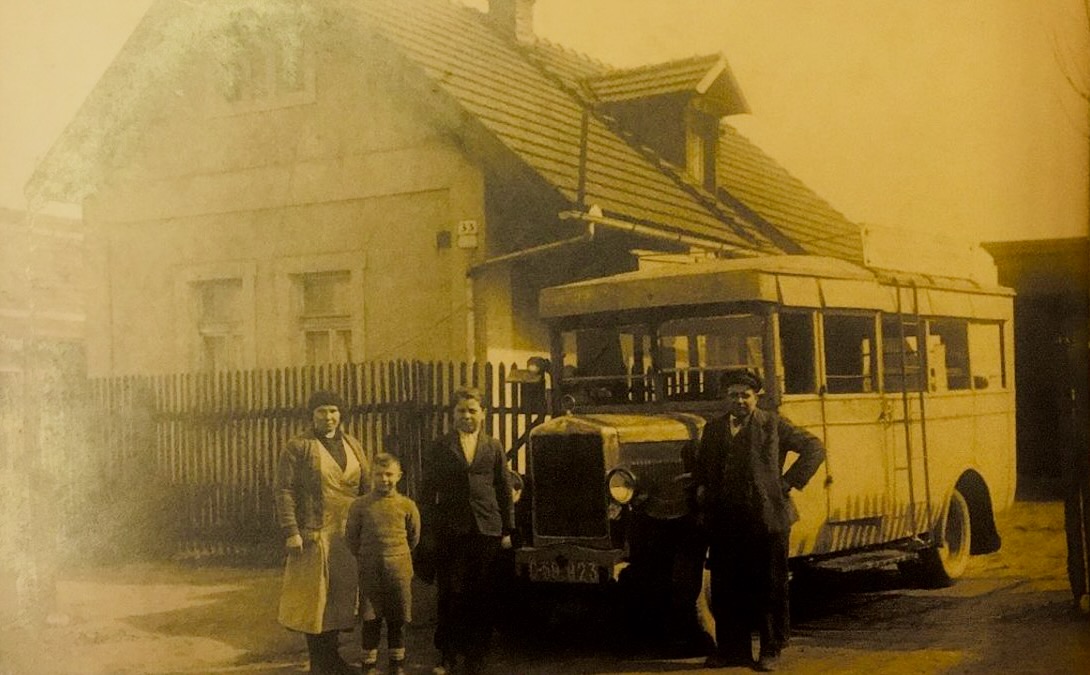
  • "Despite all the difficulties, my mother renewed the line and in 1946 she started operating the buses again. My brother has already obtained a driver's license. In the 1946-47, it was much better, because there were already a lot of passengers, mainly workers in factories in Prague, students in schools and so on. So in terms of transport profitability, it was quite decent. Mom decided, because we were renting, to build a house with garages. She had a project done, she got two plots, one for the house, the other for the garages. The construction was prepared, the foundations were dug up, a well was dug up, the material was imported. Unfortunately, the events of February and nationalization came. The construction was stopped. After nationalization came expropriation, when the mother received a decree that everything that was hers is no longer hers, but a property of the state. Even what she inherited from her parents in Moravia. So we were without a living, we were without a home, because my mother wanted to return to Moravia. "

  • "Dad and Mom listened to foreign radio, which did not escape the attention of my older brother, who was thirteen at the time. And under the influence of these reports and information that Tito's partisans are in the mountains of Yugoslavia, my brother and his two friends in their boyish naivety decided to leave for Yugoslavia. Because my brother knew well the border between the Sudetenland, Svitavy and Letovice, they devised a plan to take the train to Semanin, then cross the border to Svitavy and buy tickets to Belgrade for stamps. They waited for the express train to arrive at midnight, which drove from Berlin via Ústí nad Orlicí to the Balkans. However, they were tired, fell asleep and were awakened by a military patrol that accompanied them down below the Gestapo station. The boys were interrogated there, given a big spanking, and my brother even lost some teeth there. Nobody heard about them at home for three days. Three days later, the news arrived at the gendarme station in Újezd that they were on the Gestapo in Svitavy for their parents to come for them. "

  • "After the year 1950, we lived in Stvolová, in that small farm. Mom took the rented fields back and we started farming. But the union collective farm was established and they came to my mother to put the field in the collective farm. But my mother barely planted the fields and we were expecting a harvest, we also had some animals, chickens, a goat, rabbits and so on ... she didn't want to give them the fields. And so she had to do it, they took away our food stamps. At the beginning, all citizens received the food stamps, but when they took them away from us and everything was rationed, we were actually without the opportunity to buy something for three months. "

  • "My mother and I arrived by bus at the station in Klánovice, next to which stood the Smolík Hotel. Hitler's youth, the Hitlerjugend, were staying at the Smolík Hotel. It was like a summer camp. I was standing in front of the bus as they were walking out of the hotel, because the hotel was located in a forest setting. So they were leaving the hotel and one of them looked at me and shouted: 'Du tschechische Schwein, du tschechische Hund.' My mom didn't hesitate and slapped him. Hurting Hitler's child was equivalent to being sent to a concentration camp, but my mom spoke perfect German, and when the supervisor ran after her, she said to her in German: 'You're raising the Führer's children well. We bring workers here to ČKD, to the factories, to help our Wehrmacht. And this is how you raise them?' And she fell silent, not knowing what to say, and nothing happened to us."

  • "The occupation was at its peak, and it was necessary to get everything that was Czech—and not German—from Brněnec, Březová, and Chrastová to Moravia. And my mother took part in this herself, along with her nephew and brother-in-law. They transported the town school in Březová to Letovice. All the equipment. And they transported everything that the entrepreneur Löw-Beer could transport, everything he managed to take. And they transported it to Svitávka, because the Löw-Beer factory was also located there. And when the last bus left, it was filled with rolls of wool – he also produced wool for knitting – the whole bus was filled with rolls of wool, and Mr. Löw-Beer was sitting among them. And when my mother arrived at the gatehouse, which was before the bridge, where there are barriers across the tracks in Chrastová, there is a bridge over the river and behind it was the gatehouse, and the Gestapo was already at the gatehouse looking for Löw-Beer. And my mother told them that she was going to Svitávka, that she had a bus full of wool and that she knew nothing about him. She spoke perfect German. They probably accepted her explanation, because she was allowed to leave. And so Mr Löw-Beer made it to Svitávka, but what happened to him after that, my mother didn't know."

  • "[Viliam] Šalgovič was the chief. He called us, we came to his office, he took a map and showed us which village we would go to, which village we would walk through, and what we would do in that village—that we would ask about the chairman of the national committee, the chairman of the cooperative. Various little jokes like that. And that we would walk through the village and contact a few people. And outside the village – and he showed us the spot where they would pick us up. You know, when you're locked inside the barracks, every bit of free time is like letting a bird out of its cage for a moment. We said to ourselves, well, why not? Let's go through with it. And I had a loaded pistol with me. Looking back, when the State Security agent came to pick me up at the quarry, he could have just shot me to prevent any witnesses, because we were actually acting as decoys. They needed to arrest people – farmers who didn't want to join the cooperative."

  • Full recordings
  • 1

    Hradec Králové, 13.05.2019

    (audio)
    duration: 01:24:30
    media recorded in project Příběhy regionu - HRK REG ED
  • 2

    Moravská Třebová, 01.07.2025

    (audio)
    duration: 03:49:43
    media recorded in project Stories of 20th Century
  • 3

    Moravská Třebová, 24.10.2025

    (audio)
    duration: 01:16:30
    media recorded in project Stories of 20th Century
Full recordings are available only for logged users.

The communists hurt us a lot. But thanks to them, I met my wife
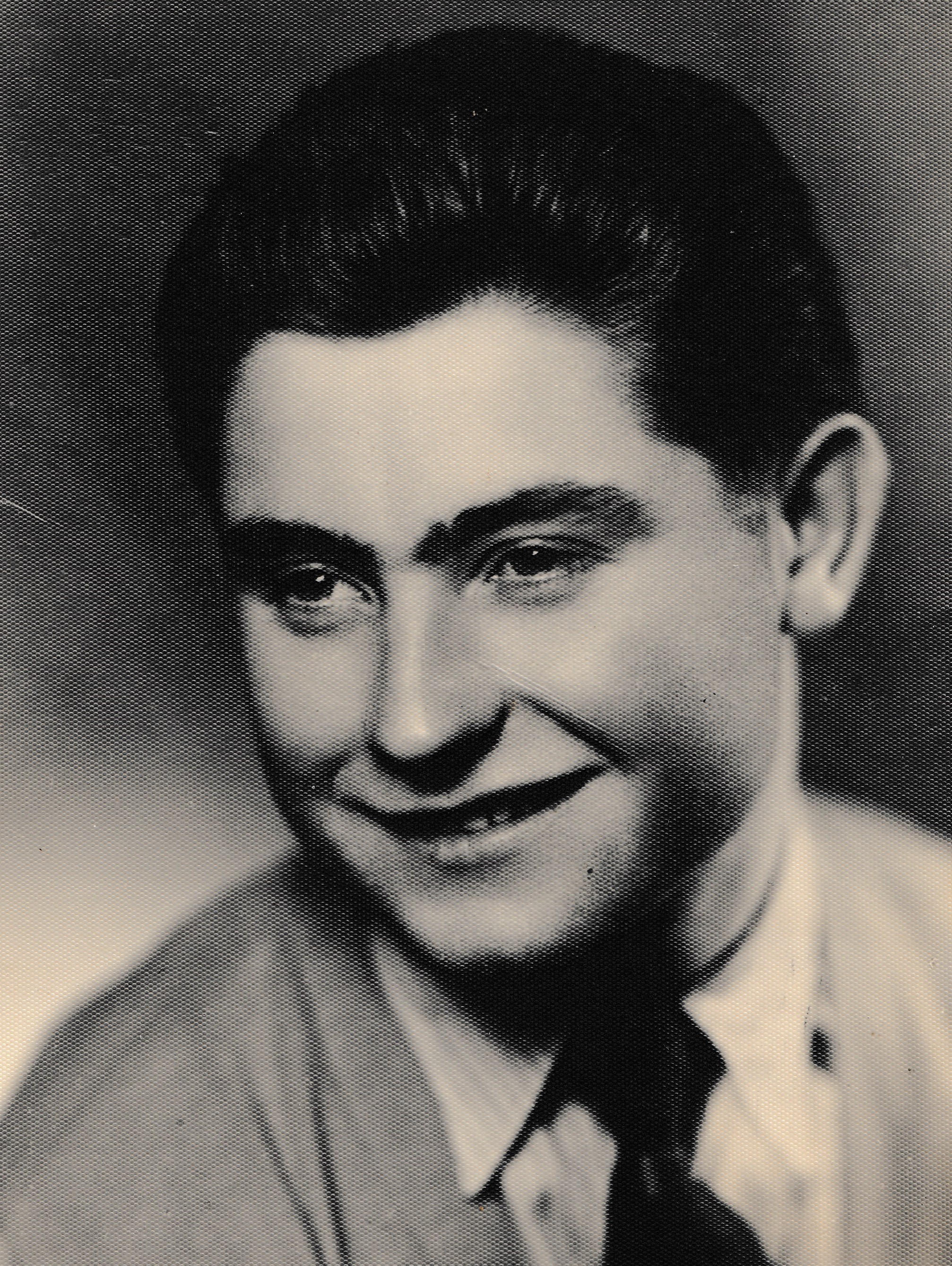
Karel Krušina, historical photography. without date
photo: Archiv pamětníka

Karel Krušina was born on September 21, 1938, to Gustav and Aloisie Krušina in Koloděje near Prague. Two days after his son’s birth, his father had to join the army because general mobilization had been declared. The family ran a bus transport business, which his father continued to operate after his return from mobilization until 1943, when the Nazi authorities revoked his license for refusing their offer to transport ammunition. The Krušina family lost their livelihood and moved to the mother’s parents in Stvolová in the Svitavy region on the border between the Protectorate and the Sudetenland, where they remained until the end of the war. Shortly after the war, father Gustav Krušina died and the mother decided to stay with her sons at her parents’ house. After some time, however, she moved back to Koloděje with her children. She applied for the return of the bus transport license, which she eventually achieved after a long battle with the authorities, and started her own business. The company began to prosper, and Aloisie Krušinová wanted to build a new house for her family, including garages for buses. However, 1948 came and the Communists took power. The unfinished house, garages, transport business, and even the farm inherited from her parents in Stvolová were nationalized. She managed to save at least the house in Stvolová, where she moved back with her sons. Their mother tried to restore the farm and sowed the fields. Soon, however, a unified agricultural cooperative was established in the village, and officials asked Aloisie Krušinová to join it. She refused, and as a result, the whole family lost three months’ worth of food stamps. Shortly thereafter, in 1953, a currency reform took place and the family lost all of their savings, which were intended to pay for their younger son Karel’s studies at an automobile training school in Mladá Boleslav. He had to leave school immediately and start working to help his mother support the family. He started working and training at the Sandrik company in Moravská Třebová, where he remained until his retirement. With the prospect of a better life, the witness joined the Communist Party in 1960. However, because of his disagreement with the invasion of the occupying forces in 1968, he was expelled from the party by officials and was also bullied at work because of this. However, he transferred to another department and the situation calmed down. In 1989, he briefly became involved in the activities of the Civic Forum in Moravská Třebová, but soon withdrew from politics. Karel Krušina has two sons. In 2025, he lived in Moravská Třebová in a house he built himself in 1968.