Stasha Hart

* 1950

  • "When my dad was recording either symphony orchestras, Mr. Dvořák, or Mrs. Bohdalová, who were recording all kinds of bedtime stories or playing... They would do things like slam doors, and they would record it there. I often went there after school because it was a nice sight, so I often saw that. And the most beautiful thing about it was that my dad had learned Czech and studied Czech, but he still had this incredibly broken Czech, which he spoke perfectly, but terribly. So when I sat there and listened... One of the directors who often made films there was an American named Gene Deitch. And you couldn't know about him either... He's long since passed away, but he was quite a character. Gene was an American who spoke broken Czech. And my dad was a Bulgarian who spoke fluent but broken Czech. And listening to those two... It was a concert. But everyone understood him, everyone adored him, because he was incredibly modest and never asked anything of anyone."

  • "1938. Bulgaria played against Germany. I don't know where, whether in Sofia or in Germany. I don't know. But probably in Germany, because my dad told me that when you looked around, everything was screaming Hitler. Even back then, in 1938. And then when they played, when the team found out that there was a Jew among them, they kicked him. And that's all I know. But it wasn't the Olympics. It wasn't. It was purely an international match. And my dad played there. That one... And he didn't play again. After that, he only played for AC or AS 23."

  • "And I know that when he was about ten, eleven, twelve, he was spotted by a soccer club. It was called AC 23, or AS 23, because it's in Cyrillic. So AC is AS 23. And they took him on as a talented young player. He stayed there until 1937. He also played for the national team once. And I know that he traveled with the club, he did one tour with AS or AC 23. It was called the Balkan Cup, or the Balkan Trophy, or something like that. In Bulgarian, it was called Balkan Kupa. And kupa means cup. And they traveled with it... They were probably in Turkey, in Istanbul, playing against a soccer club that still exists. It was called something, something... Besiktas. And Besiktas still exists, because when I was in Istanbul, we drove past a soccer stadium and I looked at it and said, ‘Oh, that’s Besiktas, that’s where Dad played.’ And then they were in Monte Carlo. My dad told me that when they were in Monte Carlo, because he didn't have any formal clothes, his mom gave him his school tunic... And he said that his colleagues even smuggled him into the casino because he was too young. He went into the casino in Monte Carlo through a back entrance wearing his school uniform. But he doesn't have any photos from there, nobody was taking photos back then."

  • Full recordings
  • 1

    Kralupy nad Vltavou/Londýn, 20.01.2025

    (audio)
    duration: 01:19:38
    media recorded in project The Stories of Our Neigbours
Full recordings are available only for logged users.

My dad was with the partisans during the war, most of his family fled to Israel

Stasha Hart, 2025
Stasha Hart, 2025
photo: Witness archive

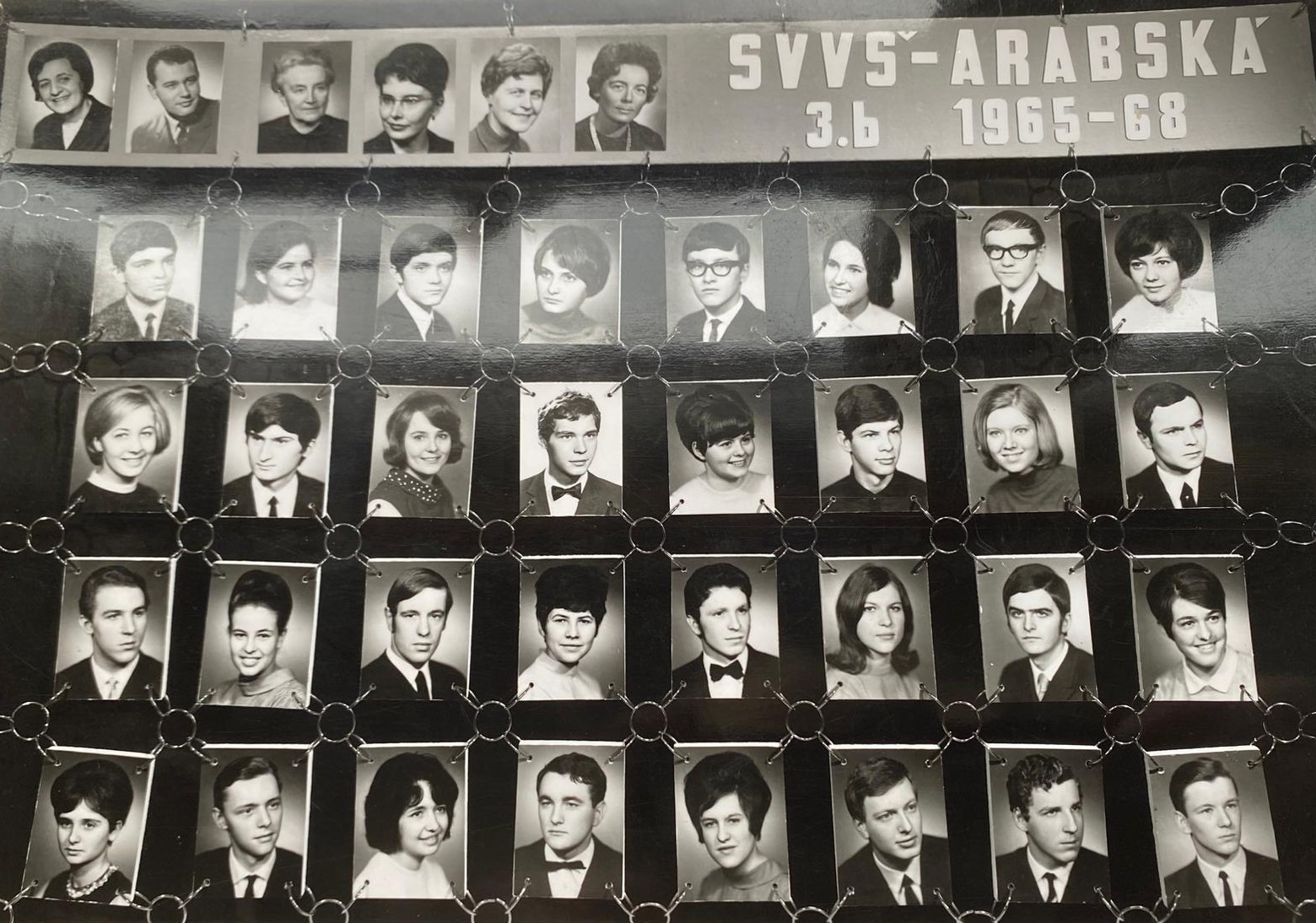
Stasha Hart, née Stanislava Astrugová, was born on August 1, 1950, in Prague as the only child in a Jewish family. Her father, Benjamin Astrug, was Jewish and came from Bulgaria. In the 1930s, he was a well-known soccer player. After World War II, he came to Prague to study and later worked as a sound engineer. He participated in the production of a number of Czechoslovakian children’s television programs. Stasha Hart grew up in Prague and attended high school at Červený vrch on Arabská Street. She first went to England on an exchange program in 1966, graduated from high school in 1968, and then went to London for a year as an au pair. After returning, she began studying Czech and English at Charles University, specializing in Slavic languages. After graduating in 1974, she married her long-time boyfriend Antony Hart and emigrated to London. She worked for a marine insurance company. Her mother died in 1977, and her father visited her regularly in England. In November 1989, she happened to be on a business trip to Prague and experienced part of the Velvet Revolution there. In 2025, Stasha Hart lived in London.