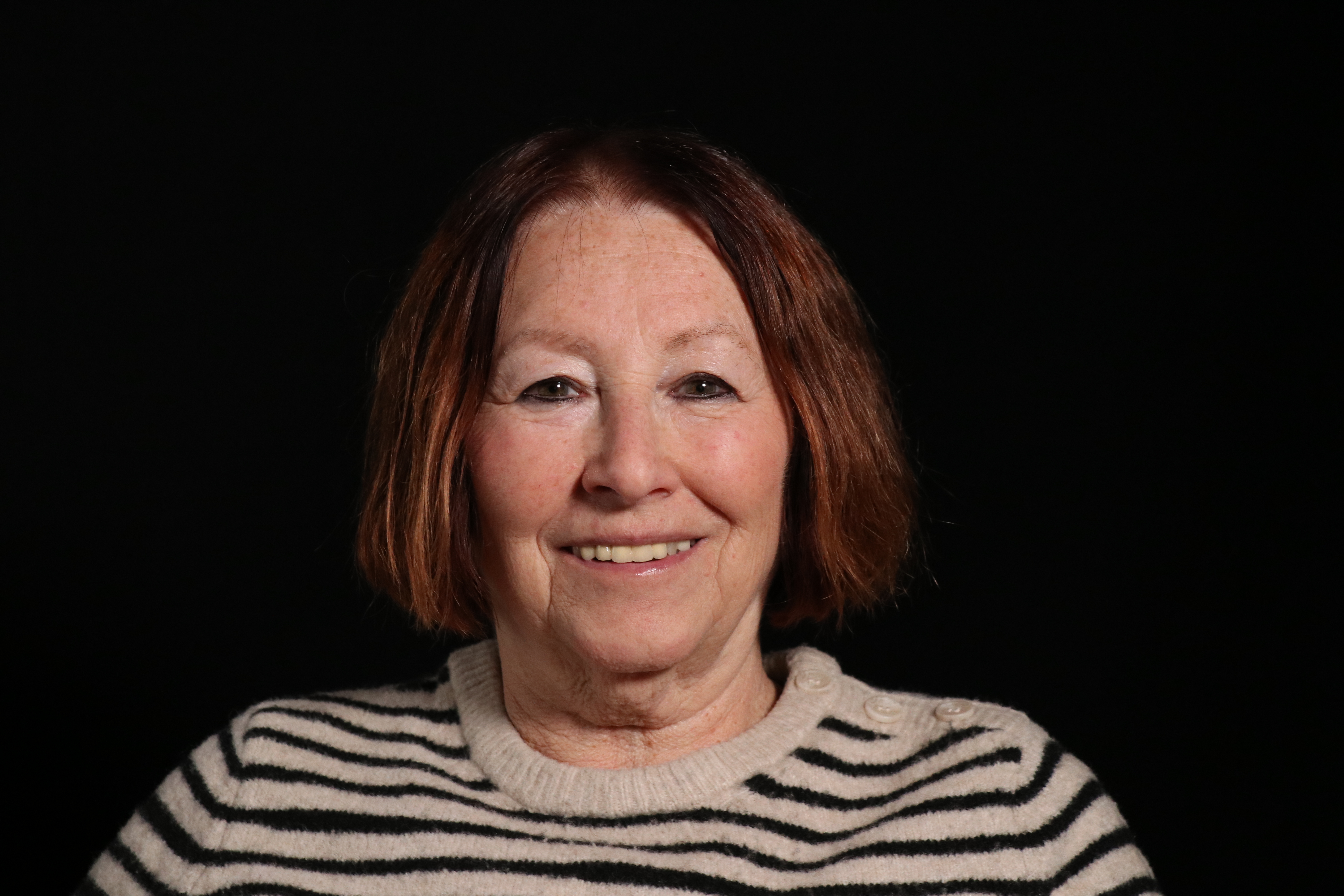
When I was six, they found out that I didn’t weigh 18 kilos, and they didn’t let me go to school

Download image
Zuzana Glückseligová was born in Jihlava on 3 February 1947. Both of her parents were of Jewish descent and met during the Second World War in Haifa in what was then Palestine. Her father, Arnošt Hausner, came from Ostrava and had six other siblings, only four of whom survived the war. One sister and one brother died in Auschwitz, the other brother was killed in the fighting at Dukla. Another sister died in Israel in the 1950s as a result of the experiments of the Nazi Dr. Mengele. The life of her father’s first wife Heidi and their daughter Hanička also ended in the gas chamber. He himself fled to the Soviet Union via Poland, later going to Africa with General Karel Klapálek to join the Allied forces and fighting alongside him at Tobruk. He subsequently went with the British Army to the Middle East and Palestine. The family of her mother, Elsa née Müllerová, came from Klagenfurt, Austria. Before the war, the Müller grandparents returned to Czechoslovakia. Her grandmother perished in one of the concentration camps after grandfather’s death. The mother of the witness, Elsa Müllerová, and her 12 years younger brother František reached Haifa after a harrowing journey and a shipwreck. There František died of typhus and Elsa met Arnošt Hausner, the future father of the witness. In 1947, shortly before the birth of little Zuzana, they returned to Czechoslovakia. They settled in Vinohrady, Prague, with father working in the Koospol foreign trade company and Mummy a housewife. After the February 1948 communist coup, her father was fired from his job and in the 1950s lived in fear of arrest because of the staged trials taking place. Zuzana Glückseligová also experienced anti-Semitism. Despite the circumstances, she had a nice childhood and from her school years she was aware of and accepted her Jewish origins as a matter of course, also thanks to her regular visits to the synagogue in Jeruzalémská Street. She went to school together with her brother, who was a year younger, in 1954. Mother spoke mostly German and English with them. After finishing her school attendance, she was not recommended to go to grammar school (then an eleven-year school), but was accepted to the secondary medical school. Brother Peter graduated from grammar school and medical faculty and became a renowned oncologist. After graduating in 1967, Zuzana Glückseligová worked at the Thomayer Hospital in Prague-Krč, married in 1968 and had a daughter Andrea with mental disabilities. During the occupation in August 1968, she did not take up the offer to go to London to visit her aunt. From the mid-1970s she worked for 13 years at the 1st Dental Clinic in Kateřinská Street, then in a private dental surgery practice, where she remained until her retirement. She and her husband Alexander Glückselig also raised their second daughter Barbara. She never joined the Communist Party and welcomed the fall of the totalitarian regime with enthusiasm. Shortly before the Velvet Revolution, her brother, who has lived in Washington ever since, went to the USA for an internship. After the regime change, she travelled extensively, her favourite place to return to was Israel. Her daughter Barbora married an Israeli. In 2025, Zuzana Glückseligová was living in Prague.