"The phones couldn't fall into the hands of State Security. I had to swallow two lines once, because there were personal issues. We weren't going to give up our souls so easily. And he (his brother Wilson) insisted on not handing it over. At that moment, the person handling this case, Wilson's most relentless pursuer, was Officer Marco, whom we have clearly identified. Today we know that he is now a senior member of State Security—they have promoted him. This officer feels powerless, he can't convince my brother, so he decides to use violence and looks for five or six police officers. According to my brother's story, which made me cry then and still makes me cry now, they beat him up and kicked him to the ground. And my brother was a strong, big man. They threw him against the wall, grabbed his head, and slammed it against the wall. And the man wouldn't let go of the phone. At one point, they weakened him so much that they almost killed him. They took a patrol car and took him to the hospital. That was in the morning, and by the afternoon Wilson still hadn't appeared. Reports were made on social media that Wilson was missing. Security had to go and find his wife to cheer her up, because Wilson couldn't go out due to his illness. He was on crutches for about a fortnight. International reports were made, journalist Camila Costa interviewed him, and from that moment on, his determination to stay and fight for Cuba's freedom was reinforced, but this was not possible. State Security itself arranged his ticket and everything. At the terminal, there was even a major to coordinate everything at the airport, and Wilson was definitively expelled from Cuba."
"The Libérate project emerged as a tool for struggle. We were not part of the so-called dissident movement, as we were not penetrating the networks, it was not structured, it was not organized. In other words, two individuals would go out into the street, hold up a sign, get beaten up, arrested, and make the news. That was it, nothing more. When you came to see it, what it gave was victory to the adversary. We thought: if civic groups are able to structure themselves into cells and advise each other, there would come a time when this dissident opposition could be stronger in the fight against the dictatorship. // Already in those years, people were thinking about a large protest. Libérate planned to structure it nationally by province. It didn't matter if two or three people came forward, we knew that a national network was being created in connection with the critical mass, this limited number of people who had the ability to mobilize others. We are talking about 2020, and we were thinking of a large protest, but with knowledge, and to impart this knowledge, you need advisors with a certain degree of professionalism who know how to teach; teaching is key. Without knowledge, you cannot challenge an enemy as strong as a dictatorship. We joined together in groups. There were writers, psychologists, sociologists, people with a history of opposition. There was even a military man, a very interesting ex-military man. He said to me, “I was in the military, my friend, but I want to help.” I said, ‘Well, my friend, you know that if something happens, I'm not going to give you any information, but we're going to teach other activists inside Cuba how to behave as opposition members. We're going to teach them how to conduct interrogations, how to observe the geography of a space to see if it's suitable for a demonstration, how to detect informants and snitches, and how to create investigation files on individuals.’ And we did it."
He died without a house, without a car... My father died poor. So poor that his checkbook balance was, I think, just over 2,000 pesos, but we're talking about a professional who contributed some 45 years of work, a law graduate who worked as a legal professional and was well versed in legislation. And yet, so to speak, he died in extreme poverty. My father had no assets, no car. His personal belongings consisted of some clothes and a phone that the family gave him. You can't say that his sacrifice enabled him to live a high standard of living, no..."
“We were born in poor neighborhoods. Imagine neighborhoods without sewage systems or running water. Obviously, the internet didn't exist. I don't remember seeing a television in my home during my childhood. If there was one later on, it was public. Wilson and I were born in a generally extremely unfavorable environment. Our little house was made of boards and had a dirt floor. We didn't have a united and strong childhood because we had to move frequently due to our living conditions. My father tried hard to improve our home and find a better place to live, but we always ended up in marginal neighborhoods. It was a terrible childhood. // I remember that Wilson and I lived in an area called El Pueblo Nuevo. There was a lot of military activity there. Among the poor houses were hills, areas with practically no inhabitants, where every Sunday there were loud maneuvers, loud noises, sirens, and explosions. It scared me; we thought they were bombs... maybe they were shells. At the same time, among the neighbors, there was talk of war against imperialism, that aggression was imminent and we had to prepare and face it. It was a totally warlike discourse, and this produced fear."
"Violence broke out on July 11. What happened on July 11? We saw repression everywhere. However, we must admit that there was also a fairly criminal sector of society. I acknowledge this publicly: these people disrupted the intention of that protest. There were even those who abandoned the march to go looting stores. We must be honest."
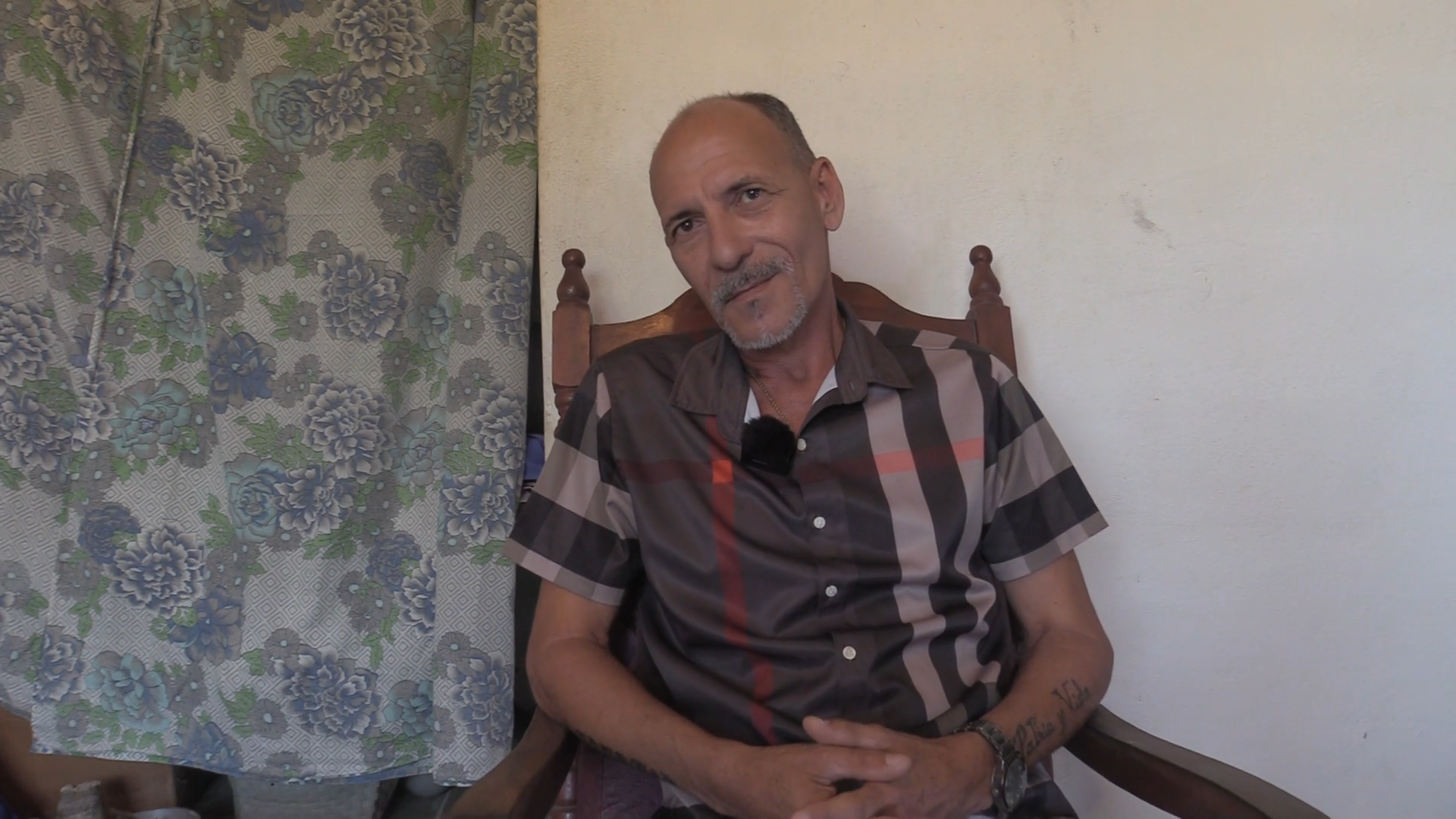
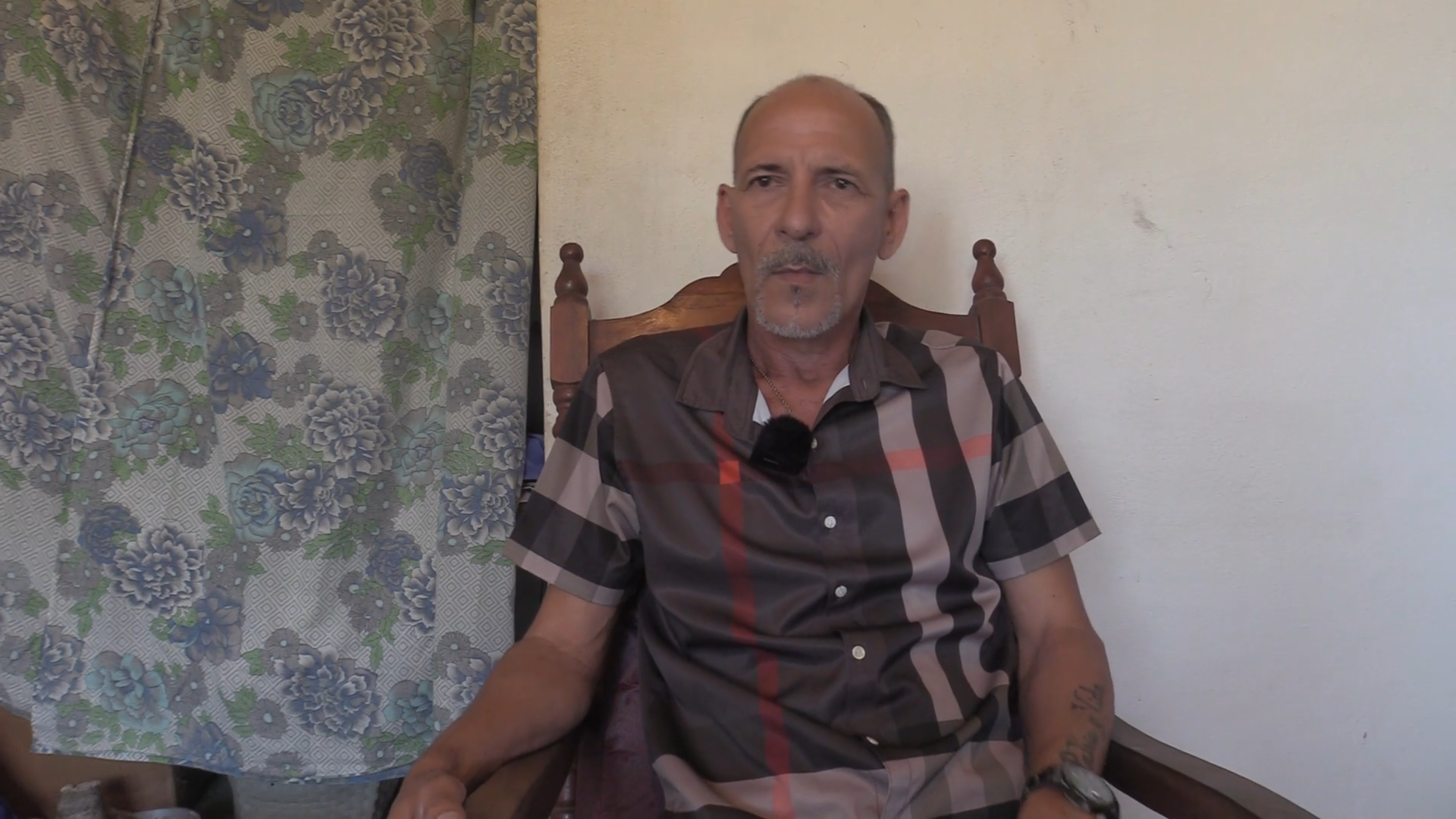
Idael Edesio García Zaldívar was born on May 1, 1970, in Holguín. He has two brothers, one of whom is the renowned playwright Yunior García Aguilera, whom the Cuban authorities expelled from the country for his leading role in protests against the regime. The second, Wilson García Zaldívar, was also forced into exile for similar reasons. Idael himself was actively involved in several civil society organizations. However, he is the only one of the three brothers who still lives on the island. During his first months of life, little Idael only had contact with his father during the passes that were given every two or three months to Cubans mobilized for the ten million ton sugar harvest. The family lived in precarious conditions in houses with dirt floors and wooden roofs, frequently changing residence in search of more suitable land. As a result, Idael did not grow up in an environment conducive to establishing friendships and stable relationships. One of the influences that significantly shaped him was the religious faith practiced in his family. Jehovah’s Witnesses were very present in his home, and because of his membership in this religious organization, he had to deal with some forms of persecution in a society that did not look kindly on any kind of autonomy in private life. Idael did not achieve a high level of education and was always a craftsman. Due to his family’s ideological profile, he managed to escape military service and throughout his life he became involved with various organizations and structures of Cuban civil society, thanks in part to his contact with the cultural environment in which, due to the essence of a culture that seeks free expression from external obligations, there were always opposition groups. He actively participated in various projects, including Libérate, which sought to instill democratic ideals and the concept of a free society in the Cuban population. His contribution consisted mainly of education, propaganda against the regime, and the organization of demonstrations. As a result, he became the target of repeated summonses, interrogations, and arbitrary detentions. A significant part of this testimony is devoted not only to his experiences, but also to the lives of his two brothers, Yunior García Aguilera and Wilson García Zaldívar.