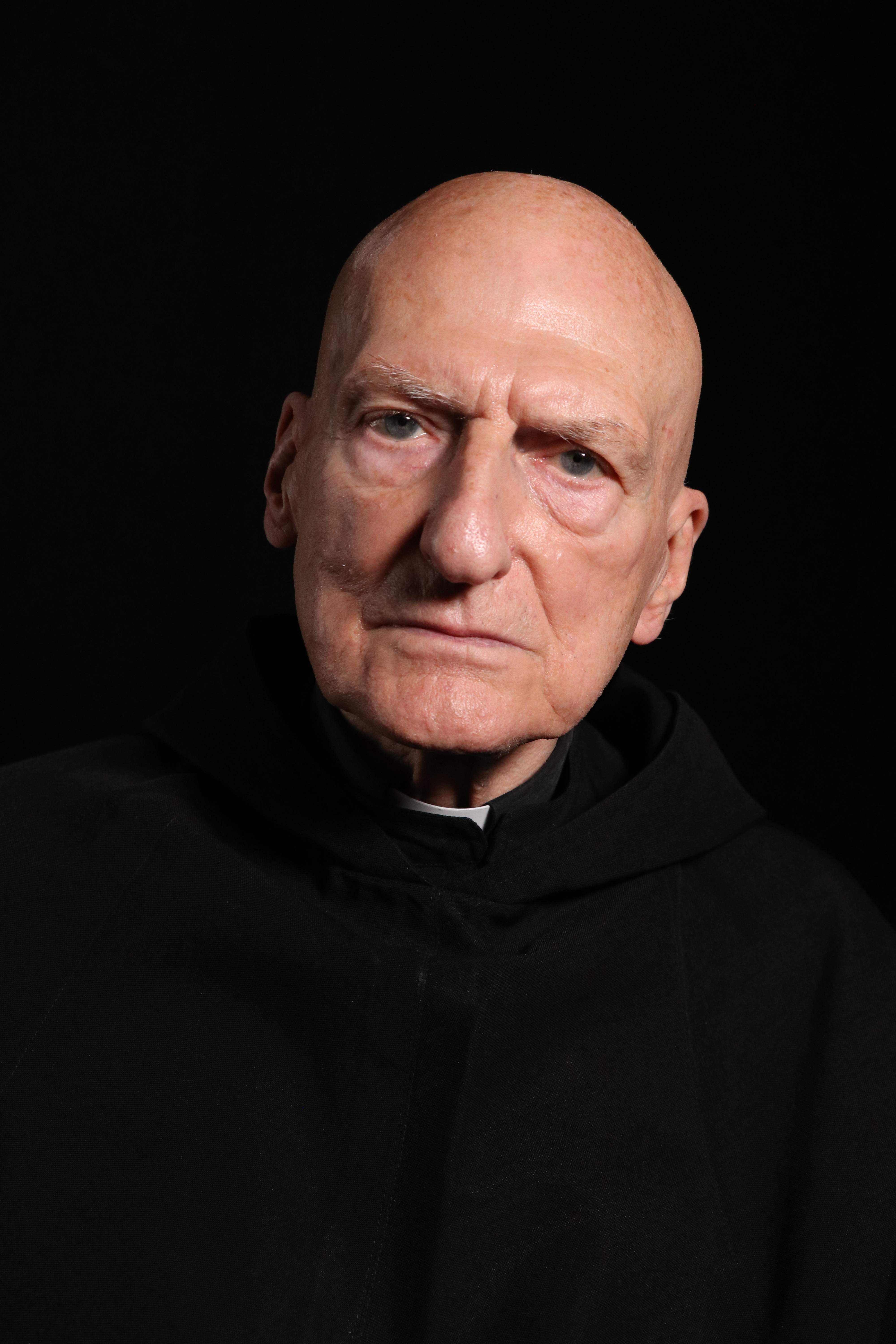
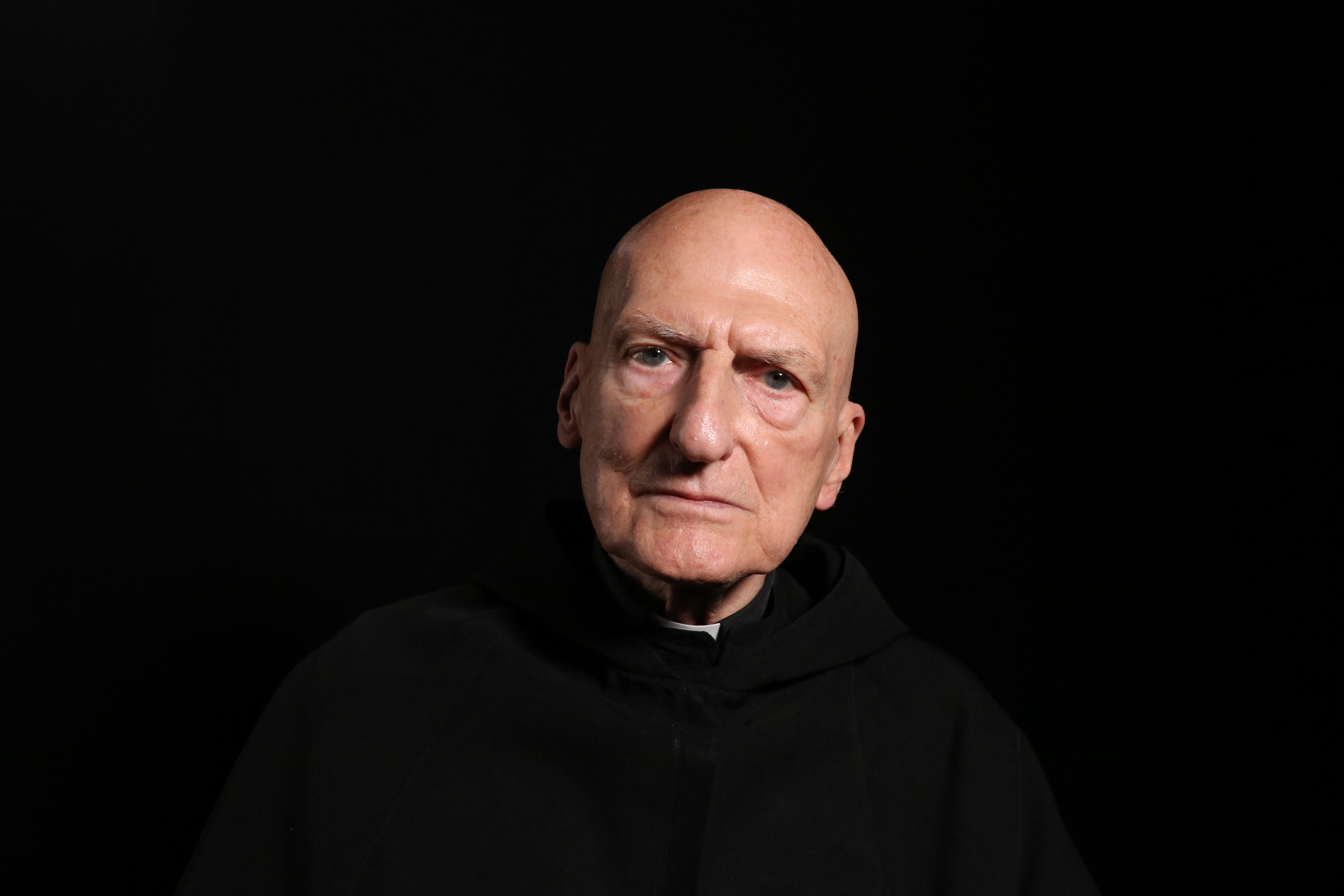
“I wasn’t planning on being in Prague. I thought I would be transferred some place out. When I came here, it was difficult. The Czech people, you have to remember I came in 1995, and the Czech people just came out of a rather dark period in their history. They weren’t quite sure who this American, who couldn’t speak Czech properly, was. And then I was made pastor at Saint Thomas Parish, which was very difficult for one year. They were very very reserved – I would get a polite, but reserved, good morning, dobrý den, dobrý večer, and that was about it. No one was saying anything, they were very polite. And then, of the sudden, a sort of miracle happened after a year. It was Easter Sunday. Father Juan joined me in 1997 at Saint Thomas. I said to Father Juan that there used to be an old tradition that was practiced here in the Czech Republic on Easter Sunday – we would have a procession and the opening of the tomb, we would process with the blessed sacrament, and sing the Easter hymns, and we would close the liturgy. And so, Father Juan said: ‘Let’s do it.’ And I said: but if we do it, maybe it’s only going to be you and I who are going to be walking in the procession. And he said: ‘So what, we have Jesus, it doesn’t make any difference. We'll just walk with Jesus.’ So, while I explained everything to the people, they looked at me, I looked at them and said to the organist to play the Easter hymns – Velikonoční písně, we started the procession and the people followed. The longer we went on with the procession, the louder the singing began. And when we came back to the church, people were singing out loud. We put the blessed sacrament away, and after mass, the people came and wished me a Happy Easter. And since then, everything has calmed down, and now I have only good friends – I don’t have parishioners, I have good friends. So, it took Jesus on the day of his resurrection to pacify people in their faith.”
“When I was ordained (1963), the last thing I was thinking was that the Soviet Union would disappear in our lifetime. I never thought that, never. I thought the Iron Curtain was going to be a permanent feature of the political climate for the next 100 years. I was totally convinced of that. As regards to wars, this was in the 1960s, all the African countries were establishing independence, were leaving the imperial system – the French, the British, the Dutch… The colonies were becoming independent nations. It was an age of turmoil, it was anti-colonialism, there were massacres, there were terrible acts committed against a former colonial power. The civil rights movement in the US was gaining momentum, the Vietnamese war in the US, we finished the Corean war, then there was the war in Vietnam, there were riots and marches in the streets, marching on Washington. Nothing has really changed. What has changed is the technology that has developed in this time frame. The technology, the ability to communicate to all parts of the known world, just with a telephone, which is unthinkable. The rise of terrorism… There was terrorism, certainly, there were some troubled areas that are still troubled areas. It didn’t really change – it became more refined, if I can say, cruel. These drones – can you imagine, they don’t have to send anyone into space, and they can send a drone and destroy a village. These things… And I can say – when we heard about the atomic bomb in Nagasaki and Hiroshima, it was one of the most heartrending, fearful pieces of news that we lived in start fear that someone else is going to do the same to us. You know, life goes on and the malevolent streak in global cultures remains. We’re facing the same, but in a more refined level of destruction.”
“…a story that came down as a legend in our family. I have always noticed that my grandfather on Easter Sunday would fast. He would not really eat very much, and I always though it was strange – Easter Sunday is the big feast day, when there were no limits to what was put on the table, it is like Christmas, and even more so on Easter. When I was ordained a priest in 1963, my mother said to me: ‘Now I can tell you the reason for your grandfather's meager diet on Easter Sunday. He fasted on Easter Sunday so that there would be a priest in the family.’ She told me that on the day I was ordained a priest, on February 9th 1963, she told me that.”
“It was after the (Second World) War. I remember this enthusiasm, there was a sense of national pride that the war was over, that we (In the United States of America) were spared the bombings and the carnage… The television was just beginning to come in, and there was a footage of ruined cities and destruction – something which amazed me in 1970 and 1971 when I lived in Poland as a Fullbright scholar. There were some cities, like Wroclaw, where there were streets of piles of bricks. It was just ruined, there was very little work done sometimes, and in the outskirts, and even in the center of some cities. Krakow was not bombed, it was spared. But I remember it was dark, cloudy, because the Polish people’s republic established a circle of plants and there were belching out smoke. Cloudy. The fabric of inner city was corroding. Warsaw was completely, they say 87 % of the city was destroyed during the war. When I was there in the 1970s, there were still streets, where only the façade of the building was left, with wooden support, so it would not fall into the street. It was rather grim. But something at that time was the smell of oxide. A strong, pungent, odor of something that never seemed to go away, even it was a nice day, you still had that cloud. So, my first recollections of Poland within 25 years after the War, was that it was still in working to move out of that phase of the war. Reconstruction seemed to be endless.”
Father William Faix (born 8 May 1936, Governor’s Island, New York City) is an Augustinian priest long active in Central Europe and based in Prague since 1995. Raised on Staten Island by parents Genevieve (née Rolka) and William Robert Faix, he entered the Order of Saint Augustine, earned an undergraduate degree at Villanova University, and completed theological studies in Washington, D.C. He was ordained on 9 February 1963. He taught high school in Reading, Massachusetts for five years, then pursued doctoral studies at Catholic University in Washington, D.C. In 1970 he held a Fulbright scholarship in Poland, returned to the United States in 1971, and went back to Poland in 1978; he remained there through the 1989–1990 transition. After 1990 he continued serving in Central Europe and, from 1995, in the Czech Republic, primarily in pastoral care. His long-kept daily journals are deposited in the Archives of the Order of Saint Augustine in Rome.