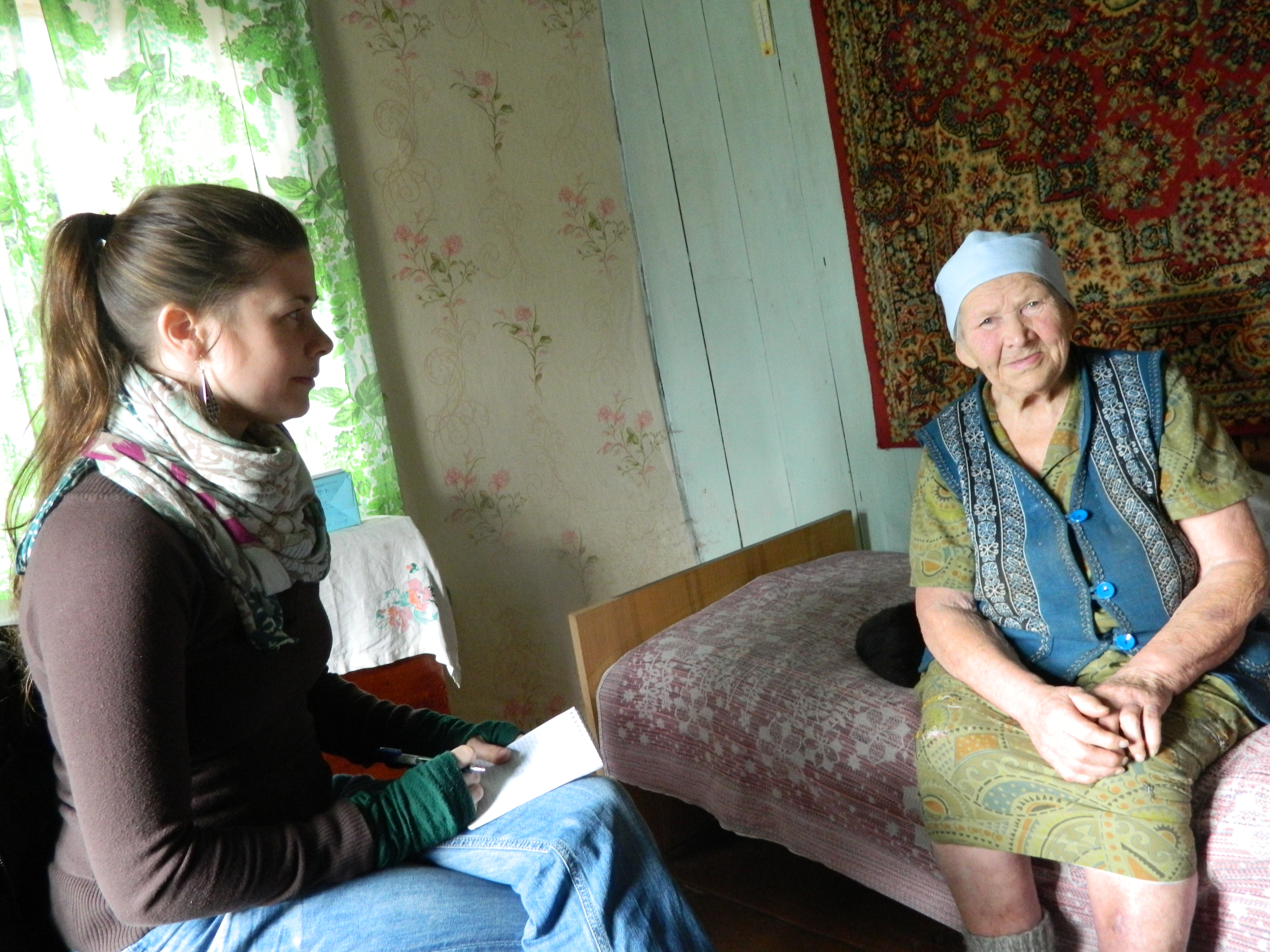
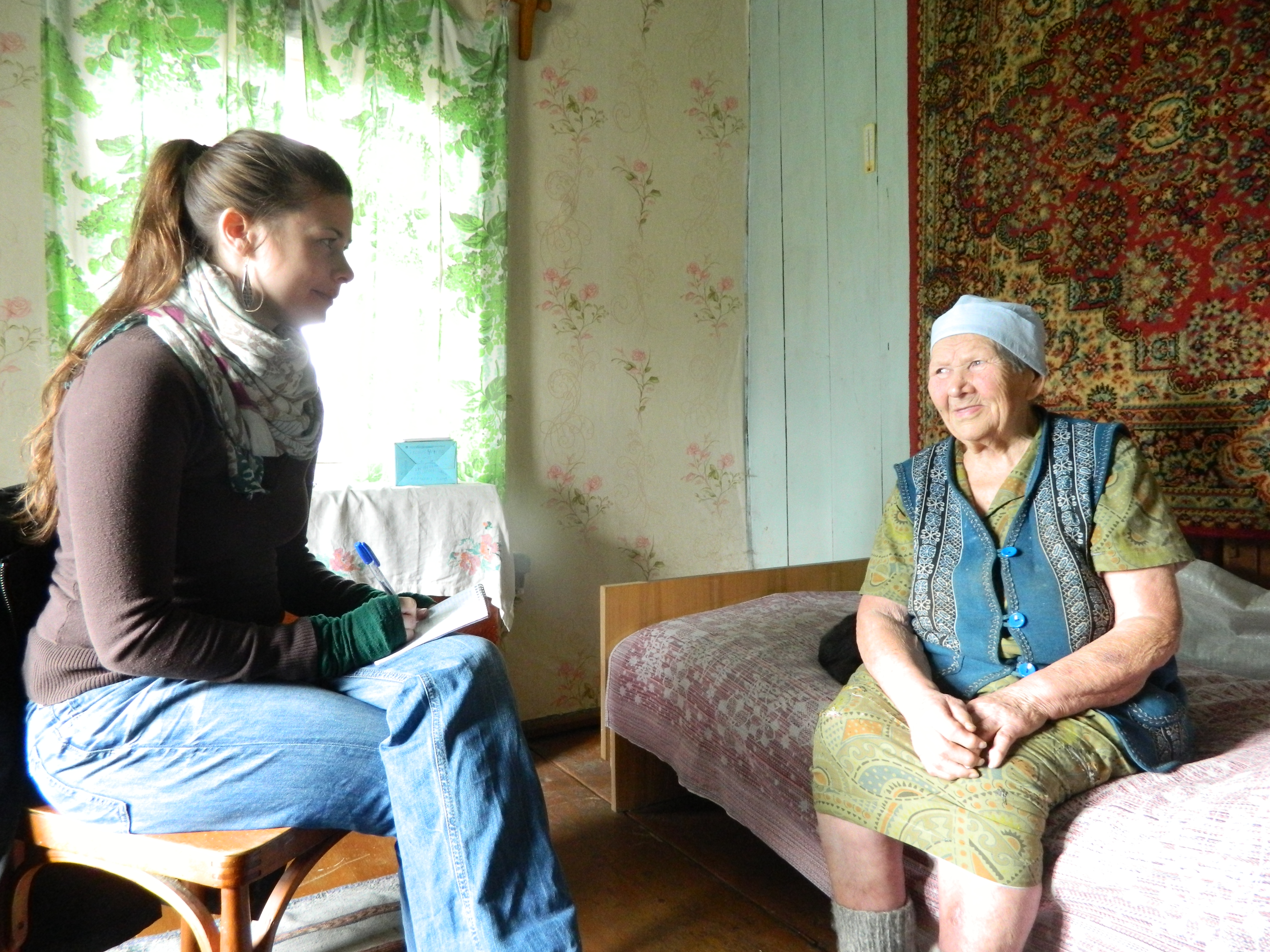
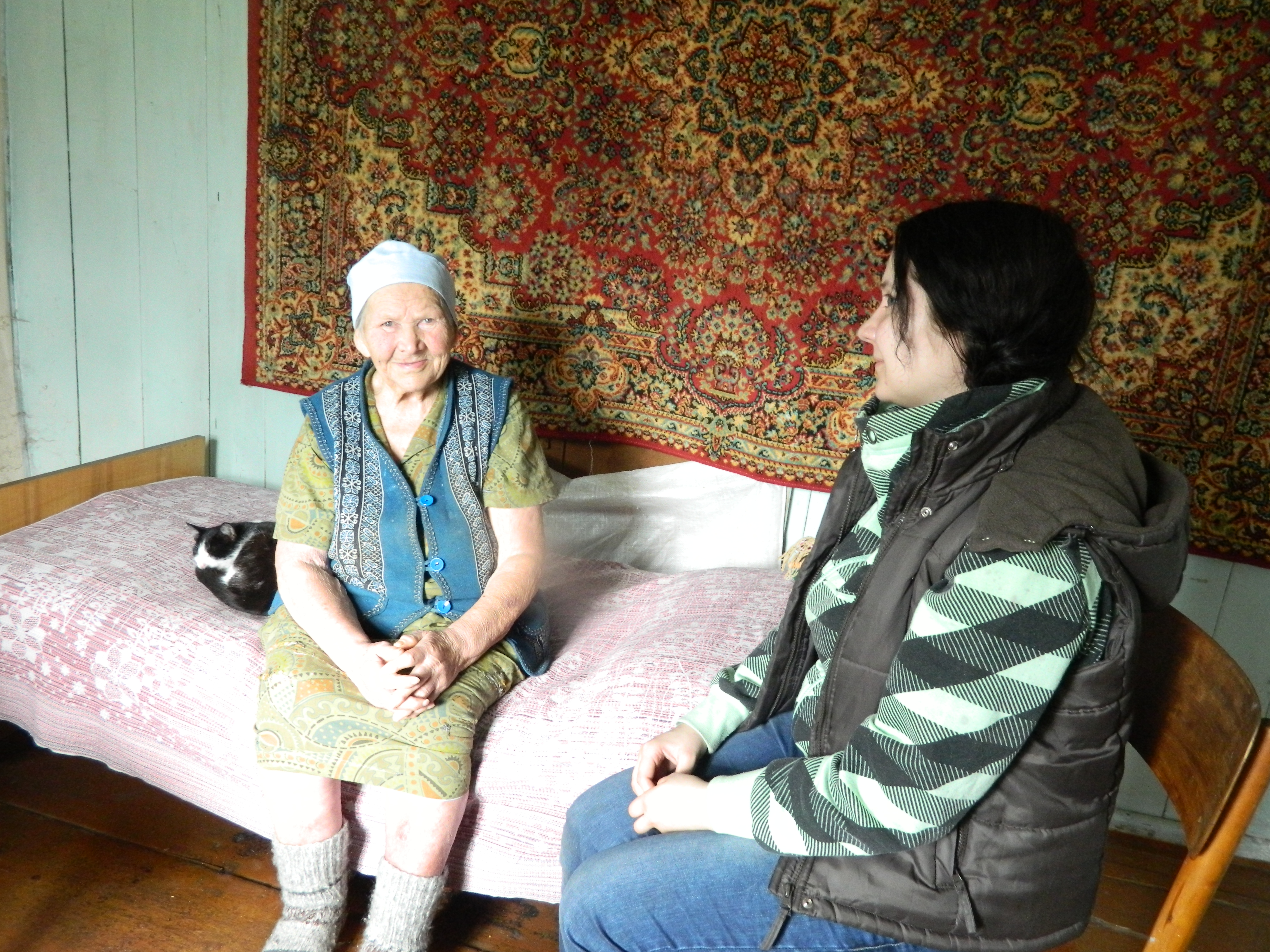
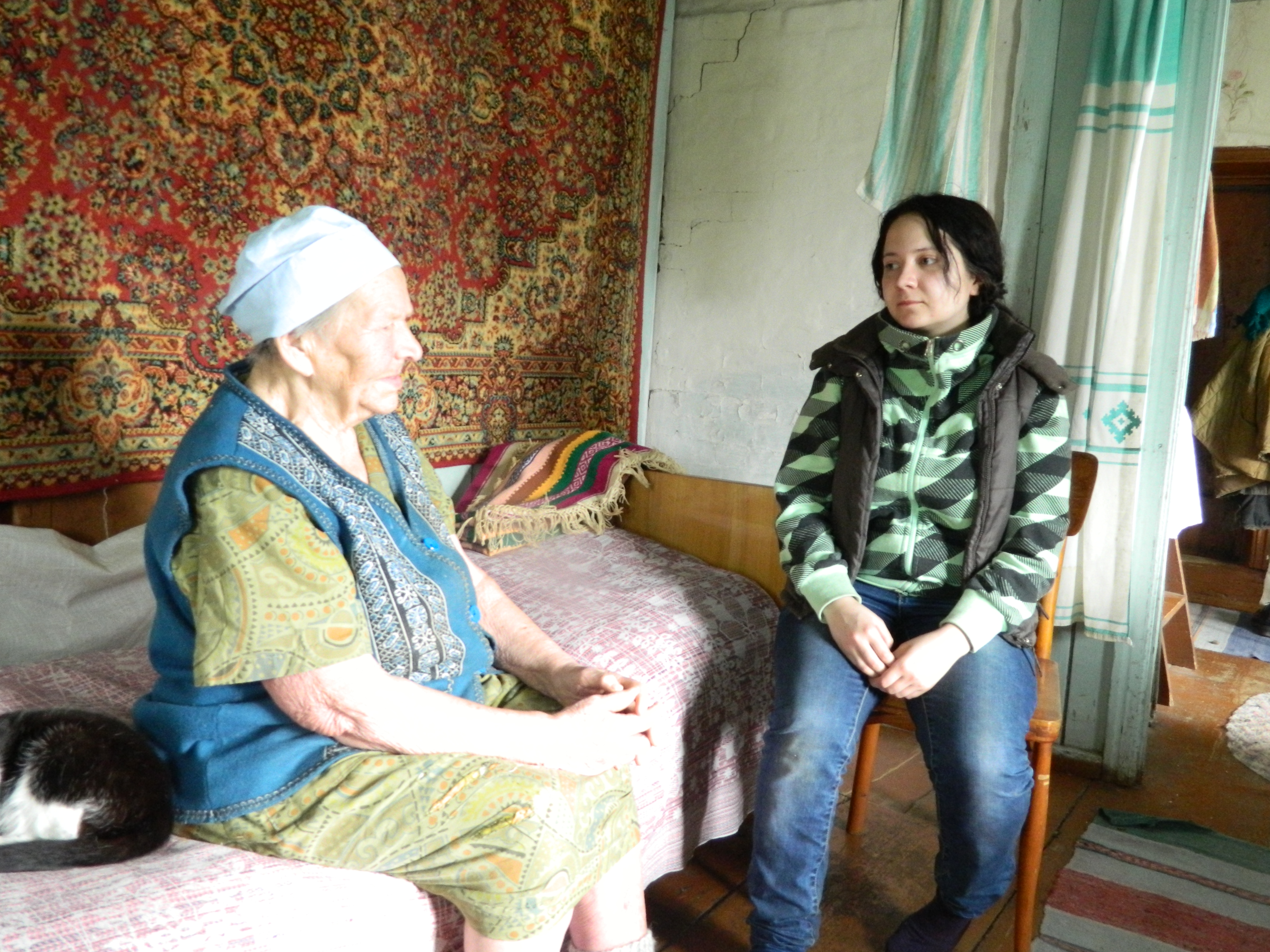
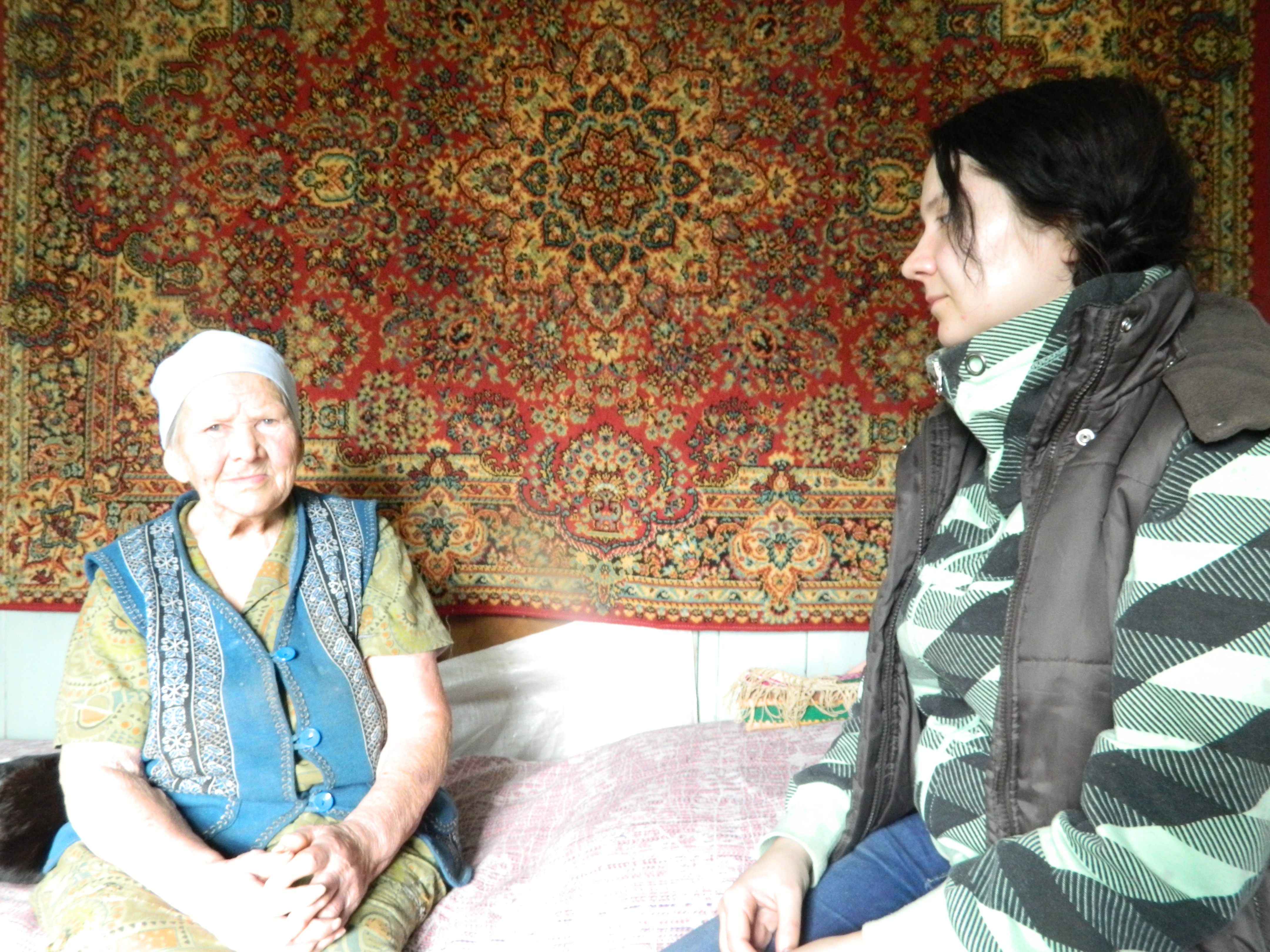
"We were hungry. The only rationed food you could get in the shop was 200 grams of flour. At work, 500 grams. You get it and bake what you want, but it's not enough. We used to collect clover, dry it and crush it. Weed, all kinds of grass." - "Berries and mushrooms too?" - "Berries grew there. But there was no time to pick them. Cranberries and blueberries grew in Serov. Blueberries were more popular, you had to add sugar to the cranberries, they were bitter. Whereas blueberries didn't need much sugar. We started to live a little better, so we learned to cook the local way."
"Everyone was from a different place. First they moved us from the forest to the barracks. In the barracks we lived four families in one house - there we had only one room. In one corner there was one family, in the other a second, a third and a fourth. There were four families in the house. One room, nothing was separated." - "There were no partitions?" - "No." - "Were there beds?" - "No beds, where would they be?" - "And mattresses, pillows, bedding?" - "We brought our bundle. It was spare, as they say. There were no partitions." - "And there was no bedding to buy? Were there any shops?" - "There was nothing to pay with." - "Did they pay wages?" - "Wages were paid, but they were for maintenance. As long as we lived, we didn't get rich. They didn't just make people kulaks."
"We were only allowed to take some things. The only thing you could take was what you were wearing and what you picked up. We went - there were five of us, three kids and my parents, two bundles on the wagon. There was only one tablecloth, a sheet. One bundle had the children's underwear in it and the other had pillows and little blankets." - "Do you remember going there? On wagons?" - "I remember. First we rode on horseback - they assigned us one wagon. To Sharapovo. Then we rode along the Kama River. Then they moved us to the "calf" wagon, as it was called." - "Can you describe the calf wagon?" - "It had no windows, no doors. They loaded people in, closed it, and people were sitting there." - "And approximately how many people were in that wagon?" - "It was crowded." - "Were there any bathroom stops?" - "No. We had the toilet with us." - "What did it look like?" - "A bucket."
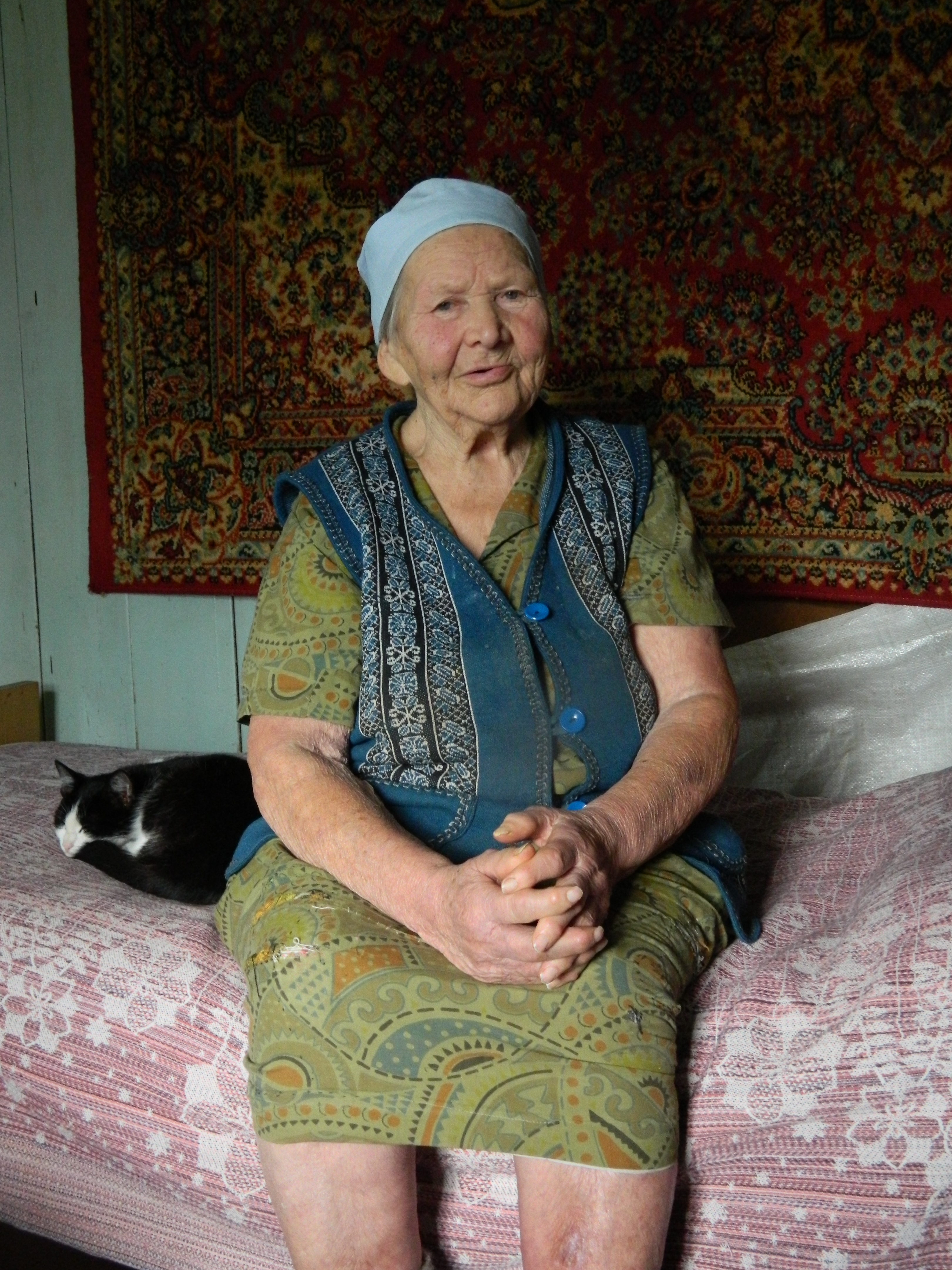
Maria Ivanovna Aksyonova was born in 1921 in the village of Panovka in the Vysokogorsky district of Tatarstan. Her parents, Ivan Ivanovich and Anastasia Sergeyevna Aksyonova, were wealthy peasants, natives of Tatarstan. In the summer of 1929 (or 1930), the family had all their property confiscated and, together with their three young children, were deported to the north of the Sverdlovsk region, to the town of Nadezhdinsk (later renamed Serov). At first they lived in a hut, later in so-called ‚baráky’ , which they built with their own hands. Their parents worked, and after work, they cleared the forest and planted potatoes to make a living. Maria Aksyonova attended a seven-year school and helped take care of her younger siblings. In 1941 she graduated from the Finance and Economics School in Perm and was sent to work in the Perm region. In 1943 she married. Despite the hardships, three of the five children of the Aksyonov family received higher education and achieved successful careers.