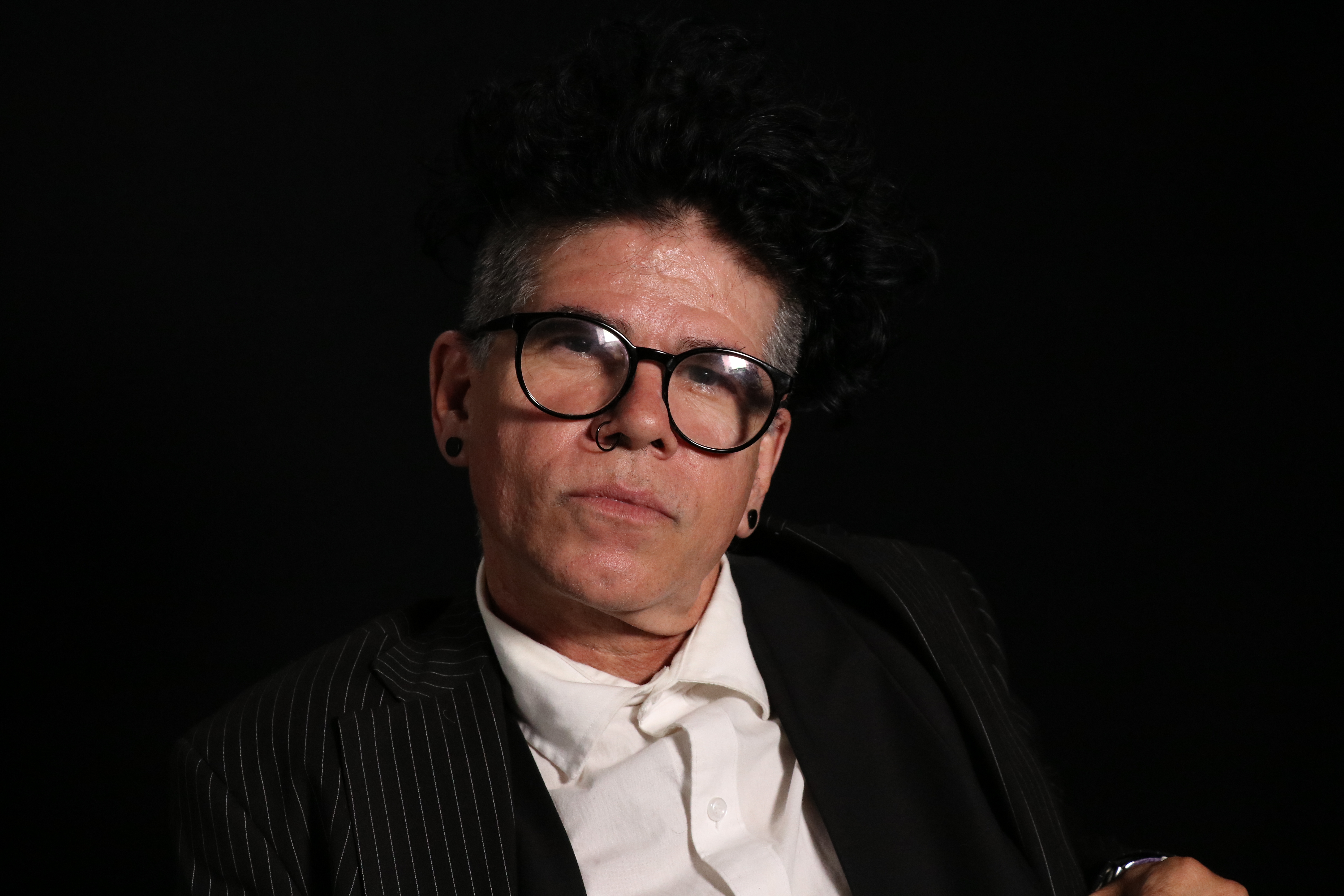
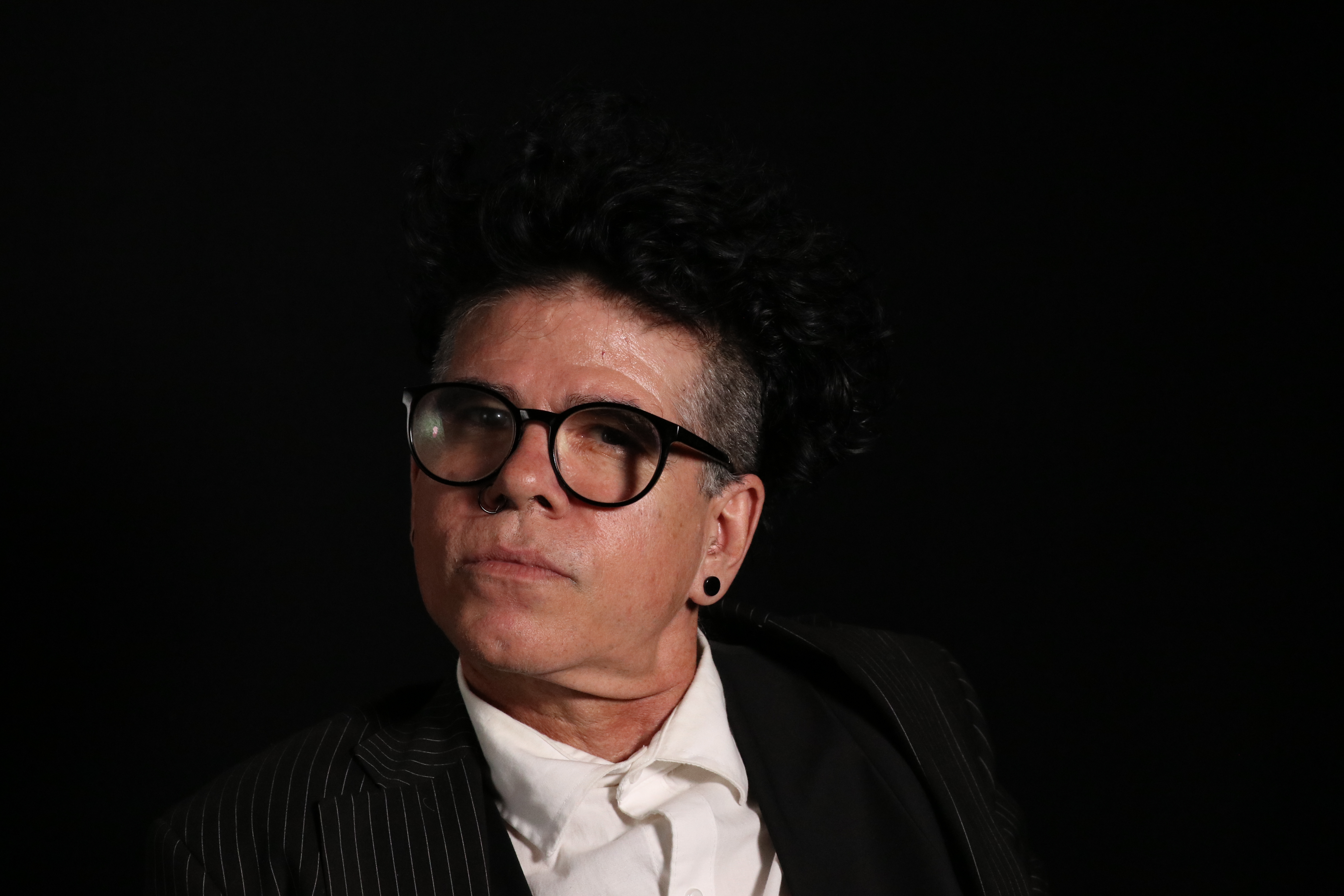
Gorki Águila

* 1968

  • “During the coffee harvest, my grandfather employed many farmers from the surrounding area. My grandfather wasn't rich, but he lived very well from farming the land. I had the opportunity to visit that place when it was already completely impoverished, since communism took my grandfather's land away from him and put him in a cooperative — a kolkhoz — which they called 'more developed forms of production,' a totally blatant euphemism. That two-acre farm passed into the hands of communism, and my grandfather no longer had any power over it, so the farm began to decline and become impoverished and destroyed. The cows were not his, they had to be marked with a small stamp, every calf that was born was not his, and the cedars he had planted were not his. Neither was the coffee, and that's where the hunger really began. There's a lot of talk about the hunger that existed before the Revolution and communism. But the real hunger came after communism arrived and Castro came along with all his bullshit and took the land away from the peasants. That's when I began to realize that, and from all the stories my mother told and all the expressions she had in a very spontaneous way when she heard Castro giving nine-hour speeches on television, she would say to my father, ‘Look, take that unpresentable face away from me, I can't take any more of these lies.’ Because those speeches were staged performances of an egotistical script, but on a disgusting level; that guy took pleasure in giving speeches, simply reciting statistics that no one cared about. But Cuba stood still until Castro finished speaking. If there was an event, such as Carnival, it wouldn't start until Castro had finished speaking. There were two television channels, and both of them broadcast Fidel Castro's speech. Well, in short, once I realized how to connect the dots, as I grew up, and based on my mother's testimonies and reactions, I began to form an idea. With regard to all that was happening, what they called the Revolution, all that collectivist bullshit and all the destruction, the censorship, the fear that existed in people when it came to speaking out, I came to a very simple conclusion: these people are messing with my freedom and, therefore, I hate Castroism and communism and the Revolution. My mother never said to me, "Gorki, you must think this way." No, she simply spoke in front of me, and from those testimonies I formed an idea that I still hold today, and I believe that I have placed myself on the right side of history, so to speak, to put it bluntly. I believe that it is not normal to believe in communism and defend it. To me, it seems that this is not normal. Communism is a paranormal phenomenon, it's like a UFO, it's not normal. I mean, no one is really a communist. I believe that human beings cannot really be communists, they cannot instinctively like it, they cannot go there as something that is better. It seems to me that this is not normal and has done a lot of damage. It has been one of the biggest lies told in the history of humanity, in my opinion.”

  • “Cubans already shouted ‘freedom’, Cubans already voted in a certain way. That is, when July 11 2021 came around, what you heard most was ‘away with communism’ and ‘freedom!’. I was amazed, because I was at the Maleconazo — I was there. A friend came to get me at work and said, ‘Hey, did you see what's happening at the Malecon?’ He told me that people had taken to the streets, and I said, ‘Let's go there.’ I didn't even ask for permission at work, I just left, and we got there. I'm not trying to be brave, but I think I was the only one there shouting 'freedom!' and 'away with communism!'. I was there shouting and people were asking for — I don't know what the hell — 'Let's get on a boat' or 'food' or whatever. And there were very few journalists, of course, it was a different time — there was no internet or anything like that. But I felt the need to shout that, for some reason in my little head. Obviously, it was just me, and in the end, I gave up, because shouting there all alone, you were going to get lost in all that madness. And besides, the repressive hordes came down at times. It was terrifying — I mean, in terms of the repression, the beatings that took place there — it was serious because there were almost no cameras. No one had a cell phone to film or anything like that. When I got home, I walked because there were no buses or anything. Helicopters flew over my house — like a caravan of helicopters — and that was because Castro was there. They filled all the rooftops with security forces with long guns. I was at the Deauville hotel, where a security guard — who was the hotel's security guard, because in all hotels there are those kinds of people, that is, security guards, state security people — took out his gun and started shooting. I saw him in front of me, right in front of me. He fired and fired at the building across the street, because people in the building across the street were throwing stones at the Deauville, breaking all the windows. People took advantage of the situation to loot stores and all that. There was no organization, no civic sense, no resistance, no opposition, so that march couldn't be channeled and organized, and people acted on instinct: ‘the stores are broken into, let's steal everything there, after all, those are things that were stolen from us and we can't afford them, right?’ But I lived through that experience — the Maleconazo. I wrote a song in Porno para Ricardo called El Maleconazo. It was very important because it marked me: that on July 11, 2021, people did chant ‘freedom’, and ‘away with communism’. That's beautiful, to hear that from Cubans. I loved it. People were clear, and they knew what to ask for. I'm not going to say everyone, but when you see a chorus of that kind of thing, it's because saying that in Cuba comes at a huge price. But when 30, 50, 100, 200 people shout, it means that people are fed up. They are fed up and have enormous, enormous resentment. It's been a long time: 60—odd years of this monologue, the same shitty speech, the double standards, the theft, the murder, the hunger. It's too much."

  • “Yes, that's a question, a constant question. And I don't know why, but for some reason, people must be interested in why it's called that. It came about at the end of 1998, but I had already been trying to do it since 1996. In other words, I had time to do it because I wanted to find musicians who were in tune with the idea and also musicians who were slightly competent, who could take on a repertoire. And so it's called Porno para Ricardo, because there was already a song I had written for my friend. Ricardo is a guy who really exists. Now, the name for the band — not the name of the song, because the name of the song is for him. And Porno para Ricardo is like a request, like a demand—porn for Ricardo!—so they'll give it to him, right? In Cuba, pornography is prohibited, but the name adopted by the band tries to suggest this: defending individuality, defending how important the individual is in an environment where the collective — collectivism, the homeland or death, the people — are what’s valued. I want to talk about the individual. We write songs in the first person. I talk about my experience. That's something I wanted to defend consciously, that is, premeditatedly, and I want to talk about the individual for that reason. That's why it says Porno para Ricardo. We're making a claim — because this individual wants that, and Ricardo could be anyone. It's a name, it could be common, that is, it's a name that can be assumed by any other person's experience. I know another Ricardo who's a little crazy. He could also exist."

  • (Would Porno para Ricardo exist if there hadn't been a Special Period of the 90s?) “That's a good question because I'd never thought about it. I mean, I've thought about it, but I couldn't come up with a concrete answer. But you've seen that things that are sometimes fruitful grow in a very hostile environment, like what they say about falling in love when you're having a really hard time, right? And so I think that's what happened with Porno para Ricardo, something like that. It was a response to this thing I saw in many people around me, which was wasting time. That thing. I think creativity is a defense mechanism. When you start to create unconsciously, it's... I mean, boredom is a defense mechanism for being creative. I mean, it gives you the opportunity to start doing something instinctively. I think that's what made Porno para Ricardo flourish out of real desire, out of pure necessity. I mean, I need to do this because I realize that I'm getting really bored, that I'm wasting my time, and that nothing I'm doing is interesting or fruitful. So I think that in that breeding ground of boredom and decadence, I think it was a good thing to start a band like ours.”

  • "I tell people, sometimes I tell them to do it, if you're not going to do anything against it. I say that because sometimes they come to us and say: Hey buddy, I admire you, blah, blah, blah, but I can't and I can't do what you do — you're crazy. And I say to them: Look, buddy, if you can't do anything against it, at least don't do anything in favor of it, that is, stay that way. Pretend to be crazy, that is, abstain from what is happening, because Castro also has another strategy, that is, abstention in Cuba is not valid, those who abstain are also considered enemies.”

  • “What does censorship sound like? Well, I can describe it in several ways. It sounds like when we were with the Ladies in White, accompanying them at the Church of Santa Rita, when we would say: ‘Look, here they come.’ That phrase — Hey, look, here they come. — They were all hyenas, dressed in civilian clothes, coming to repress us. It sounds like when the police officer said to me: ‘Hey, hey, stand there, stand there, stand there.’ He meant that they would push you up against the wall and ask for your ID, and you could end up sleeping in a cell at night. But censorship sometimes doesn't sound — it has no sound. It sounds like this: when people shut up and look at you and say nothing... they just make gestures at you. I think that's more like the sound it makes. Censorship sounds like the gesture you make to avoid complications. What you don't do: that's the sound of censorship."

  • “Imagine what it must be like inside a prison. When you enter a prison like that… I had never been in a maximum-security prison before, and in the special regime wing, it was even worse. Anyway, I felt completely uprooted. I mean, they took me from one place and put me on another planet. It was horrible. I didn't even know how to act. I was surrounded by criminals, murderers — I had to say to myself at one point: you're going to have to think a little like them in order to defend yourself... I mean, you can't think like Gorki on the street in his everyday life. You have to think a little like them, because even if you think like you are, you're not prepared or able to follow the dynamics that exist there, with people who are, who think like hell. You imagine yourself on the street: you have all that evil, on the street, but it's not concentrated. In prison, it's concentrated in a wing with 10 to 20 cells, you understand? There you can find all the evil in the world concentrated in one place. So I thank God that I was able to get out of that place unscathed, which was almost like going to war. I saw people there cutting their tendons, people who killed other people with toothbrushes, which they sharpened. I also saw acts of violence, homosexuality at all levels, people screaming in the early hours of the morning. It was like war — It's like going to war. And I thank God that I didn't come out of there thinking like a criminal because I could have. Prison never re-educates you like they tell you: 'You're going to go through a period of re-education there; We're going to re-educate you.' That's a lie. What it does is make you a worse person, if you let yourself be carried away by that kind of thing. If you spend time there, it's something that completely destroys people. You're in a hostile environment — a very hostile environment — in which you have to survive, and to survive you can't think like a lamb, you have to think like a wolf, and that's how it is. And I thank God that I didn't come out as a criminal on the streets — that I kept going. I even came out even more anti-Castro, obviously."

  • “Damn! I say damn — [pinga in Cuban Spanish, editorial note)] all the time. But it's a very strong word, because, for example, Ciro wrote this song about the Comandante. If he had said, ‘Oh, don't be so mean, Comandante,’ it wouldn't have had the same impact. I mean, ‘Don't be so damn mean, Comandante.’ That's very expressive and very forceful. That's why that bad word is used there with a force and meaning that completely reconstructs the song. It's very direct: I mean, if another word had been used, the song wouldn't have been as good, I think. Look — how many genres have been called vulgar? Let's see, Tango, Son Cubano, and nowadays talking about things that used to be censored in Son and Tango was scandalous. Dancing the way they danced in Tango, the way they danced in Son, was super, super scandalous. But not now, I mean, you see how relative these things can be? That's why, for me, I speak about those words and those terms in a more modest way — in the sense of: let's think about it and let's not explode with rage when we hear similar things.”

  • “My dad looked like a Mexican movie star—his little mustache, his hair... I'm telling you all this because my mom used to sing me a Mexican lullaby (Échame a mí la culpa, editorial note) by José Alfredo Jiménez. It says that in the other world, instead of hell, you will find glory. It's a beautiful song — a song of love, almost heartbreak. No, I can't sing now; I'm already hoarse from drinking too much beer here — it's impossible to be in the Czech Republic and not drink beer — and from getting up early. I was fascinated by that song. I didn't know what it said, but I fell asleep like that, on her breasts. That memory — no, I'll never forget it. The smell of her perfume, her necklaces, and lying on her breasts while she sang... That's something that stays with you for life.”

  • “Absolutely. For me, [the Cuban regime] is my closest direct enemy. All this time, it has been the enemy that is always behind me. Not to mention all those stories about the police. But there wasn't a single time when I saw a cop and, by mistake, kept walking that the cop didn't at least hassle me, saying things like, 'Give me your ID, what are you doing here? if you're from such-and-such address, why are you in this place?' Those super silly questions that make you feel like you're being watched, that you're being persecuted, that you're being controlled. Therefore, you have to control yourself, yourself. That's what happens under communism: you censor yourself. you tell yourself: I mustn't do this because I'll suffer the consequences. Your friends, artists, musicians, colleagues — they all say to you: 'Damn it, Gorki, you did that, you shouted down the association of brothers there, and you knew you shouldn't have done it.' That kind of slave mentality made me even more indignant. I mean, how? How can you give up what is, by nature, your right to express yourself about what you disagree with? That can never be a crime, and many of my colleagues considered it a crime—the crime of thinking, the crime of expressing yourself. That made me very indignant, that even with my colleagues, I didn't have an oasis to talk to, those people who could give me strength. No, on the contrary, they knocked me down. So I would say: am I alone here, or am I crazy? You start to think that sometimes, under communism. You say, man, I think I'm doing things wrong, I'm going too far, I'm crazy. Sometimes you have moments of weakness, but other times you say, no, no, no, this can't be normal, this can't be normal, they're the ones who are wrong."

  • "I was imprisoned in 2001, right after I returned from a forum organized by an organization called Free News in Denmark. After that, I took the opportunity to denounce what was happening in Cuba. After that they put me in prison when we gave a concert in Pinar del Río. That's when they imprisoned me for the first time, and then they tried to imprison me again in 2005 or 2006 — I think, I don't remember — but they tried to imprison me again, and this time they couldn't because there was a lot of national and international support. People came together, and there was already a little bit of internet, so communication and the dissemination of information was much faster and more effective. I remember that when they put me in prison, they put me in prison for one crime, but then they changed it to contempt right there. I mean, I'm telling you, come on: the police instruction to change this crime to another was simply because they already knew they couldn't sentence me to five years. They knew they had to fine me and let me go because it was going to be worse [for themselves]. They always weigh up what they stand to gain and what they stand to lose, and they act accordingly. But when they want to give you 20 years or when they want to kill you, they'll do that too. People think they won't, but they have. They came in killing and stealing.”

  • Full recordings
  • 1

    Praha, 26.06.2025

    (audio)
    duration: 02:08:56
Full recordings are available only for logged users.

Communism is a paranormal phenomenon; it’s like a UFO
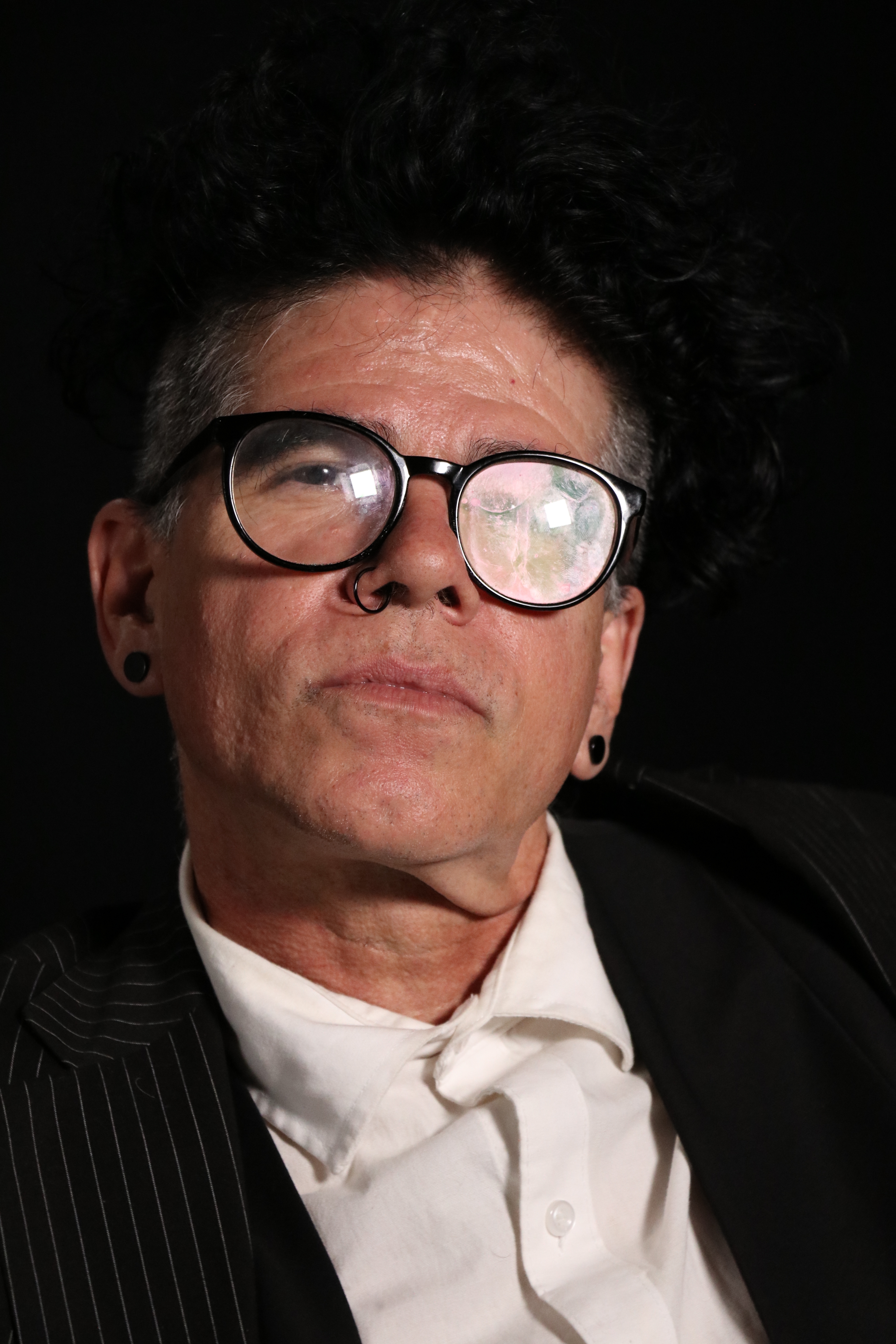
Gorki Águila, 2025
Gorki Águila, 2025
photo: Post Bellum

Gorki Luis Águila Carrasco was born in Havana and grew up in the Buenavista neighborhood. As a child, he listened to his mother, a country woman from Sierra del Rosario, sing décimas and boleros, which led him to music. In 1996, he began looking for musicians for his own project, and at the end of 1998, he founded the opposition punk rock band Porno para Ricardo. In 2001, he was arrested after a concert in Pinar del Río and spent two years in a maximum security prison. Between 2005 and 2006, attempts were made to convict him again, but national and international pressure from human rights organizations prevented this. He continued to compose and carry out acts of resistance, including “Balconazo,” probably Porno para Ricardo’s most viral performance from a balcony in Havana, which was violently suppressed by the political police. During the mass protests in Cuba on July 11, 2021, he took to the streets, just as he had during the Maleconazo protests in 1994. In May 2024, after a wave of repression against him, he went into forced exile in Mexico. In June 2025, for the first time in 13 years, he met with his colleagues from Porno para Ricardo—Ciro Díaz, William Returret, Renay Kairús, and Yimel García Góngora—in Prague for the documentary film Música o Muerte and performed at the Metronome festival. Of all the members of the group, only Yimel García remains in Cuba, where he continues to face repression by the regime, while the other members of Porno para Ricardo live in forced political exile. All of them remain steadfast in their artistic activism.