"The latest leak is Xinjiang Police files. They have pictures and names and the files. That was exposed by Victims of Communism Foundation in Washington D.C. Also a lot of researchers have been analysing the Chinese governments data and providing the information. Recent report states that last year only, in 2024, 3.34 million Uyghurs were transferred as forced labourers. So basically, the Chinese government is using Uyghur slaves, blood, sweat and tears to make this genocide a profitable venture for themselves. And also making all of us, you me and everyone out there, when we use the products manufactured by Uyghur slaves working on these companies supply chains, they are making all of us not just complicit with this genocide, but also enablers of this genocide. We are enablers of this genocide today, when we use cotton from China, tomatoes from China and also seafood, automobiles. If you bought any automobile in the last five, six years, the Chinese government deliberately made products manufactured by Uyghur slaves some part of your car. Tires, windshields or upholsteries. Something in your car is made by Uyghur slaves."
"The last time I saw my sister, Gulshan Abbas, was in 2016. And then, in April 2017, all of a sudden, there was a mass detention of the Uyghurs. We heard that about a million Uyghur people were in detention and concentration camps. With them, 24 members of my husband´s family disappeared from Hotan. His parents, all of his siblings, their spouses, 14 of his nieces and nephews. And then in September 2018, I participated in a public panel at Hudson Institute, one of the think-tanks in Washington. By that time, I was not even communicating with my sister. I stopped calling her, because I wanted to protect her from this mass detention. I was afraid if I talked to her, the Chinese government would retaliate against me and do something to her, hurt her. As much as I love her and love to talk to her, especially since my parents both passed away. She was like mother figure to me, five years older than me, a retired medical doctor. I thought by not talking to her I might protect her. I was wrong. I participated in a public panel about mass detention of the Uyghurs on September 5, 2018. And I talked about the situation and the conditions in the camps and outlined the fate of my in-laws. Only six days later, she disappeared."
"I resigned from my position at Radio Free Asia Uyghur service for family reasons and moved to California. So I was living in California and one morning I received a call and they asked me for help. I realised that the government needed my language service and I accepted. So I went to Guantanamo and I translated for those 22 Uyghurs. But immediately after the first interrogations, the US military realised that those Uyghurs were in the wrong place at the wrong time. They had nothing against the US or its allies, they were escaping from the Chinese communist government´s persecution."
"The only country before 9/11 that (if you were Muslim) did not care whether you have valid visa or not, was Afghanistan. So they ended up going to Afghanistan. And then these 22 Uyghurs were detained, because they were turned in by Pakistani bounty hunters for money, when the US offered Pakistanis money for detaining foreign fighters at that time."
"And these people didn´t want to go back to China and the US immediately started to have a problem. What do you do with them? You cannot send them back to China, because sending them back meant execution. And the other countries were not accepting to resettle them because of the Chinese government´s pressure. So they ended up staying in Guantanamo for quite a while."
"When I came to Beijing to get my visa to come to United States, the protest was happening. The students were gathered up. Seeing that was really emotional for me, because I remembered how we gathered up there that day. Almost for years after our protest, seeing again thousands and thousands Chinese students protesting and the signs they were holding - for democracy, freedom! It was really wonderful feeling, to see that. So I was really happy. Then I came to the United States and a horrible thing happened. Just three weeks after I arrived. That evening, it was Saturday, June 4th, I went to a highschool graduation. I attended a local highschool ceremony, in Washington State. When I came back from that, Dr Faulkner and his wife, Lois Faulkner, they were devastated. They met me at the door when I came back and they took me to the back room, the family room, where the TV was on. And they both kept saying - I am so sorry for this. I came over and I stood in front of the TV and couldn´t believe my eyes. First I thought it was some film, not a real thing. Hard fires were going on, you could hear the gunshots and screams. And blood. I was horrible. And all I could think of was - if the could do this to their own children... Those were Han students, Han children and this was a Han government. They were not Uyghur students, or Tibetan students or Southern Mongolians. Those were their own children."
"We gathered togther in physics department in one classroom and we made a decision what we were doing. First, actually, w decided to start the protest at 2 p.m., in the afternoon the next day, which was December 12. And then we sent one student to each university. We sent them to go and tell the student leaders and they mobilised other universities. By the time they went and came back, another 3-4 hours passed. The university authorities found out about what we were planning and were trying everything they could to stop this. When we leared this, we got together again in physics department, 7-8 of us. And we made the final decision to move the protest to first thing in the morning, 8 o´clock in the morning. If we waited until 2 p.m., nobody would be able to get out of the school. Again, we sent another set of people, now on bicycles, becase at this time bus and public transportation already stopped. It was nine, ten in the evening. We sent another wave of students to the universities, the notified them again. And then, 8 o´clock in the morning, when we were marching to the People´s square, where the Autonomous Region´s government is located, we were seeing students coming in from every corner of the square. Six, seven, eight different directions. They were pouring in. And before we knew it, by 8:30 or so, we were about 15-20 thousand students there. It felt like see of people. And we stood there for a couple of hours, demanding the authorities to come and talk to us. But they decided to ignore us, nobody came out."
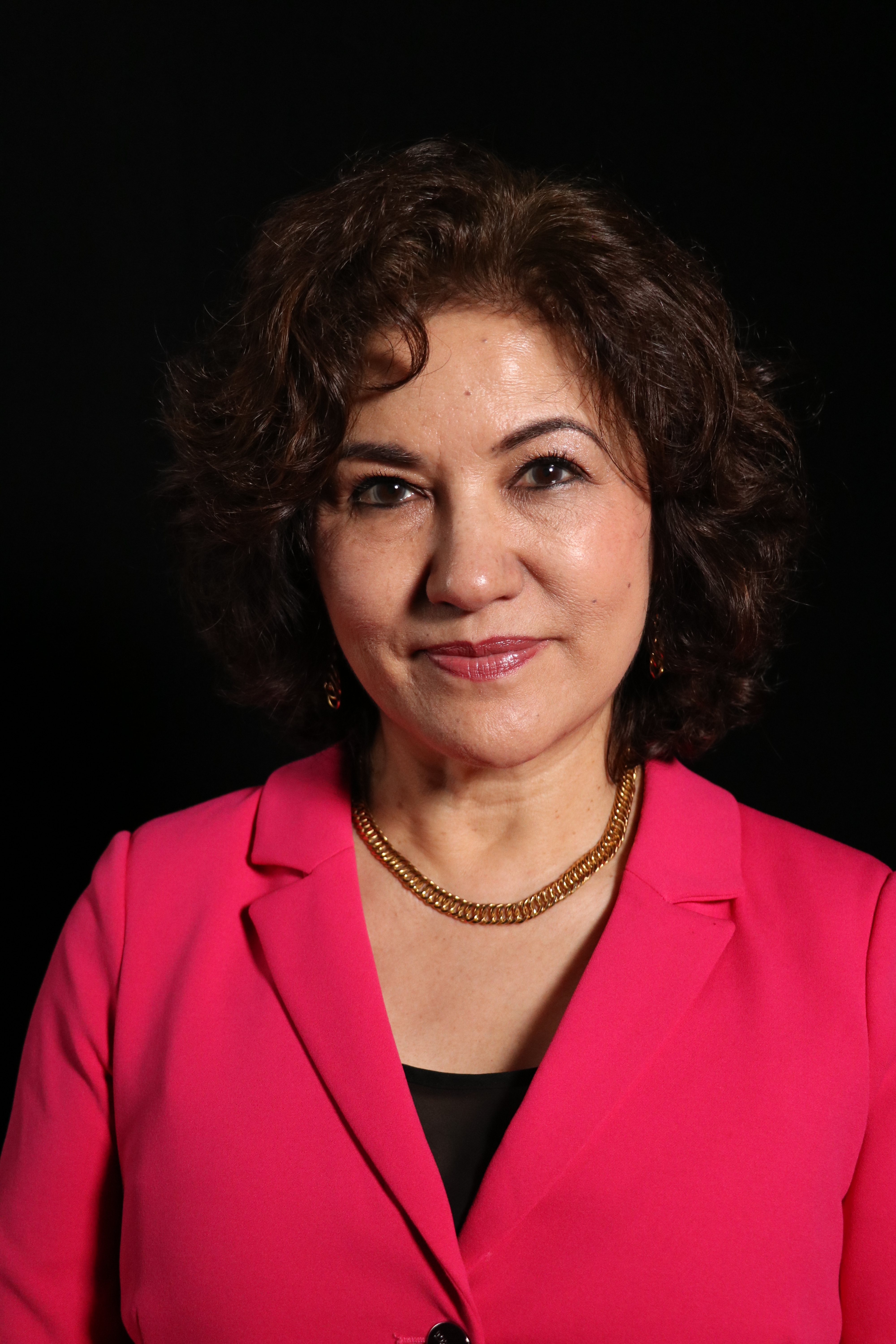
She was born into a family of university professors at a time when the Cultural Revolution was raging in China and her native Uyghur Autonomous Region. Her grandfather, allegedly a counterrevolutionary element, spent three years in a Chinese prison, and her parents were regularly sent for re-education. When Rushan Abbas studied biology at the University of Urumqi in the 1980s, conditions were more relaxed. On December 12, 1985, she with a small circle of friends organized a massive student protest for the freedom and rights of the Uyghur people, and she also helped with the 1988 protest. These were among the first manifestations of the student movement for democracy in the entire Eastern Bloc. In 1989, Rushan left to study in the US, where the news of the massacres in Beijing’s Tiananmen Square reached her. She remained in America, worked as the first reporter for Radio Free Asia’s Uyghur service, and in 2002 she interpreted for Uyghurs who had been unjustly imprisoned at the Guantanamo Bay detention camp. The next couple of years she spent campaigning for their release and resettlement in safe countries. When the Chinese government launched a genocide against the Uyghur people in 2017, Rushan Abbas made it her duty to inform the world, because “silence is the oxygen of dictators.” In 2018, her sister Gulshan also ended up in a Chinese concentration camp, and Rushan has been fighting tirelessly for her freedom ever since. Rushan Abbas is the executive director of Campaing for Uyghurs. This interview was made possible thanks to our cooperation with the Forum 2000 Foundation.