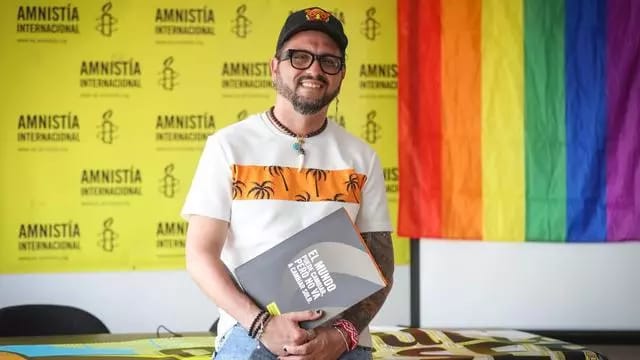
Emigrating is a rather difficult decision, because you have to leave behind so many things that define you. As the line from the song says, ‘you leave Cuba, but Cuba never leaves you.’ When you have such a strong sense of belonging, it is impossible to let it go.
Download image
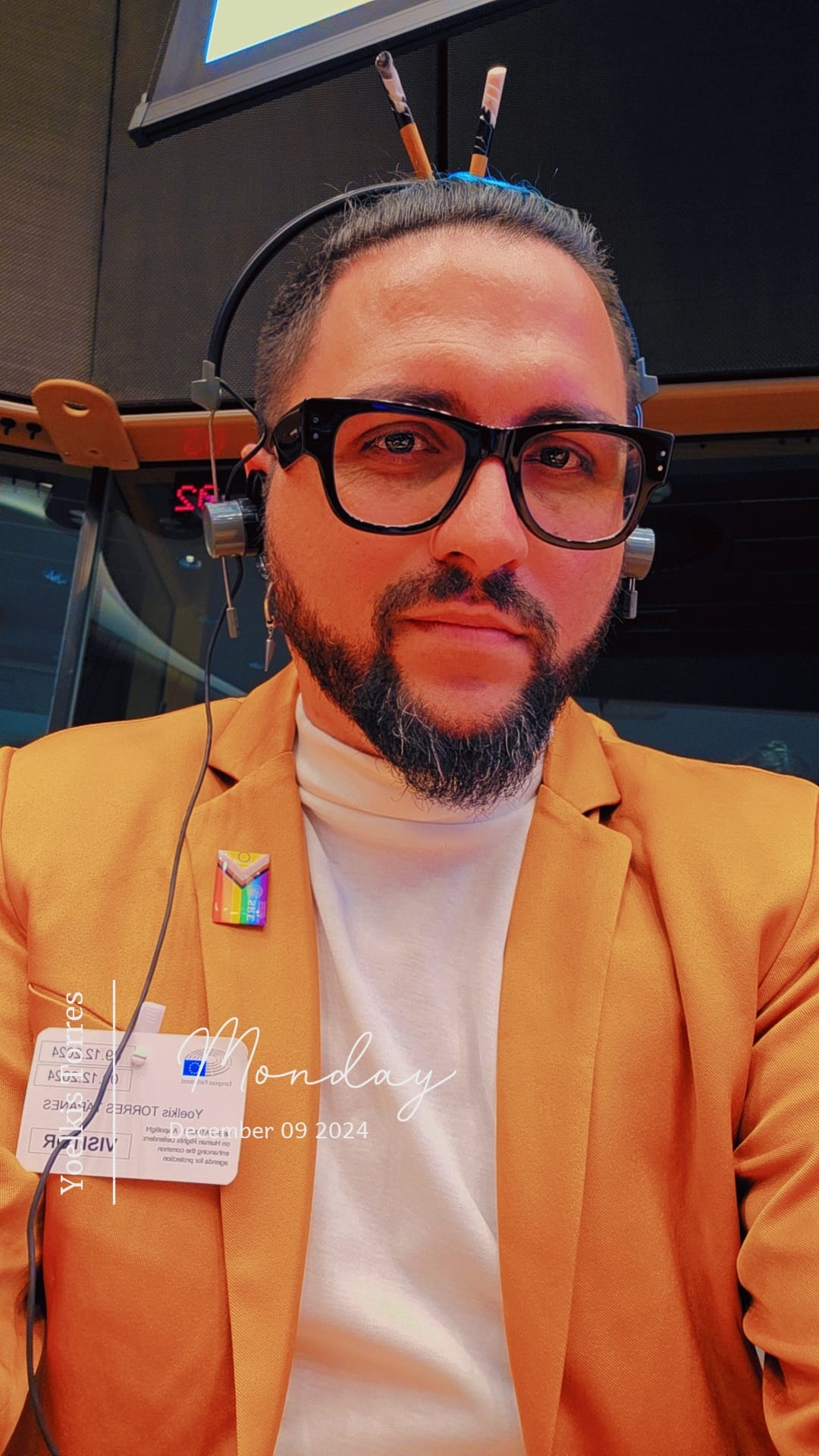
Yoelkis Torres Tápanes, 40, comes from a farming family that later moved to the city. He grew up in an environment shaped by his parents’ hard work and the care of his grandparents, and he recalls his childhood and early friendships with affection. At the age of 15, he began a complex process of recognizing and accepting his homosexuality, confronting both his family and the cultural norms of Cuban society. Before emigrating, he devoted sixteen years to cultural and social activism focused on community empowerment and social change. He also worked as a university professor, a vocation he was later forbidden to pursue. Yoelkis attributes the interruption of his personal and professional development to the totalitarian regime, as well as the negative impact it had on his family and on the people he worked with. The decision to emigrate was particularly difficult due to his deep sense of belonging to Cuba, summed up in his statement that “you leave Cuba, but Cuba never leaves you.” From exile, he denounces the government’s lack of dialogue and calls on new generations to demand freedom and to continue the struggle for a Cuba with equal opportunities, democracy, and respect for human rights. This testimony was recorded as part of the project Memory of Our Cuban Neighbors, in Madrid, 2025.