Zdenka Tichotová

* 1954

  • "Right on Palach's anniversary, our Quintet performed at the Theological Faculty club, and Bohdan Mikolášek was there and played too. Since it was right on the anniversary of Palach's self-immolation, Mikolášek played a song called Ticho (Silence) that he wrote for that anniversary. He said: 'When we finish singing, please don't clap and let's be all silent.' Everybody did, and the Quintet started We Shall Overcome into that silence. It was a bit of a protest, for sure. It caused a lot of trouble. They couldn't play for six months or so after that. They didn't play anywhere at all, and the Faculty people were in trouble too. I think [the authorities] took advantage of it. They wanted to crack down, do some purges and ban something, and so they took advantage of this and closed the club down. Also, some people quit their studies..."

  • "Quite often, the promoters would say, 'Look, hold back a bit today. There are two [secret police officers] in the second row, so make it that neither you nor we get into trouble.' That was the common practice. It encourages you to see that they have the same understanding and mindset. So, of course, when some of the songs came out... all the songs that were provocative to the regime we just said were about black people because black people are such protesters. So there were a lot of songs that we wrote that everybody who went to a concert understood the same way that we did. We wanted to live like this, we thought this was right and that was wrong, and it sounded terribly revolutionary. It's actually crazy nowadays. We were singing about normal things, so why did it sound so anti-regime, but it did. The truth is that listeners really welcomed the songs terrifically enthusiastically, and I told you that we had to repeat some of those songs several times. The enthusiasm of the people hearing it... They were so excited, and I think of course the musical component contributed to that, at least I hope so, but of course it was such an encouragement for the people."

  • "There was this family, the Freunds by name, and they lived near the fence that separated Berlin from East Germany. They lived right on the border and they had a daughter who was sixteen. I was almost fourteen at the time and we hung out. I was supposed to be there for about two weeks or so. One day, we were in the bath together with a transistor radio on, and suddenly she says, 'They're shooting in your country!' We would talk in this gibberish, but whatever... 'There's shooting!' I was looking at her thinking, this is weird, what the hell is she trying to tell me, and I tried to tune the radio to the long waves. I tuned in. It was probably from České Budějovice because all the broadcasts we received came from České Budějovice, but then it ended and they said, 'We have to say goodbye now' and they played the national anthem. I cried so hard, it was terrible. As I was tuning it, I caught this collaborationist broadcast at that time; it was called Vltava. Nowadays, the Vltava station is something completely different, but back then it was called Vltava and the collaborators were broadcasting from there, and even though I was just 14 I didn't take that information into account. I really wanted to leave everything and go home."

  • "And it just so happened that we got a call from, I don't know now, Jirka would know who, but just someone from Havel, I'll make it simple, if we would be willing to play on the balcony at Melantrich for the rally, and that would be on Thursday the twenty-third. And we said: 'well, sure, we'd be willing to do that,' but because we were rehearsing at the time, Irena Budweiser was coming back to us, she had been trying for a solo career for two years in the meantime, she also had a little baby at the time, so we had another singer singing with us at the time, but here in that November eighty-nine, we were rehearsing with Irena, who was coming back to us, so we made arrangements and everybody said, well, sure, we're on it, and so we were invited to the Laterna Magika, now the Bez zábradlí theatre, where the center of that dissent was, and those who took it on, the organization. And so we came there, we gathered there, and then about thirty people, I don't know how many there were, just all those who had something to do with it, were moving from the Laterna Magika - not to confuse - Jungmanka Street to Palacký Street and Vodičkova Street and Melantrich Street. It's not a long way and everybody was like in a huddle and the huddle was surrounded by - at that time some of those judists offered themselves as security - so it was surrounded by those in quotation marks gorillas, the security, and we were moving in one unit through those streets, as I said, and the funny thing was that Irča, she came to the rehearsal with us from her parents from Mýto from Rokycany and she said: "Well, when I was driving, my dad said: don't get involved in anything, Irenka.' And she told me this in the silence as we were moving to the Melantrich, so it was quite funny. So she got a bit involved, well. So we got into this Melantrich, and there were a couple of big rooms, but they were actually emptied, I don't know what it was, and there was somebody putting together who was going to speak now, who was going to sing now, and we were waiting for them to say: 'you're going to perform now' - and that's just kind of my personal experience, that there, as there were a few rooms like that and they were empty or there was some kind of leftover furniture or I don't know, so I got into one room because I wanted to look through the windows to see what it looked like on Wenceslas Square, and there was a chair and Havel was sitting there, completely absorbed in himself and obviously thinking about how to organise it, what to do now and what to do later, just concentrating, I guess that's not the same as absorbed, is it, well he just looked like he was completely concentrating and thinking, and I said, so I was in this empty room, I wasn't even talking to him or anything, so I thought: 'you've got to remember that.' Well, then it was our turn to say 'sing', there it was on one microphone, it was very disorganised, so we gathered, there we were, climbing over each other a little bit, on that one microphone, and we sang "A6 se k nám právo vrátí" (When the Law Returns to Us) - and the crowd of two hundred and fifty thousand sang along with us, so it was a great experience."
  • "And that was a song for a party about Welzl, the traveler. It was called 'Hau širou plání,' and it said, 'There's a piece of walrus for breakfast, what - walrus -' so it's a joke, it's a poem like that, so the audience answered, the audience - 'two dry codfish for lunch' - and the audience said: 'bangs of cod' - and the next one said: 'that's nice, but there's nothing for dinner, that's a problem' - and then there was a chorus, and the thirty-five thousand people on that Lochotin howled 'hoo hoo', I thought it was great fun. But unfortunately the consul from Karlovy Vary, the Russian consul, was there, he didn't think it was a big joke at all, he thought it was like we were making fun of the supplies because it was taking place in Siberia, that it was about supply in the Soviet Union, and we had six months of that, six months we weren't allowed to go to the West Bohemian region, and we had to explain it, and it was terrible, you just can't guess that, can you. Or sometimes it happened, for example, we used to sing - it was a revivalist song - and it was at the time when Brežněv died and then soon after - I don't know if it was Andropov or Černěnko - I don't know what order it was, and we used to sing this song by Čelakovský, where they sing, 'it's the life of the world that one would run away, you haven't experienced one yet, you've got the other sadness.' And now we sang it and everybody started laughing. Well, we had no idea there might be a problem with that. And it was at that point that the other one had died again... well, just things like that used to happen all the time, but what I meant by demonstration was that everybody was so excited about the same ideas."

  • "On the twenty-first someone called to their apartment, they said 'this is Spejbl and Hurvínek, be nice and let's arrange some contact'. So they understood from that, so both the wife, so my dad, so they really went to that Spejbl and Hurvínek Theatre and moved from there. I know there was one stop at Novodvorská street in that institute... Pavlova? No, A. S. Popov, not to confuse the Russian scientists - A. S. Popov. Because it was through the electronics that institute, so there was also a broadcast, also from the studio, I don't know if there was something else in between, or there was something else afterwards in Prague, but then they went to Cukrák, they broadcast from Cukrák. There was still my father, who... Then my father, when he came for a while in the spring of sixty-nine, he told us all about it - so at Cukrák, he said, 'Well, we were broadcasting there, and then we could see from the windows that the Russian soldiers were coming, so we said - Dear friends -' my father invented this addressïng, by the way - 'Dear friends, we have to stop here now, we're going to move out somewhere, but here we are showing you how the Russian army is coming and that we have to leave here quickly.' So they pointed those cameras at those soldiers and really those soldiers were seen there (approaching) in a step - they were expecting something terrible to be waiting for them, they didn't know that they didn't really have to worry about anything, did they. Well, and then they wandered, they wandered, I just know that they...they wandered south and I think it ended, I'm not sure it ended at Klet, and then I know that my father told us that on a fire truck, that they crossed the border with Austria and he stayed there until that spring of '69 when he came to Prague to legalize all those stays. He actually had it legalized, with the only exception that he didn't have a stamp from the border, because he had already negotiated a job in '68, I don't know now whether in Austrian or Italian television - and then he left Austria for Italy."

  • Full recordings
  • 1

    Praha, 14.10.2024

    (audio)
    duration: 01:53:48
    media recorded in project Stories of 20th Century
  • 2

    Praha, 18.09.2025

    (audio)
    duration: 01:43:09
    media recorded in project Stories of the 20th Century TV
Full recordings are available only for logged users.

Every concert was a small demonstration

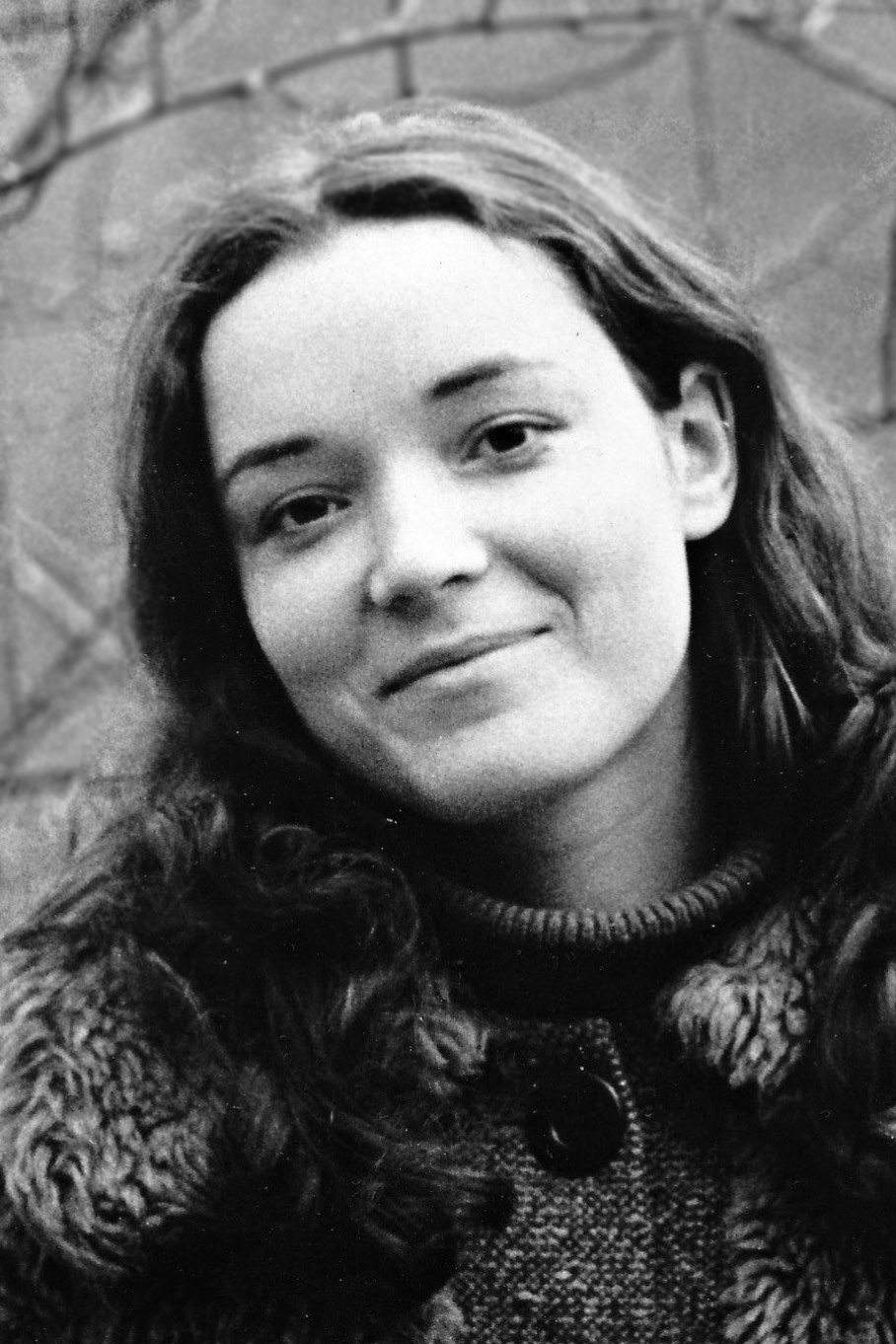
Zdenka Tichotová, 1976
photo: Archive of the witness

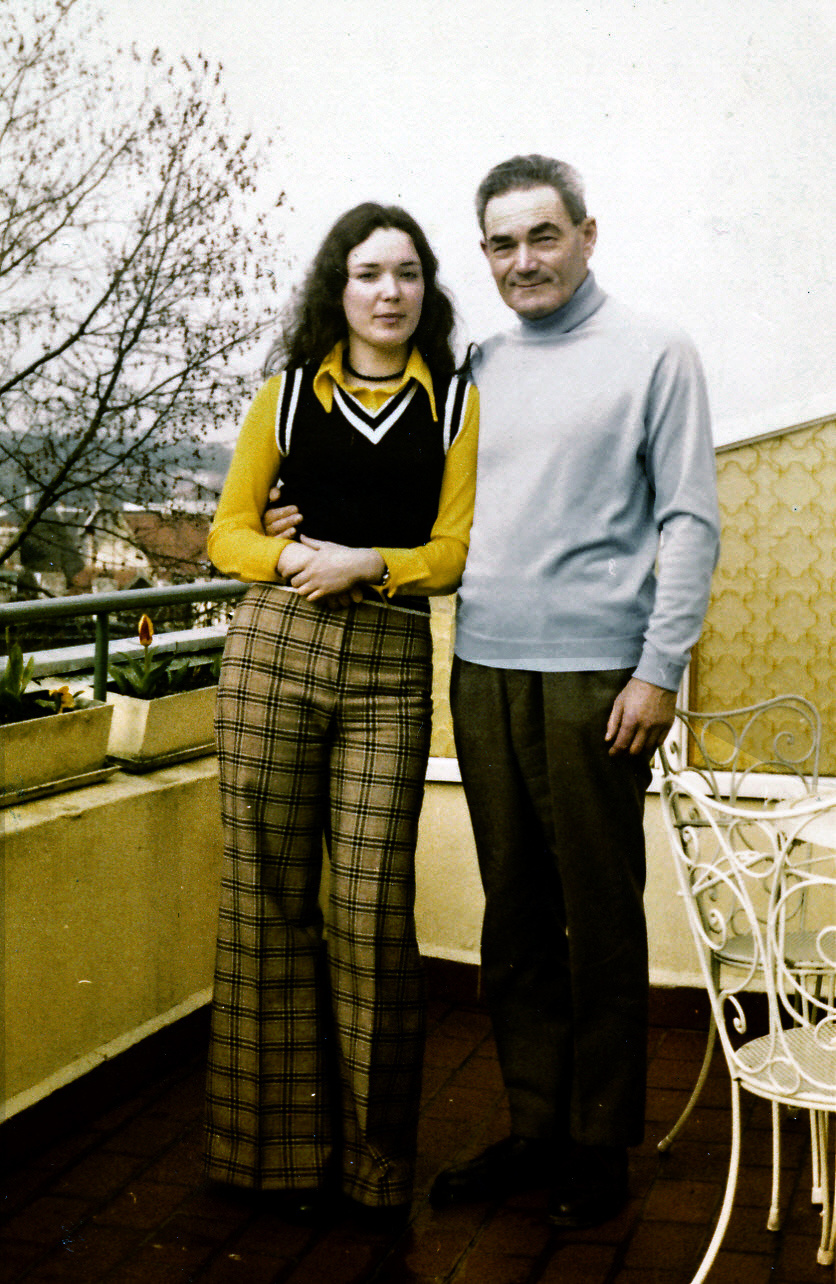
Zdenka Tichotová was born on 24 September 1954 in Prague to Vladimír Tosek and Libuše Zykmundová, later Svobodová, as the youngest offspring. Her parents soon divorced and the children stayed with their mother. Her father worked first at Czechoslovak Radio and later became an editor and commentator at Czechoslovak Television. In 1968, he led anti-occupation broadcasts, left for work in Austria and Italy, and after 1969 the Communists did not allow him to return to his homeland. He worked at the BBC and as editor of Pelikan’s List, and died in exile in 1987. Zdenka Tosková sang in the Kühn Children’s Choir from childhood. She studied programming at a secondary school of economics, worked briefly as a programmer at ČKD, met her future husband Jiří Tichota in 1974 and began singing in the Spiritual Quintet. In 1977, her son Tomáš was born, and a year later her daughter Lenka. In the seventies and eighties she had the opportunity to visit her father abroad several times. They ended their concert career only in 2021. In 2024 she lived with her husband in Točna, Prague.