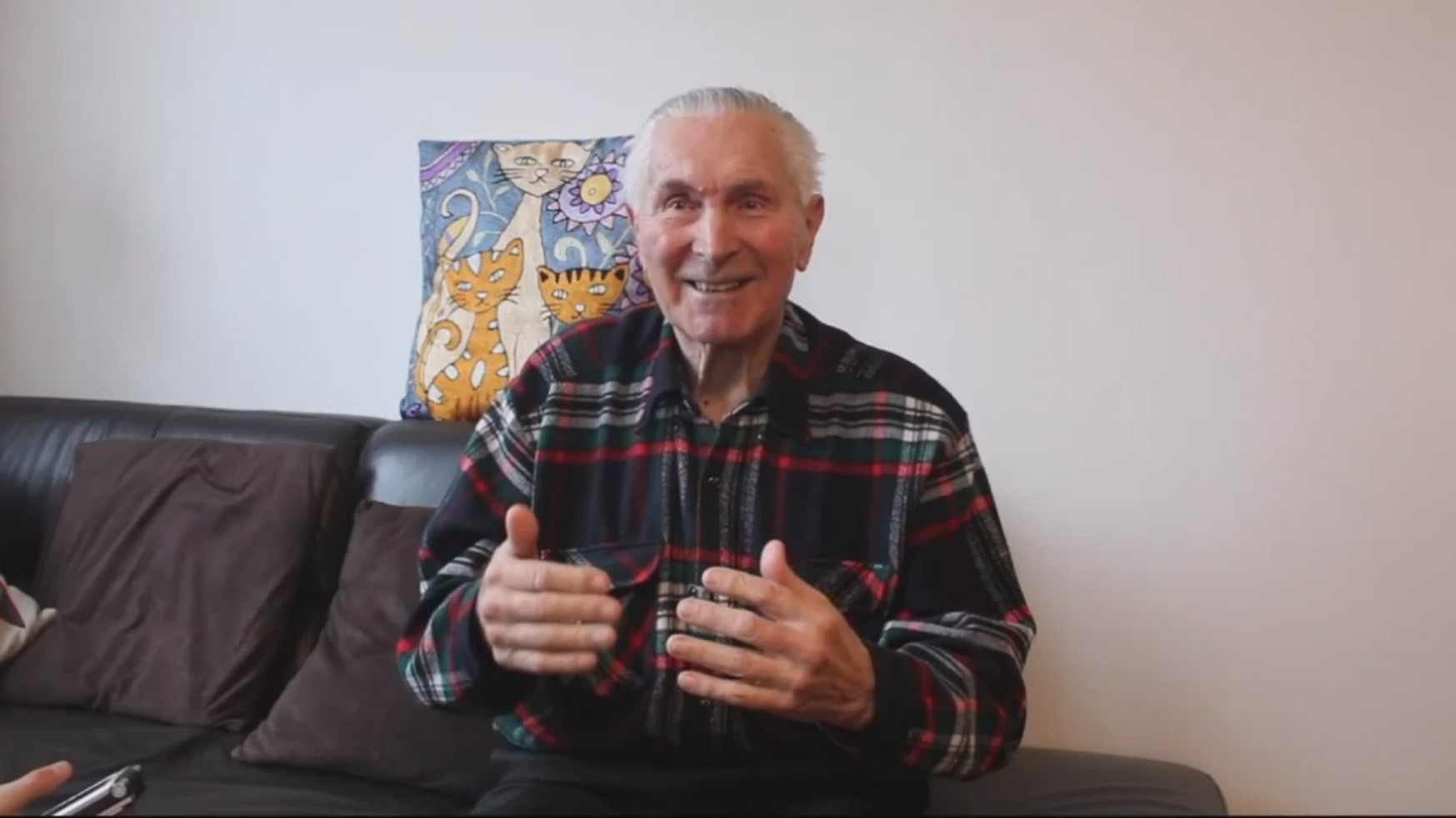
František Šúlek

* 1937

  • "When they were bombing, even in our place you could see the glow at night, how it was all on fire. That was over a few hills from us, as the crow flies, I don't know, twenty to twenty-five kilometers. Well, that line of bombers was always dropping additional tanks over those hills of ours. Well, the first time those pilots dropped it, we ran away because we saw it. But then we were running towards them. They were all aluminum, and people took it apart because there was no metal, and that could be used for repairs. Like reinforcing tools, because it was beautiful duralumin sheet metal. People used to pump this red petrol out of it, too. But they dumped maybe five or six of these tanks. They dropped a bomb at Látky once and it landed in this swamp. And that hole was there for a long, long time after the war. I went to school in fifty-two and it was still there. The diameter was about from the wall to that TV set, and it was so deep that we couldn't reach the bottom with a four-meter stick. When I went home from apprenticeship after the first year, it wasn't there anymore."

  • "We were collecting the ammunition and making a pile by the Obecná Mountain. And now it was a bigger pile than this table, bigger, definitely. So what to do with it? So we make an explosion. Well, we set it off. If we'd known what it was going to do, we'd never have... I was eight years old at the time, I could do all sorts of things, but I couldn't know what it was going to do. I knew it would be a terrible blow. There was a main state road about 150 yards from that Obecná Mountain, from the projection where we had the ammunition, and there was a bridge where the hay wagons could pass. So we'd run through there and hide on the other side behind the earthwork. And we made... we had detonators, flash line, incendiary line at home. And then we stacked these anti-tank mines, flat, artillery shells that we carried. The ones we couldn't carry, we rolled. Because some of them were packed in such a way that it was a metal box, and when you opened it, you could see exactly that the grenade was stacked full length in a larger caliber. It was a calibre of, I don't know, 150 millimetres, the grenade was that long and weighed maybe seventy kilos. We couldn't carry that. And we set it off... we made it explode. It was quite safe in relation to the road, because the bus went there in the morning and in the evening, and this was around noon. And in Látky, where we went to school, they said it was falling like hail on the roofs, these little shards. That was a terrible explosion... A clearing in the woods, fifty meters cut down."

  • "Of course, as a kid I got in everywhere. When they were filling a magazine, for example, I got in. And he, if I wanted to shoot. Yeah. So he went out with me and there was this bank a little bit, so he put the machine gun in my hand and stood behind me. But he already knew what it was going to do, because as I shot at that bank, and as I squeezed, the machine gun went up, and I would have fallen on my back, but he held it from behind. It was giving terribly fast bangs. There were 72 cartridges in there, and they could go off in a couple of dozen seconds. I did about three or four shots when I hit it, when I hit the trigger. And in the snow they were kind of dimples, you could see it, but then I didn't want to go on, it wasn't fun, to shoot. With the Russians, you could... You could understand them a little bit, so you could have fun with them."

  • Full recordings
  • 1

    Jablonec nad Nisou, 04.11.2024

    (audio)
    duration: 01:52:12
    media recorded in project The Stories of Our Neigbours
Full recordings are available only for logged users.

Entire villages participated in the Slovak National Uprising
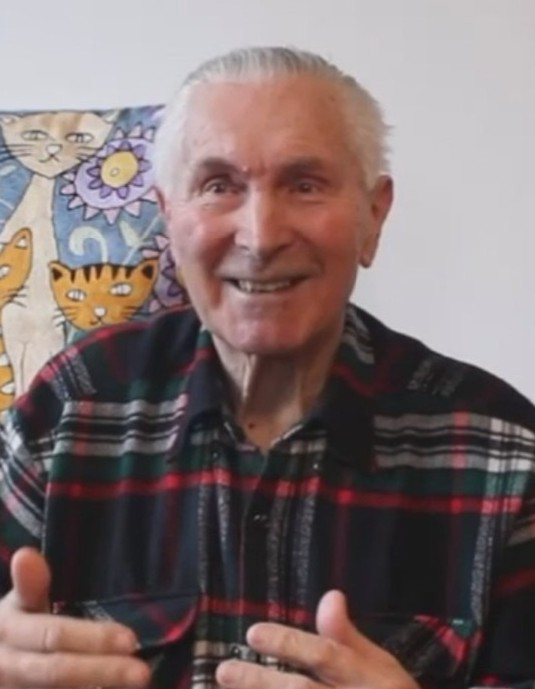
František Šúlek in 2024
photo: Post Bellum

František Šúlek was born on 28 April 1937 in the Slovak village of Biele Vody. He spent his childhood in the Slovak hills and has many memories of the period of the Slovak state and the Slovak National Uprising, which broke out when he was seven years old. According to his memories, whole villages were often involved in partisan actions. After the war, František Šúlek moved to Bratislava, where he attended a minucipal school. He then apprenticed as a locksmith in Ústí nad Labem and, thanks to an obligatory placement, began working in Jablonec nad Nisou. Already during his employment he graduated from the evening secondary technical school. From 1957 to 1959 he completed his basic military service. After the military service, he worked in Mikrotechna, in the special workshop of the Air Force Technical Administration, in Liaz as a parts manager and in Autobrzdy as a maintenance worker. He retired in 1997 and lived in Jablonec nad Nisou in 2024.