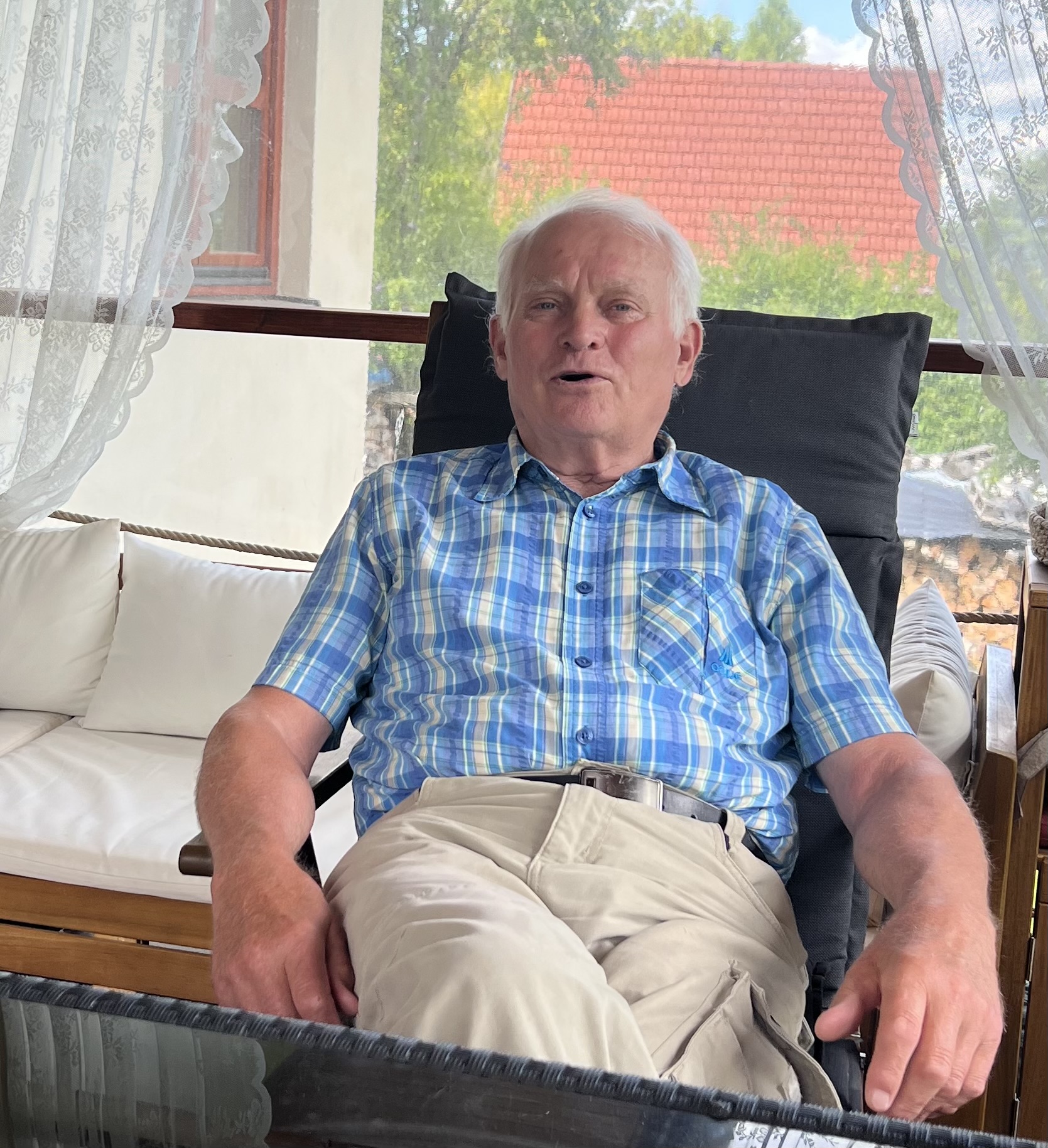
Karel Přibyl

* 1949

  • "So in seventh grade, we went on a school trip. We went to the Vír Reservoir. It was my first time on a traveling excursion like that. And since Mrs. Marie Tesařová was our homeroom teacher, he came along with us. But of course, that’s when panic broke out among the communists in Hrušovany—because Přibyl’s daughter [my sister] had gotten into grammar school in Krumlov. In my opinion—and I’m sure of it—that’s when they assigned Tesař to keep an eye on me. He was from Moravské Budějovice, from a landowning family, the youngest of four siblings, and the oldest brother was a priest. Skipping ahead a few years and generations: in 1964, when I was finishing school, he was there with his wife—she was probably from Brno. I finished the nine-year school in Hrušovany, and he left to teach at a primary school in Brno. He was heavily involved in politics, a staunch communist, and eventually became a regional inspector. He had two university degrees—he was a Doctor of Philosophy and a Doctor of Pedagogy. He bragged about that when we had our twenty-year school reunion." – "Do you believe he was assigned to monitor you?" – "He was definitely assigned to me. On that seventh-grade trip to the Vír Reservoir, he attacked me—slapped me around—and I even got a bad conduct grade because of it. He beat me up there. And in eighth and ninth grade, he became my homeroom teacher. So I got bad conduct marks in seventh, eighth, and ninth grade. I even had a poor grade in math from Mrs. Tesařová—a C—and in ninth grade, I got a D at midterm, and she bumped it back up to a C at the end. I’m convinced all of that was under his pressure."

  • "So he was riding down the hill, and suddenly some kids—ones who used to go to Czech school with him—started shouting at him. When my father arrived there, even a few German families had declared allegiance to Czechoslovakia, so they let their children attend Czech school. The kids were calling out, ‘Kódl, Karle, Přibyl, stop!’ So my father braked—he was going downhill fast—and if he’d known what was coming, he would’ve kept going and that would’ve been it. But he stopped, and they ran up to him. When they were just a few meters away, they shouted, ‘Another Czech whore.’ They threw him off his bike and punched him in the face. That evening, he didn’t come home—he was twenty-two at the time—and mother said, ‘He’s probably with friends,’ in Hrušovany, a wine-growing region. ‘They probably ended up in a wine cellar somewhere.’ The next day he still wasn’t home, even at lunchtime. So she sent Růžena, the eldest, who had gone to school in Austria and spoke German. She rode down on her bike—she had her own—and ran into an old German woman. She asked, ‘Excuse me, do you know where our Karel might be? He came here yesterday to shop and hasn’t returned.’ The woman looked left and right and said, ‘You know, Rózi, I’ve heard that our youth have been brainwashed by Hitler, and apparently they’ve got some Czechs locked up in a garage behind the savings bank.’ Růžena went there—she spoke German—knocked on the door, and asked, ‘Is our Karel here?’ ‘He is, but we won’t let him go unless you pay a ransom.’ It was illegal, of course, but they could get away with it. So she went off—she knew Hrušovany well—and somewhere bought a ten-liter jug of wine, unofficially. She came back, knocked again, and handed over the wine. They kicked my father out of the garage. He said, ‘They even kicked me in the backside.’ And he said, ‘My bike. They didn’t give me my bike back.’"

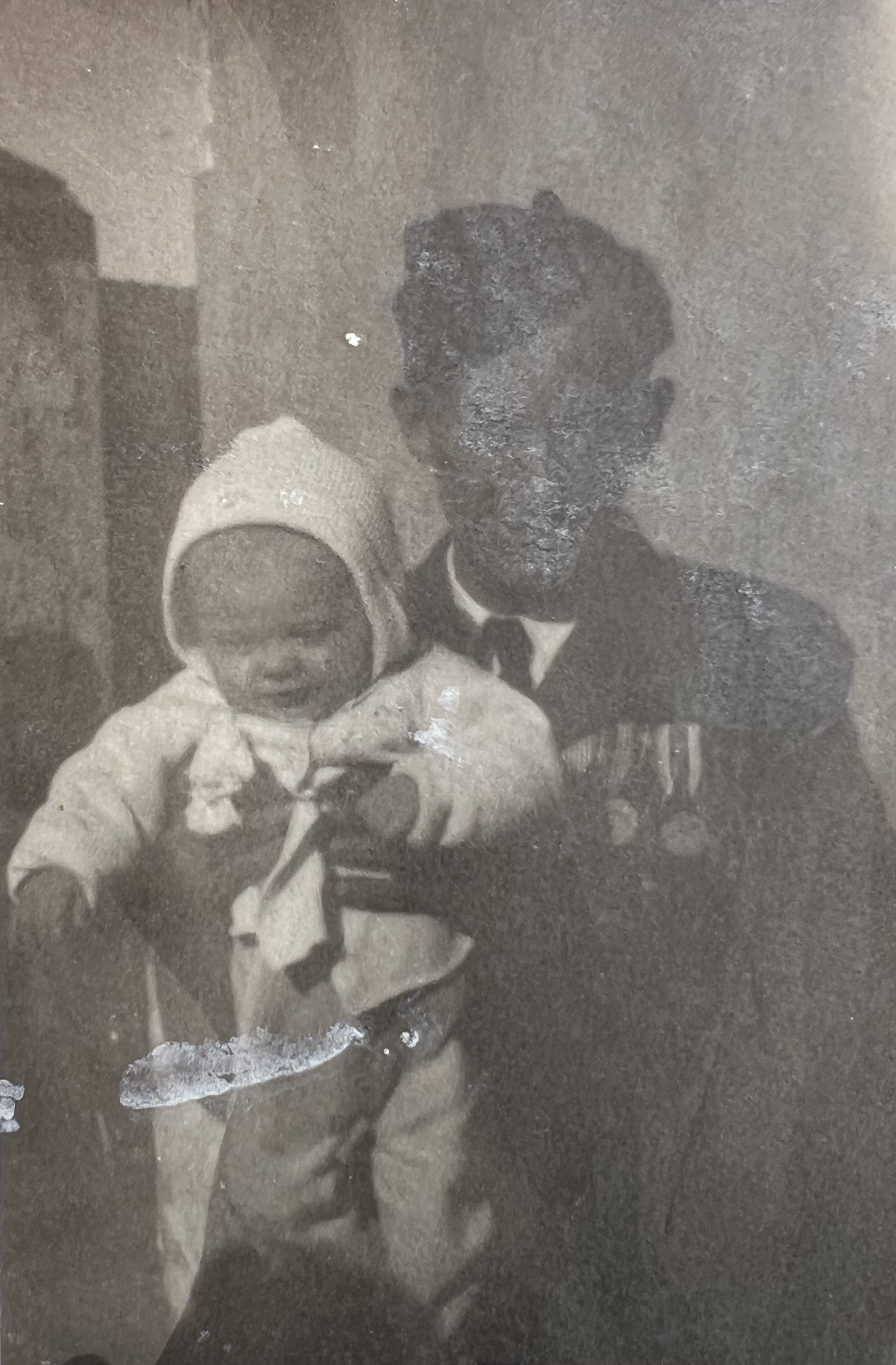
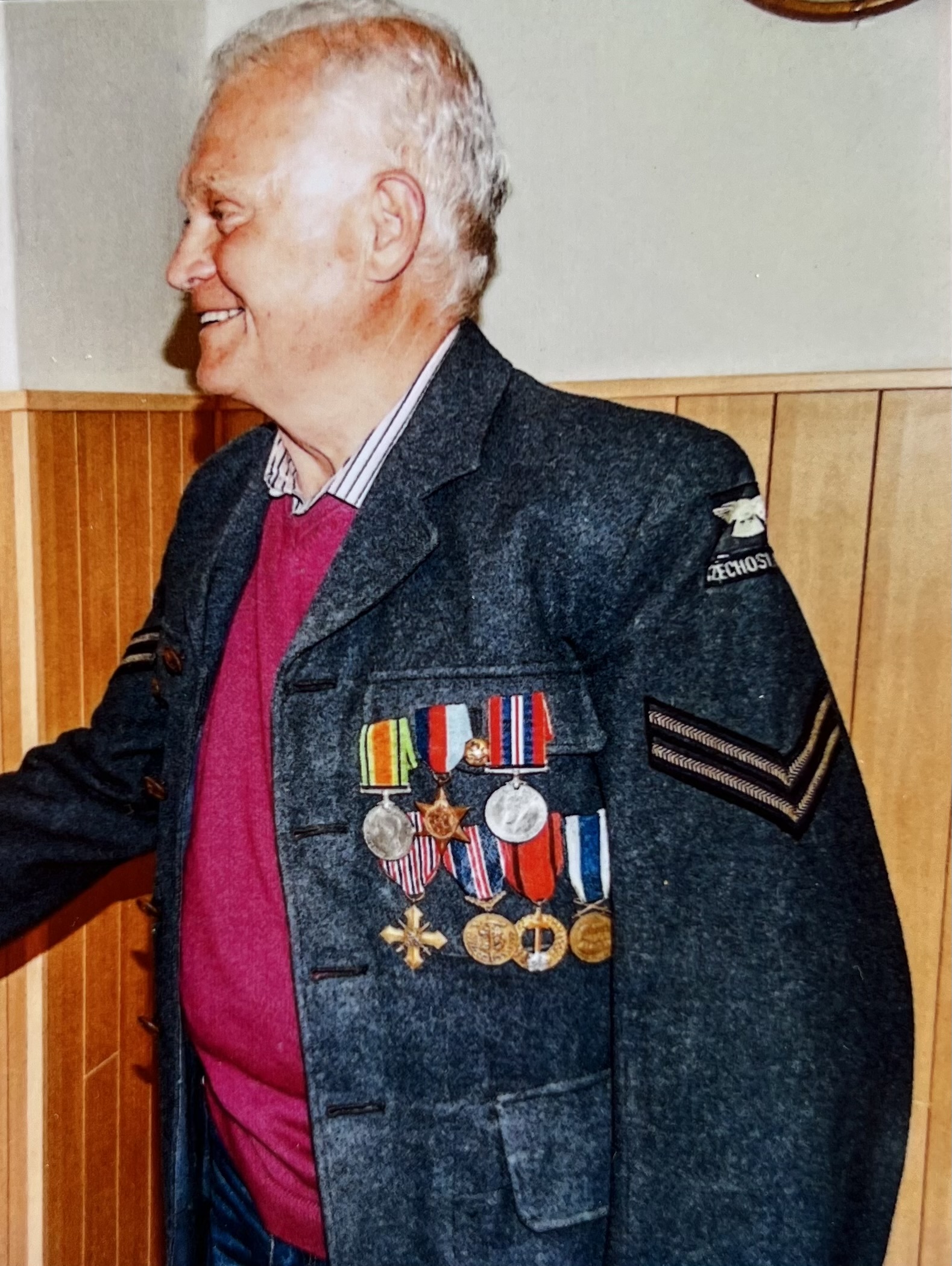
  • I was born on July 17, 1949, because on October 28, 1948—Republic Day—my father marched in a lantern parade wearing his British uniform. The parade started near a school, made a loop, and ended up in the town square. Suddenly, some comrades from the secret police jumped in and grabbed my father—just arrested him and took him away. My mother started looking for him, trying to find out where he was. She went to the local police station and told them that her husband had been taken during the parade, but no one would tell her anything. The rude policemen—State Security—just threw her out and told her to stop bothering them. Some time later, my mother found out she was pregnant. She started seeing a doctor, and only then did the police learn she was expecting. That’s when she was granted permission to visit my father in prison. And that’s how I came to be—because I was already on the way. I was born on July 17, 1949."

  • Full recordings
  • 1

    Luhačovice, 02.08.2025

    (audio)
    duration: 01:50:45
    media recorded in project Stories of 20th Century
Full recordings are available only for logged users.

The communists took my father away from me before I was born

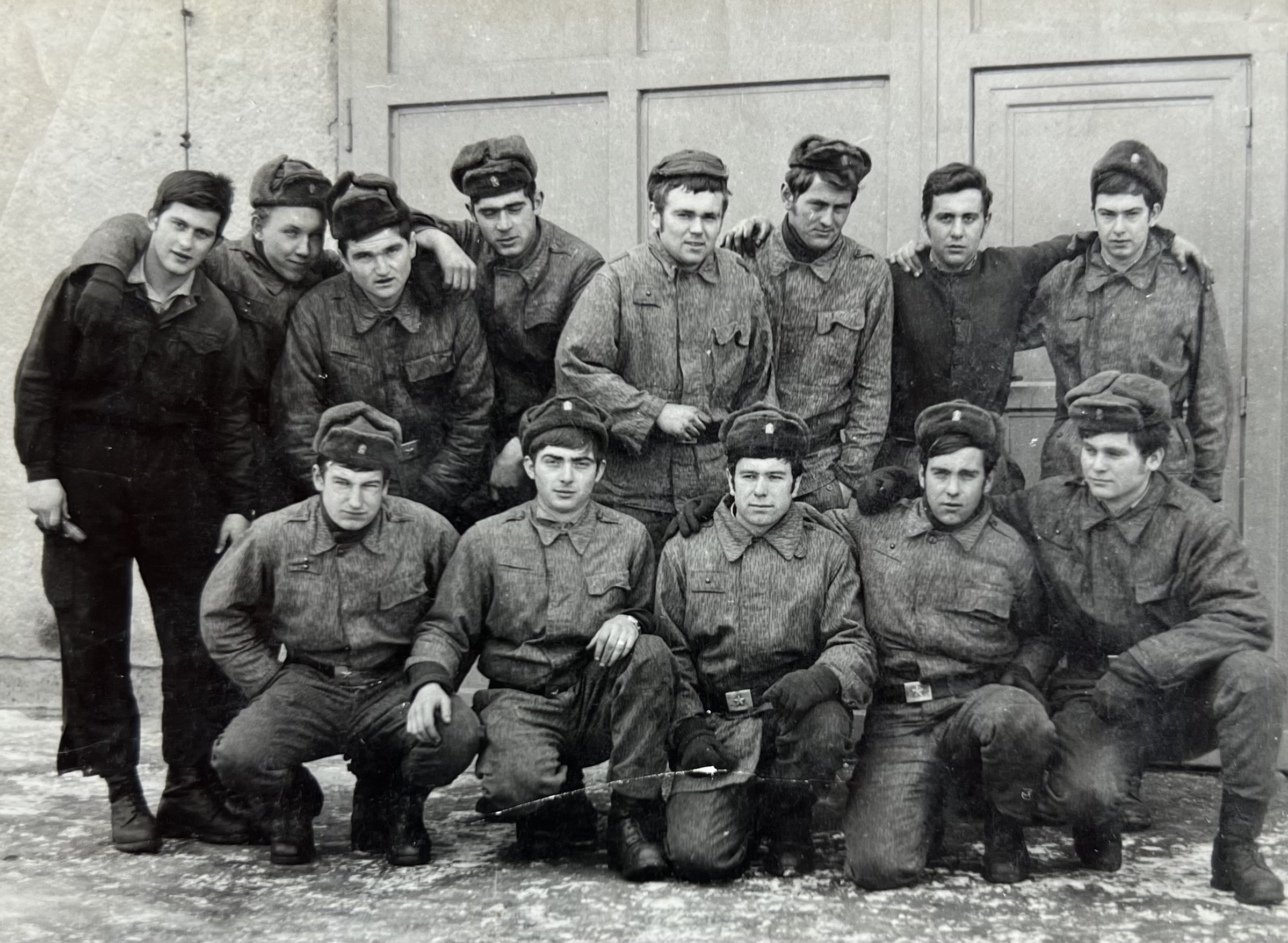
At the military service, 1970
photo: archive of a witness

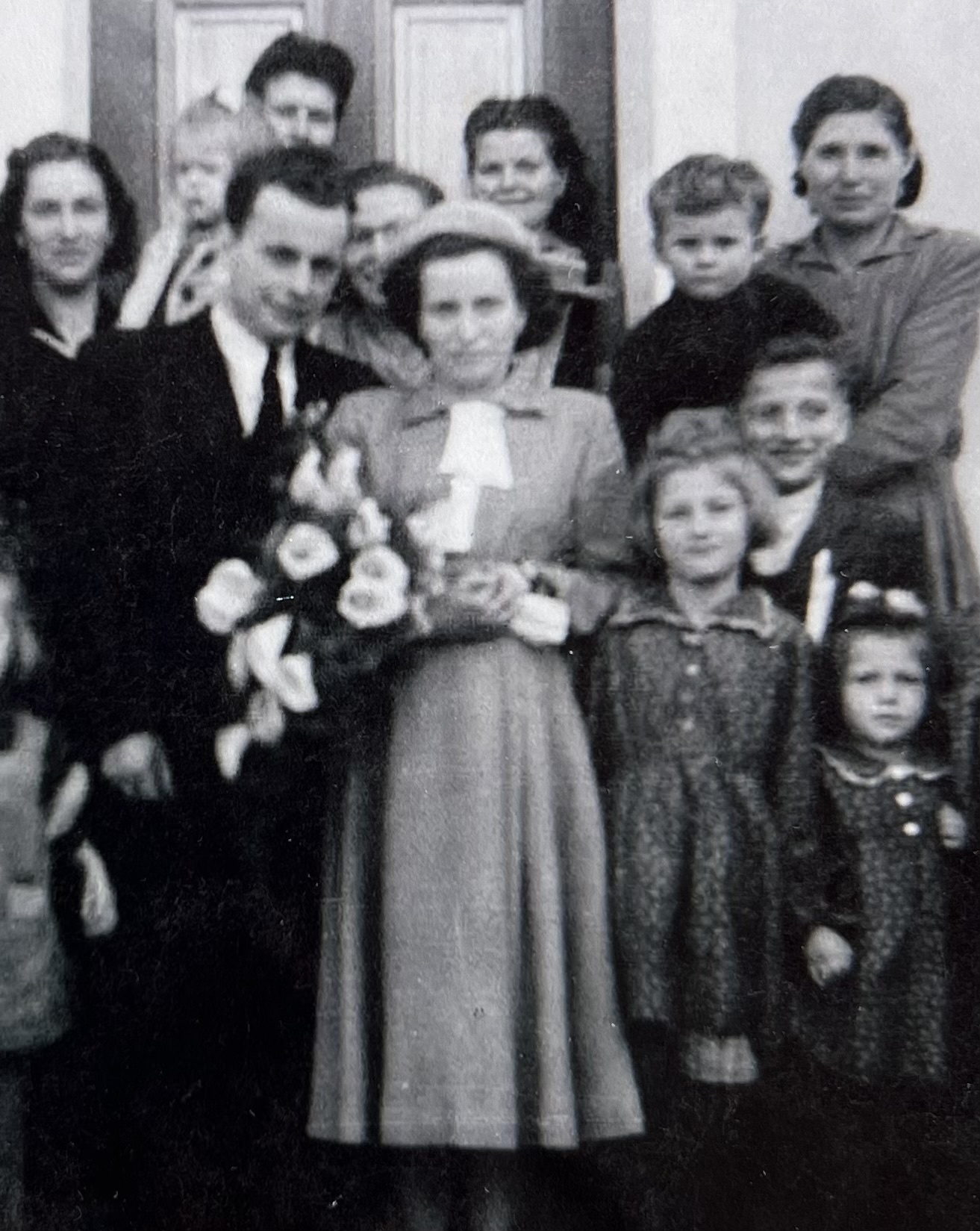
Karel Přibyl was born on July 17, 1949 in Hrušovany nad Jevišovkou into a family whose fate was significantly marked by the history of the 20th century. His father, Karel Přibyl, was apprenticed with the Bat’a family. He went to France via Yugoslavia, where he became a member of the Czechoslovak Foreign Army during World War II and served in the 311th Czechoslovak Bomber Squadron of the RAF in Great Britain. After the war he returned home. In 1948, he was arrested by the State Security Service (StB) directly during a lantern parade. He was sentenced to imprisonment for “collaboration with the West” and alleged treason. At the time, his wife was pregnant. A son, Karel, was born in 1949. Karel Přibyl spent his childhood in Hrušovany in an environment influenced by political conditions, mistrust and the loss of the family farm, which was taken away from his grandfather by the communists after 1948. After graduating from primary school, he trained as a repairman of agricultural machinery. In the 1970s, he did two years of military service in Havlíčkův Brod and then completed his evening studies at the secondary industrial school in Znojmo. After returning from the war he worked first in a local state farm, then as a technician and master of vocational training in Hutní montážy in Moravský Krumlov. From 1978 he participated in the construction of the nuclear power plant in Dukovany, where he worked as a technician, later he worked on the completion of the Temelín power plant and was also a teacher of vocational training. After 1989, he was actively involved in activities related to the restoration of the memory of war veterans. He participated in meetings of former members of the RAF and cared for the legacy of his father and other persecuted airmen. He married and raised two daughters. At the time of filming in 2025 he was living in Moravský Krumlov.