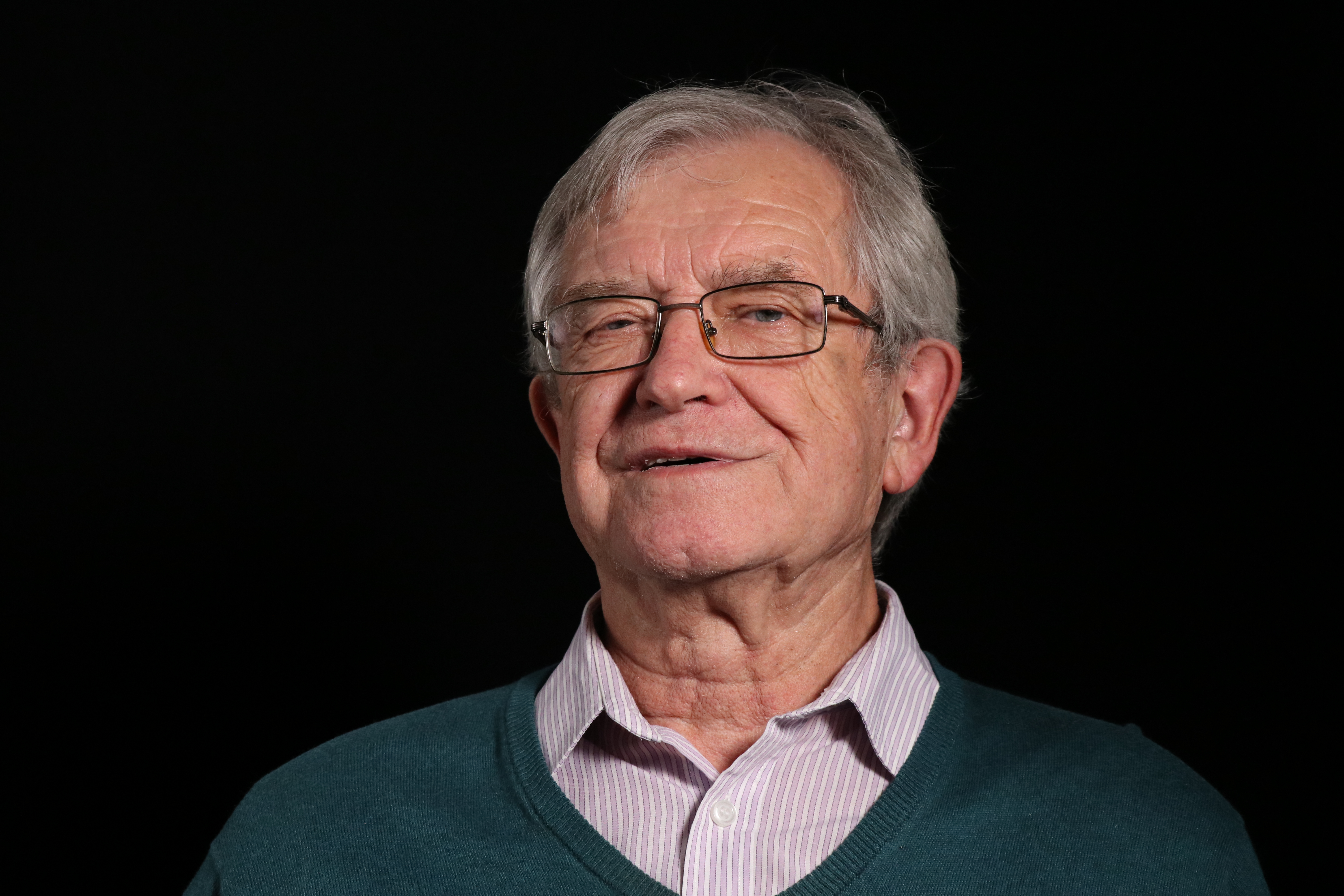
Oldřich Novotný

* 1938

  • "I walked here, there was nothing. It was only here in front of the radio station that I could see that there was a tram and a bus, that I saw them throwing some papers at a tank that was going there to catch it. But because it was tricky there, I was always a bit cautious, I guess, so I preferred to get out of there and I thought I'd better go somewhere else. I had a friend of mine, just a classmate from my apprenticeship, who lived here in Žižkov, that was Vít Nejedlý - I don't know if that's his name today. And so I went there, and there was some shooting going on in that Riegrák, so I was lying on the ground there for a while, hiding, because I said, I wasn't keen on getting shot. Then I came back. And because my wife and child were in Hradec at that time, like on vacation with my parents, so about two days later I went to see her to bring her to Prague because it was the end of the vacation and she was supposed to be at school and she wanted to be back in Prague. And I know that I was getting on a train at that time somewhere in Vysočany, because there was nothing running at the main [station]. From there I got to Hradec. The next day we left Hradec with the carriage and the daughter, and at the station in Hradec we were warned not to go anywhere, because there was shooting in Prague. I said, 'I came from there, so they are shooting there, but we are on the outskirts, so it won't be like that.'"

  • "Dad, because he was always a debater, he was there [in court] fearlessly defending himself and challenging them. But it was like there were others who then behaved downright cowardly and were more like begging for mercy and asking for them. So dad didn't act like that." - "So dad was brave?" - "Yeah, he was brave in that way. Although like them before... Lawyer, because everybody hired a lawyer, and the lawyer told mom that he could get life or twenty-five years."

  • "One thing that happened there was that just as they were investigating him, he had previously been operated on for appendicitis, and apparently, because they were forcing some kind of confession, he had to go to the hospital, he had to go to the hospital in Hradec, and they were going to operate on him there to get him fixed up." - "You mean they beat him during the investigation?" - "I think so." - "And they damaged him because he had been operated on." - "Well, the surgery was maybe a year or two before that, but it was probably some kind of after-effect. So he was in the hospital and then what happened there was that we... He was guarded there, at first, there was a man in the hallway, the room was just for him, there was a policeman in the hallway. People told my mum that dad was locked in there and so he was under police surveillance. So my brothers, I mean my brother, me and my mom went there to see him. They let us in, the policeman said that we two as boys could go to dad, but mom had to stay in the corridor, even though the door was open. What happened later, because it looked like he might be there longer, was that the doctors were trying to prolong the treatment, so he might have been there, I don't remember exactly, but he might have been there for three weeks. After a week, the police had left the guarding and I think they asked the hospital management to make sure he didn't run away from there. He wasn't in any condition where he couldn't escape, but he was in recovery. Well, so then my mother got there so that the three of us could be at his bedside. From there he went back to prison."

  • "I went to the city [centre] then, the trams didn´t run, so I walked from Strašnice to Wenceslas Square. I also remember that in Vinohradská Street, in front of the [Czechoslovak] Radio residence, such simple barricades were made from trams and some buses, and in front of the barricade there were some Russian tanks. They fired in the air, the Russians fired in the air. So it was a bit wild there. And then I was on Wenceslas Square, where some tanks were driving and burning papers were thrown on a tank. And then I was going back and I know there was a shooting, so I had to lie down somewhere in Rieger's Park on the ground, because I had a feeling that bullets were flying around. And I walked back to Strašnice, because the trams didn´t run, the transport didn´t work. "

  • "It was difficult for me that, for example, at school it was being written down what your dad does. Each of my classmates got up and said what his dad was, I don't know, a worker, a clerk or something. There were twenty-five or thirty of us in the class I went to, I don't remember. So because I was a bit ashamed to say it in front of the whole class, I got up and walked to the teacher´s desk and said to the teacher: 'My dad's in a penal institution.'"

  • "Well, we had been on holidays, and since the holidays were over, we were returning - now I don't know exactly if it was on the thirtieth or thirty-first, probably the thirtieth - my grandma brought us, me and my brother, to Hradec. And right than, in the afternoon my father was brought in there, a plain-clothes policeman came with him and asked ... Simply the workers in the workshop, which was normally running on, they had to leave, and my father had to make the stamps that afternoon in order to get a piece of evidence. This means that the stamps were actually made on request, before, they only had prints. They apparently needed documents [evidence] for the court, simply those particular completed stamps. Well, of course we talked to him there, and the work took about three hours and then they drove him away again."

  • Full recordings
  • 1

    Poděbrady, 05.10.2019

    (audio)
    duration: 01:22:31
    media recorded in project Stories of 20th Century
  • 2

    Poděbrady, 02.11.2019

    (audio)
    duration: 17:11
    media recorded in project Stories of 20th Century
  • 3

    Praha, 25.11.2024

    (audio)
    duration: 01:56:43
    media recorded in project Stories of the 20th Century TV
  • 4

    Praha, 17.01.2025

    (audio)
    duration: 01:38
    media recorded in project Stories of the 20th Century TV
Full recordings are available only for logged users.

I walked up to the department and whispered, “My dad’s in the penitentiary”

Oldřich Novotný, first half of the 1960s
photo: Witness´s archive

Oldřich Novotný was born on June 4, 1938 in Hradec Králové to Marie, née Zvěřinová, and Oldřich Novotný. He spent part of his childhood during the war with his grandparents in Bítouchov near Bakov nad Jizerou, where he witnessed the bombing of Mladá Boleslav. His father Oldřich Novotný Sr. owned an engraving workshop. After making fake passport stamps for alleged emigrants in 1949, he was arrested in August of that year. In the staged trial of Maděra and Co. in the summer of 1950, he was sentenced to 18 years imprisonment for complicity in the crime of treason. The family lost all their property and housing. During his father’s imprisonment, Oldřich Novotný rarely saw him. In addition to the family’s existential difficulties, he had problems with his studies. At first, he could only apprentice as an engraver and only then did he enter the industrial school in Jablonec nad Nisou. His father returned from prison during the amnesty in 1960. After his compulsory military service, Oldřich Novotný began to study at the Faculty of Philosophy in Olomouc, where he graduated in 1967. He lived through the invasion of the Warsaw Pact troops in Prague, where he witnessed the fighting with the invaders. In the following years, he worked as a teacher and artistic blacksmith. In 2024 he lived in Prague.