I want to emphasize this point, that is, the Vietnamese security forces always choose the moment when we, the people fighting for democracy, are at our weakest. For example, when they arrested me, they knew that my wife was about to give birth, so they knew that it would be easier for me to surrender. Because they thought that I would think - Okay, surrender to get a lighter sentence so I can go home early to my wife and children. I will take Trinh Ba Phuong as an example. When Trinh Ba Phuong’s child was just 1-2 days old, they arrested Trinh Ba Phuong. Those are the ways of the Vietnamese Communist security to attack us when we are at our weakest so that we quickly surrender to them.
And they always arrest people on Fridays. Why is that? Because when they arrest people on Fridays, the embassies are closed and in the time the news spreads out in the evening, everwhere is closed. Journalists and embassies are closed. On Saturday afternoon, they beat and torture us to force us to confess so we can ask for leniency. On Monday, they release the news saying that we have surrendered, and then the embassies can’t do anything anymore, that’s their way. So in my case, as well as other cases, if you pay attention, most of the arrests take place on Fridays.
"By 23:00, the accommodation, hotels, guesthouses are required to report to local police that anyone is coming today. So I waited by 23:00 to go to a hotel for me to stay in. I had to use a trick. I pretended that I was a bagpacker, I spoke French to them. They thought I was a foreigner. When they demanded a passport, I pretended to shake my head without understanding anything, and they let me go in the room, at that time after 23:00. When I paid them, I pretended to negotiate the price with them. They demanded 500, I paid 400. I spoke French, let them think I’m a foreigner. The next morning I had to throw everything out, go buy new phones, new sims, in Vietnam security they knew my phone, so I left it. My first departure was to go to a Vietnamese border province. I took a taxi away and only 15 minutes from the border – I was exposed. Their company’s switchboard called constantly for him, the driver of that taxi. They asked if it was true that he picked this person up in Anang Wang Street and described how the bag I wear looked like. I knew I was exposed, but the driver, he denied me. When I arrived, I cancel that trip and deleted the app and I told him you just went away, no pressure. And I paid the exact amount as was on the app specified. He’d get the whole amount, so that it would benefit him. So this driver denied, he said he didn’t carry me, he was in Sigon and I wasn’t anywhere. I knew I’m exposed so I got to get out of the car."
"Immediately when I entered my house, I texted my friends that the security wanted to kidnap me this morning and told them to immediately left the house. Short afterwards the security also rushed into the houses of the other friends. I immediately called the embassies and to journalists. Then a uniformed police came in my house and gave me the summons. My wife and my parents ran down to the house arguing with them.
I texted all Western embassies. At that time Mrs Wallat, the German consul general in Vietnam, was on her way to work. The driver took her straight to my house. She came to see the situation. Security also surrounded her car, turning the camera on. She went into my house and asked about the situation, then just went back and went to meet the US consul general. In Saigon, the German and American consuls are both on Le Duan Street, two buildings opposite each other. The German consul general is at 33 Le Duan, the US consul general at 34 Le Duan. She met Susan Burns, the consul general of the United States. The two ladies discussed together and sent notes opposing the kidnapping of citizens. Perhaps that is why that afternoon security withdrew from surrounding my house."
"I just asked: ´You invited me to the police station. First of all, where is the summons and who are you guys in plain clothes? You don't have the right to invite me to the station. You guys in plain clothes, you have to tell me who you are.´ They said: ´Trung, just come to the station and we will send you the summons to your house.´ I said: ´No, how could I go without summons?´ Then we started arguing back and forth for a while, then started to get loud, and people started to gather to watch. And then I remember the commander was a fat and short man, wearing a long-sleeved pink shirt, he nodded towards the cafe at the end of my alley, then about five plain clothes security guards jumped up. Right at the moment they jumped up, I ran back to my house. The person closest to me grabbed my neck, but I escaped and couldn't grab him. As I was running home, the person closest to me ran into a bike that was passing by my house and they fell off, so I had enough time to run home.
One thing that was very lucky for me was that, every morning when I left the house, I locked the gate, but that morning, somehow I thought that my parents were home and that I would go out only to the alley to buy breakfast and come back right away. So I didn't need to lock it. Thanks to that, I pushed the gate open, ran into the house and locked the door. Just then, the security guard ran up behind me."
"If I remember correctly, the guy’s name was Dung. He introduced himself as the Captain of Team 1 of the Ho Chi Minh City Security Investigation Team – the team that investigates serious crimes. He was a colonel. He said something that I will always remember, that if I went out and still dared to engage in democratic activities, either they would stage a traffic accident to kill me, or they would set up drugs into my house to frame me for drug trafficking and possession and arrest me if I continued. I still clearly remember what Dung said to me."
"All three, Mr. Dinh, Mr. Thuc, Mr. Long, knew each other before but actually neither of them was in the Vietnam Democratic Party. They were not related to the Vietnam Democratic Party, but we knew each other and exchanged views and contacted each other. Vietnam Security just threw the case together. And said that Mr. Thuc, Mr. Long established the Chan research organization, but actually that was not an organization, it was just people who were interested in Vietnam in Mr. Thuc's company and did research and wrote articles together. But they put it together into alleged organization. The organization had no charter, no platform, nothing, but they put it together into an organization and they connected ut with my Vietnam Democratic Party. Who was a member of Vietnam Democratic Party, was me and uncle Tran Anh Kim. He was in Thai Binh bit they separated him from my case. They wanted to try Uncle Tran Anh Kim in Thai Binh for the crime of participating in the Vietnam Democratic Party. Uncle Tran Anh Kim and I were actually in the Vietnam Democratic Party, the rest - Mr. Dinh, Mr. Thuc, Mr. Long - they had nothing to do with us, we did only talk to each other. They put it together to make it a big case, with many people involved, so that the police generals could easily flatter the Politburo, so that they could say, this is a big case, with many people, and that is the great achievement of the police. Later, by chance, in prison, I read an article in Thanh Nien newspaper. They said that my case had the number C509B. C stands for political, 509 is the month of May in 2009 when this case was opened, B is the Ministry level. And there are a lot of generals who got medals and decorations because of my case."
"Then we decided to establish an organization for democratic youth. The “Democratic Youth Association” is an organization registered in France. It is registered according to the association right of France, according to the law, it is legitimate. And I remember that I chose for the founding day the day of victory over the Nazis, May 9, 2006, so I remember it now. Or May 8, 2006, one or those days. Then on December 25, 2006, I remember that because it coincided with Christmas Day, I joined the Democratic Party. Gathering democratic youths with Democrats was ment like a platform where young people can participate and learn, train politics and democracy, and then it’s up to them. They can join other political parties or join Democrats. But it is great to say, the Democracy Youth Association is the place where youth is trained for the Democrats. It is the same as with the Communist Party. The Communist Youth Union is the place to seek and train young people for the Communist Party. We follow this model so that we can compete directly with the Communist Party. So I was the head and founder of the Democratic Youth Associatiom. Then together with some other friends we joined the Democratic Party of Vietnam."
"When I realized there was the 10th Party Congress, I wrote the first two articles. The first article was titled Open letter of an ordinary student in an unusual country sent to the Minister of Education. At the time it was Mr. Nguyen Minh Hien. I remember that about March 2006, I raised the problem with Mr. Nguyen Minh Hien, that education in Vietnam is a stuffed and lying education, deceiving Vietnamese youth. With such skull stuffing, young people will not be able to think critically, English term for it is critical thinking. Without critical thinking, you cannot compete with the world at all. Because in the world what you need to grow is to rely on yor creativity. The Vietnamese party, they make Vietnamese youth students into sheep or parrots, learning not to stand out. They only know to imitate without being creative and will make my country lag behind. That letter made me famous at the time. I remember the BBC journalists said it had to have million readings and my posts on the front page of the BBC was kept there for a month, because it was very crowded with readers and created a very large stream of public opinion from inside as well as outside of the country. Then I wrote a petition to the 10th Congress of the Vietnamese Communist Party. I remember that at the time was Mr. Ngo Duc Meng, who at the party congress called on the people to write a letter of suggestion to the party. So I also made my contribution. Through those two articles I became very famous. Until now those two articles are still on the BBC’s website in Vietnamese."
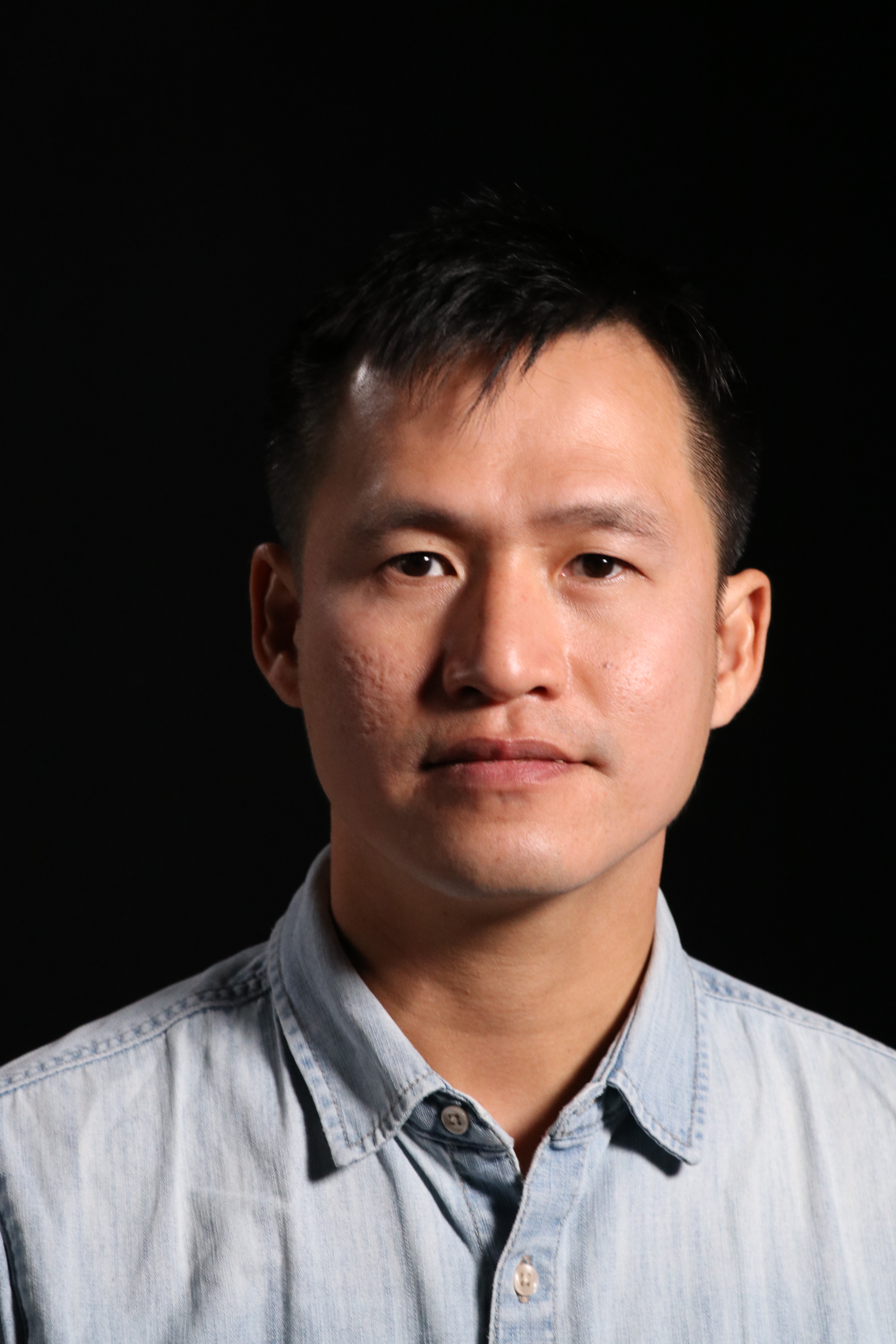
Nguyen Tien Trung was born in Dak Lak and grew up in Saigon in an intellectual family. His parents were both state officials who studied abroad. He also followed in his parents’ footsteps and studied at the French institute of technology - Institut National des Sciences Appliquées (INSA) in Rennes. After the first two years, thanks to his excellent academic results, he was awarded an Eiffel scholarship from the French Ministry of Foreign Affairs. While reading, learning and observing the lives of the French people, as well as the 2002 French Presidential election, he realized that he, like many other Vietnamese young people, had been falsely propagated about life in Western democratic countries. He felt angry because he was deceived by the education system at home. Not only did they deceive him, they also deceived and shepherded the entire young generation like a flock of sheep that could only follow and repeat without knowing how to criticize. He realized that this is a major barrier hindering the country’s development, so it is difficult for Vietnam to compete with friendly countries around the world. He decided to participate in democratic and civic movements to help Vietnam to achieve freedom and democracy. He is the co-founder of the Democratic Youth Gathering, once participating in the Vietnam Democratic Party founded and restored by Mr. Hoang Minh Chinh. Before returning to Vietnam, he organized and participated in advocating for democracy in Vietnam and met with Western politicians. Because of activities fighting for Vetnam´s democracy, he was sentenced to 7 years in prison and 3 years of probation. After his release from prison, he continued his democratic activities, despite threats and pressure from security services and the government. In 2023, he escaped the hunt and “kidnapping” by Vietnamese security and fled to Cambodia and Thailand. After that, he took refuge in Germany with his family.