"The thing is, people haven't taken to the streets (since the demonstration on July 11, 2021) because we have more than half a million Cubans who emigrated just after 2021. There is a bitter experience and a terrifying vision of what happened that day and in the days that followed in repressive acts... massive beatings. I saw women and girls being pushed face down onto the concrete, beaten on the floor. I saw it. I was broadcasting live the outbreak of 2021 while the internet connection lasted. They also beat me, they kicked me. There is a large mass of people who left after the demonstration into exile in a mass exodus. If these same people who participated in 2021 despite all the terrifying experiences they went through are here now, they join those who are here—which is a rather weakened force, there are more than 25 percent of older adults within the Cuban population... Another large sector is children, who do not have the capacity to decide to take to the streets. If this large mass of young people who emigrated were here, there would be no turning back. That is why the regime sees these mass deportations from the United States as very dangerous. That is where the fall of the Cuban regime could begin.
"When I arrived in Bogotá in 2016, it was a shock. It was too abrupt a change. Beyond Varadero, I had never known anything so different. The thing is, we had been taught to think of Latin America as a third world region populated by indigenous people. Even though you gradually detach yourself politically from this discourse, this vision is overwhelming and very difficult to shake off. When I was in Bogotá and looked around me, I saw huge buildings stretching as far as the eye could see, a jungle of concrete and glass. At that moment, I asked myself: ‘Damn... if this is the third world, what world am I living in?’"
”At the Maleconazo, I was amazed how manipulative could be the sole and only image of Fidel Castro. I had just married my wife and had to look for money everywhere. The Special Period was already winding down, but the situation remained critical, and in fact, El Maleconazo took place. I was hustling, I had a friend's car that he rented to me, and in return, I kept it in good repair. He knew that both my dad and I were into mechanics... That day, I had it parked in front of the Hotel Inglaterra. I walked down the avenue and arrived at Galeano. I was looking for something to eat. There I saw a crowd of people shouting and throwing stones. In fact, they broke all the windows. The police who had gathered there were hit with two bricks and went inside the store. I wondered what was going on. A boy of about ten or twelve, very excited, said to me, “This shit has fallen!” Wow... I looked at that and joined in the shouting, thinking, “It can't be that it happened so fast...” As we were walking down San Lázaro, Fidel Castro appeared. He got out of the jeep with his entire escort, punching people. The special troops were in front, clearing the way. The crowd was shouting ‘Down with Fidel, down with communism, Freedom, Freedom!’, but when they saw Fidel Castro, everyone stood still in silence. And then, little by little, they started shouting: ‘Fidel, Fidel, Fidel!’ The troops started arresting people. I managed to slip away and get lost up where I had parked my car. I was very impressed by how manipulative the image of Fidel Castro was and how little ideological and political basis the Maleconazo demonstration had. These people exploded without knowing what the reason was. Some say it was staged by State Security itself so that the Cuban regime could stage a coup. I don't know what the origin was, but I saw some brutal beatings, even of those who were shouting ‘Fidel’. For a few hours there were several brutal beatings and about 200 arrests."
”This is going to sound terrible... it's not easy to say this in public, these are very personal things. I became addicted to eating cat. At home, we went hungry, but it was brutal hunger. My dad was a mechanic, and people didn't even have enough money to put gas in their cars. How were they going to take them to get fixed? We depended on that. We went hungry at home. We drank cabbage soup and ate cats. I hunted several cats myself... if not, the boys in the neighborhood did. And they invited me. They were violent and criminal acts, but purely for survival. I don't justify or rejoice in these things. It was pure survival.“
"I remember I started listening to it at Miguel Gómez's house. We would go to his grandmother's room, turn it down low, and sometimes, when the old lady came in, we would cover ourselves with a blanket so we could keep listening. Miguel's mother would always say to us, ‘Let me know quickly, hurry up, I'm waiting for the soap opera Esmeralda’—it was the first radio soap opera broadcast on Radio Martí. We were very young, but we already had this inclination and we knew that if we wanted to hear real information that would tell us how to act, this was the perfect way. It was the only way. I remember that we formed a group of boys and girls and went to the beach on weekends. We had a Selena radio... having a radio like that was a sensation; it was a very good FM receiver. Then, on the beach, where there was good reception, you could hear all the stations from the United States.“
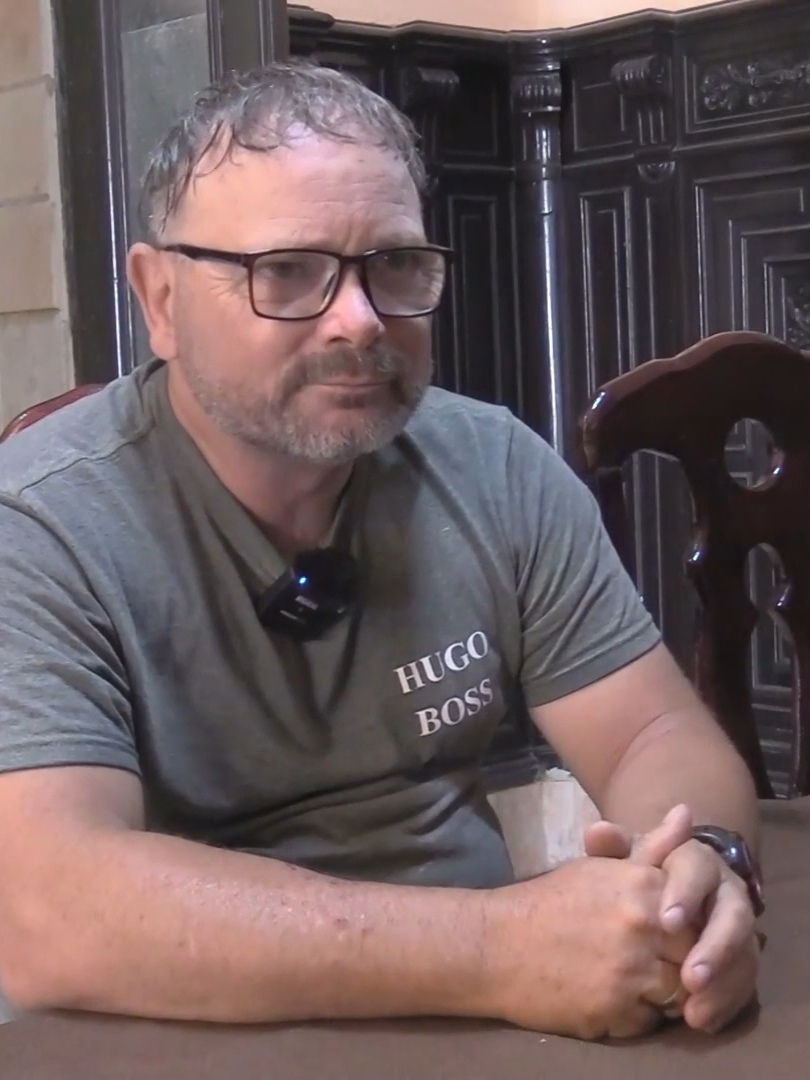
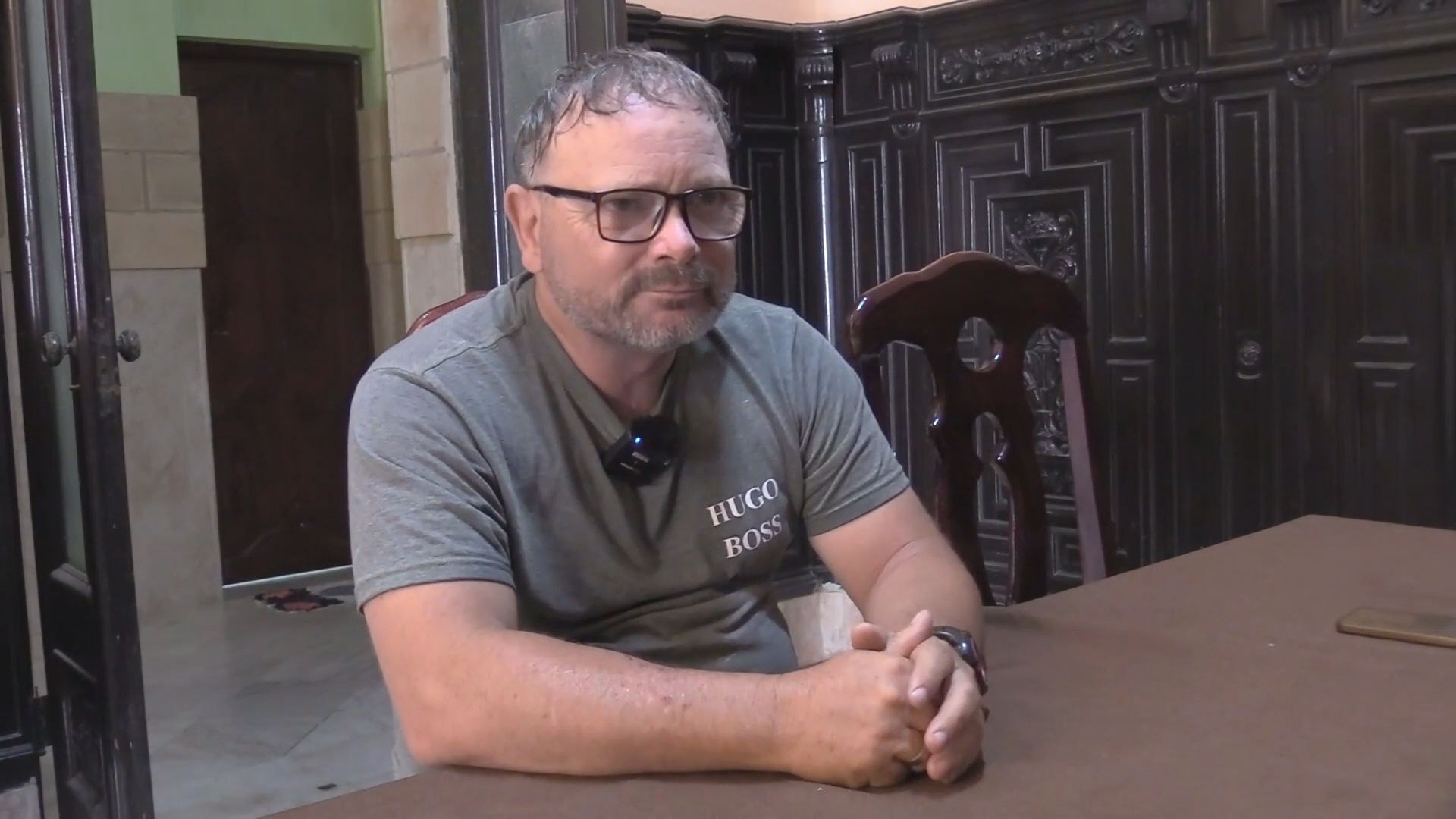
Juan Manuel Moreno Borrego was born on August 6, 1968, in Havana. However, he spent five of the first seven years of his childhood in Las Tunas, the province where his mother was from and where Juan’s family returned to be with his maternal grandmother during her final days. While his mother was a guajira from the Cuban countryside and, like his maternal grandfather, was not very supportive of the revolutionary process, Juan’s father participated directly in the struggle of the barbudos under the command of Fidel Castro. He later maintained his military status but worked mainly as an automotive mechanic in the Technical Directorate of State Security. While the family lived with his maternal grandparents in Las Tunas, conflicts based on ideological differences became increasingly serious and ultimately became the main reason for the family’s return to Havana. While still a high school student, Juan began to question some basic concepts of Marxism and got into arguments with his teachers. Later, he had the opportunity to meet other students and young people who shared his dissatisfaction with the country’s official policy. Together, they listened to the newly founded Radio Martí and came into contact with the opposition movement that was forming around figures such as Oswaldo Payá Sardiñas. Juan helped collect signatures for the Varela Project. Meanwhile, he managed to survive the special period that hit his family with brutal force. He himself admits that he had to resort to hunting stray cats to survive. He tried several times to leave Cuba by sea during the Rafters Crisis, but was always intercepted by the police or border guards. After one of the attempts, he was tried and was supposed to spend two years in prison. In the end, he did not have to serve his sentence and only paid a fine of about 800 pesos. He witnessed Fidel Castro’s arrival at one of the largest popular uprisings known as El Maleconazo. After several years during which he devoted himself mainly to his family, he came into contact with the organization Candidates for Change and became one of its leaders. He received training in democratization abroad and visited countries such as Colombia, Argentina, and Peru. The knowledge he acquired on these trips helped him educate and prepare independent candidates who were running for election. He is an independent journalist and director of the community media outlet Amanecer Habanero.