“So at first we set out as the second wave, and then near Krosno we moved into the first wave. And near Bóbrka we ran into the fascist defense. There, an anti-tank gunner hit the first tank—the one we were on. So we took out that anti-tank gunner, and another tank came up. It was hit again. A third tank—again the same. I gave the order: ‘Dig in!’ So with our little field shovels we dug ourselves in. In the evening, two buses came up to us. I stopped them, and there were Slovak drivers inside. I asked, ‘What are you doing here?’ — ‘We brought fascists, they’re over there about 150 meters from you, in defensive positions. Because the road was deep, we couldn’t turn around, so we’re just going on.’ I told them: ‘Then keep going.’ In the evening, another infantry battalion marched up in tight formation. I stopped them too. Their commander was Colonel Kvapil. I said, ‘Colonel, where are you marching?’ — ‘Well, where do you think? To Dukla!’ And I said, ‘Not to Dukla! The fascists are dug in just 150 meters from us.’ Kvapil said, ‘What nonsense are you talking?’ But because they had arrived at night, they didn’t have heavy machine guns with them. And then suddenly—trrr trrr—the tracer rounds were flying over the heads of our soldiers. And then he said: ‘You’re right. Turn!’ So they withdrew to Machnówka, where the fascists had already built a deep defensive line. Our men took it over and stayed in the dug trenches. In the morning, the Soviet soldiers launched an attack on Bóbrka, but again it turned out they couldn’t break through, so they pulled back to Machnówka. We submachine gunners retreated with them, and on the way from Bóbrka to Machnówka I was shot in the leg.”
"Then in the forty-fourth year, at the beginning of February, the Red Army's frontline troops came to us there. We helped them build observation posts, trenches and so on. And then we voluntarily joined the Red Army. From there, from Straklov we crossed over to Rovno, and there we joined the - as I say, voluntarily, the mobilization hadn't been announced yet and nothing - the Red Army. And just because they had equipment and armaments all the way to the Urals, it was thousands of kilometers away, so we were there in civilian clothes and instead of weapons we had sticks. The commander there taught us how to use the sticks as rifles. After a few days, a nicely dressed officer showed up, and we said, 'That's an Englishman or an American, or whoever it is.' The regimental commander had the regiment embarked and told us that the Soviet government had decided that Czechs and Slovaks - Soviet citizens - could voluntarily join the Czechoslovak unit that was being built there. Well, because he didn't know how many Czechoslovaks he had there, he gave this command: 'Czechs and Slovaks, four steps forward, march in!' And he had the whole regiment moving slowly. He went from one to another and asked: 'What is your name?' And he said: 'Malczewski.' And he said, 'You're not Czech.' He said, 'No, I'm not Czech, but I know the Czechs well, they're my good friends, I went to school with them, I want to fight with them.' He said, 'No, stay here, yours will come too.' Another one: 'What's your name?' He said, for example, 'Pochozaj.' - 'You're not Czech.' - 'I am Czech. My father is Ukrainian, my mother is Czech. She taught us Czech, and we spoke only Czech at home.' And really, that was also so well known... So that's how it ended there."
"There was work on the land. Of course, there were no tractors and no machinery back then. So you dug with a shovel. When harvesting, they cut with a scythe. I, as I said, attended school till April. Every time I came home, I had to either work in the garden somewhere or clean up the manure from the cows and pigs, and I would take it to the garden somewhere and bury it there and so on. So that's how it was."
“On our way we joined the Soviet tank unit, because, as I said, our army did not have a sufficient number of tanks for the tank attack. So we got in the tanks and approached the starting point for the attack while it was still dark. On the front, the fascists would naturally light the foreground with signal flares, from time to time they made an artillery or mine attack, but aside from that, there was portentous silence. The tanks stopped in the forest, further from the front edge, we jumped out of the tanks, helped to cover them; we did not need to dig trenches, because we could hide under the tanks. We crawled under the tanks and we were protected. Those tank drivers obviously told us so: ´Get under the tank, and you don’t need to dig anything.´ In Russian, naturally. And right after the dawn of the 8th, at 6:40 a.m., the guard mine-throwers, the katyushas, started a mighty fusillade, an artillery preparation. And you could not hear a single word. We were one next to each other, like we are now, but you could not hear what the guy next to you was saying. You had to shout right in his ear, it was terribly noisy there. And the fire was coming from all sides, grenades were whistling, and we did not know: Was it the Germans shooting, or our soldiers shooting, or what was going on? So we were pretty scared. But the tank drivers just said: Něbojtěs, eto art-podgotovka načalas.´”
“When I was with the sub-machine gunners we had no time. And then, when I joined the 5th artillery regiment, we had no free time, either. We had to bring supplies of food, of petrol, or ammunition. If they had had no ammunition, they would not have been able to fire a single shot, without petrol they wouldn’t be able to move the artillery, without food, they would die of hunger, right? So we had to keep going all the time, to be on the move, to head somewhere. And as I said, the supply units, the storehouses and so on, were far away, because the front kept advancing, and as I said, the Germans were retreating, and on their retreat they damaged railway tracks, roads were mined. If you drove off the shoulder of the road, you ran into a mine, it destroyed your vehicle.”
“The commander gave an order: ´Meeting here in 15 minutes.´ We packed our things in a minute and came back: ´Get in the car and go.´ - ´Go where?´ - ´You will see.´ On the front, you are not told where and why you are going, or where you will attack, because if you were captured by Germans, they would get all this information from you, you understand. So we arrived to Kroscienko, it was a small town, or rather a larger village, near Krosno, and we arrived to a school there. ´What shall we do here?´ - ´You are in a driving school.´ So we ended up in a driving school and we were taught how to drive. ´Have you ever driven this before?´ ´No, never.´ I have never driven a car, but I did not get much driving practice there either. ´So, get behind the steering wheel.´ So I sat in the driver’s seat and rode a few meters. ´Enough, stop!´- ´But I haven’t even…´ - ´You know how to drive.´ And then we took a test regarding the technical matters and driving, and I got my driver’s license.”
“We first encountered the fascist cunning, brutality, bloodthirstiness and aggressiveness in September 1939, when the fascist Germany attacked Beck’s Poland and after 20 days of fighting they advanced quickly, and approached a nearby railway station. The station’s name was Kosťaněc, near the eastern Polish border with the Soviet Union. …Those transports were crowded with refugees and wounded soldiers. And suddenly a modern airplane with Czechoslovak emblems appeared. And we said: ´Oh God, the Czechoslovaks came to help Poland, they will now fight the fascists. And the airplane descended, and since it had Czechoslovak signs, they did not open fire on it. It was a surveyor plane. And suddenly it began dropping bombs – on those transport trains, and shooting at the refugees from a machine gun. He was simply murdering those people. So we immediately knew these were not Czechoslovak airmen, but fascist pilots, who piloted the Czechoslovak airplanes that they had taken.”
“They (Germans) were murdering their own prisoners of war as well. This was inhumane, it goes against all the present regulations, right. Those captives were kept in a space, about this large, which was surrounded by barbed wire, and inside this enclosure, on a meadow, were the captives. And they did not feed them properly; they were slowly dying of hunger. And when we were going to school, we were passing by this POW camp, and they would beg us to give them something to eat, so we would throw them the snacks we had for our lunch break. And the fascists… they would either beat us with rifle butts, or with some truncheons they had, or just threaten that they would shoot us or something else. The prisoners had no shelter, so when it was raining, they were sitting in that mud, and that was how they lived there. And of course, those who were wounded were dying.”
“A ghetto was set up in the town, and all Jews, not only those from Dubno, but from the whole area, were forced to go there, and they robbed them of everything. And when there was nothing left to take, they threatened them: ´If you don’t give us x kilograms of silver, x kilograms of gold, and such a number of leather coats, we will execute every tenth of you.´ And they did. And when the Jews had nothing left, ´We will exterminate the whole ghetto.´ And so they did. They transported them behind Dubno, there was an airfield, the Soviets were building an airfield there, so there were pits dug out for planned construction of hangars. And there they had to undress, fold their clothes into one pile, and then they were shot. And when the Germans were then looking at the dead, they fired another shots to finish off those who seemed still alive. And some, when they regained consciousness, dug themselves out of the pits and crawled into a nearby village and there they were hiding, so when the Germans then came there and found out that somebody was hiding them, they murdered the whole family including the Jew. So what was happening there really was a horrifying massacre of people.”
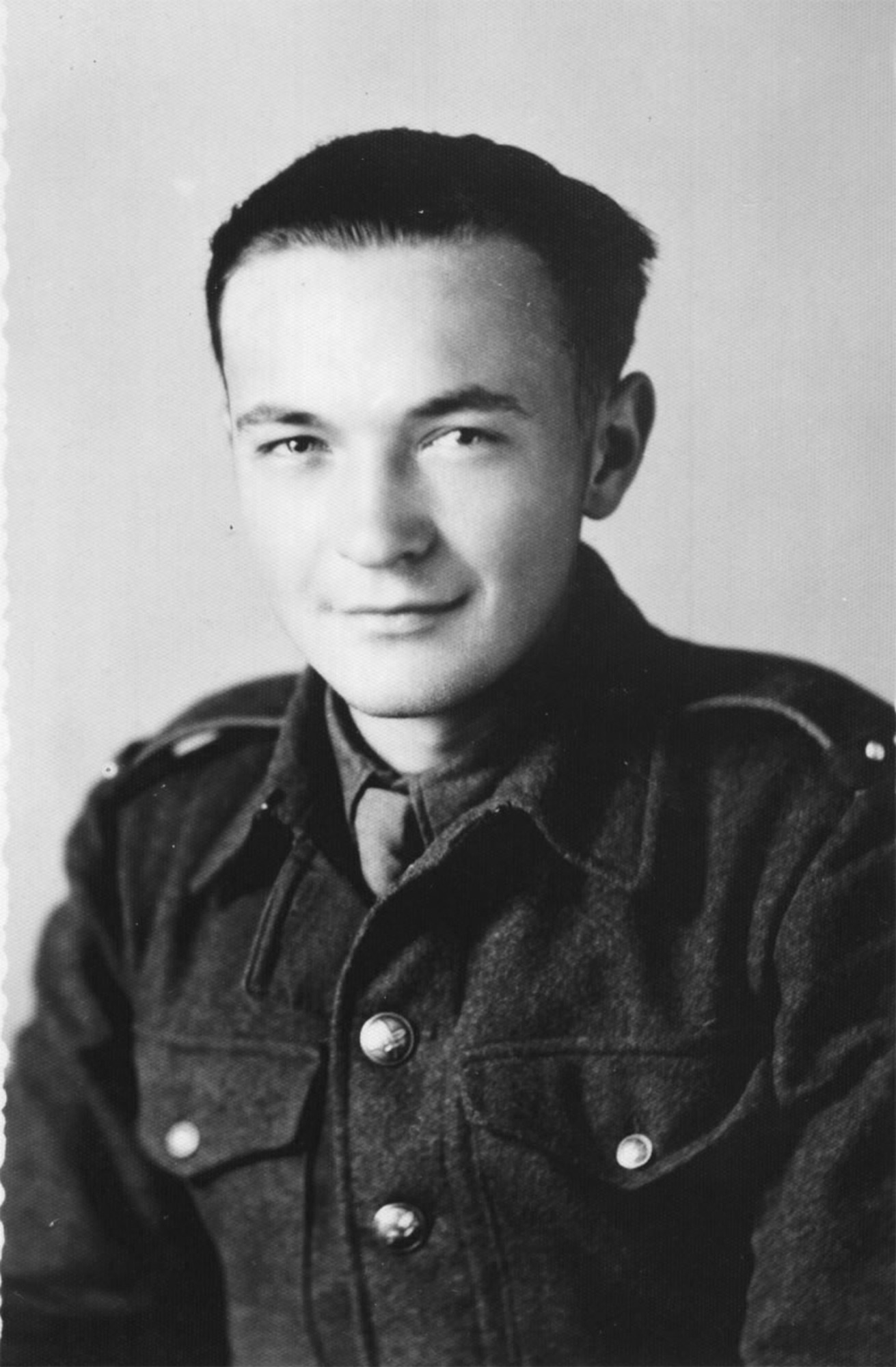
“So I am ing. Miloslav Masopust, colonel in retirement, I was born September 26th 1924 in Český Straklov in Volhynia, Dubno district, so this was the former western Ukraine, subject to Poland till 1939, after 1939 it became occupied by the Soviet Union. I am a former member of the 1st Czechoslovak army corps in the Soviet Union; till Dukla I served in the independent brigade of tank sub-machine gunners, commanded by the Hero of the Soviet Union, later the general, Antonín Sochor.”
“Of course, they had the inscription ´Gott mit uns – God with us.´ on their belt buckles. And I thought: ´Good Lord, how could have God been with them?´ Am I not right? Did God support them when they massacred infants? If they had murdered kids of school age, let’s say you might argue – so those children and their adults were guilty of some sins, and God had them punished this way, by letting the Germans exterminate them. But infants? A baby cannot commit any sin. And they massacred them brutally. They held them by their legs and smashed their heads and threw them into wells. There were wells, not a water piping system like here, and those wells were full of corpses. Horrible.”
“Till 1939 I attended a Polish grammar school and after that I studied a so-called ten-year school. They (the Soviets) have abolished grammars schools and introduced the ten-year schools which were in used in the USSR. So we, who had studied at grammar schools and have been transferred to those ten-year schools, now excelled in everything and were exemplary students. So we functioned as course leaders, teachers at various trainings, and so on. But when the fascists came in 1941, they closed-down the ten-year schools and reestablished the Ukrainian grammar schools. So after that I attended Simeni Petljura Grammar School in Poland, in the town of Dubno. And this Simeni Petljura Grammar School was again closed by the Germans about 9 months later, and we all had to go to forced labour in Germany. In case you did not find some job in that region quickly enough, you were obliged to do forced labour in Germany. But we had acquaintances in various places, and thus I quickly got a job in a meat factory.”
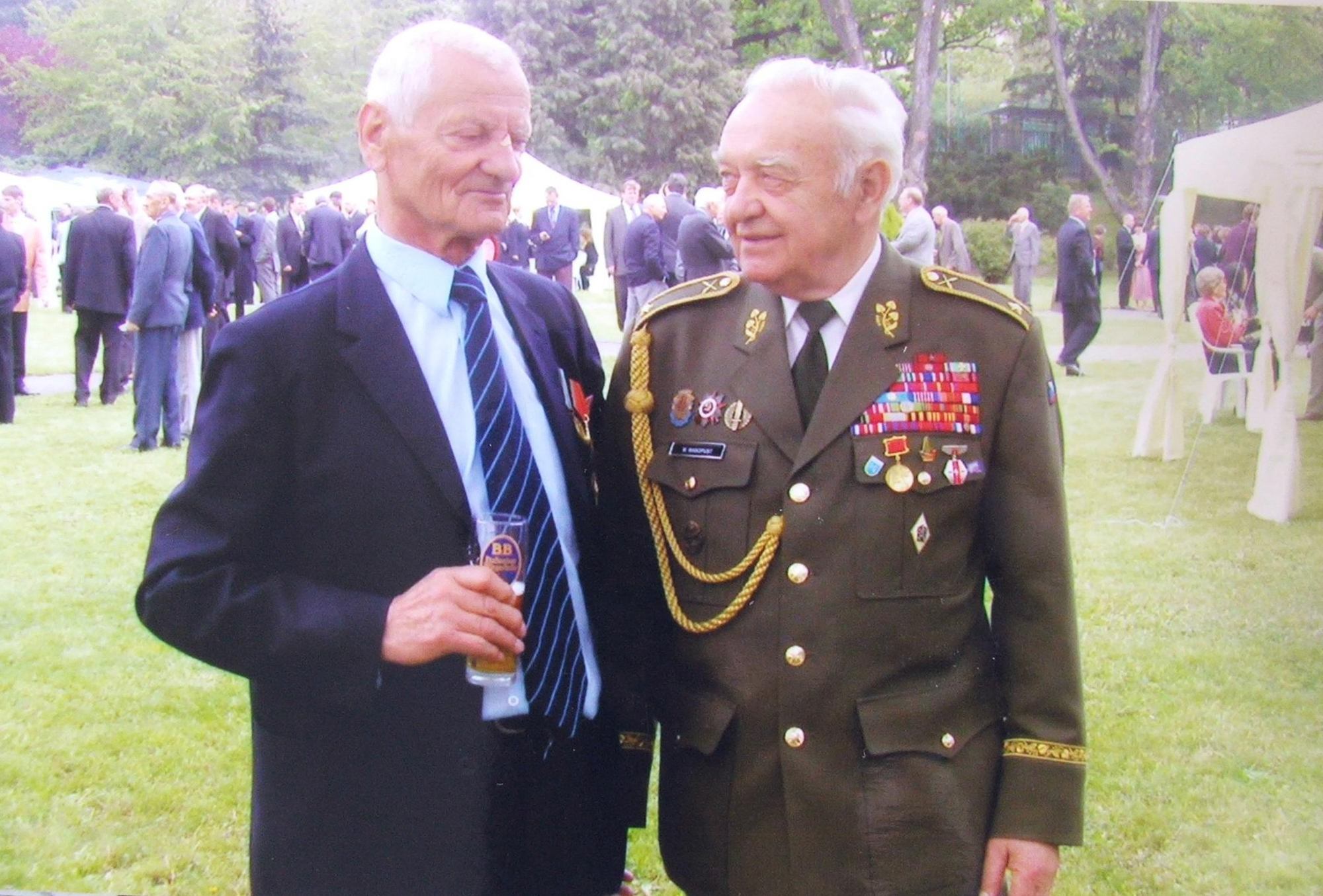
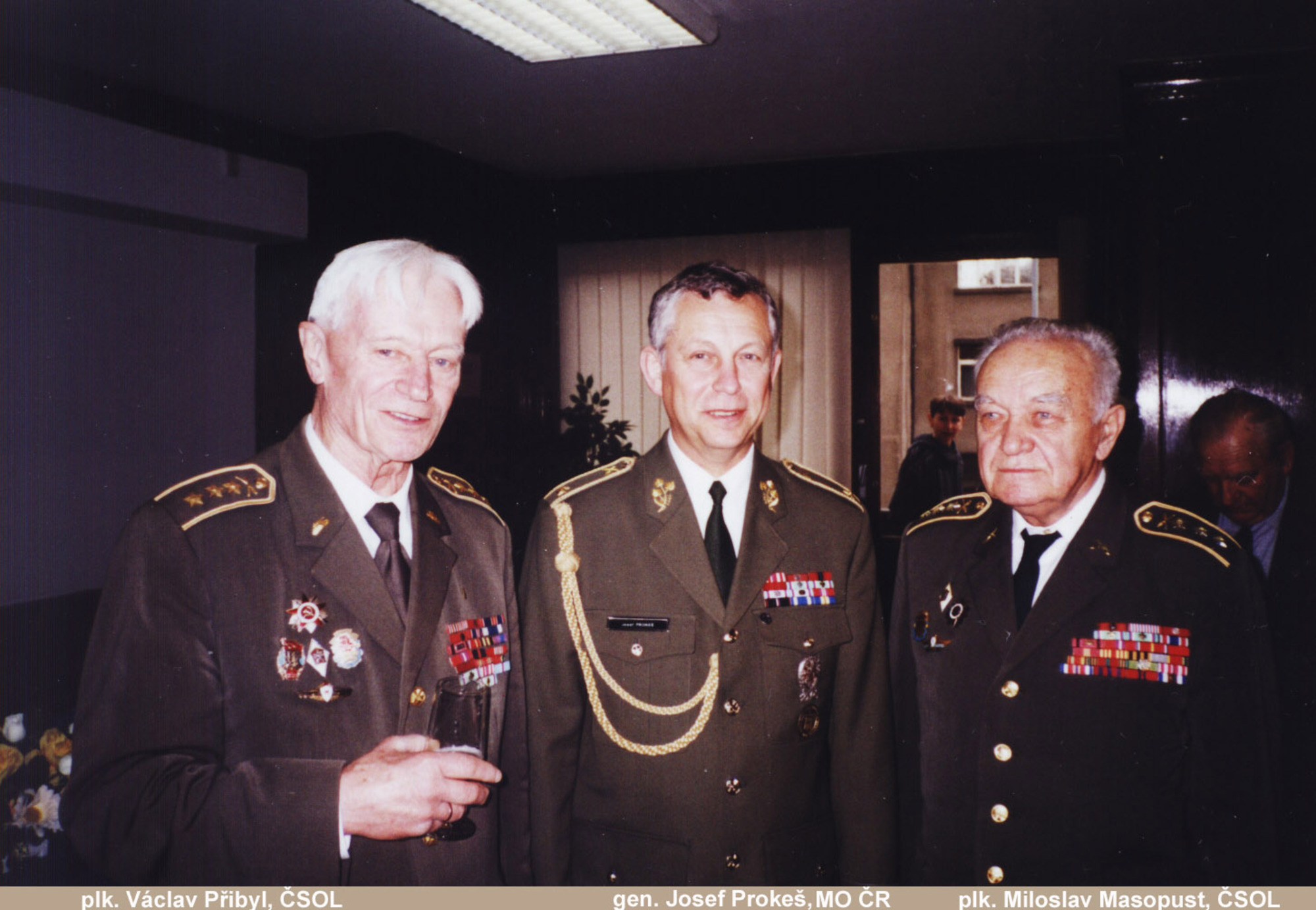
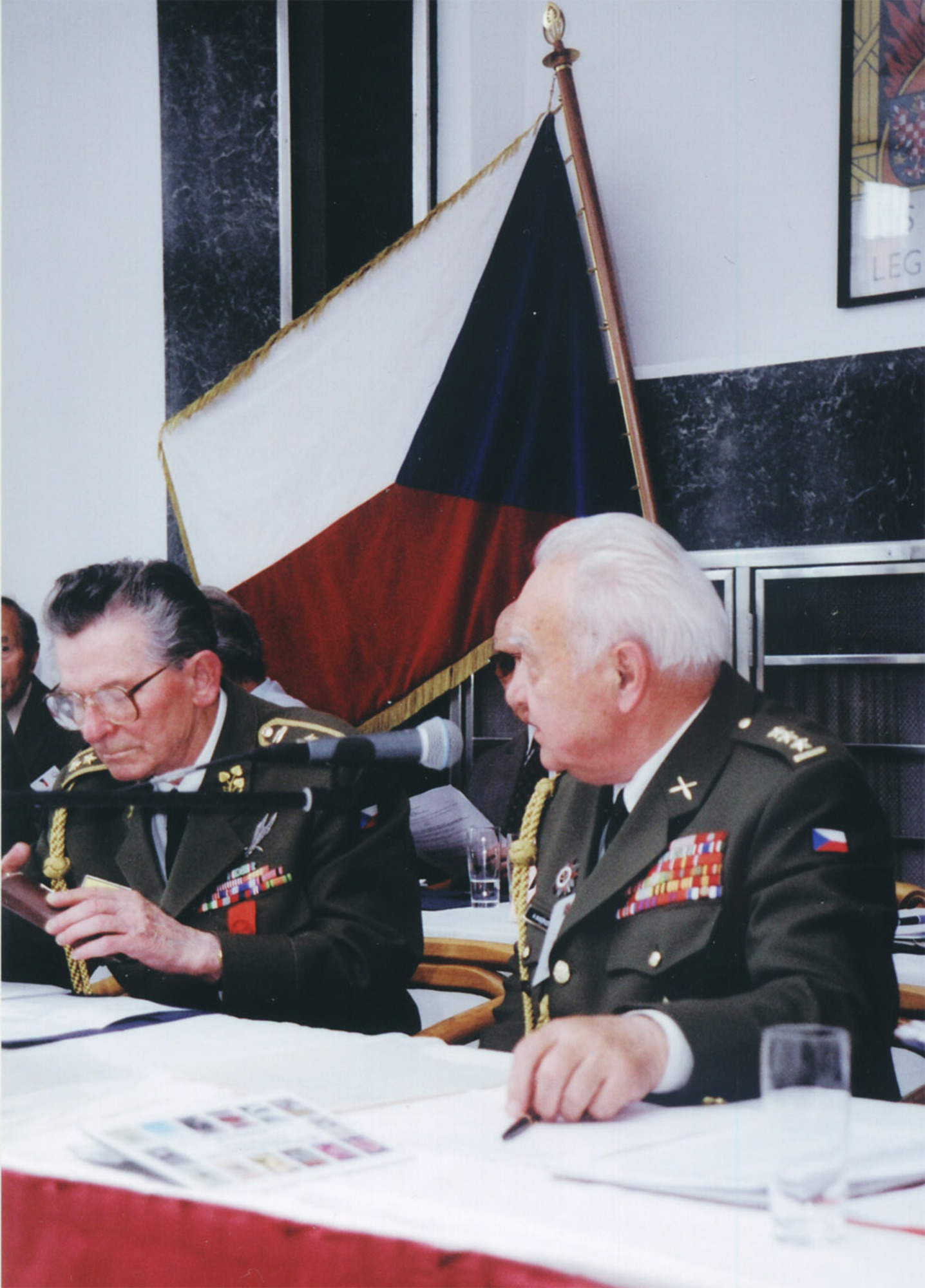
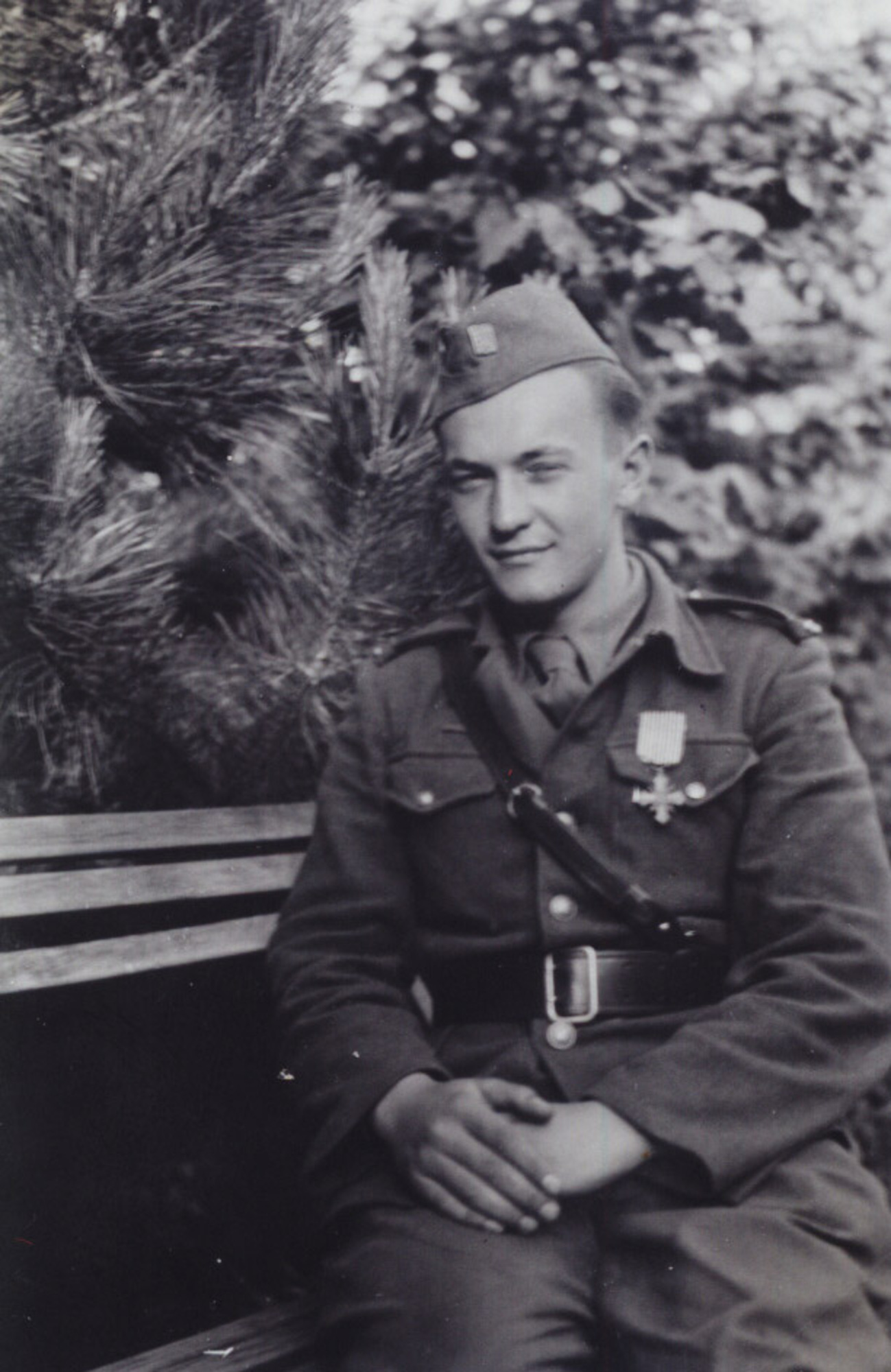
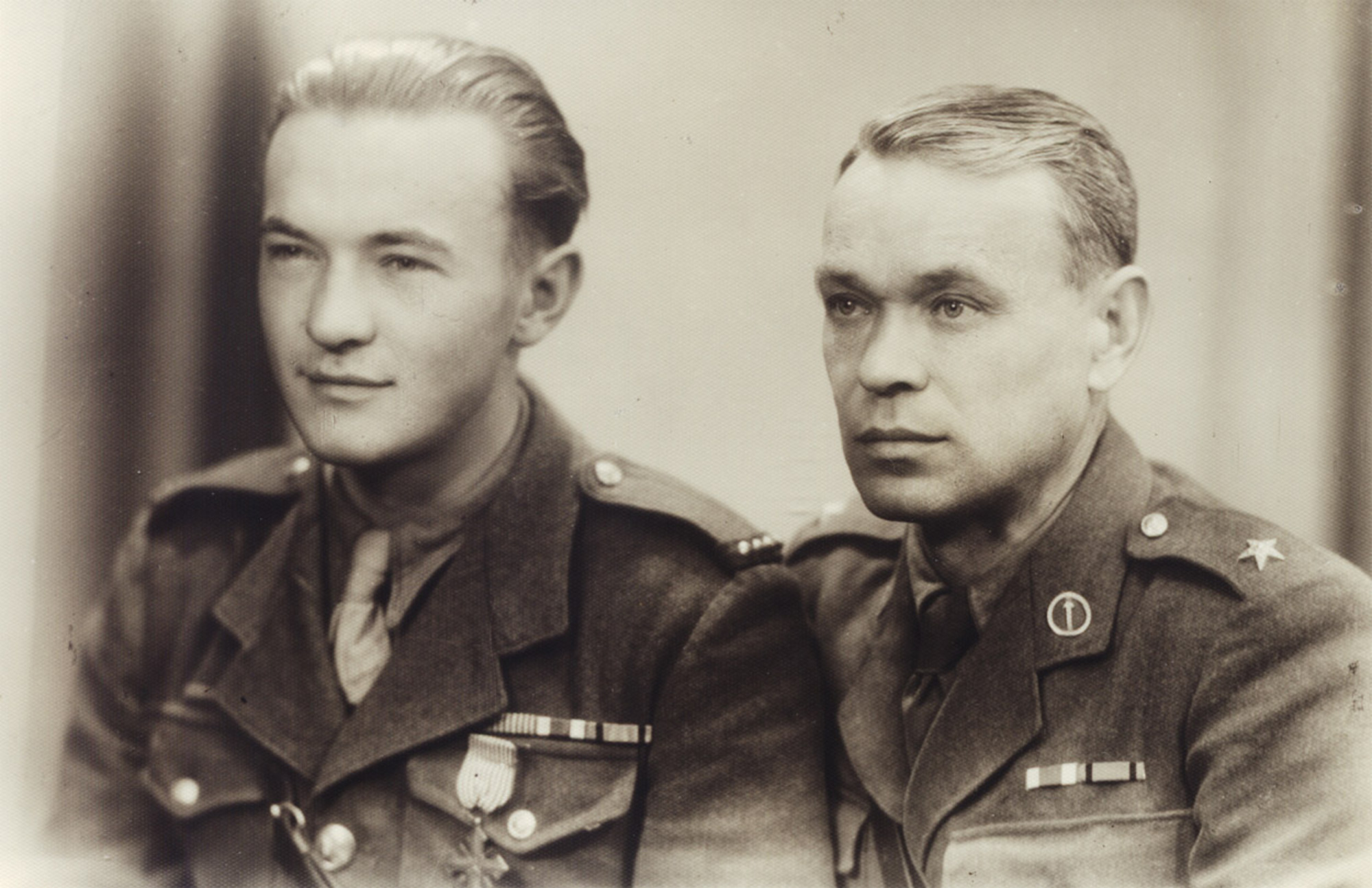
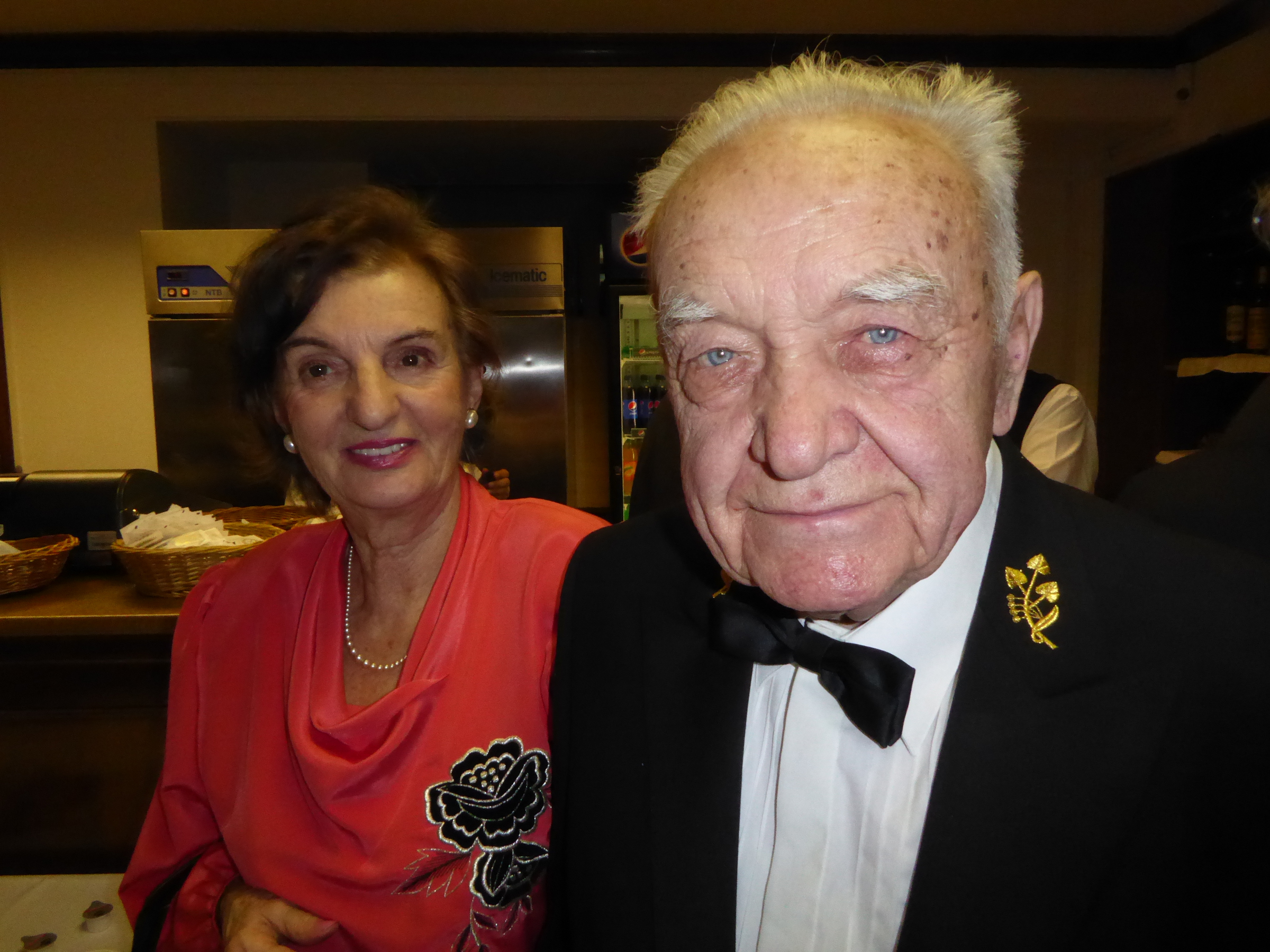
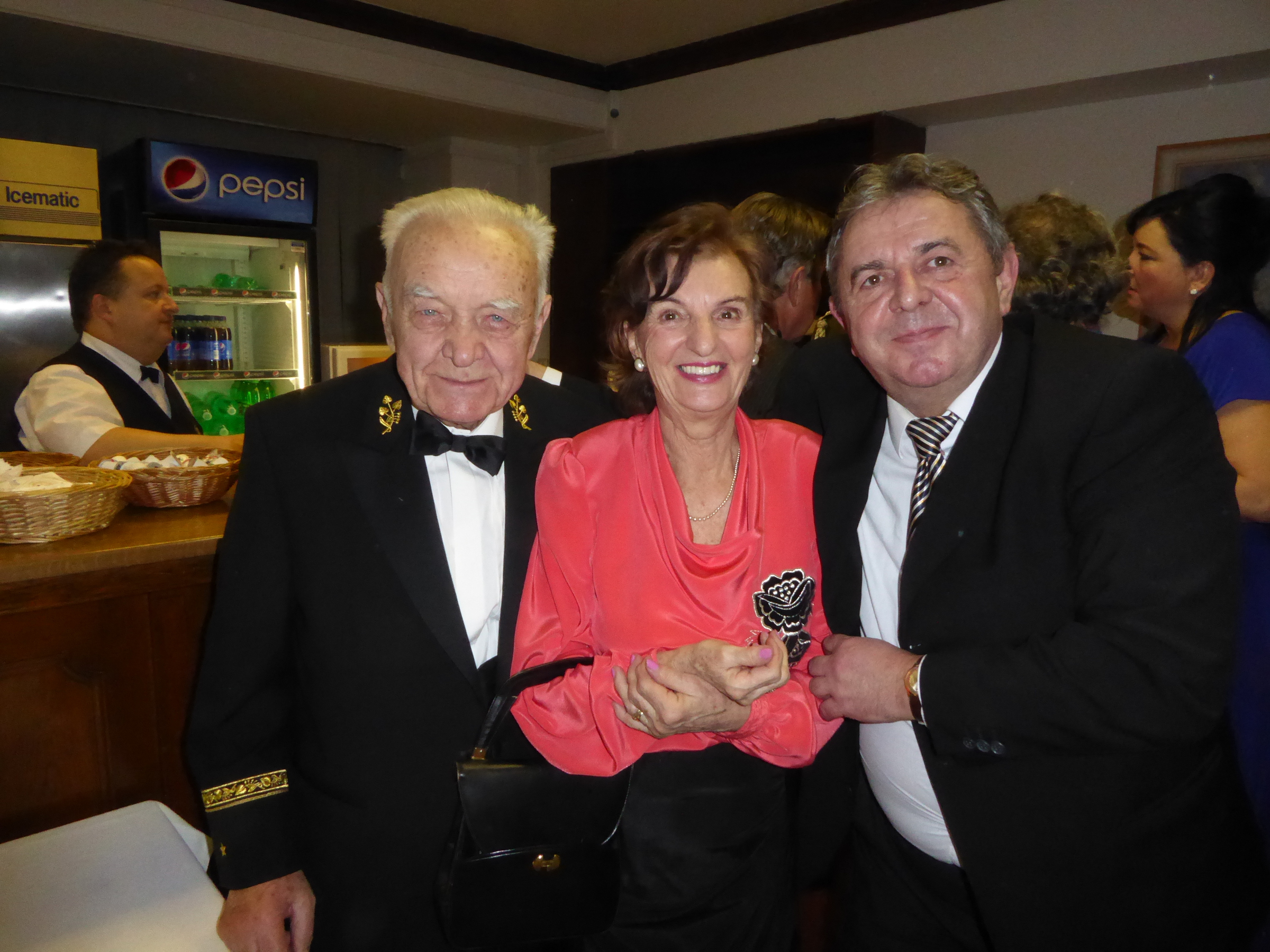
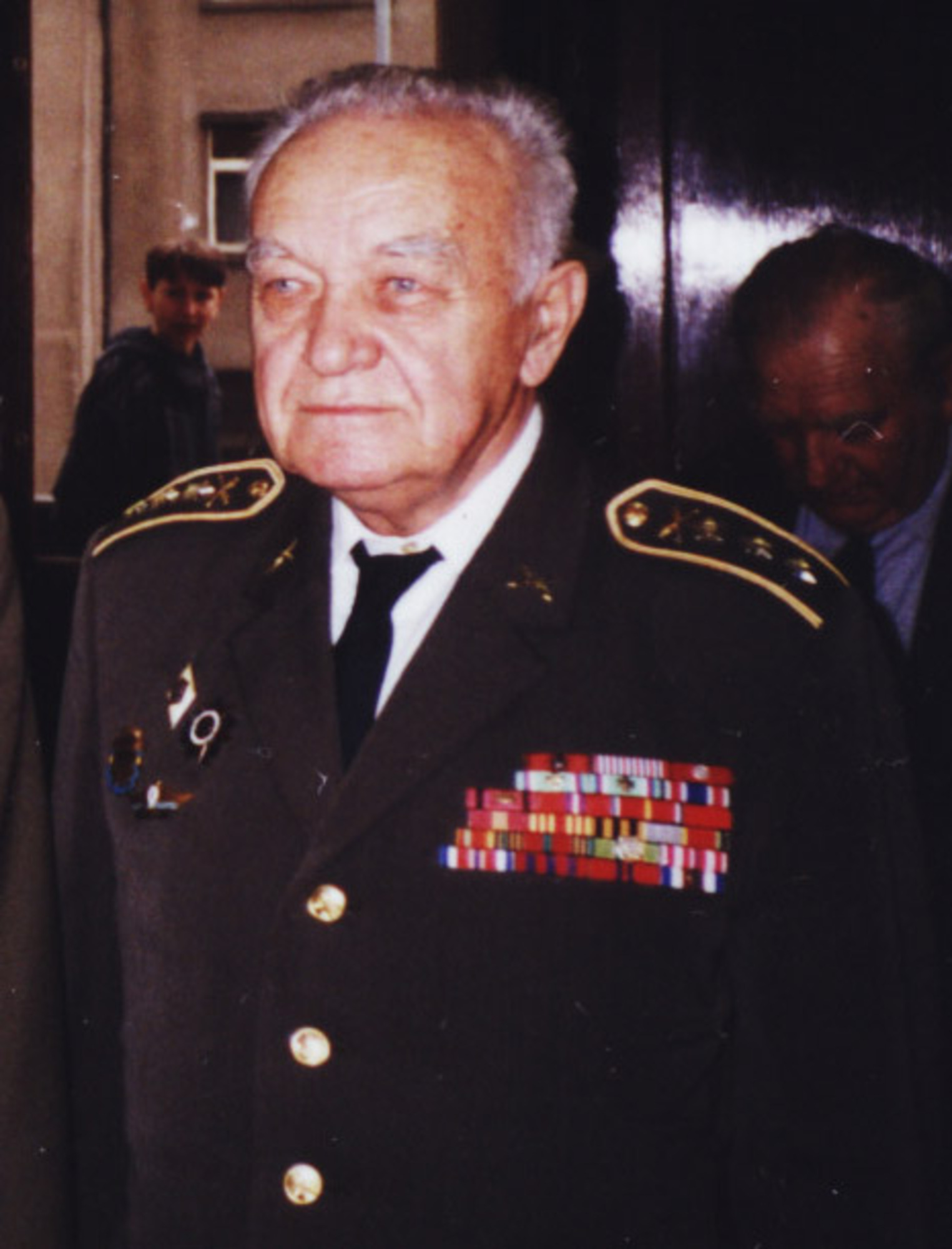
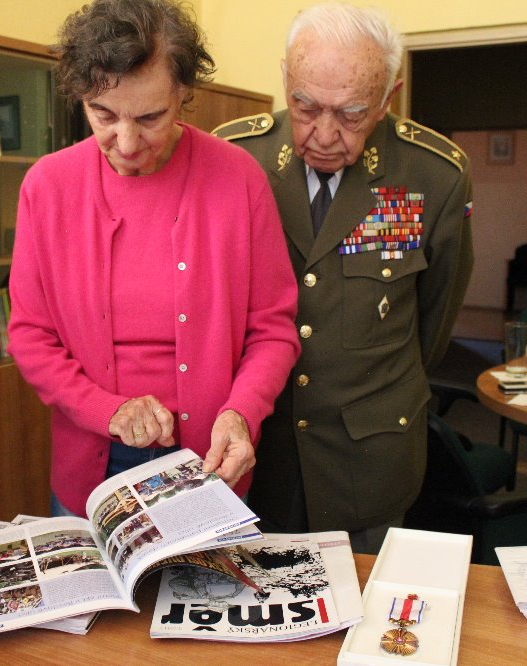
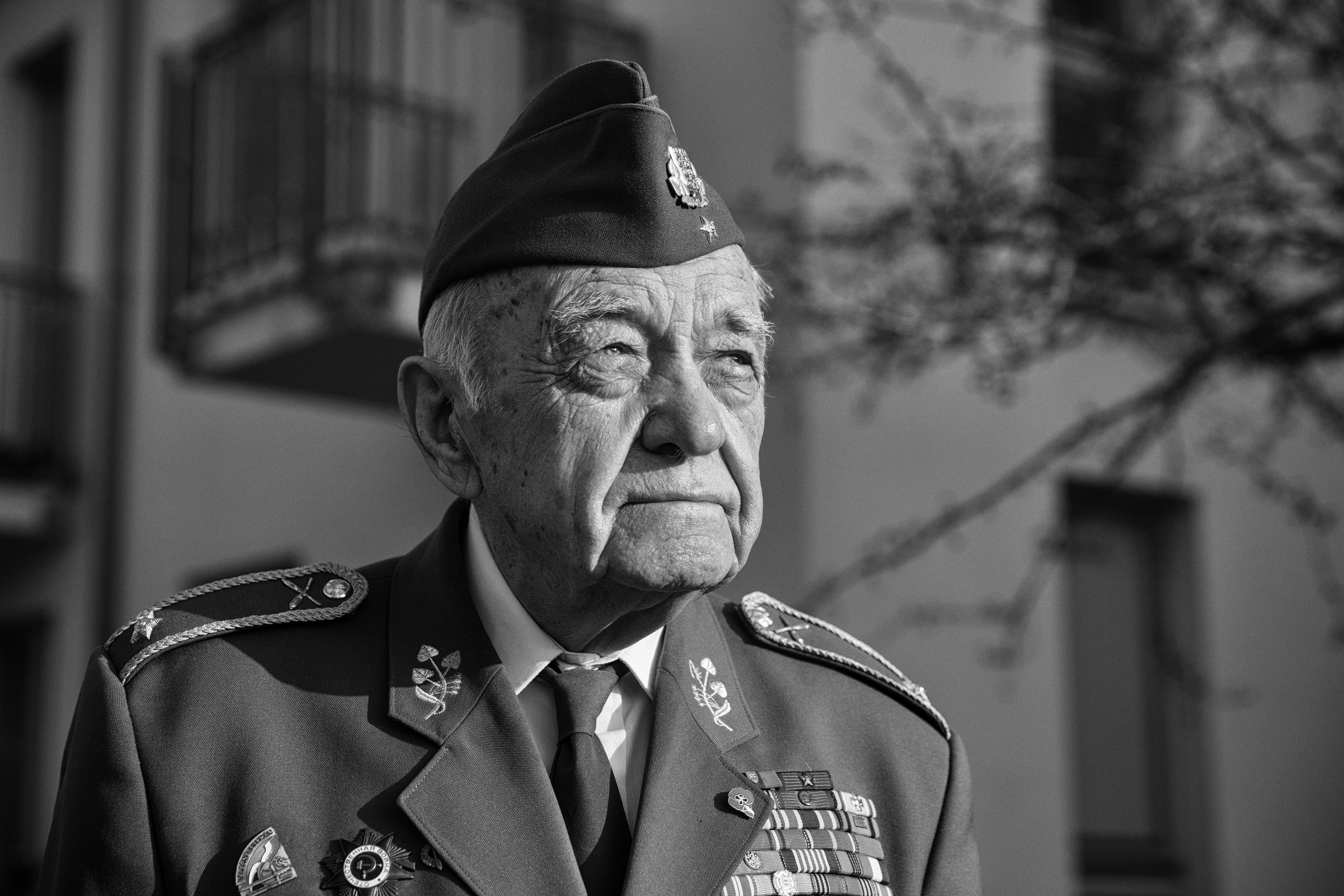
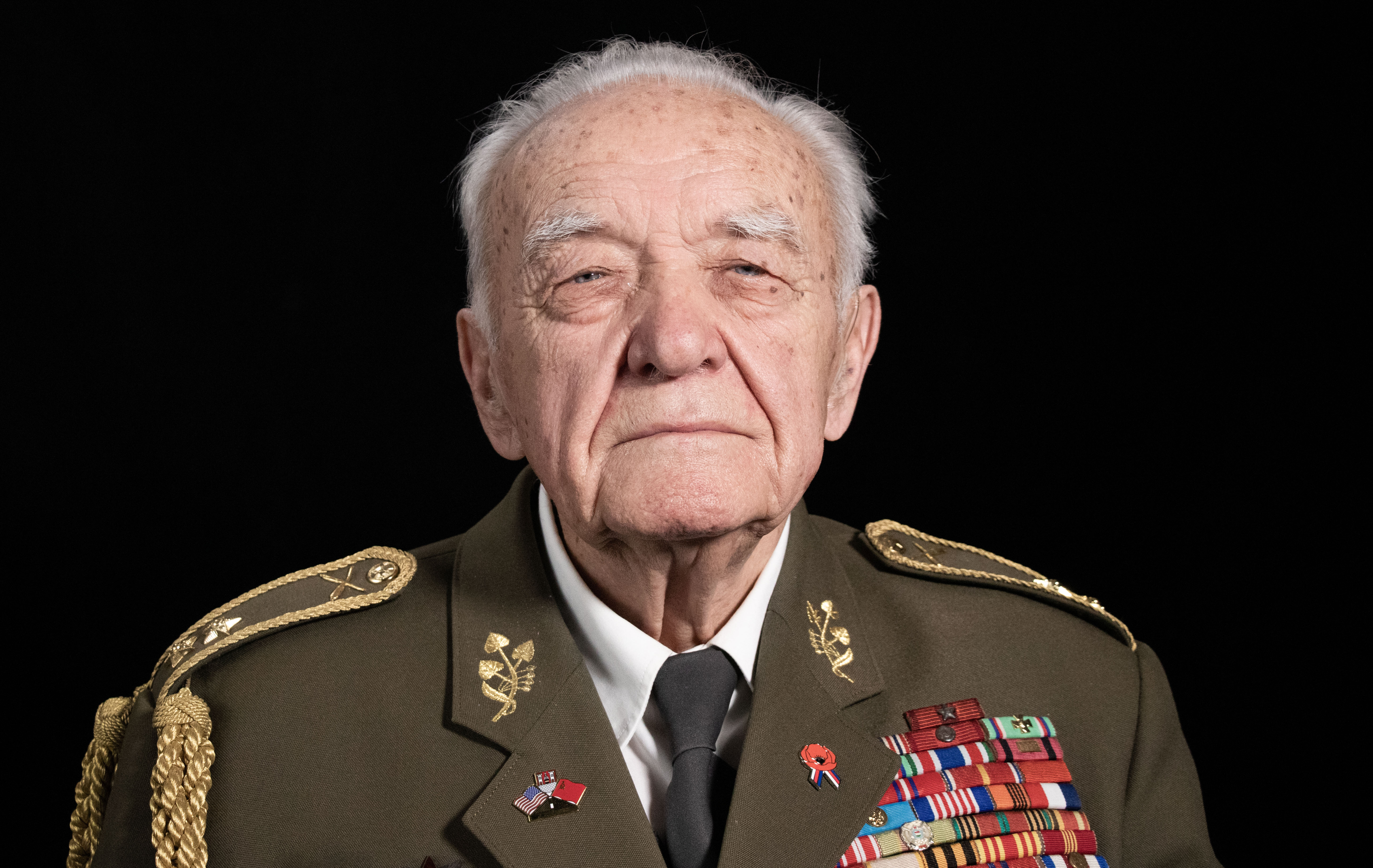
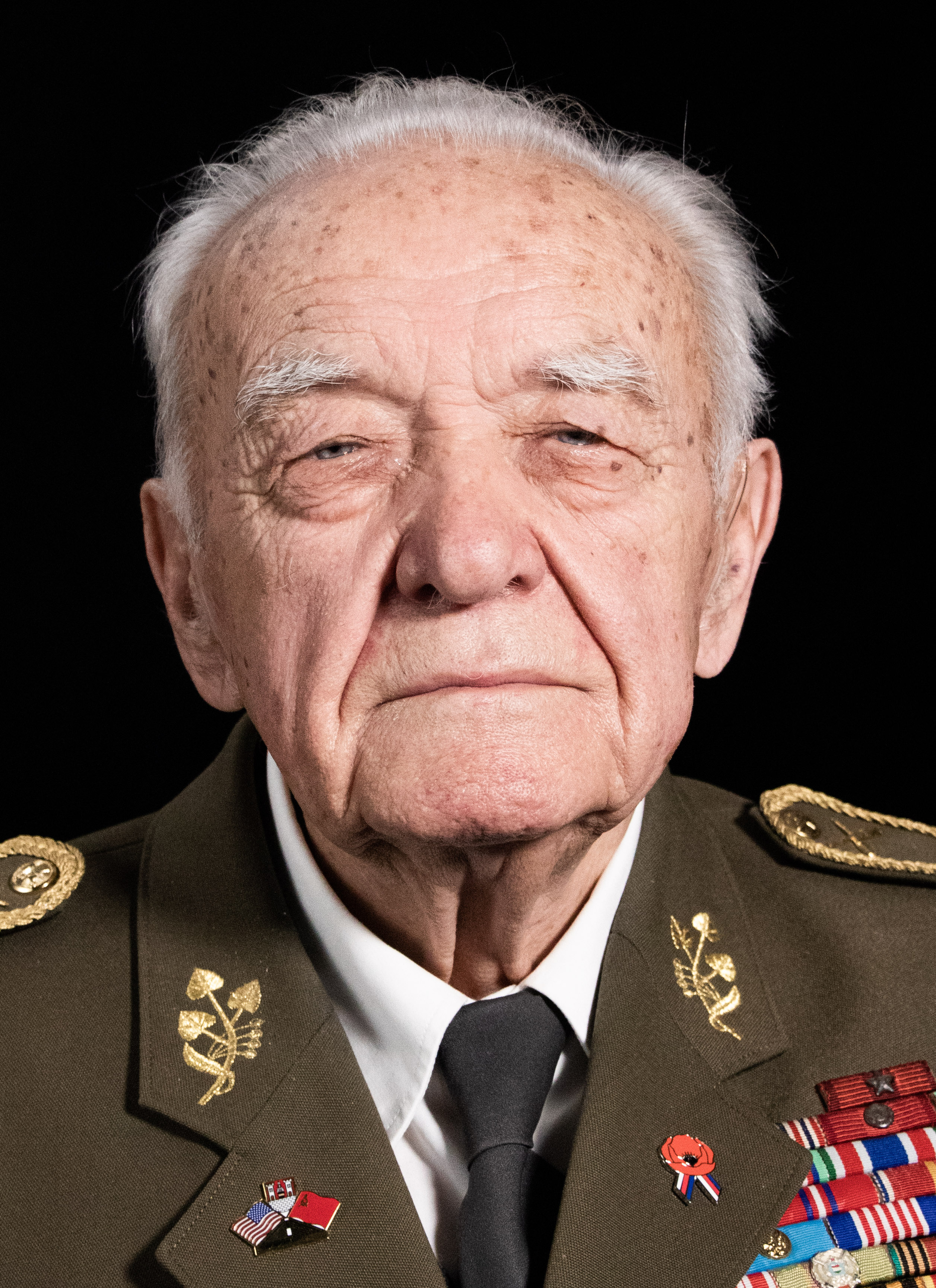
Ing. Miloslav Masopust, Lieutenant General v. v., was born on 26th September 1924 in Volhynia in the village of Český Straklov. His father was a teacher at the Czech schools in Volhynia. In 1944, Miloslav Masopust joined the First Czechoslovak Army Corps in the USSR and was trained as a commander of a platoon of machine gunners. He took part in the fighting at Krosno, where he was wounded in the leg. After his recovery, Sergeant Masopust was sent to the autocourse and assigned to the 5th Artillery Regiment. With the artillery regiment he participated in the liberation of Slovakia as a commander of a supply battery. After the war, Miloslav Masopust and his father acquired the farm of the displaced Germans in Mlékojedy near Litoměřice. However, Miloslav enrolled in the Military Academy in 1947 and since then he served in the army in various command positions in the artillery. From 2002 to 2004 he was the vice-president of the Czechoslovak Legionary Community. In 2022, he was appointed to the rank of retired Lieutenant General. Miloslav Masopust passed away on January, the 4th, 2026.