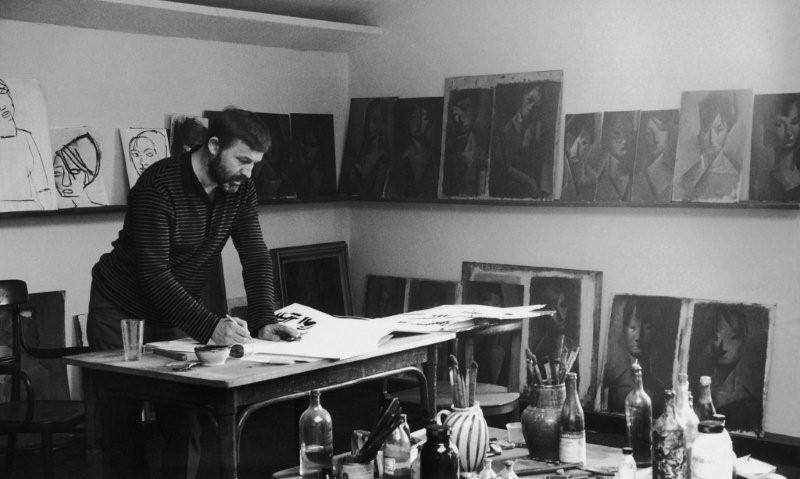
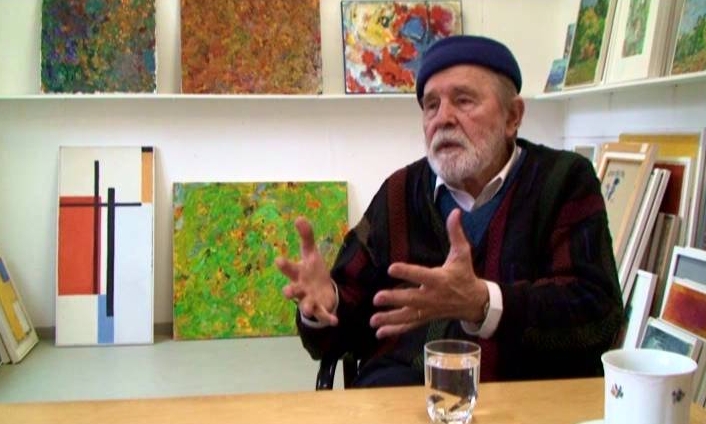
He ran a private painting school in Lucerne, Switzerland

Download image
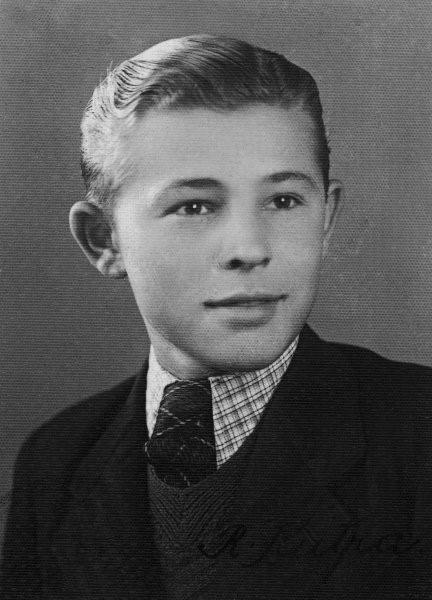
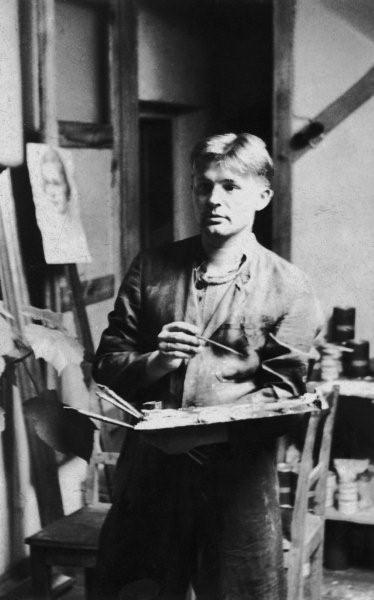
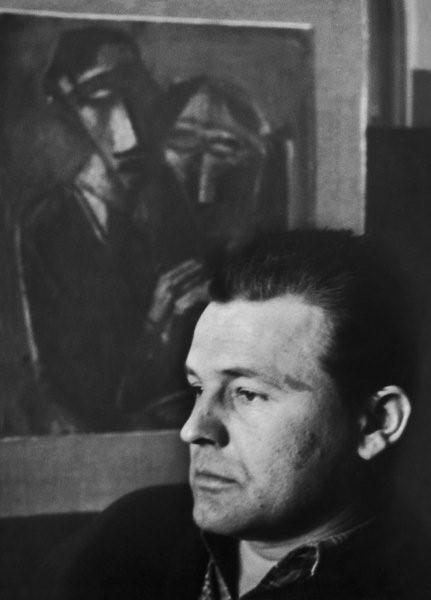
Radoslav Kutra was born on March 13, 1925 in Holice near Olomouc. His father was a worker and his mother a seamstress. Young Radoslav was interested in hockey and was a member of Sokol. As far as his relationship to art was concerned, he was most influenced by his art teacher at the burgher school and his professor at the high school real school. After high school, Radoslav Kutra enrolled at the Academy of Fine Arts and headed to Prague. Before February 1948, Kutra, as a Christian convert, often clashed with the proponents of communist ideas. He attended lectures at the Dominican monastery or visited the writer Jaroslav Durych. His social attitudes took a toll on him after February 1948, when he was expelled from the academy on the basis of political vetting. He returned to Olomouc, where he did occasional small art work until he left for the war. He was soon transferred to the Auxiliary Technical Battalions (PTP; 1950-1952) as an “unreliable individual”. When a hepatitis epidemic broke out in one of the camps, Radoslav Kutra was mistakenly identified as one of the patients. As a result, he was transferred to civil engineering and subsequently released. After returning home, he joined Sigma Lutín. He became a member of the Union of Artists so that he could work freelance. Radoslav Kutra also maintained contacts with the capital and became famous there. This happened by exhibiting a controversial painting called Motherhood. The painting was labelled formalist by one of the critics. In 1968, he was accepted as a teacher at the secondary school of arts and crafts and therefore moved part of his activities to Uherské Hradiště. There he was caught up in the events of August 1968. He decided to emigrate to Switzerland, where he went with his two sons from his first marriage, his second wife and his daughter. In Switzerland, R. Kutra had a large exhibition in Solothurn After his enthusiasm for the refugees from Czechoslovakia cooled, he had to work hard to join the local art community. He decided to work independently and founded a private painting school, Kunstseminar, which he eventually moved to Lucerne. Soon after arriving in Switzerland, his sons decided to return to their homeland. He remained in exile with his daughter. In the 1980s, he managed to obtain Swiss citizenship, but lost his Czechoslovak citizenship. He regained it after 1989. By the end of the 1980s, he was able to visit relatives in his native country. After the fall of the communist regime, Radoslav Kutra was offered a teaching position in Brno. He also worked there in the mid-1990s. However, he soon returned to Switzerland for good, where he continued to run the Kunstseminar. Radoslav Kutra lived in Lucerne and taught painting courses. He died there on January 19, 2020.