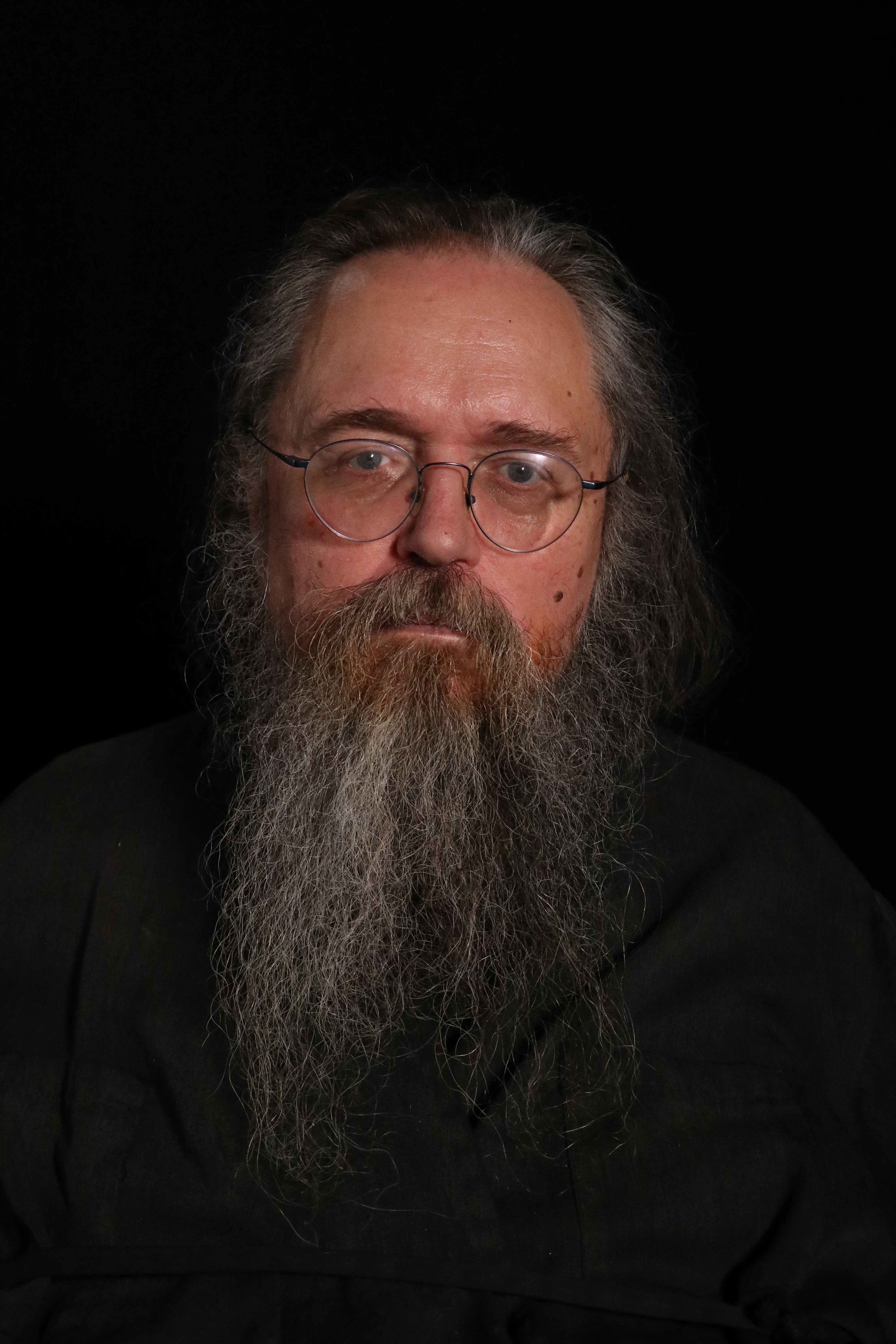
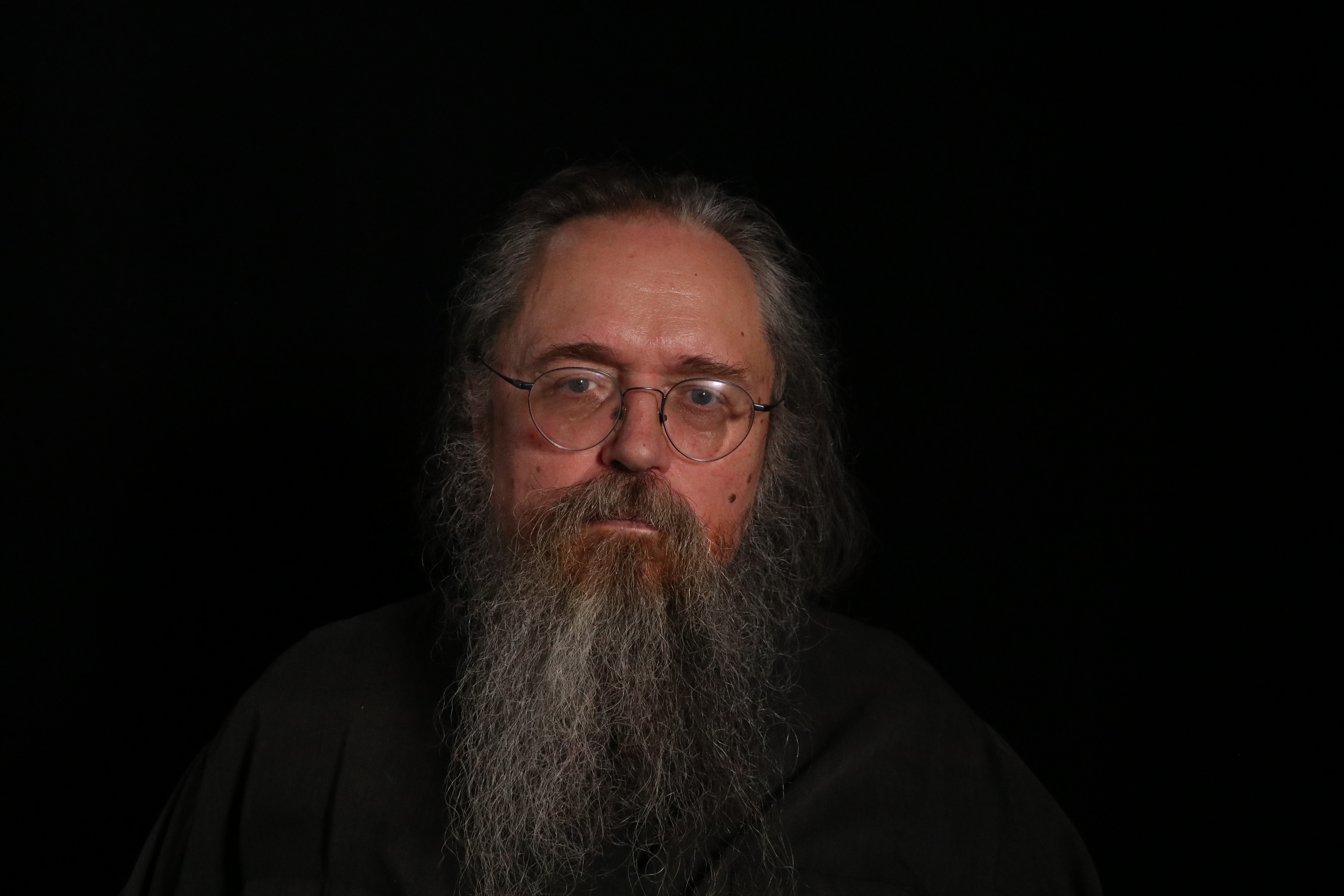
"In a sense, I have always been a dissident. I was a dissident in relation to the mainstream Church propaganda. This mainstream for the masses was, for example, the newspaper Russkii zhurnal or the articles of Metropolitan Jan (Snychev): as much as possible of Great Russian nationalism, self-glorification and monarchy - the Batyushka Tsar and so on. The very fact that I avoided it was a form of dissent. You are right, I am a dissident by nature, I am always frightened by strong currents - it is not clear where they will take me. It's usually a 'headless horseman', the masses. I was a religious dissident in the atheist Soviet Union. And with the early 1990s a new mainstream emerged - the sectarian mainstream. I have already mentioned Dzhun, who was brought to Moscow by the academic Spirkin. My mother worked in his sector, and when I talked to the staff of the Philosophical Institute, I saw that they were interested in India and Hindustani caves. Not Orthodoxy, but oracles and aliens. The mainstream was like that."
"I was in a schizophrenic state for a while. Part of me wanted to agree and calmly step aside: 'You are worthy of acceptance by your actions, so I should, I agree.' And the other part of me was saying, 'Wait, is this really what your whole life was about, to end up like this?' The other part of me was saying, 'What? You're not just a deacon. The whole church is looking at this scandal now, and retribution is being made as public as possible. If everything goes quietly with you, then these executions will start happening like a treadmill. Any free thinking in the church environment will then disappear. So maybe it's worth fighting for - not for yourself, your reputation or anything else.' It's clear that I wasn't thinking about emigration at the time. Even if I had appealed, what would I have done with that paper from Istanbul in Moscow? Nothing. I wouldn't be able to serve anyway. Only, as they say, to the archives. But for people, for other people, it's important. It's important to show that you can resist, that you can say 'no'. And there is such a variant of intra-church controversy, including in the courts. And that's why I chose something that was psychologically uncomfortable for me personally. I've said many times that I'm an introvert, I'd prefer to go into my shell and have nothing to do with anyone. But I decided to continue this court battle."
"First, if someone blasphemes without being a member of the church, they are not under our disciplinary jurisdiction. And it is very unwise to frighten secular people with laws from the sixth century. It will only multiply the number of our critics. I was not heard and the document was approved. But I criticised it publicly: first at the commission and then on my blog and in the press. The Patriarch was not mentioned, I argued with anonymous officials. That was the first quarrel.
The second was in connection with Pussy Riot. I did not intend to riot. I just knew very well after my experience of the Patriarchate that it doesn't like scandals and the smartest thing to do is to let the matter go. I'm sure that under Patriarch Alexios II my advice to 'feed them pancakes and let them go' would have been well received. It would have relieved the Patriarch of the responsibility of responding, which would have made him happy. And avoid scandal. The girls would have been made fools of: they thought we were monsters, and we would have treated them humanely. Interestingly, on the same day, Vsevolod Chaplin reacted the same way. But then he was hit on the head by the patriarch who decided: 'No, we must make a scandal, make it as big as possible.' And so it was done. Chaplin changed his attitude, but I didn't. That's how it all started. And for me it was crucial because I'm a missionary. I'm responsible for those I've 'domesticated'. I assured people that we were smart, we'd learned our lesson, and we weren't going to put shackles on anybody. Suddenly, here it is. Turns out I've deceived them.
Many times I've denounced totalitarian sects for the esoteric gap where their advertisements say one thing and the secret teachings say the opposite. And now it turns out that my beloved Orthodox Church has run into these ruts as well. We used to make no secret of the fact that we were all for imprisonment and burning, but in the twentieth century we began to shy away from that. And suddenly - again. And then what a bacchanalia began in Orthodox blogs, including mine! How those seemingly nice, incredibly Orthodox people began to share sadistic dreams of raping these girls in perverted ways. It was just monstrous."
Andrei Vyacheslavovich Kuraev (born February 15, 1963 in Moscow, former USSR) is a Russian clergyman and public figure, theologian, writer and publicist, former deacon of the Russian Orthodox Church. He is known as a missionary, author of popular theological books, and an uncompromising critic of intra-church and state political processes. He has lived in exile in the Czech Republic since 2022. He was born into a family of Soviet philosophers. From 1973-1978 he lived with his parents in Prague, where his father worked for the journal Problems of Peace and Socialism. This period shaped his critical perception of Soviet ideology. In 1982, as a student at the Faculty of Philosophy of Moscow State University, he was secretly baptized. He graduated from Moscow State University (1985) and entered graduate studies, but left to join the Moscow Theological Seminary, which meant his father’s dismissal from the Academy of Sciences. In 1990 he became secretary to the newly elected Patriarch Alexios II and participated in the preparation of the Patriarch’s key documents and speeches of the early 1990s.
He gained wide renown as a missionary and columnist who created the genre of “newspaper theology.” His books and articles in the secular press were aimed at young people and intellectuals. He taught at Moscow State University and the Moscow Theological Academy. He took a consistently critical stance on a number of issues: opposition to occultism and sectarianism in the 1990s, criticism of nationalistic and clerical tendencies in the Church.
Since 2013, after the disclosure of the scandal at the Kazan Theological Seminary, he has been gradually removed from all positions: he was dismissed from the Theological Academy and Moscow State University, excluded from synodal commissions. He sharply criticised the annexation of Crimea (2014), calling it “an adventure that brings the death of the Russian nation closer”. In 2020, Patriarch Kirill was put on trial in a church court for criticism published on a blog. Kuraev did not acknowledge the legality of the trial and pointed out that it was politically motivated. In May 2022, after his public condemnation of the Russian invasion of Ukraine, the Patriarch’s decree was enforced.
In September 2022, he left Russia and obtained a residence permit in the Czech Republic. Shortly after he publicly announced his emigration, he was declared a “foreign agent” in Russia.
In April 2023, the Synod of the Patriarchate of Constantinople restored his rank and recognised the decision of the Russian Orthodox Church as non-canonical. In exile, Andrei Kuraev is working on a series of books, The Mythology of Russian Wars, devoted to a critical analysis of historical and ideological myths in Russian and Church history.