Mum organised all the holidays. She even allowed us to have a Christmas tree. If all the other children had one, then Mummy allowed it. She asked God for forgiveness because this wouldn’t have happened in her family home.
Download image
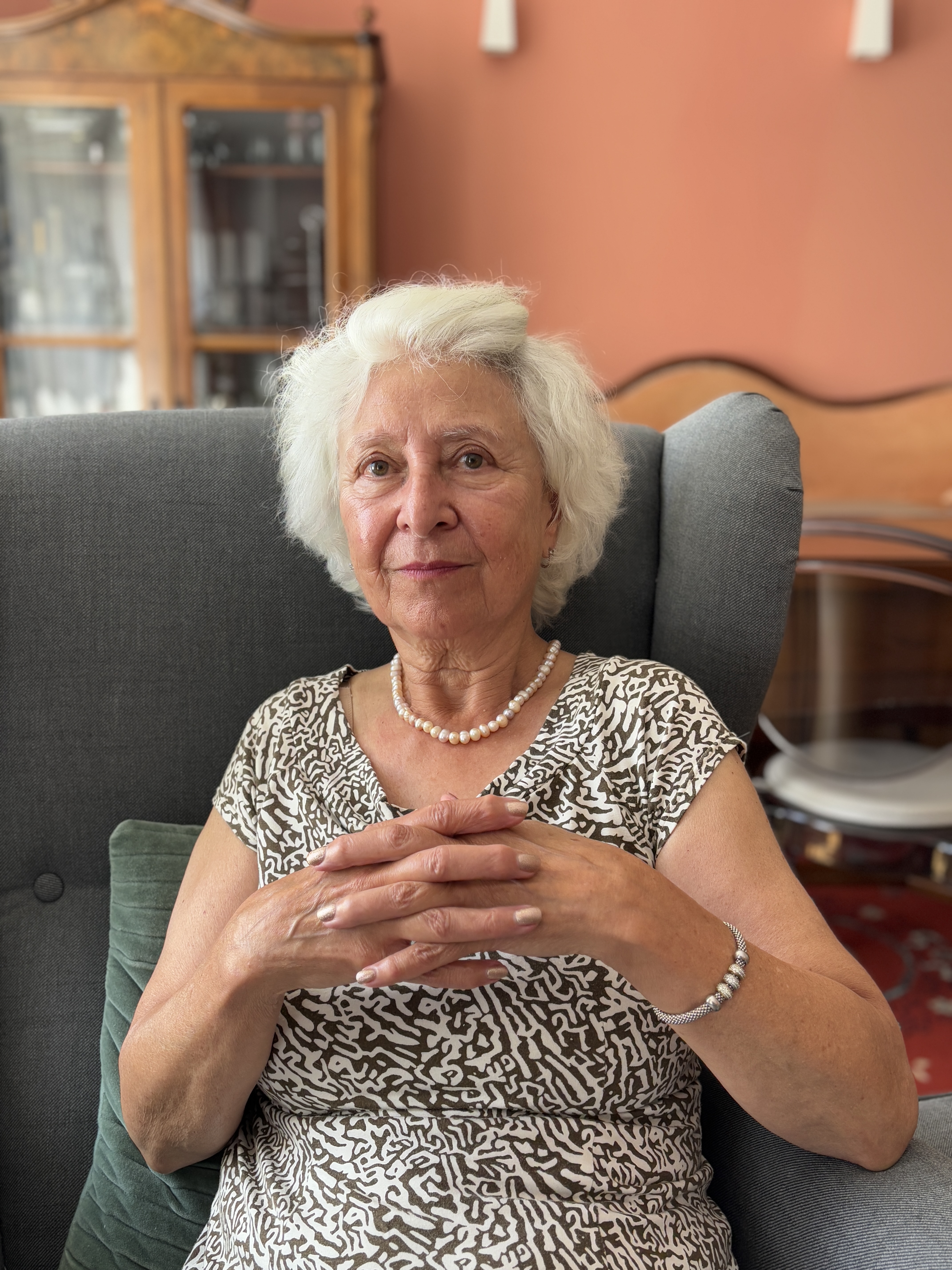
Was born in Walbrzych in 1947. Her parents came from Jewish families in Ozorków, near Łódź. After the war, they met in Walbrzych, a place where many Polish survivors settled after the Second World War. Dora’s mother, Fradla Hiller (née Krygier), was sent to the Łódź ghetto. She was imprisoned in Brzezinki and in a subcamp of the Gross-Rosen concentration camp in Dzierżoniów. Before the war, her father, Chaim Hiller, was an activist in the Jewish socialist organisation Bund. He escaped to the Soviet Union before the German occupation, which meant that he survived the war (unlike most of his family). After the war, he returned to Poland to look for his family. Dora Hiller-Mańczka has a sister, Irena, who was denied a place at university as a result of the anti-Semitic campaign in Poland in 1968. Consequently, she left Poland for Sweden. Jewish traditions were observed in Dora Hiller-Mańczka’s family home. She attended Polish primary and secondary school, where she was the only Jewish girl. From 1964 to 1970, she studied at the Sanitary Engineering Department of Wrocław University of Technology. She is a sanitary installations engineer by training. She married a Catholic named Bronisław Manczak. In the 1980s, she was active in the Solidarity and worked at the ‘Inwest Projekt’ sanitary installation manufacturing plant. It was not until the 1990s, when her family life had stabilised, that she became actively involved in the social and cultural life of Jews in Wałbrzych. She has a son. The project is co-financed by the Governments of Czechia, Hungary, Poland and Slovakia through Visegrad Grants from the International Visegrad Fund. The mission of the Fund is to advance ideas for sustainable regional cooperation in Central Europe. https://www.visegradfund.org/
The project is co-financed by the Governments of Czechia, Hungary, Poland and Slovakia through Visegrad Grants from the International Visegrad Fund. The mission of the Fund is to advance ideas for sustainable regional cooperation in Central Europe.