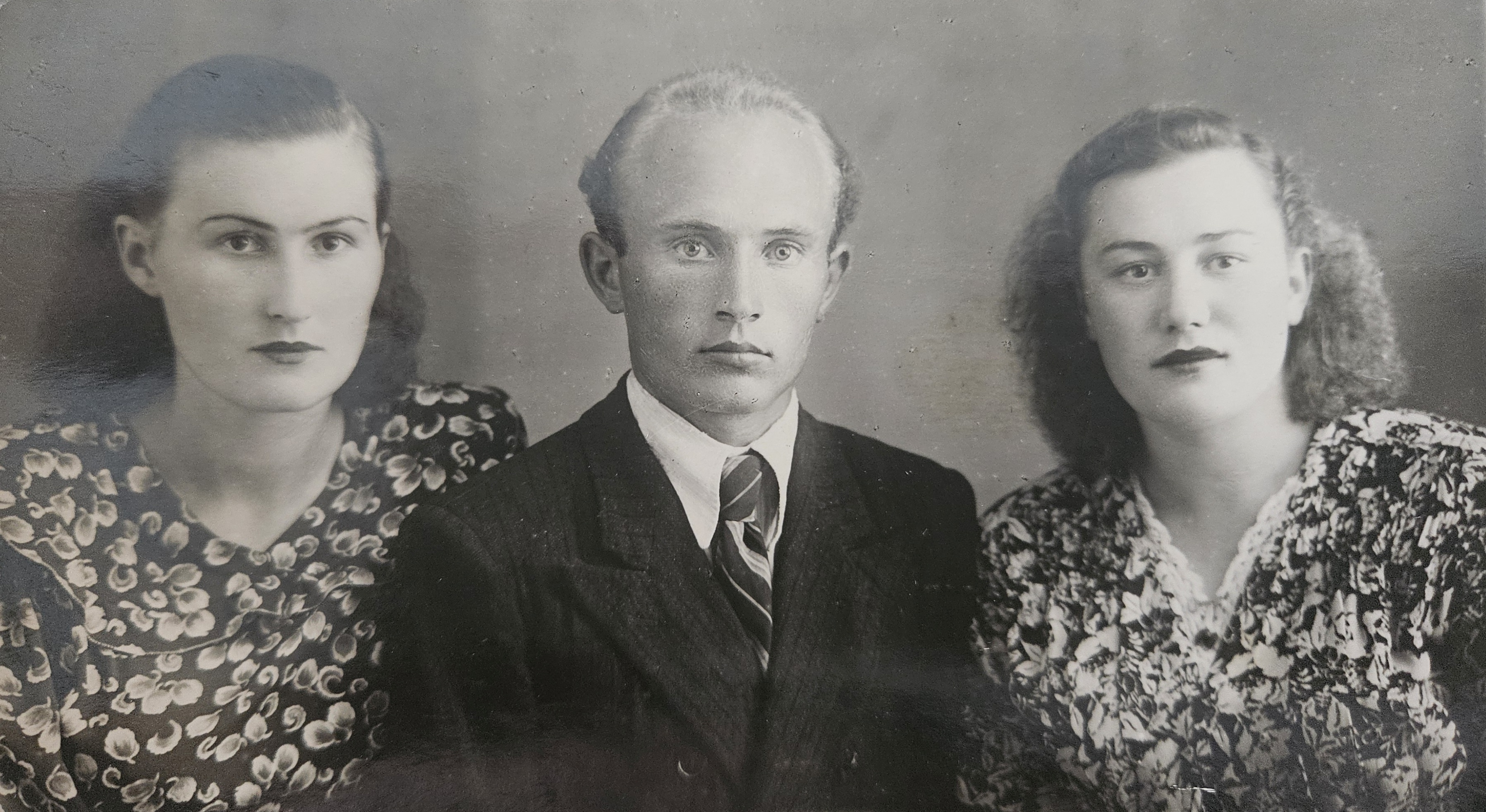
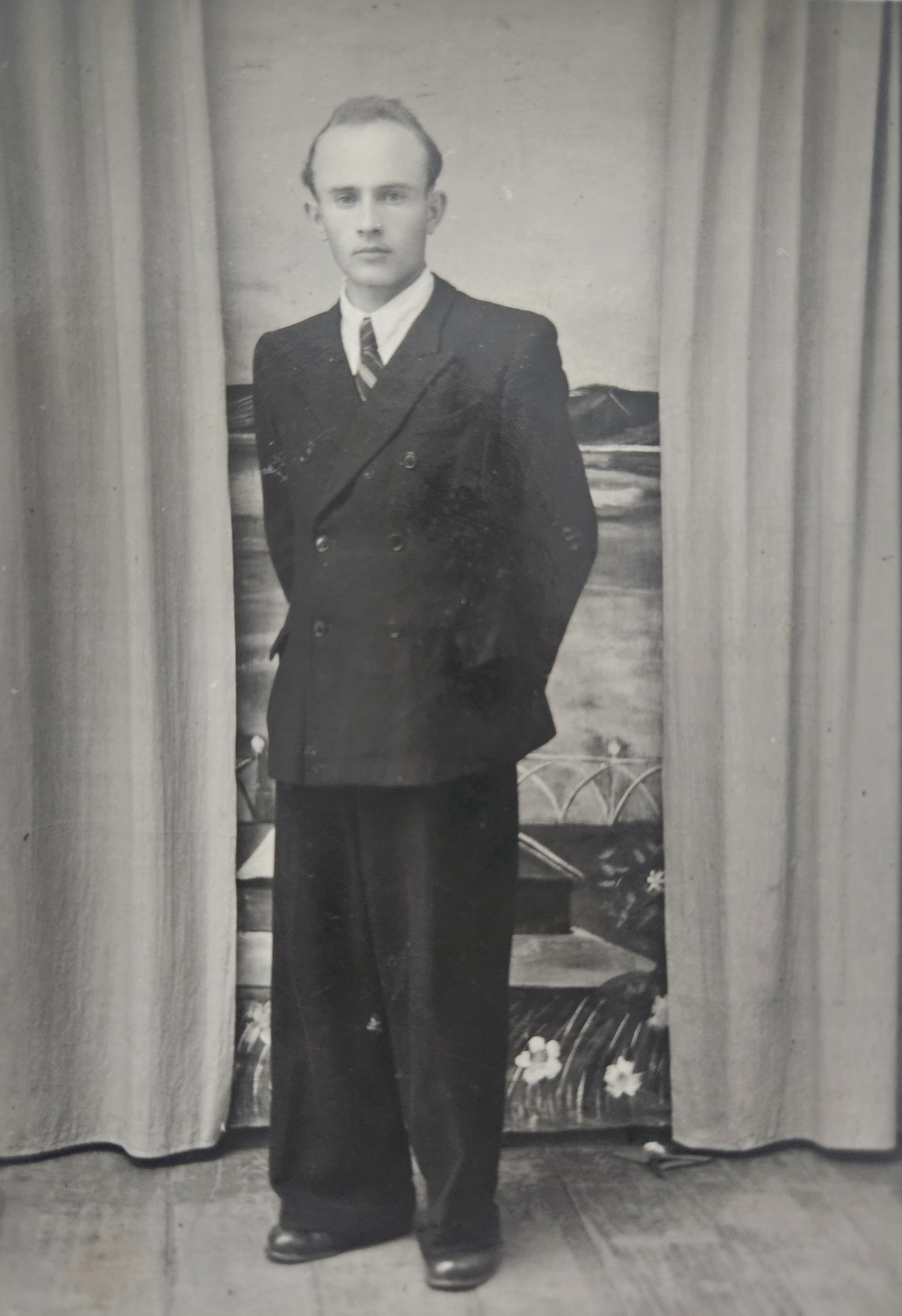
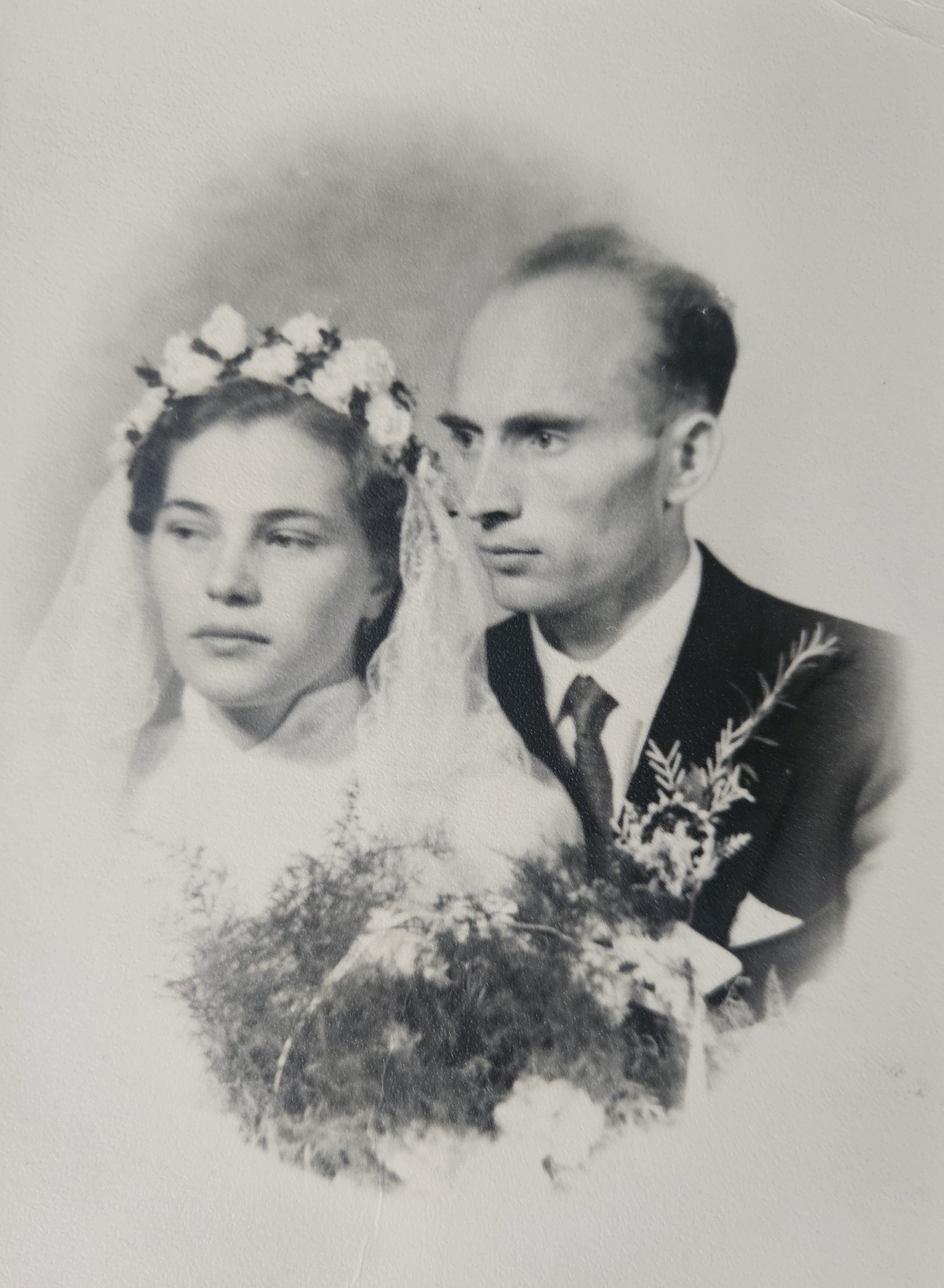
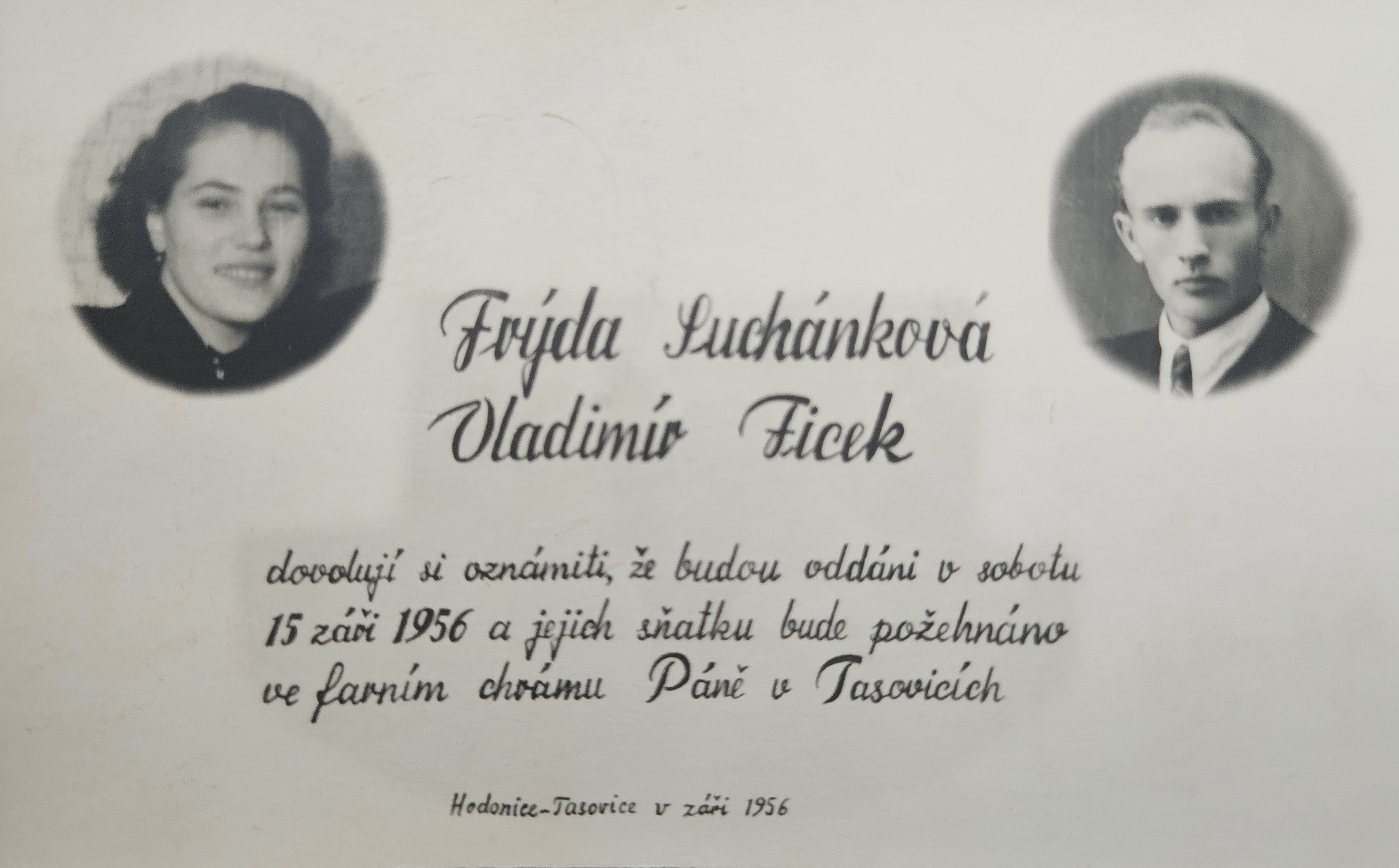
Vladimír Ficek

* 1926

  • "About an hour later a car suddenly arrived in the yard, and about four men, the Russians, entered the house with it. Dad was sitting there on a chair, and mom was in the kitchen, in the next room, that's what he was, washing, in an apron, and washing. And they came in here, looked around, and started right away to the closet and robbed the clothes. Dad saw what was going on, so he hurriedly ran to get at least the wedding costume ['costume' is a Russian word, in Czech it means 'suit'], to save himself, so that they wouldn't take it from him... So he grabbed the trousers in his hands, put one leg over his legs, and the other leg was grabbed by the Russian, and now they were tugging at the trousers. The Russian tried to pull down my father's trousers, but my father wouldn’t let go, and they struggled for so long that the trousers tore in half. Then the Russian threw one half into the corner and said, 'Go ahead and eat them.'"

  • "As soon as I cross the border of Czechoslovakia, I’ll lie down on the floor. I have my father's address, I don’t know where it is, but I’ll give it to the conductor and let them take me there. I have no idea where that will be. So I went, we crossed the border, Čop, the train stopped. People were getting off, I looked out the window and stared. At the station, there was this huge portrait - two meters wide and five meters tall- Stalin! And I thought to myself: Dear God, I escaped one Stalin and ended up with another."

  • "The girls went into the village, also looking for food. In one part of the village there were Germans, and one of them had a flock of sheep. They took one of his sheep, he shouted at them, but they ignored him. They brought the sheep home, slaughtered it, and feasted. He complained to the Americans. The Americans then assigned police to keep watch. I think the ones who guarded us most were the forced laborers—they treated us very well. That German complained to the Americans. 'Who hurt you?' they asked. So the German brought them to the camp and said, 'These women.' And when the women saw it was that German, they immediately broke off branches and started beating him across the back. The German was glad to escape. The American just laughed."

  • "When they evicted the kulaks, the houses remained empty. Russians from Russia started moving in. Apparently, the poorer folks moved around just like the Czechs did here after the Germans left. It was the same over there. The government set up national committees. And of course, those committees were made up entirely of newcomers - Russians. And then they ran wild! There weren’t any proper laws yet, and they said Lenin had declared: ‘Vlast na mestách’ - meaning whatever the local government deems appropriate, that’s the law. And the state apparently needed money. So every village was assigned a tax they had to pay. The national committee, made up of those Russians, had to divide up who would pay it. And they did it in a way that everyone except themselves had to pay—they didn’t pay anything."

  • "Everyone survived only on what they could harvest from their little garden. But there wasn’t much- there was hunger. And the kolkhoz- they gathered livestock together, but they didn’t have much feed either. Where could they get it? Eventually, the animals started dying. Horses - there was a place set up where they brought the carcasses. When a horse died and people found out, those who heard about it would rush to the spot where the dead horse was being taken. As soon as it arrived, people tore it apart- because there was nothing to eat."

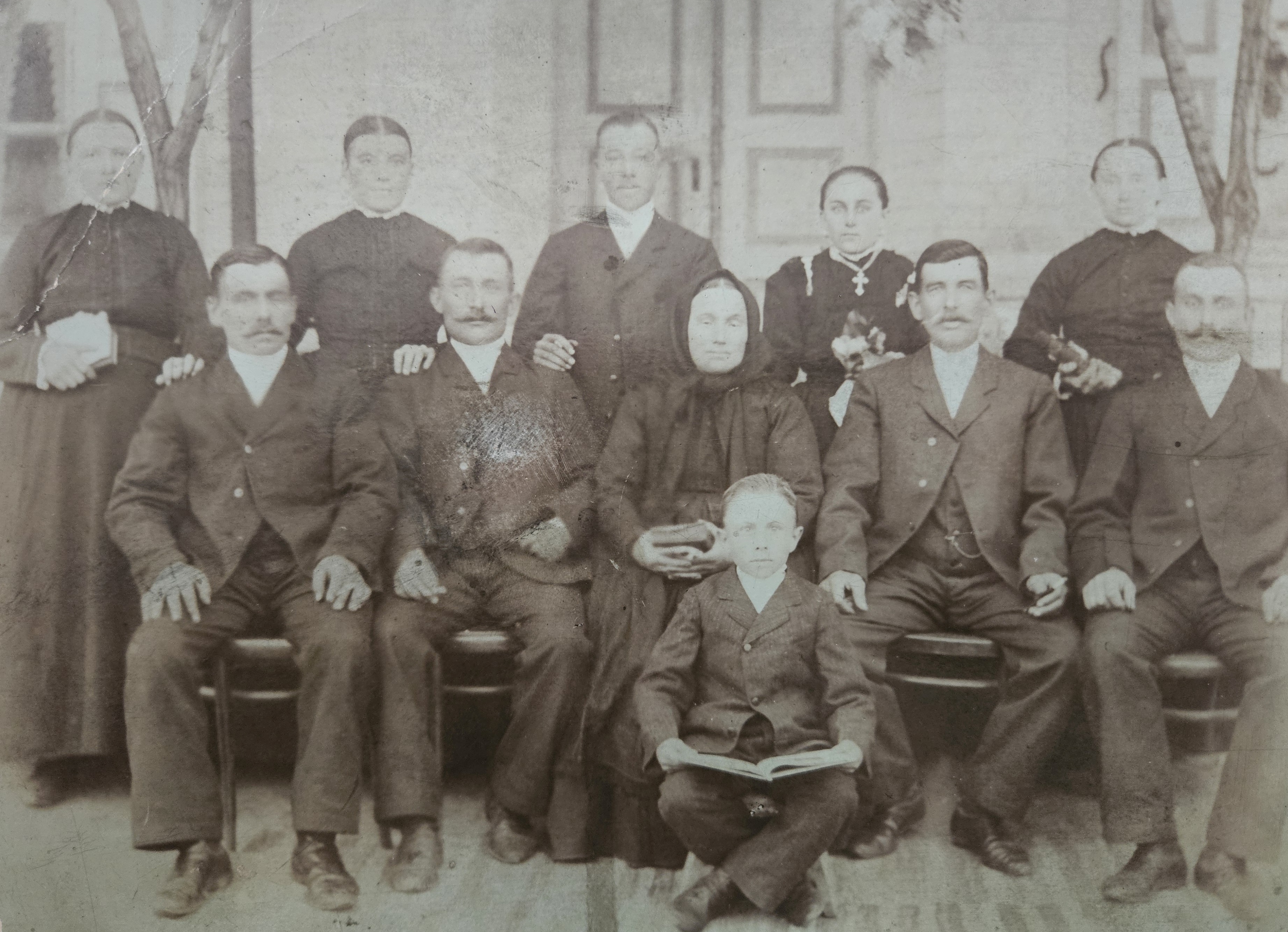
  • "And Grandpa Ficek - they were deported out past Chelyabinsk, into an empty field. First, they had to build some kind of living quarters. This is how it was done: the topsoil, the turf, was cut into square pieces, about 10–15 cm thick, and stacked one on top of the other to form walls. They dug about a meter into the ground, and from those turf blocks they built walls about a meter above ground. There were forests nearby, so they felled trees, laid beams across the top, threw branches over them, and then covered it all with soil - that was the roof."

  • Full recordings
  • 1

    Znojmo, 25.04.2025

    (audio)
    duration: 02:46:58
    media recorded in project Stories of 20th Century
  • 2

    Znojmo, 19.06.2025

    (audio)
    duration: 34:52
    media recorded in project Příběhy regionu - JMK REG ED
Full recordings are available only for logged users.

I escaped from one Stalin and came to the other
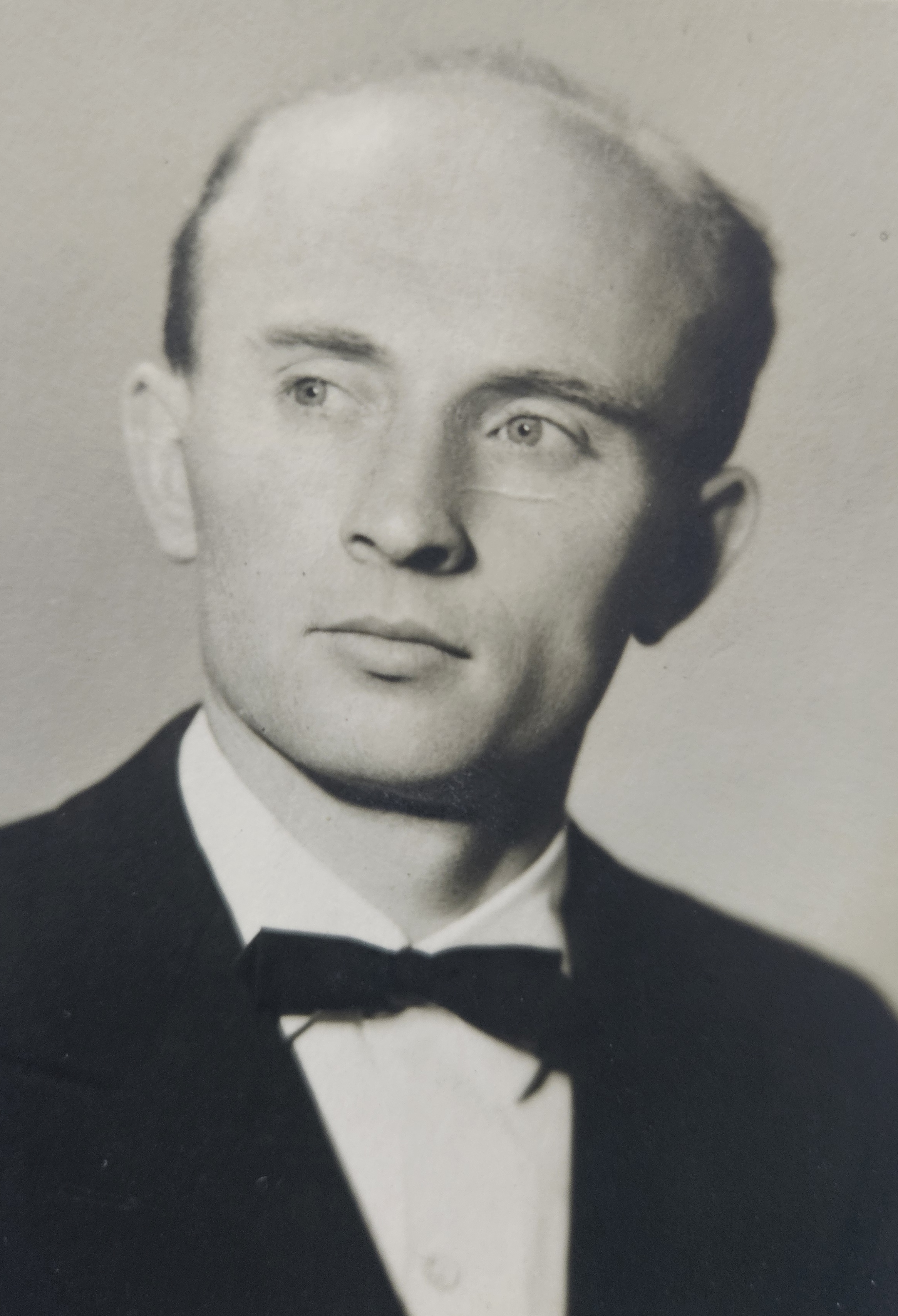
Vladimír Ficek 1965
Vladimír Ficek 1965
photo: archive of a witness

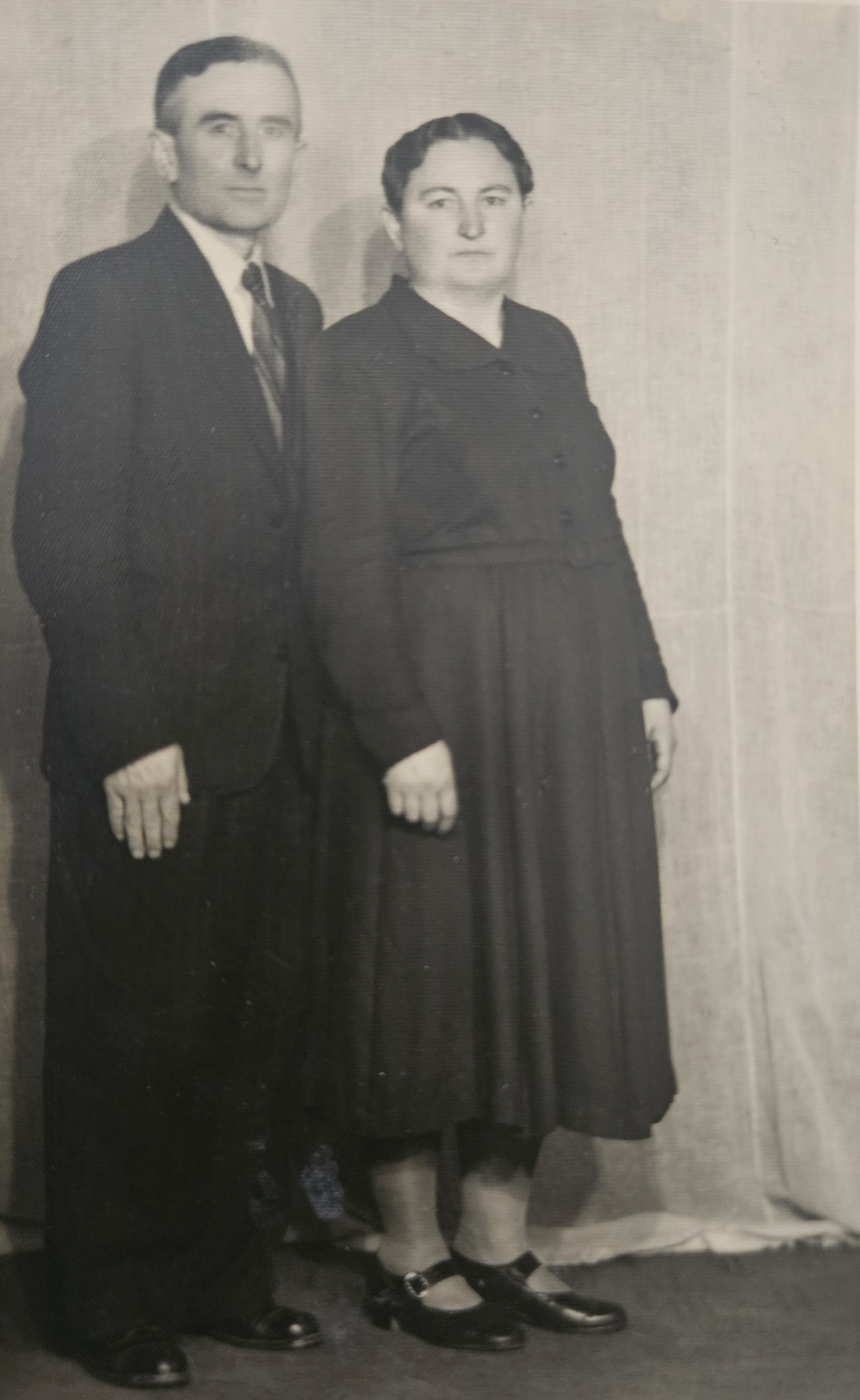
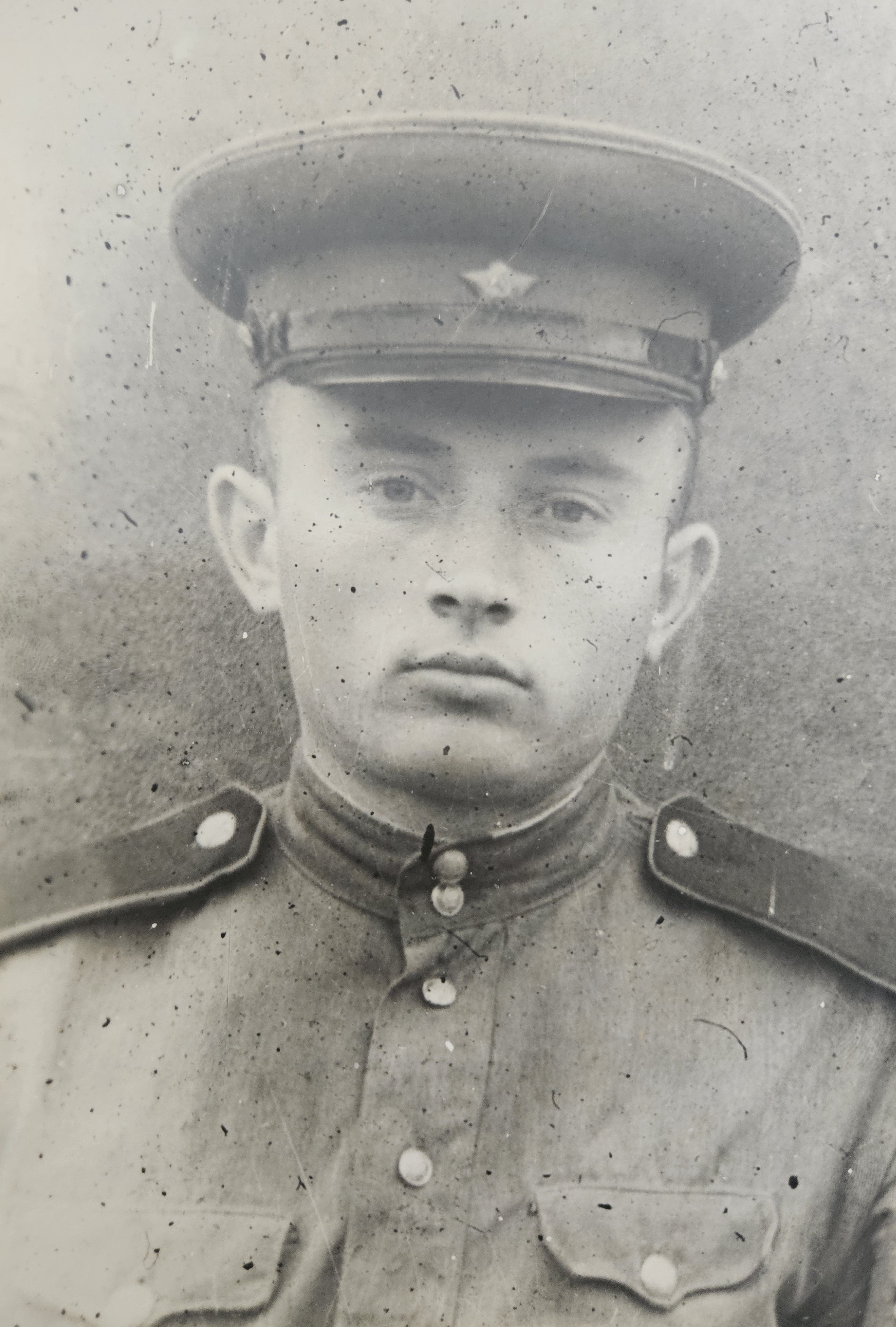
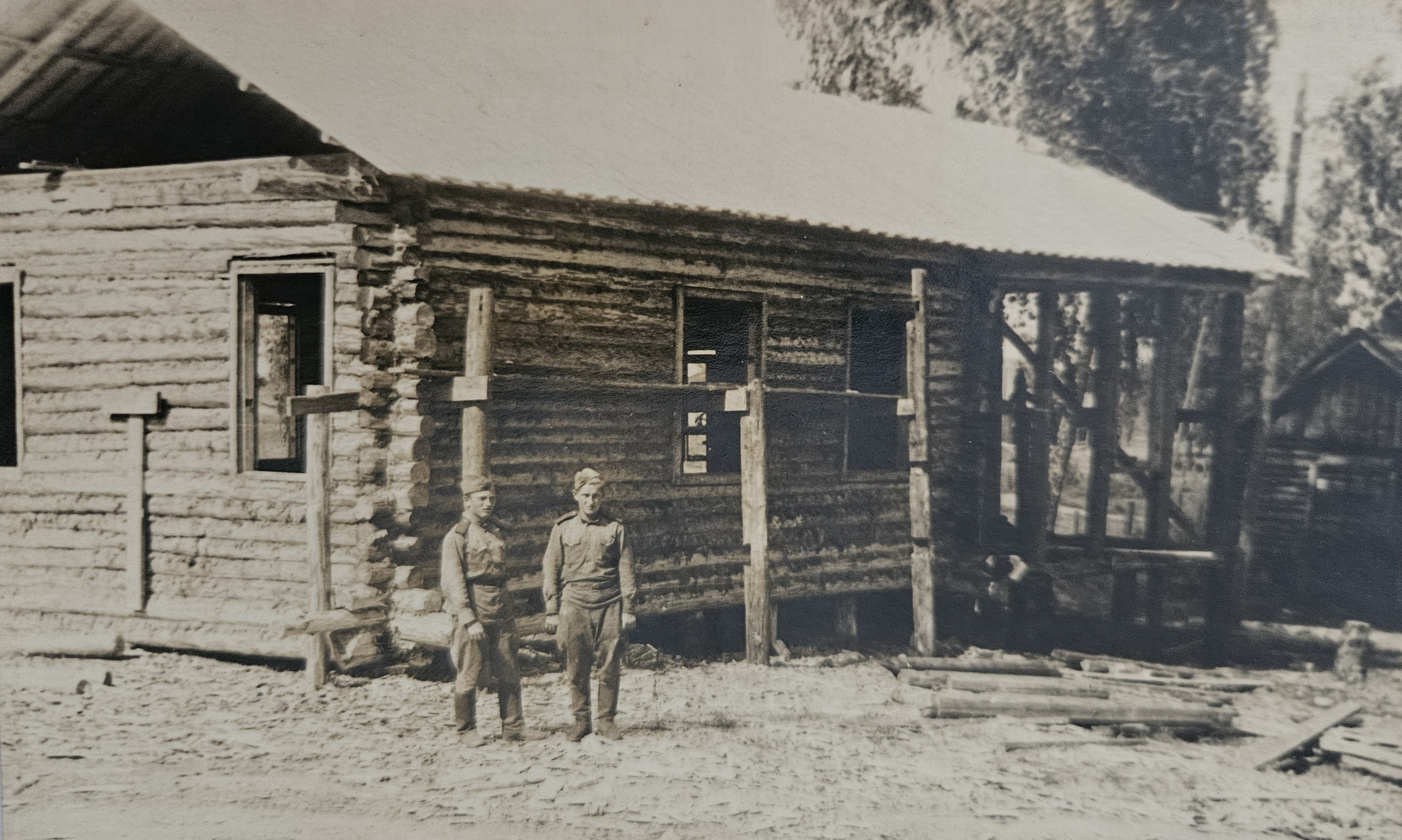
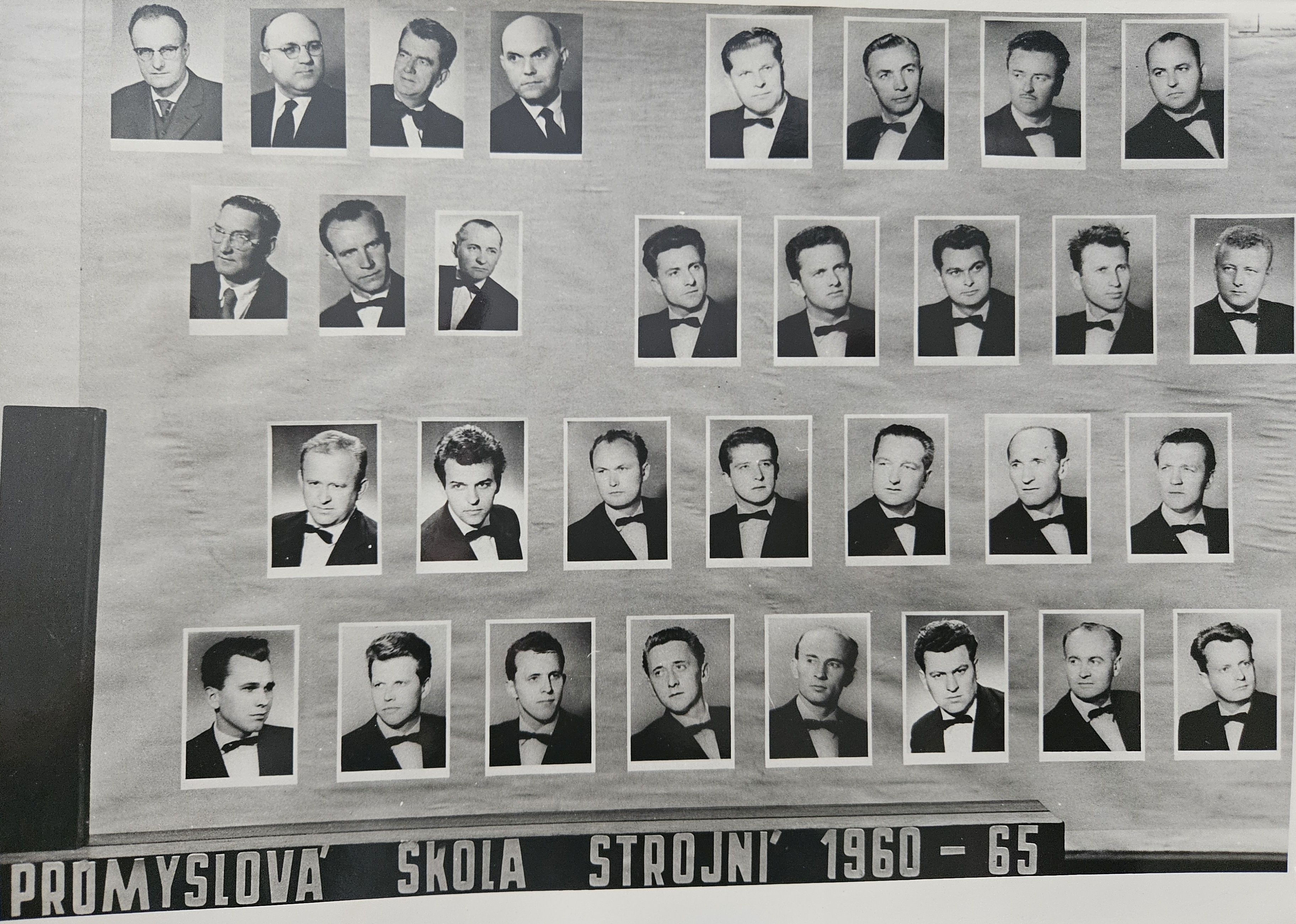
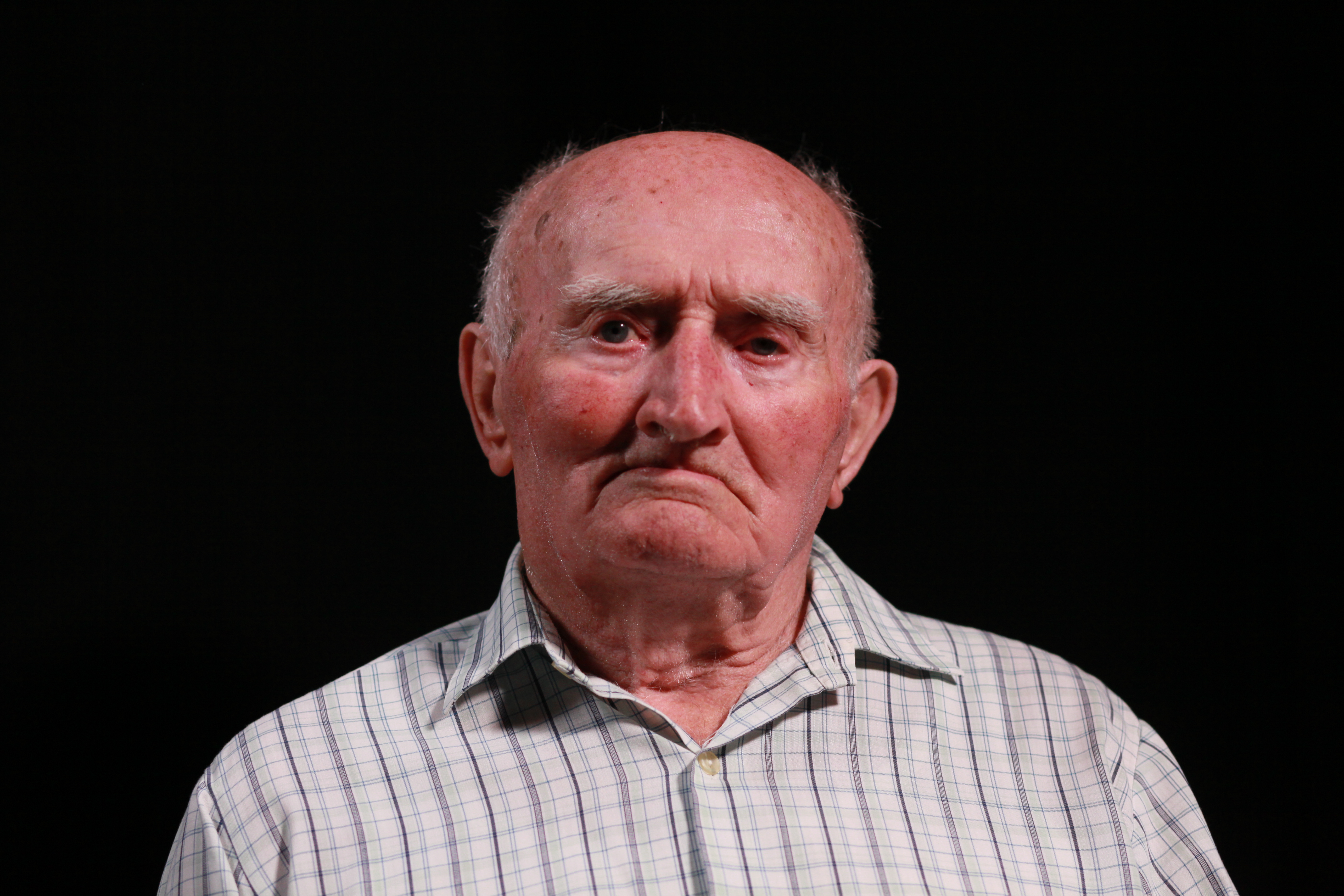
Vladimír Ficek was born on April 6, 1926 in the village of Čechohrad in southern Ukraine to Czech parents Josef Ficek and Cecilia, née Pohorská. The inhabitants of Čechohrad, including the Ficek family, experienced all the horrors of forced collectivisation and Stalinist repression in the 1930s - famine, loss of all property and imprisonment. Completely impoverished, they moved to Siberia, where their father and mother worked in the coal mines, but after only two years they returned to their native Čechohrad. In 1937, his father was sentenced to two years of forced labour. In 1942, Čechohrad was captured by German troops and Vladimír Ficek was taken to Germany, where he was totally deployed in an explosives factory for three years. After the end of the war, he served five years in the Soviet army. In 1953, he managed to get permission to emigrate to Czechoslovakia, where his parents had been living for some time. In 1956 he married and settled near Znojmo. He worked all his life in the engineering company Motorpal in Znojmo as a milling machine operator. In the sixties he graduated with honours from the Secondary Industrial School of Mechanical Engineering and qualified as a designer and technologist. In 2025 he lived with his wife in Znojmo.