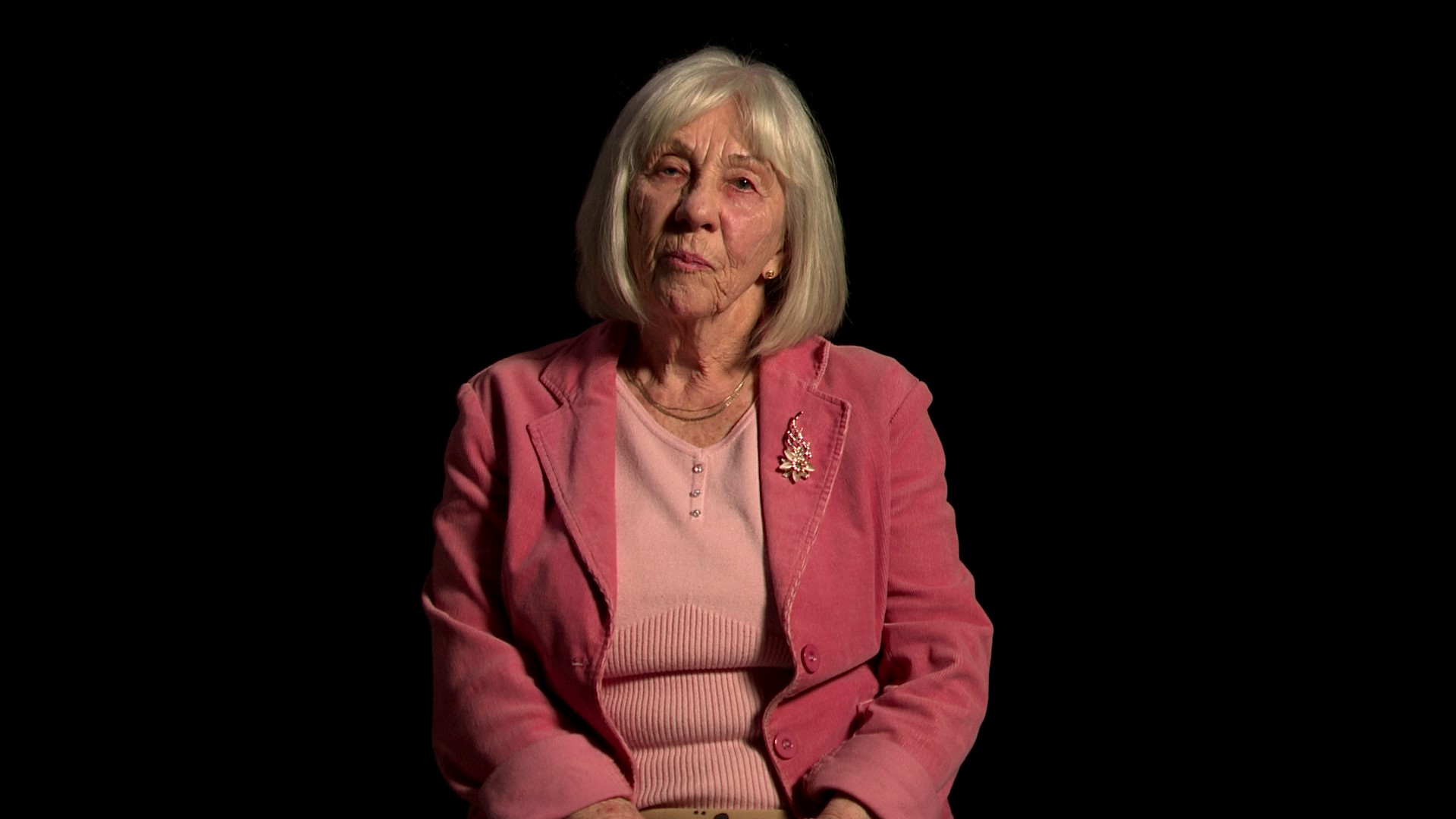
Milota Bacúriková

* 1941

  • "When the war came and my father went to the Uprising, my mother was hiding somewhere in a village in Horehronie, my father gave her to a family so that no one would harm her, because there was not only a threat from the Germans, but also from the guards-Slovaks. And my aunt, my mother's sister, she took me, because her future husband, at that time they were still just engaged, was also in the University Guards Unit. So she took me to Hodruš, where my grandfather, as a mining engineer, had equipped, there was a mining house on Praniarska, and in that house he equipped an apartment for us, where I experienced the Uprising with my aunt."

  • "My father worked at the Education Commission after the war, and he worked there with Husák, Novomeský, Stráňaj, and after 1948, we know, those two were locked up. My father was a gym teacher, he wasn't involved in the communist party, anywhere, he did his job, he was just fired from there, he was unemployed for 8 months. That's how my mother's father, Samuel Pilc, supported us for 8 months, he also paid off the house that my father bought, because he had a good income. My mother didn't work. And I remember that before 1948, we even had a maid. I remember that, she used to take me around the streets here and there. And then in 1948, my grandfather was kicked out of Prague and my father was kicked out of the Education Commission, he didn't work for 8 months, and then he founded the Institute of Physical Education and Sports."

  • "Father came home completely devastated and said: 'Milotka, the war. The Russians have come.' I said: 'Did you dream something?' And I heard it roaring, those tanks, everything, planes. 'And it's true. Well, what now?' My brother, of course, took a camera and ran to the city to film everything, he had everything filmed. My father didn't even know about it, because he wouldn't let him go and he would be afraid. He had it all. And I, up above us in the street, there were no houses there, there used to be a children's pioneer camp. And they had to disband the pioneer camp there and he had supplies left, so the leader called the housewives from each house and gave us all the food he had there - salami and butter, cheese and things like that."

  • Full recordings
  • 1

    Bratislava, 27.05.2025

    (audio)
    duration: 02:31:15
    media recorded in project Stories of the 20th century
Full recordings are available only for logged users.

The Sokol spirit survived the entire communism

Milota Bacúriková was born on November 7, 1941 in Bratislava. During the Slovak National Uprising, her parents hid her with her aunt Darina Kriva in Hodruša because the guards were looking for her father, who was a member of the University Guard Unit and participated in the preparation of the radio broadcast of the Free Slovak Broadcaster. She began attending elementary school in 1947 in Palisády. She completed the 11-year school in 1958, when she successfully graduated. In 1948, Milota’s father had to leave the Education Commission, where he worked with Husák and Novomeský. When Milota was 8 years old, her mother Milota tragically died, killing herself while hiking in the Tatra Mountains. In 1958, she entered the Faculty of Education, teaching Slovak and physical education. She graduated from the Faculty of Physical Education and Sports of Comenius University, which was established during her studies. Milota actively competed in downhill skiing. Her greatest achievement was winning the Czechoslovak Universiade on Chopok in 1960. Milota married Igor Bacúrik, who was a construction engineer, in January 1963. After the wedding, they lived with his parents for a while and then moved to Banská Bystrica for three years. In 1963, their daughter Zuzana was born. In Banská Bystrica, Milota worked at the Secondary Industrial School of Construction, where her husband was also employed. After returning to Bratislava, she took a job at the Academy of Performing Arts at the time when the Department of Physical Education was being established there, where she worked until her retirement. In January 1968, Milota’s son Igor was born. They also actively participated in activities during the Velvet Revolution. During the revolutionary days, Milota was given the position of head of the ROH to oversee the delivery of reports on people that the communists had conducted on their citizens. After the revolution, she also participated in two All-Slavic Gatherings as a trainer in the Sokol physical education organization. She retired in 1994, but for another 5 years she actively took care of her little granddaughter while her daughter went to work. Milota is still very active today and is still involved in skiing.